© © Sung-Hee Seewald
March 16, 2023
Stephanie Pieper
- Interview
- Portraits
Rebekka Reinhard on the Nature of Beauty
Why it's high time for our society to take global responsibility and turn forced deprivation into intentional minimalism
Share article:
© © Sung-Hee Seewald
March 16, 2023
Stephanie Pieper
Why it's high time for our society to take global responsibility and turn forced deprivation into intentional minimalism

 Find a Doctor
Search the network for suitable specialists and contact them directly
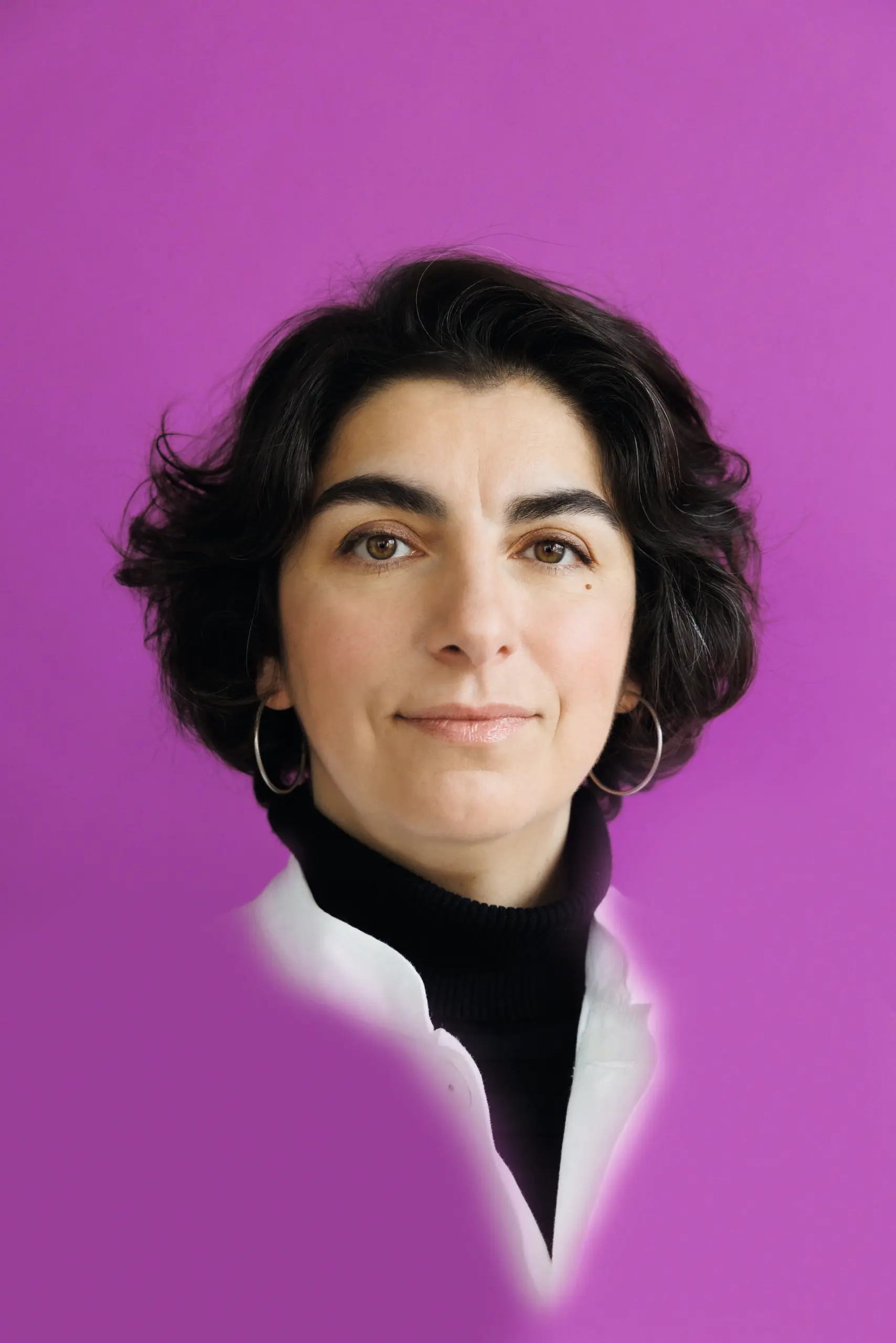
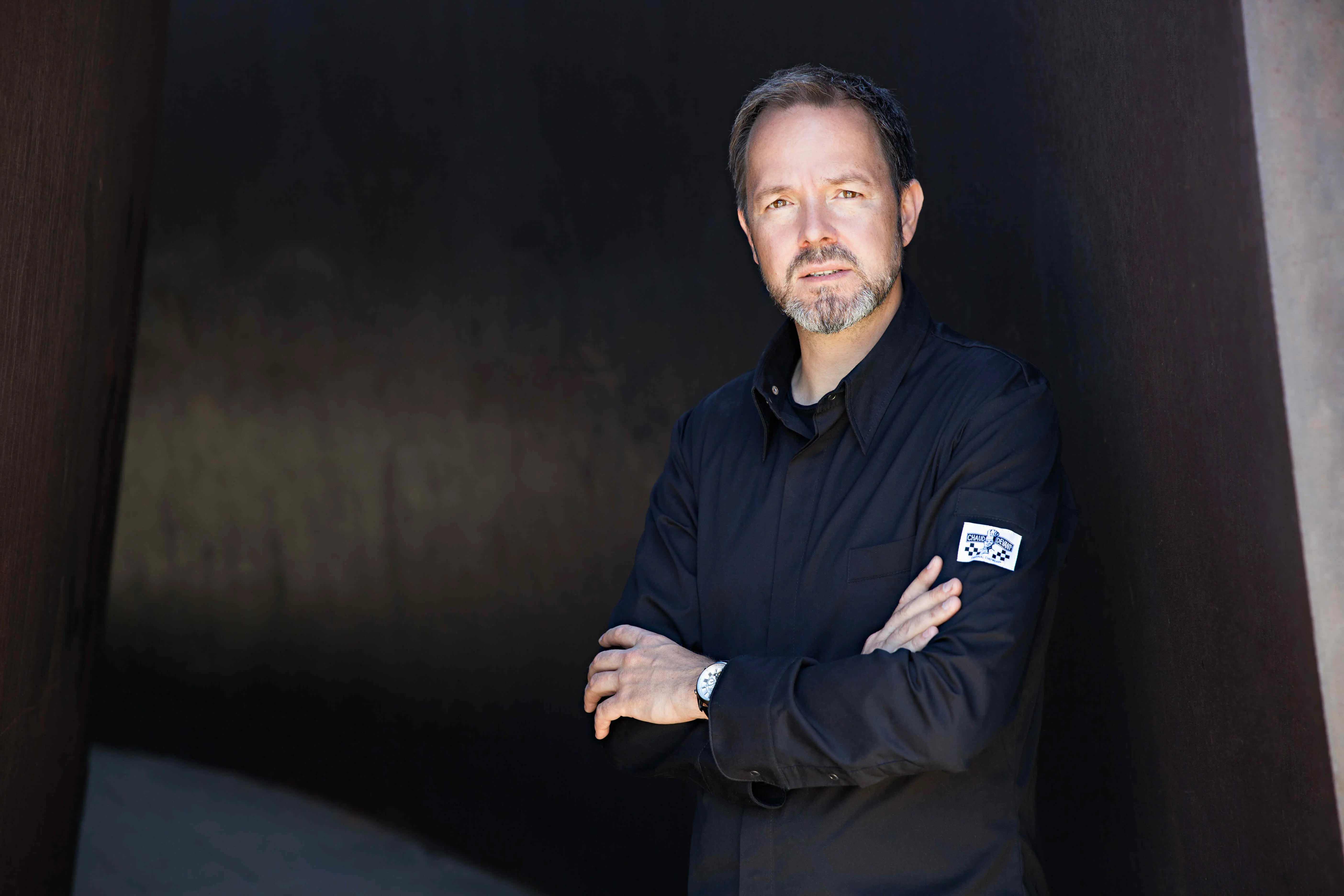
Philosophy doesn't need a Platonic white beard or to live in a barrel like Diogenes to be wise. “You are never too young or too old to philosophize,” says Dr. Rebekka Reinhard, one of Germany's most renowned philosophers. “What counts are courage, curiosity, and the willingness to think awake.”
This is how the bestselling author (A Little Philosophy of Power (Just for Women), Would Plato Wear Prada? Philosophical Survival Tips for the Lifestyle Jungle) and sought-after speaker repeatedly manages to place current topics such as digitalization, feminism, or the existential crisis of society in larger contexts, to offer unusual perspectives, and to inspire us.
As a philosopher, you are responsible for utopias. Will we ever actually be able to reconcile with nature?
Reconciliation with nature presupposes that we have become estranged from it, or at least that it has become strange to us. This was the case at the latest with the onset of industrialization, when, for example, railway tracks were laid through once untouched landscapes. Back then, it was thought that nature had to be controlled for the sake of civilizational progress. Today we see that the same progress is destroying our livelihoods.
Why do we actually have such a divided relationship with nature? On one hand, we hug trees, on the other, we still exploit our earth as if there were no tomorrow.
That is our Western civilization. The USA is the paradigmatic example. This nation, as the most potent capitalist country in the world, brutally developed and subjugated the entire continent. This higher, faster, further at the expense of nature has also manifested itself in Germany after World War II. Our fundamental human need to be in nature has been reduced to one lifestyle among many. Additionally, desires were created, artificial needs that have little to do with the joy of nature and the awareness of its originality.
What exactly are these civilizational needs?
For example, the artificially created compulsive idea of having to be everywhere and immediately at all corners of the world. Naturally with cheap flights, with SUVs, by cruise ship. And when we are there, the nature experience should be as cozy as possible. The wild, original is colonized, tamed, and transformed into a kind of fake nature.
The industrialization of nature?
Exactly, we fly to Bali or the Maldives and experience a best-of our imagination of exoticism. Incidentally, fewer and fewer people can afford this.
But since there have been humans, we have interfered with nature. Is there an absolute boundary between good and harm for nature in coexistence with humans?
The British scientist James Lovelock compares the Earth to a living organism. The Earth, nature, every existence on this planet has a certain lifespan. And Lovelock compares the Earth to a very old person. When nature gets 'old', it should be treated like an old person. Respectfully. Cautiously. Protectively. For me, the line is crossed wherever we deviate from that. It seems that young people have already understood this before Corona and the so-called turning point and have built a strong counter-movement.
Do you mean Fridays for Future?
Among others. Also vegetarianism or veganism, the new joy of hiking, not only buying regionally but also vacationing at home. Sustainability is no longer a small trend but a serious movement that could soon become a necessity. If our economy collapses, we face forced renunciation. Of travel, of meat, of many things that are everyday for most people today.
However, this also offers the chance for a completely new, voluntarily chosen way of life in harmony with nature. Rediscovering the environment, enjoying the original. Already now, forest hikes or mountain tours are the biggest hit for many families. Often, the vocabulary of nature needs to be completely relearned to name and understand its beauty.
What is the name of each plant, which animal eats what? Which is eaten? The cycles of life, of becoming and passing. We humans also come from the earth and return to it. It would do us good to finally shed this hubris of seeing ourselves as the crown of creation. In the end, we are just animals, albeit supposedly rational and very adaptable.
Do we not therefore have the duty to change our lives? And does the new green mass tourism not destroy the Alps just the same?
Everything is a matter of the right measure. Aristotle's doctrine of the mean is the doctrine of our time. Neither too much nor too little, but just right. We need to develop an awareness of the measure of nature again. Then we can also respect its power and need not be surprised that after centuries of exploitation there is either no water left or far too much.
All the climate scenarios, droughts or flood disasters - nature reflects our behavior. It's five past twelve. Nevertheless, I believe that we could manage a system change. The prerequisite would be that our society understands itself as a community that takes on global responsibility and transforms forced renunciation into a voluntary minimalism that is good not only for a few but for as many as possible. After all, we are all in the same boat.
That sounds almost romantic. Weren't the Romantics the ones who described nature as godlike?
Yes, and I am a big fan of Romanticism and its aesthetics. At the same time, I am a convinced Stoic. What excites me so much about the art of living of Stoicism is the idea that you can shape every life situation, every challenge with heart and mind. Always, of course, within the framework of the possibilities currently available to you.
And here we are again with aesthetics: Whenever I create, even if it's a small area, I make something beautiful. I turn chaos into cosmos. And in Greek philosophy, cosmos stands for order and the proportion of the right measure. For me, 'cosmos' contains a promise of meaning as the basis of culture. We are not only cultural beings, we are also natural beings, and we can give something back to nature. The right measure.
Then culture and nature would no longer be opposites?
No, then we would finally no longer merely manage this world in a bored or stressed manner, but actively and joyfully shape it. This is our great opportunity in the turning of the times. No longer naively perceiving nature as 'natural' in the sense of 'self-evident.'
The electricity comes from the socket ...
… and the water comes from the tap. The saturation of society, which has become accustomed to prosperity, must be broken. Success, meaning economic success, and eudaimonia, a good, meaningful life in the ethical sense, must be thought of together. Fortunately, eudaimonia also means a beautiful life. One that we should be allowed to enjoy.
Is there actually a difference between men and women and their relationship to nature?
One must consider an ensemble of biological factors and gender-specific role expectations. Since the Enlightenment in the 18th century, women have been associated with the sphere of femininity and dependency and are very closely connected to nature. This includes their seductive, beautiful, natural, and above all, fertile body.
The cycle that enables us to give birth. I believe this continues to have an effect today, this awareness of care and concern of the modern woman and mother for the planet and future generations. In contrast, men traditionally stand for cultural, economic, civilizational progress, for the sphere of autonomy.
And how is the relationship between beauty and naturalness today? Are we on a good path? Back to nature – speaking of body positivity and such?
For me, the talk of body positivity is just as hypocritical as what I call marketing or Tupperware feminism. What has changed is the understanding of naturalness. The trend is increasingly moving towards the idea that authenticity includes the artificial. On social media, we have all long been masters of 'authentic self-presentation,' which is an oxymoron. And we are now seeing more of this in so-called real, analog life. Women today can easily admit to aesthetic procedures or surgeries as long as they do so in an authentic way.
In doing so, many women often adapt their beauty ideals to the currently trendy internet filters.
Exactly, naturalness today is more a question of attitude or identity – no longer whether something has been altered. And that brings us back to progress capitalism. The moment I define beauty this way, I once again align it with certain market criteria and brand myself simultaneously.
Because whether consciously or unconsciously – subtle mechanisms like advertising, Instagram, and the like play a big role. Likes or backlash. Reward or punishment. Black or white. That's why I consider regular critical awareness thinking so important, to see through this dialectic.
So is the artificial today the natural?
It morphs into each other. And both together are considered authentic. Authenticity involves two things: something real in the sense of original and something original in the sense of ingenious. How practical. With this, one can reinvent not only oneself but also the concept of authenticity over and over again.
How would you define natural beauty today?
As a unit of outside and inside. That I am real, not fake. No matter if I have had surgery, inject Botox, or help in some other way. And this applies in the spirit of the times to both women and increasingly to men, who are also more and more subject to the paradigm of physical beauty. The congruence of what I convey outwardly and what I feel inside is the new beautiful.
However, the concept of beauty is also fluid. Where do you see us in the future?
My dream would be a beauty that does not need to be explained for long, that does not need to be argued over, that connects people instead of separating them. Simply by experiencing it, feeling it, being enriched by it internally. Just as in the face of beauty one cannot help but think and feel: "beautiful!"
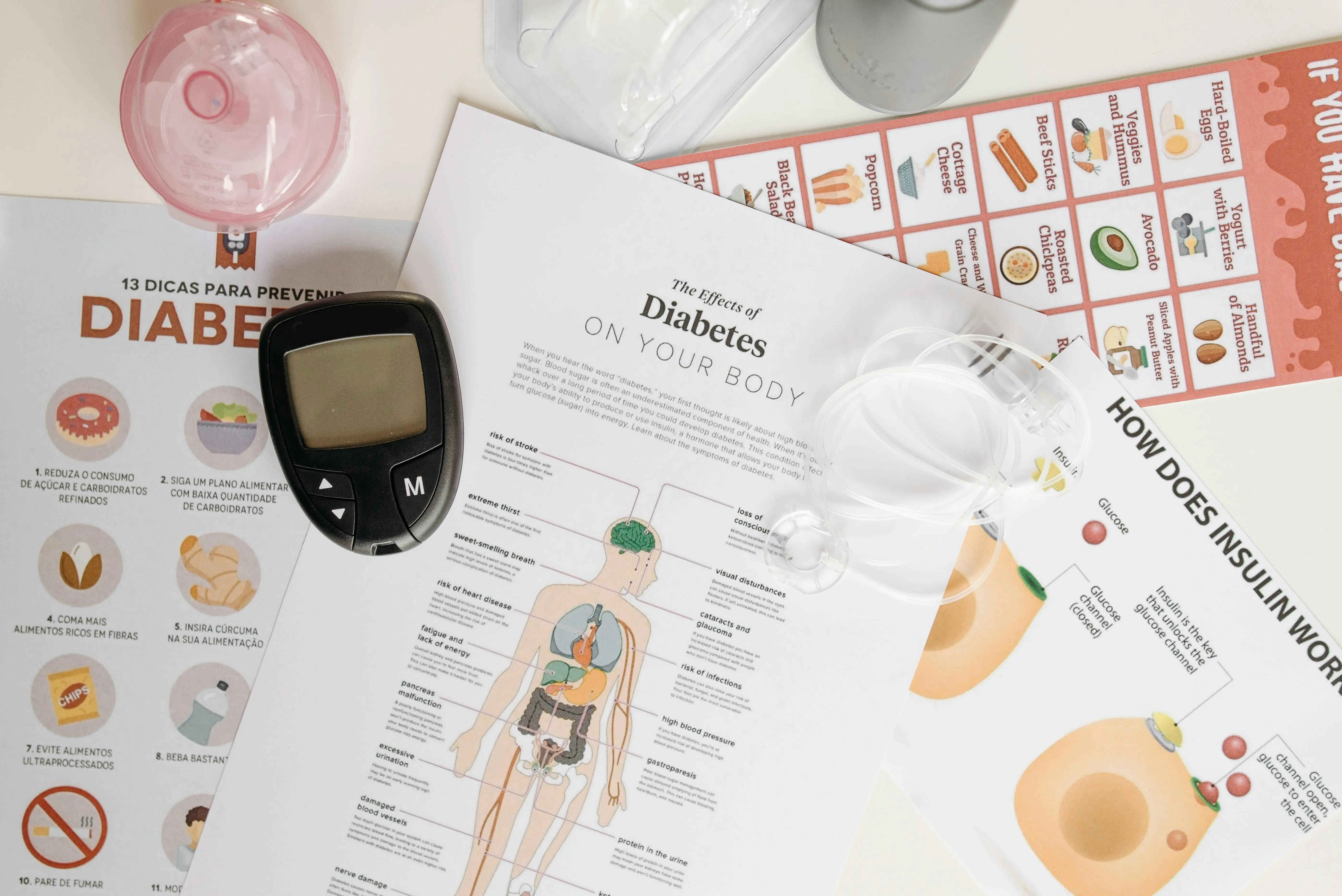
Can diabetes be prevented? And will the disease be cured soon? Diabetologist Dr. Alexandra Dr. Schoeneich on scientific breakthroughs – and which therapies are already changing the lives of 11 million Germans today.
PMC Redaktion
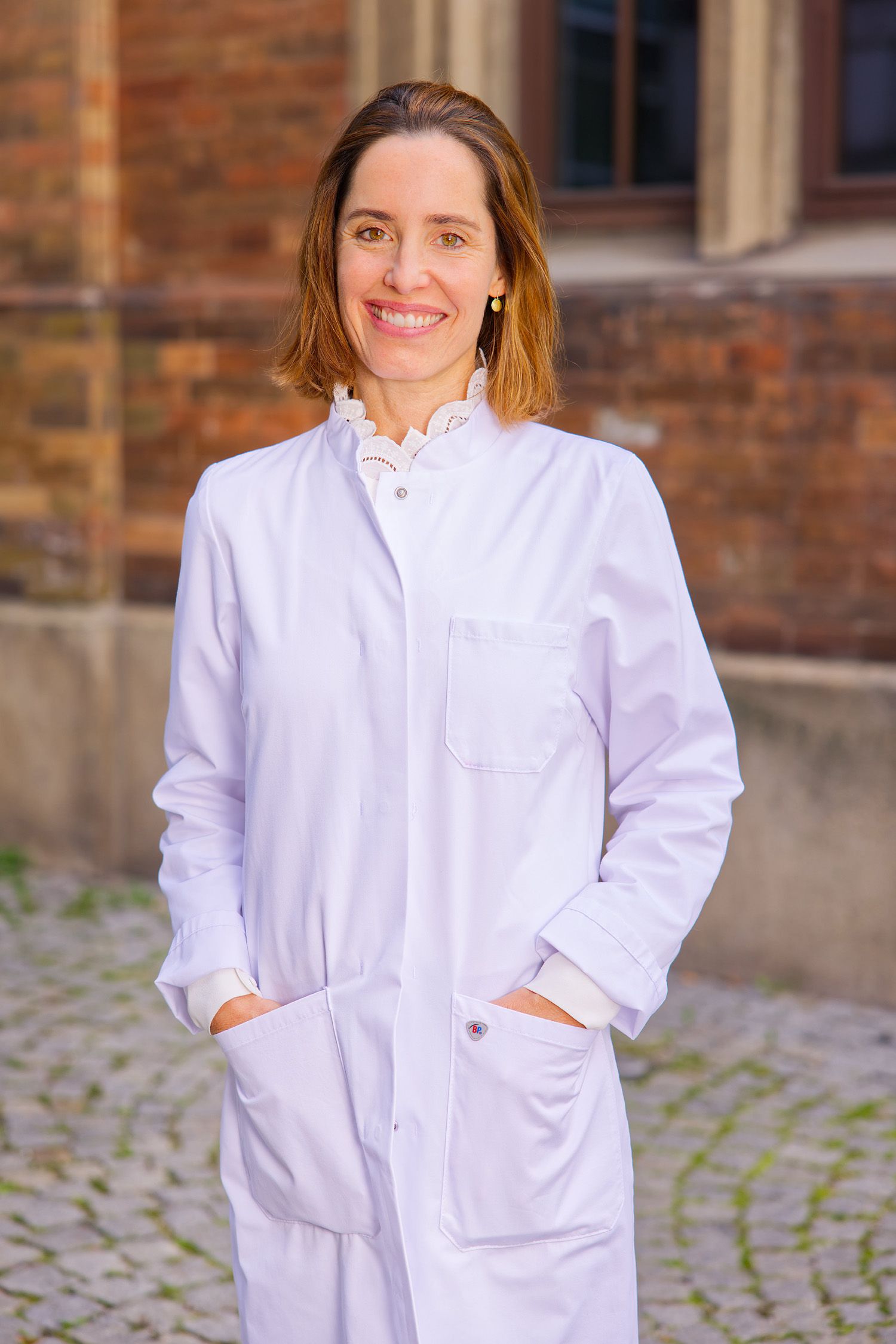
An interview with
Dr. med. Alexandra Schoeneich