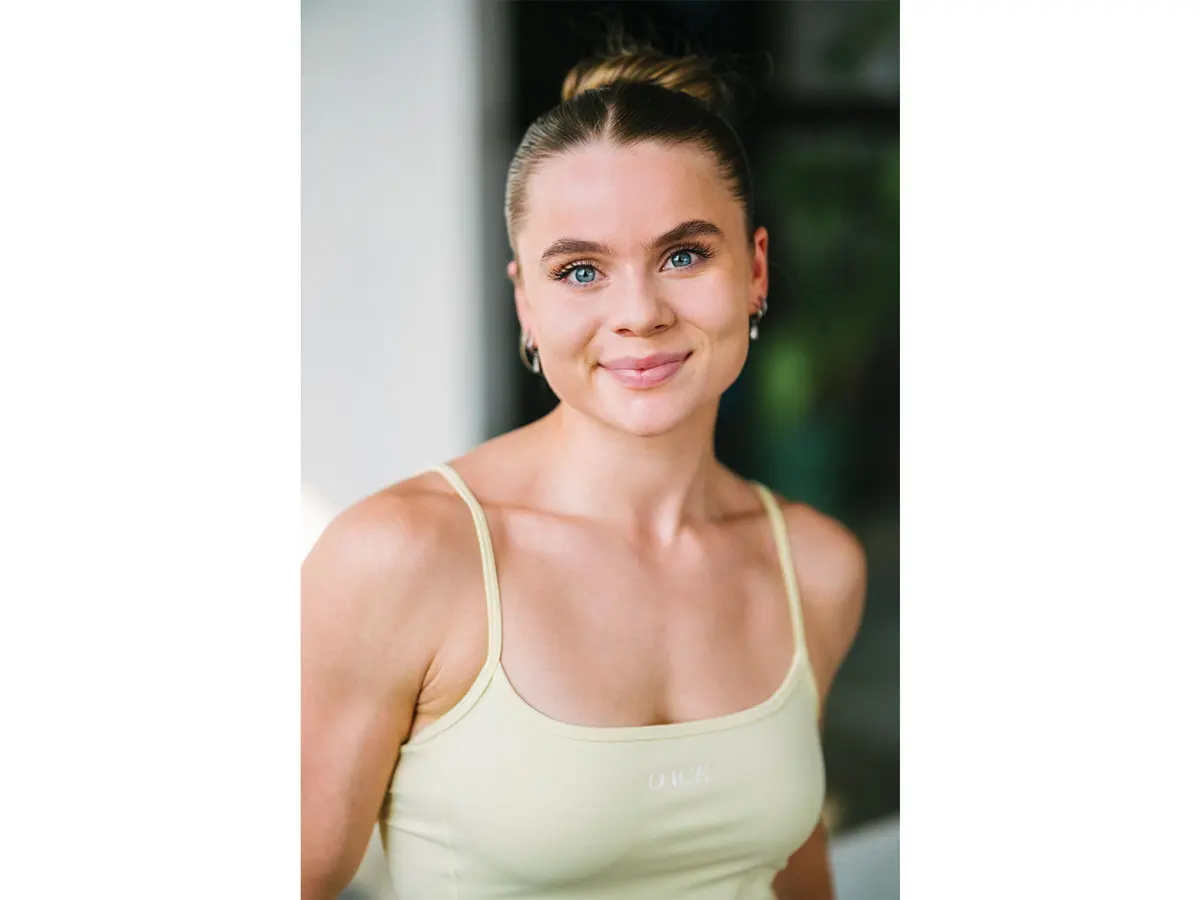
Fitness often appears on social media as a project for perfectionists: strict diet plans, daily workouts, and an ideal body that seems hardly attainable. Jessica Bock wants to change exactly this image. The fitness influencer reaches hundreds of thousands on social media – and conveys training as something that fits into a normal everyday life. A message particularly important to her: Women should not be afraid of strength training.
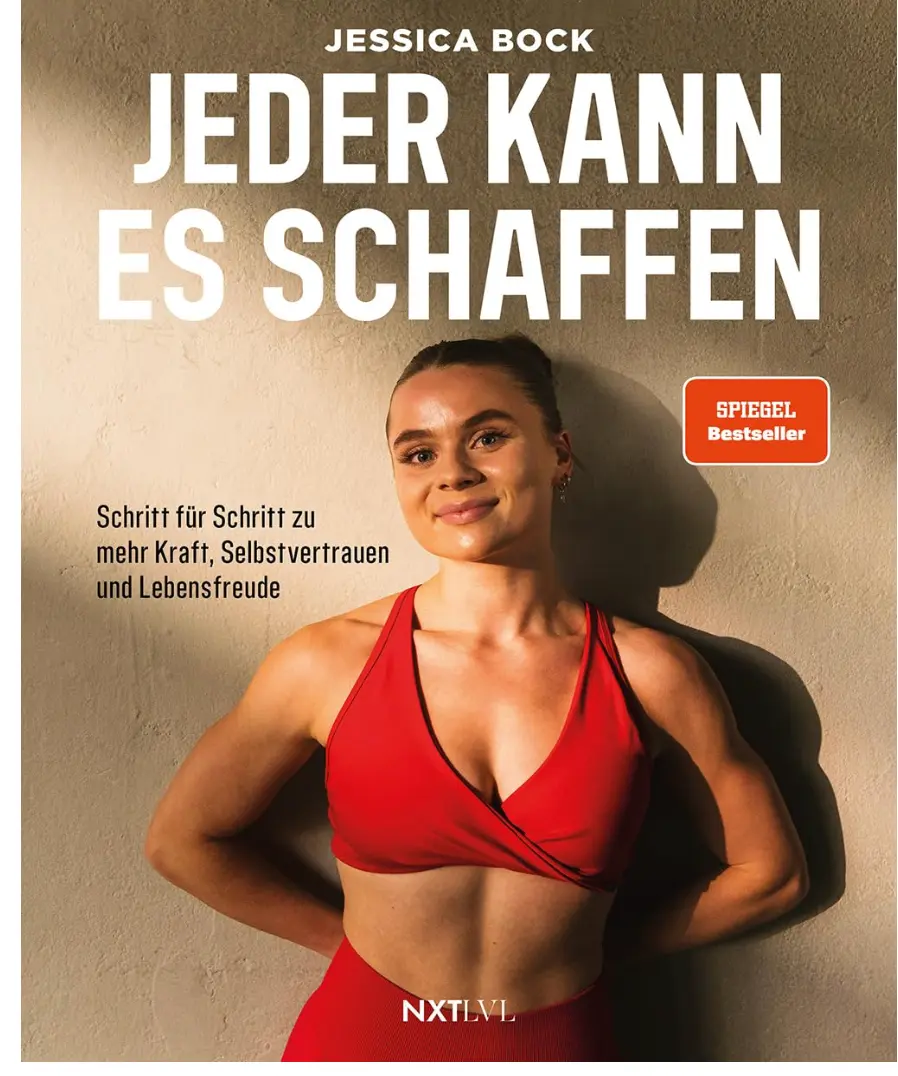
With her first book "Anyone can achieve it" (Next Level Verlag), she wants to show that a healthier lifestyle doesn't start with extreme diets or complicated workout plans, but with small, realistic steps. In the interview, she talks about her motivation to write her book, her path out of an eating disorder – and why long-term routines are more important than short-term motivation.
Why Jessica Bock encourages women to strength train
What was your motivation to write "Anyone can achieve it"?
I never even remotely thought about writing a book one day. But my message, which I want to emphasize to everyone, is: It is really never too late to start exercising – it is absolutely the best medicine and I have set myself a big goal: to motivate as many people as possible to lead a healthier lifestyle and to help them.
In 2024, I opened an email. It was from a publisher asking if I would be interested in writing a training book with them. Leo (my friend) was immediately enthusiastic – I was more unsure and didn’t believe I could do something like that at all.
After an initial positive phone call with the publisher, they sent us a finished table of contents for my book. I had never dealt with how the creation process of a book works before, so I wasn’t surprised.
However, I became suspicious when I looked at the content that I was supposed to publish under my name: A large chapter was supposed to be about why women should train differently than men and especially adapt their training to the different phases of the cycle.
From then on, the book project was over for me – I know what a great responsibility I have, and it is extremely important to me that the things I tell are also correct.
Women should do strength training just like men. Just because a woman has a cycle doesn’t mean she must have symptoms that affect her training. The cycle is not only different from woman to woman but can also vary from cycle to cycle for each individual woman.
If you feel good, then train like that – if you don’t feel good, no matter why, then don’t train or train differently.
After I canceled the book with the publisher, I felt an even greater urge to write a book, but not one dictated to me, rather the exact book that the Jessi from 8 years ago would have needed.
From this, "Anyone Can Do It – Step by Step to More Strength, Confidence, and Joy of Life" was born.
Jessica Bock on Motivation: How to Start Living a Healthier Life
What tricks can you use to leave your comfort zone and lead a healthier life with more exercise?
That's exactly what the prologue 'Get the Ball Rolling' is about. Motivation is actually not crucial and not something you should rely on, because then you'll probably never start exercising. It's the habit. Exercise eventually becomes as normal as brushing your teeth. But until then, you have to persevere and get your ball rolling.
Call a gym near you right now and schedule a trial session - and just like that, the first step is done. I promise you, after your first workout, you'll want to train again. It's like unloading the dishwasher: the first cup is annoying, but after that, it happens almost automatically.
Make it easy and as attractive as possible! If the gym is too far away, start at home: with YouTube, resistance bands, or your own body weight. The first step is the hardest, but it gets easier, promise.
And: Schedule fixed appointments. If training is scheduled for Tuesday at 5 p.m., then it's like a business appointment and you don't question it anymore. After all, you wouldn't cancel a meeting at work just because you're not in the mood.
Strength Training for Women: Why Weights Are So Important
Strength Training or Endurance Training - Which is Better?
The amount of information we get on the internet about training and nutrition is incredibly overwhelming for quite a few people. There are far more tips than we could ever implement. I felt the same way—I didn't really know what was actually important, how to train, let alone how to eat.
For a long time, I thought going to the gym was the only way to train properly. And many people get caught up in small details like: Cardio or strength training? At home or in the gym? Do I have to train like my favorite bodybuilder? Or like the Pilates girls?
Training is about much more fundamental things, namely doing anything at all—any movement is better than staying seated, even if it's just half an hour of walking more per week.
And it should definitely be called cardio AND strength training. We build muscles and strength through strength training. Strength training simply means that you let your muscles work against resistance. This resistance can be gym machines, dumbbells, barbells, kettlebells, or resistance bands at home, but also your own body weight.
And our muscles grow when we do regular resistance training with progressive overload, i.e., with more and more weight and/or repetitions. Strength training is incredibly flexible: You can go to the gym—you can also build muscles at home excellently or combine both.
The gym has the advantage that it's easier to increase weights there. At home, however, you can start training excellently with resistance bands and gradually get some weights in the form of dumbbells and/or barbells.
And you complete the strength training as often per week as suits you, even if it's "only" once—that's more than not at all.
I think you already notice now that there are many ways to Rome. The most important thing here is: Stick with it. Those who quit demotivated after a few months without significant successes will miss out on results they could never have dreamed of.
Also: Training with weights FROM NOW ON! No matter how old you are!
But: "Only" muscles are not enough for us, we also want to train our cardiovascular system. We do this with cardio training. And it can be much more than just pedaling a little on the stepper in the gym. And yes, even bodybuilders do cardio training.
The WHO recommends that adults engage in at least 150 minutes of vigorous physical activity per week or 300 minutes of moderate activity. In addition, strength training twice a week – and that into old age. We want, if possible, to do sports all our lives.
What is always important to me to emphasize is that really even a little movement is better than none and every extra minute counts.
Eating disorder and bulimia: How Jessica Bock found a way out of the vicious cycle
You suffered from an eating disorder, bulimia – how did you find a way out of the vicious cycle? What helped you?
I have been dissatisfied with my body for as long as I can remember. In the schoolyard, I was called "the piglet" and I was not an overweight child – I really only had a few more kilos of fat than the other children and they let me know anyway that this made me different and somehow less valuable.
I did athletics throughout my childhood and always looked up to the big girls – they had long legs, a toned belly and at 13, I asked myself why I didn’t look like the grown-up girls.
I still remember very well an athletics competition. We stood at the starting blocks and I heard the thinner girls from another club whispering and saying that the fat one there, meaning me, couldn't run that fast.
When I was about 14, I first wanted to have a six-pack because the big fast girls in athletics, whom I looked up to, all had one - for me, it was simply the epitome of athleticism.
But when I eventually had Instagram, I saw all these well-toned, muscular, but very defined women and wanted exactly that: a six-pack, a big butt, toned legs.
I started doing these typical six-pack 10-minute home workouts because that's the first thing that pops up when you search for 'six-pack' on YouTube, and at some point, I came across the phrase 'abs are made in the kitchen.'
And so, in short, began a years-long vicious cycle of restrictive eating and binge eating that led to me losing my period for 6 months.
I was practically addicted to finally getting this six-pack, that I risked my health for it - simply because I was so desperately trying to achieve a body that I couldn't achieve at all.
I roughly knew that I had to be in a calorie deficit to lose weight. The calorie app suggested 1400 calories - at that time I hardly knew better and thought that was right.
But as a physically active woman, I quickly got cravings and binges, which ultimately ended in a vicious cycle of binge eating and subsequent vomiting - simply because I didn't know that the calories were far too few.
Therefore, here is the appeal to you: Do not blindly trust a single calorie tracker and engage with the basic knowledge of nutrition.
The longer the vicious circle described above continued, the clearer it became to me that I had a serious problem. I still remember exactly the pathological behavioral patterns that I displayed at that time. It was worst whenever my family left the house or went to sleep.
Then it was as if a switch had been flipped in my head. Suddenly, I couldn't resist any food, and everything I otherwise forbade myself ended up in my mouth bit by bit.
And every time I devoured several thousand calories in this way in a short period, I saw only one way out to punish myself: the toilet. By then, I was quite aware that this behavior was pathological.
The turn of the year 2021/2022 became a turning point in my life. For years, I had resolved to lose weight, even trained with weights for two years without visible change. Frustrated, I decided on December 31, 2021, to radically change my approach: Instead of eating even less, I wanted to consciously eat more and deliberately build muscles. I deleted my calorie tracker and stopped controlling every meal.
For the first time, I engaged intensively with sports and nutrition and understood that progress requires more than a lot of training and eating as little as possible: sufficient calories, enough protein, and recovery. This realization hit me hard – I had done many things wrong – but it motivated me to start anew.
In the spring of 2022, I gained about seven kilos within a few months, which initially unsettled me. But in training, I quickly felt the positive effects: more energy, better performance, and new personal bests.
More importantly, however, I lost my fear of eating. I realized that proper nutrition supports my progress – and finally broke the vicious circle that had previously determined me.
Feeling good in your own body: Why strength training changed her life
How did you manage to feel comfortable in your body again?
It was a process that took years. But the positive body feeling didn't arise because I tried to be as thin as possible, but because I focus on getting stronger.
I don't try to eat as little as possible; I try to eat enough to have energy during training. I don't train on an empty stomach in the morning to lose fat; I eat carbohydrates before training because I want to perform better. I don’t ignore my rest days; I appreciate my body and give it time to recover from training.
I don't do endurance training to burn as many calories as possible, but to do something good for my health. I don't train just for aesthetic reasons; I train my muscles, endurance, and flexibility with the goal of being as fit as possible.
When you stop wanting to change only your appearance and start listening to your body—wanting to do good for it—then the results and the fun will follow. Don't despair if it doesn't work right away—it takes time, and it’s okay to take time—no one was successful from the start and could do everything perfectly right away.
Nutrition instead of renunciation: This is how Jessica Bock eats today
How do you eat today?
When I started weight training, I picked up that proteins are important for muscle building, and from then on I only paid attention to eating enough protein: After my athletics training, I had delicious low-fat quark with chocolate protein.
And slowly but surely, I developed a fear of carbohydrates and especially fat – I wanted anything but to gain weight. Today, I would describe my diet as “Eat the rainbow.” That means: Make your plate as colorful and diverse as possible.
Because of my history, I would define the rainbow today a bit more broadly than “Make your plate as colorful and diverse as possible”:
1. Eat carbohydrates
2. Fats
3. and proteins
Pay attention to fiber.
Sleep better: Jessica's most important tips for more recovery
What can you do to sleep better?
First of all: Sleep disorders should be clarified with a doctor.
And remember: Let yourself be inspired by the tips, but don't feel pressured, because everyone has a different daily routine and thus different conditions – especially moms, dads, or shift workers.
Humans spend about a third of their lives asleep – so it can't be completely unimportant. You only realize how necessary sleep is when you're missing it. It was actually only last year that I started to delve into my sleep.
I always thought: sleep at midnight, wake up at 7 – that should work. Then I'd have 7 hours of sleep. Then I started tracking my sleep and noticed that the time I spend in bed, in this case 7 hours, isn't equivalent to the hours actually slept – which were more like 6 hours.
We need time in the evening to fall asleep, and at night we wake up occasionally, which we might not even notice. And that's where I first started:
Plan more time for sleep:
Instead of going to sleep at midnight or later, I started aiming for 10 PM to spend more time sleeping. (And it didn't work perfectly right away.)
What has incredibly helped me to get out of bed more easily in the morning and feel more refreshed are:
Regular sleep and wake-up times:
Ideally, I always go to bed at the same time and get up at the same time.
To have a short time before going to bed to wrap up the day, I have developed a small evening routine:
15 minutes to wind down:
I put my phone away, take my supplements, which have been determined by my doctor based on my blood work. And then I start with a warm shower – there I give my thoughts room to calm down, and thus often avoid the thought carousel in bed.
Prepare the bedroom:
For me, a quiet and dark bedroom is super important. But what is even more important to me is the room temperature. It should be neither too warm nor too cold – for me, 18–20 degrees. If it's too hot or too cold, I wake up extremely often and sleep poorly.
The probably most important routine I have developed is:
The phone is strictly forbidden in the bedroom. I used to always watch YouTube videos in bed or scroll on Instagram. This led to me having strong problems falling asleep because once the distraction was gone, the carousel of thoughts began. My phone is charged at my desk in the office, and I put it there around 9/9:30 PM, and there it stays.
As soon as I lie down in bed and take the book in my hand, my body suddenly becomes tired – and if I'm lucky, I read 3 pages. And that's already my evening routine, but there are a few things I pay attention to a few hours earlier:
– Not caffeine too late
– Avoid late meals
– Avoid late training
The biggest nutrition mistakes when losing weight and building muscle
What mistakes can be made in nutrition?
This is, of course, always individual, but here are my top 5 mistakes:
1. There is no one perfect diet
I took a very long time to understand that nutrition is individual. I saw a full day of eating from an influencer whose body I liked and thought I had to eat exactly like that to achieve it.
But what I didn’t consider: What is her genetics? How does she train? And most importantly: How long did it take her to find a diet that suits her?
When it comes to nutrition, it’s really about: experimenting, being open to new things, and finding your individual diet – this can take a while.
So, if you’re mainly watching full days of eating or nutrition tips on social media – like this video, which is based on personal experiences – see it as inspiration, try out the recipes, but never blindly adapt any calorie amounts or tips from other people.
2. Counting calories
At first I thought, “From now on I have to count calories for the rest of my life, otherwise I’ll gain weight.”
Don't get me wrong: tracking calories is not positive or negative per se – it also depends on how you deal with it.
I believe that the most important thing about tracking calories is that you also stop doing it again.
However, I also think that tracking makes sense especially when you have no idea about nutrition. Many over- or underestimate the amount of calories they consume. Tracking helps to get a sense of how many calories you consume throughout the day and what calories and nutrients a food has.
Whether you want to gain or lose weight, having tracked at some point can be very helpful. But not for a few years, just for a few months at most.
In the worst-case scenario, you become completely dependent on this app and normal eating is no longer an option. It's about creating awareness, not dependency.
Therefore, here is my appeal to you: Do not blindly trust a single calorie tracker and engage with the basics of nutrition.
You don’t need to study nutritional medicine for this, but: Use Google or AI. You just need to roughly understand what our body needs macronutrients for and should roughly know in which foods you find them. To know how to prepare them deliciously, here is my cooking channel.
Nutrition is actually simple:
1. Do not eat too many or too few calories
2. Consume enough protein and essential fats
3. Ensure adequate intake of vitamins and minerals
4. Avoid pathogens and toxins (e.g., mercury, lead)
Beyond that, we know relatively little with absolute certainty.
What really helped me was a simple rule:
Eat the rainbow.
This means: Make your plate as colorful and diverse as possible.
3. No prohibitions
Why I always say that one should not have prohibitions: Dr. Eric Helms (who has done a lot of research on eating behavior) is against strict eating bans. He focuses on flexible dieting where no foods are taboo as long as calorie and nutrient balance is met. His approach emphasizes protein, micronutrients, and long-term sustainable nutrition. Too much restriction can lead to cravings and poorer diet adherence – that's why flexibility is key.
4. Inflexibility
Inflexibility will most likely cost you your success in nutrition and training.
Does your training plan sometimes feel like a straitjacket? Can't eat out with friends anymore? What starts with discipline often ends in robot mode. Humans are not machines.
The secret to long-term success in training and nutrition? Flexibility.
– Give yourself the freedom to enjoy parties, family gatherings, and such.
– You don't have to track your calories down to the exact number.
– You don't have to eat at the same time every day.
– And you don't need to meet your macros down to the gram.
The same applies to training:
– Your body doesn't know that Monday is usually your leg day – if it doesn't fit today, make it up another time.
– Exercise occupied? Switching is okay.
– If you don't feel as strong today as you thought, use less weight and do more reps – as long as you train intensely, the results will be the same.
Too much structure makes you rigid: You can only eat exactly the same thing, and eating out is no longer an option. But too much flexibility makes you aimless: Never eating proteins will ensure your body lacks building materials – find your sweet spot.
The combination of structure and flexibility will ensure sustainable success. If you want to be successful in the long run – train and eat smart, not compulsively.
These training mistakes are made by many beginners in sports
And what mistakes can one also make in sports?
A common mistake is thinking you have to choose between cardio and strength training. For most recreational athletes, a combination of both is ideal, as strength training builds muscles and cardio improves cardiovascular health. The important thing is to pay attention to recovery and plan the training sensibly.
Another mistake is skipping rest days. Muscles do not grow during training but during recovery. Those who do not give their body a break risk overloading and lack of progress.
The misunderstanding "Abs are made in the kitchen" can also be problematic. While abs become more visible with a low body fat percentage, they need to be trained just like other muscles. Eating too little is more detrimental to muscle building and can lead to unhealthy eating behaviors.
The “No pain, no gain” mindset is also critical. Intensity is important, but pain is not proof of progress. Constantly pushing to the limit increases the risk of injury and promotes an unhealthy all-or-nothing mindset.
Finally, sleep is often underestimated. Too little sleep worsens recovery, performance, and even body composition. Those who train hard should get enough sleep for optimal results.
Healthy routines in everyday life: How to make exercise and nutrition feasible in the long term
Which routines help to exercise more and eat healthier?
The reason many diets fail is often that drastic changes are made in the short term that cannot be sustained in the long term – as I experienced myself back then. Extreme restrictions may work for a few weeks, but they usually don't fit into everyday life permanently.
Instead of a short-term diet, your goal should be to make your lifestyle healthier in the long term. It is therefore useful to develop routines that have a positive impact on your health and that truly fit you and your everyday life. Here are some approaches you can choose from that appeal to you.
An important step is to prioritize nutrient-rich and mostly lower-calorie foods. Fruits and vegetables are always a good choice. Instead of trying to completely eliminate certain foods, it may be more helpful to actively add healthy foods.
Whole grains and legumes, for example, provide valuable fiber and protein, ensure good nutrient supply, and have a satiating effect.
You could opt for leaner varieties when buying meat to save calories. A fruit and vegetable snack platter at work can lead you to eat more of it automatically. Instead of drastically reducing portion sizes, you can slightly reduce calorie-dense foods and add more vegetables and fruits.
If you don't particularly like vegetables, you can "hide" them by roasting tomatoes, bell peppers, garlic, and onions in the oven and puréeing them into a sauce for your pasta.
Another simple lever is to reduce sugary drinks. Juices, smoothies, milkshakes, soft drinks, or heavily sweetened coffee specialties provide a lot of energy but hardly fill you up. Replacing liquid calories with water, tea, or low-calorie alternatives is an uncomplicated way to save calories.
Being mindful of fat intake also plays a role. Fat is important for the body but very calorie-dense. Even small amounts provide a lot of energy. Using less oil when cooking, replacing rich sauces with lighter versions, or choosing leaner meats more often can make a big difference.
In addition to diet, your daily movement is also crucial. Many of us spend a large part of the day sitting – in the car, on the train, or at the desk. Here you can start: use a standing desk, integrate a walking pad, take the stairs instead of the elevator, get off one stop earlier, or take a short walk after dinner.
Even walking during phone calls or doing housework increases your daily activity. It doesn't always have to be the gym – every additional activity counts.
An often underestimated factor is sleep. Sleep is the foundation of your health, and lack of sleep can make it significantly harder to lose weight. Take your sleep seriously and prioritize it – treat it as if it were your job to sleep well.
Adequate protein intake is also important – whether you exercise or not. Protein supports your body and also has a satiating effect. If you currently consume little protein, you might try incorporating a protein source into each of the three main meals.
Another helpful point is mindful eating. Those who eat while doing something else – like watching TV or scrolling on their phone – often consume more calories than they actually need. Eating without distractions and at a slower pace helps you better perceive your own feeling of fullness.
Finally, it's worth questioning your own behavior patterns. Many eating habits are learned. For example, if you've gotten used to eating chocolate after dinner every day, your body may signal "hunger" for it just because of this routine. Becoming aware of this allows you to change such habits step by step – for instance, by occasionally replacing them with fruit.
Long-term change does not come from perfection, but from small, sustainable adjustments that fit your life.
Mental Health: What Jessica Bock Does for Her Mental Balance
What do you do for your mental health?
I try to exercise regularly and watch my diet because it benefits me not only physically but also mentally. I consciously avoid comparing myself to unrealistic beauty ideals often shown on social media like Instagram or YouTube – I try to be a good role model for my followers in this regard.
Instead of putting pressure on myself, I focus on my own progress and on doing something good for myself. I also try to avoid content that negatively affects my self-esteem and to appreciate my past successes.