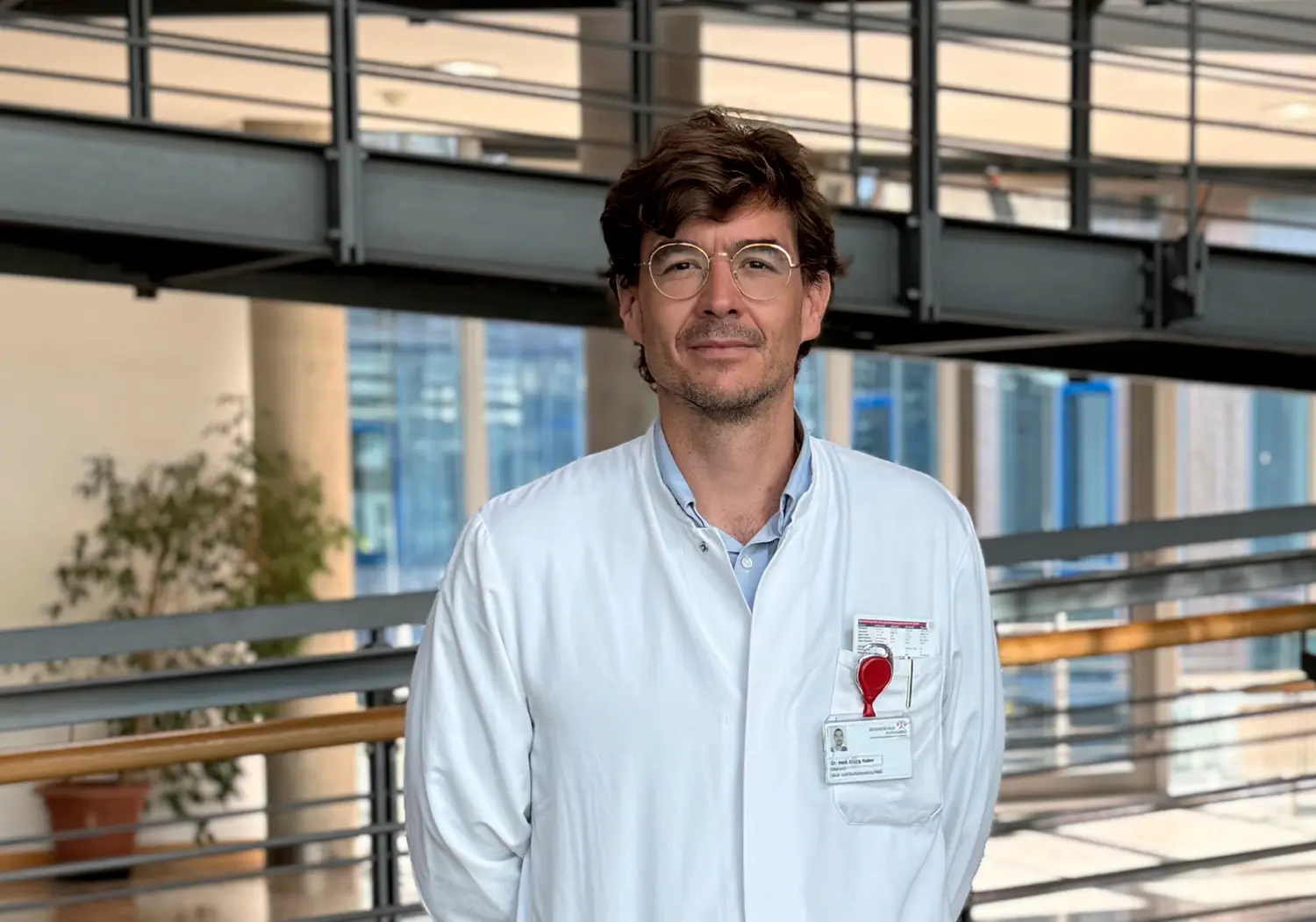
The Art of Rhinoplasty: An Interview with Professor Dr. Johannes Veit
Why surgical experience matters in rhinoplasty, what risks nasal surgery involves, and how natural-looking results can be achieved. Professor Dr. Johannes Veit discusses modern rhinoplasty and individualized aesthetics.
Nose correction is one of the most demanding procedures in plastic and reconstructive facial surgery. The nose is the focal point of the face and defines a person's entire appearance. However, successful rhinoplasty involves far more than aesthetics alone: it must look natural, preserve nasal function, and remain stable over time.
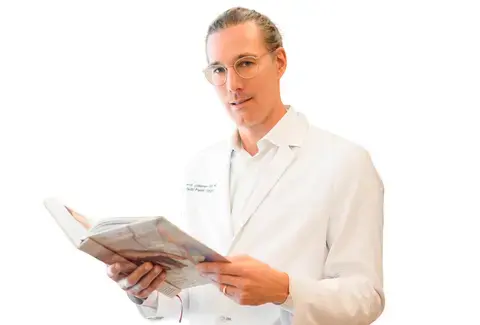
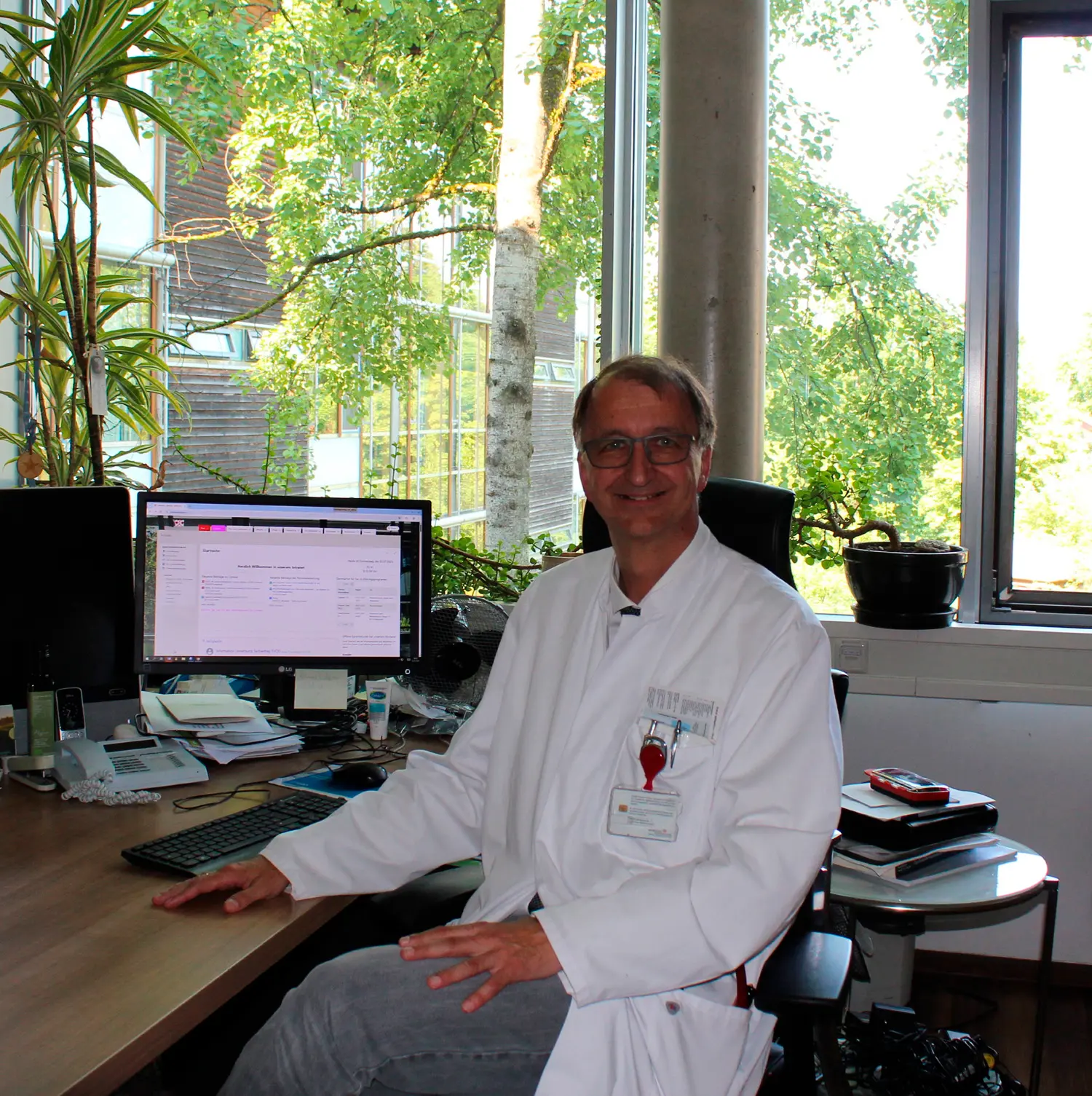
Professor Dr. Johannes Veit specializes in otolaryngology, head and neck surgery, and plastic surgery, with particular expertise in nasal surgery at his Munich practice. In an interview, he discusses why experience is essential in this field, what challenges nasal corrections entail, and why nasal surgeons must continue learning throughout their careers.
Why Nasal Surgery Requires Lifelong Learning
Professor Veit, on your website you write that "nasal surgery means lifelong learning." Why is that particularly true for this field?
The nose is a prominent facial feature visible from every angle—whether in a mirror, in photographs, or during conversations with others. Because of this visibility, it plays an essential role in a person'sidentity. Performing surgery on it carries enormous responsibility.
When I transitioned to private practice as a senior physician after ten years at the clinic, I had already performed several hundred nose surgeries and was confident in my skills. My former boss told me: "Johannes, 1,000 operations are the benchmark." I thought he was exaggerating at the time. Today, after several thousand procedures, I realize he was right.
I've now performed surgery on between 3,000 and 4,000 noses, and I still learn something new with every procedure. I learn from my own results, from patient feedback, and from my colleagues. This learning process never stops. Even the most experienced surgeons tell me they constantly discover new things.
Is that because you're making mistakes, or because patients are unhappy with the results?
It's less about making mistakes than about continuous optimization. Everyoperationoffers new insights. You observe the healing, analyze the results, and refine your technique.
Especially with nasal surgery, there are many details that can be continually refined. It's a dynamic process aimed at continuously improving the result.
Today, results can already be simulated digitally. How realistic are these simulations?
Computer simulations are now part of every detailed consultation. However, they are not intended to predict the final result down to the millimeter.
What's far more important is communicating with the patient. Together, we can discuss questions like: Should the hump be reduced more or less? Should the nasal tip appear slightly more delicate or higher? The simulation helps us ensure we both have the same vision for the desired outcome.
It can also reveal whether a patient's expectations are realistic. If we simulate multiple scenarios and none of them satisfy the patient, it often indicates that surgery cannot actually meet their true expectations.
Which Nose Shapes Are Corrected Most Often
What are the most common wishes patients bring to you?
In most cases, people feel their nose is too large or too prominent. This might be due to a pronounced nasal hump, an oversized nasal tip, or simply a very striking nose overall.
Many people don't want a completely different nose. Rather, they want their nose to blend harmoniously with their facial proportions instead of being the first thing people notice about their face.
Do mostly women come to you?
Yes, women still make up the larger proportion. About 70 to 80 percent of my patients are women.
Furthermore, women typically come much earlier. Many present themselves at 16, 17, or 18 years old, while men often wait until their early to mid-thirties to have the procedure—roughly ten years later. However, I have the impression that men now approach this topic much more consciously than they did a few years ago.
The Greatest Risks of Nose Correction
What are the risks of nasal surgery?
Classic medical risks such as heavier bleeding orpainare generally well manageable.
From my perspective, the greatest risk is that a patient may not identify with their new nose. If the nose looks artificial or no longer suits the face, it can be distressing. Nobody wants others to immediately notice that something has been done.
Another crucial consideration isnasal function. A successful nasal correction must not impair breathing. In fact, if a patient already has restricted nasal airflow, we aim to improve it at the same time.
Which procedures are considered technically particularly difficult?
Nasal correction involves many individual surgical steps. Ultimately, the overall result must be harmonious—perfecting individual areas is not sufficient if the overall appearance isn't right.
The nasal tip presents a particular challenge. It must become smaller and more refined while remaining permanently stable. For experienced surgeons, this is especially difficult when dealing with very large nasal tips.
Nostril reduction is also technically very demanding. Achieving perfect symmetry and keeping scars inconspicuous are both critical to the procedure's success.
Surgical Duration and Healing Time
How long does a nasal operation take?
Of course, that always depends on the specific findings. For me, a standard primary nasal correction typically takes about 90 minutes on average. More complex procedures can take up to two hours. Some of my colleagues need two to three hours for comparable procedures, and that's completely fine.
Ultimately, what matters is not speed, but the result. I take exactly as much time as needed.
Was there a particular case in your career that really challenged you?
Such cases arise frequently. Recently, I treated a patient who had already undergone three previous operations. There was a problem at the nasal tip that absolutely needed to be addressed.
I ended up spending three and a half hours on that one spot. I even cancelled my entire office hours because I didn't want to stop until the result was truly right. In such moments, you have to stay calm and constantly focus on what matters most: delivering the best possible result for the patient.
The second major challenge involves the patients themselves.Patients seeking nasal surgeryare considered particularly demanding in plastic surgery because the nose occupies a central position on the face. It must appear harmonious from every angle—front, side, and below.
Additionally, some patients become intensely preoccupied with their nose. In certain cases, this stems from a distorted body image. These patients often cannot be permanently satisfied by surgery. For this reason, it's important to listen carefully during the consultation and, when necessary, advise against pursuing surgery.
Working with patients who have undergone multiple previous surgeries probably requires considerable sensitivity.
Absolutely. If a patient has already undergone multiple nasal surgeries and wants only minimal changes, as a surgeon you need to be extremely careful. Sometimes another operation simply isn't advisable, or it could even make things worse.
How much time off work do you need after nasal surgery?
On average, you should plan for about two weeks before you're presentable in society again. Some patients recover faster—ten days may be sufficient for them. However, it can also take three to four weeks if, for example, bruising persists longer.
Interestingly, age plays a major role. Younger patients typically heal much faster. From around age 40, regeneration takes noticeably longer, and in older patients, swelling and bruises often remain visible for extended periods.
However, you need patience until the nose shows its final result. Depending on the initial findings, it can take up to a year, sometimes even up to two years.
How severe is the pain after the operation?
That varies widely. Some patients don't need any painkillers at all. Most take mild medications like ibuprofen for two or three days.
However, a smaller portion report more severepain. Pain perception varies greatly from person to person.
Can you lose your sense of smell after nasal surgery?
Many people wonder whether nasal surgery can affect their sense of smell.
Unfortunately, there are no hundred percent guarantees in medicine. Basically, any operation can carry risks.
However, the risk of damaging the olfactory nerve during rhinoplasty is very low, since the nerve is located several centimeters away from the surgical area. The risk falls in the per mille range.
Still, it cannot be entirely ruled out. If the sense of smell were actually lost, it would represent a significant reduction in quality of life for those affected.
Many people have experienced this sensation since the coronavirus pandemic. In reality, we perceive taste and smell together. When the sense of smell is lost, only the basic tastes remain: sweet, salty, sour, bitter, andumami. The actual aroma of the food is completely lost.
That's why losing the sense of smell is often deeply distressing for those affected—even though this risk is fortunately extremely rare with nasal correction.
What are the current trends in nasal correction?
Do nasal corrections follow certain fashion or cosmetic trends?
Yes, absolutely. For instance, there's currently a trend toward extremely upturned nasal tips—noses that point sharply upward. These are often referred to as the "Barbie nose" or the "Istanbul nose."
This shape often looks quite artificial. It might appeal to some people in their early twenties, but preferences tend to change over time. The problem is that correcting such a nose later is technically extremely difficult. Often you need cartilage from the rib or the ear.
I personally prefernatural-looking results. Most people don't want a trendy nose anyway—they want something smaller, more delicate, and harmonious that fits perfectly into their face. Finding that exact balance between naturalness and aesthetic improvement is where the real artistry lies.
Why Professor Veit Specialized in Nasal Surgery
You could have specialized in many areas of plastic facial surgery. Why did you choose the nose specifically?
That actually developed over many years. I started in general surgery and later transitioned to otolaryngology, where I performed many complex operations, including reconstructive and microsurgical procedures.
Over the years, more and more nasal correction procedures became available. At the same time, I noticed that many of my colleagues tended to avoid this field. I, however, particularly enjoyed the combination of technically demanding surgery and aesthetic sensitivity.
A nasal correction isn't merely a technical skill—it's also an art form. You need to understand proportions and develop an intuition for what complements a face. This combination is exactly what fascinated me.
Over time, word spreads. More and more patients come for nasal corrections, and eventually you're automatically perceived as a specialist. That's how this focus developed naturally.
Is there such a thing as the perfect nose?
What makes a perfect nose for you? Does such a thing even exist?
I don't believe there is one perfect nose. Of course, there are aesthetic proportions like the golden ratio that can serve as a guide. But ultimately, every face is unique.
The nose must always be harmonized with the forehead, lips, chin, and overall facial proportions. That's why my results don't all look the same.
I customize each nose for the individual patient. This isn't done through artificial intelligence, but rather through the experience and trained eye I've developed over many years.
My goal is always to create a nose that looks as if it has always belonged to this face perfectly.
Why Revision Surgeries Are Particularly Demanding
Much of your work involves revision surgeries on noses that have already been operated on. What makes these procedures so challenging?
Many ENT doctors and plastic surgeons offer nasal corrections. However, in my experience, truly mastering this field safely requires a very large number of operations and an extended learning curve.
A common mistake involves the nasal tip. To make it appear smaller, surgeons sometimes remove too much cartilage. Immediately after surgery, the results look good initially.
However, over time, the nose may lack the necessary stability. The nasal tip can droop or collapse, and breathing often deteriorates as well. This is precisely how those unnatural results develop—the kind many people associate with over-operated noses.
These revision procedures are among the most demanding operations I perform. I often need to use cartilage from the ear or even from a rib to restore the nose's structural stability.
Interestingly, the nose doesn't necessarily become larger as a result. In fact, it often looks more delicate and defined afterward—but now on a permanently stable foundation.
A nose should not only look good today, but also 30 or 40 years from now.
When does insurance cover the costs?
Will insurance cover nasal surgery?
Purely cosmetic nasal corrections are generally not covered.
The situation is different if there are medical reasons—for example, significantly restricted nasal breathing or a malposition from an accident. In such cases, statutory or private health insurance covers at least part of the costs.
However, in the highly specialized private medical sector, these reimbursements are often insufficient to cover all treatment costs.
What costs should patients expect?
That depends greatly on the extent of the procedure and the surgeon's experience.
Costs vary dramatically around the world. In the United States, primary nasal correction typically costs around $25,000, while particularly complex revision surgeries performed by renowned specialists can reach up to $50,000.
Germany offers significantly lower costs compared to international standards. Depending on the city, clinic, and complexity of the procedure, costs typically fall in the mid-four-digit to low five-digit range.
"No one should be able to tell that the nose was operated on"
Finally, as a nasal surgeon, what does your work stand for personally? Is there such a thing as a typical "Veit nose"?
No, there is deliberately no stereotypical "Veit nose".
I want to achieve the best possible result from every starting point while preserving each person's individuality. My goal isn't to make all noses look identical, but to ensure each nose harmonizes perfectly with that particular face.
The best part for me is when patients return for a check-up a year after surgery and tell me that nobody could tell they'd had an operation.
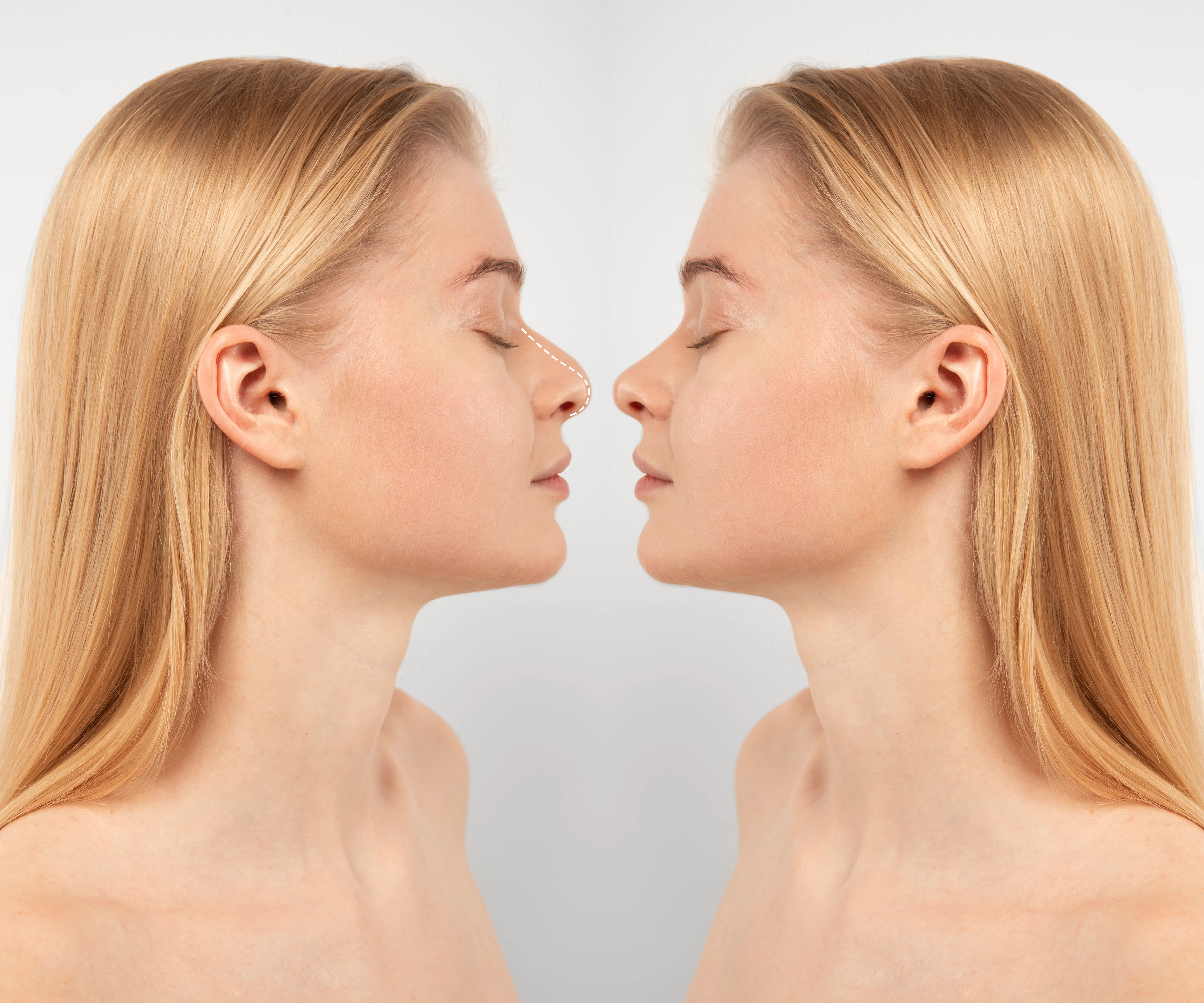
Before-and-after photos often show a dramatic difference. In real life, though, the change is barely noticeable. Friends and colleagues might say things like, "You look more rested," or "Did you just get back from vacation?" That's honestly the best compliment I could ask for.
A successful nasal correction looks natural, not operated on. It fits harmoniously with the face and enhances the person's personality rather than altering it.