© Magnific
August 3, 2026
Prof. Dominik Pförringer
Biohacking, jaw training and even self-inflicted facial fractures: the quest for the perfect body is becoming increasingly extreme. Prof. Dominik Pförringer explores where self-improvement ends and self-harm begins.

By
Univ.-Prof. Dr. med. Dominik Pförringer
Humanity has been chasing prevailing beauty ideals for centuries. From corset lacing to chronic starvation, countless methods have been tried — and, thankfully, many have been abandoned. Today, in certain circles, the desire to optimize, idealize, and perfect oneself knows almost no bounds.
Everything gets measured, analyzed, and optimized. Then along come a handful of quick-thinking individuals — how sound their medical expertise actually is, others may decide — ready to improve it all, primarily the economy. But whose economy, exactly?
Through dietary supplements, through wearables, and through a great deal that distracts from what truly matters, people keep tweaking themselves. Yes, you read that correctly: distracts from what truly matters — from the human being and their mind, from clear common sense, from character — reducing a person to nothing more than a body to be tuned like a machine.
And as so often, Einstein helps us put things in perspective: "Two things are infinite: the universe and human stupidity; and I'm not sure about the universe" — and so it goes: there is always room for more foolishness, and some (few) venture well beyond any reasonable limit.
Facial bones are deliberately broken — on one's own initiative — to provoke swelling and sculpt sharper angles. Yes, you read that correctly: some people intentionally fracture the bones of their own face. This surpasses the shortsightedness of, say, a tattoo's risk assessment in more ways than one.
It seems a small circle of misguided individuals has concluded that it is not the world that needs improving, but the angle from which they are photographed. It is about maximizing self-presentation — about the visual impression that the performance-driven, aesthetics-obsessed, self-centered individual wishes to leave behind.
Various platforms provide a stage for this self-optimization mania, and many people turn it into their own — predictably ego-driven — soap opera. Everyone is free to shape and alter their body according to their own wishes and means.
Trying to heal oneself and one's psyche by deliberately causing injury is, at best, eccentric. Helmut Gansterer's book "Geist schlägt Geld" may serve as a rock amid the surf — a wake-up call to reconsider who wants to measure themselves, in what dimension, and on which terms.
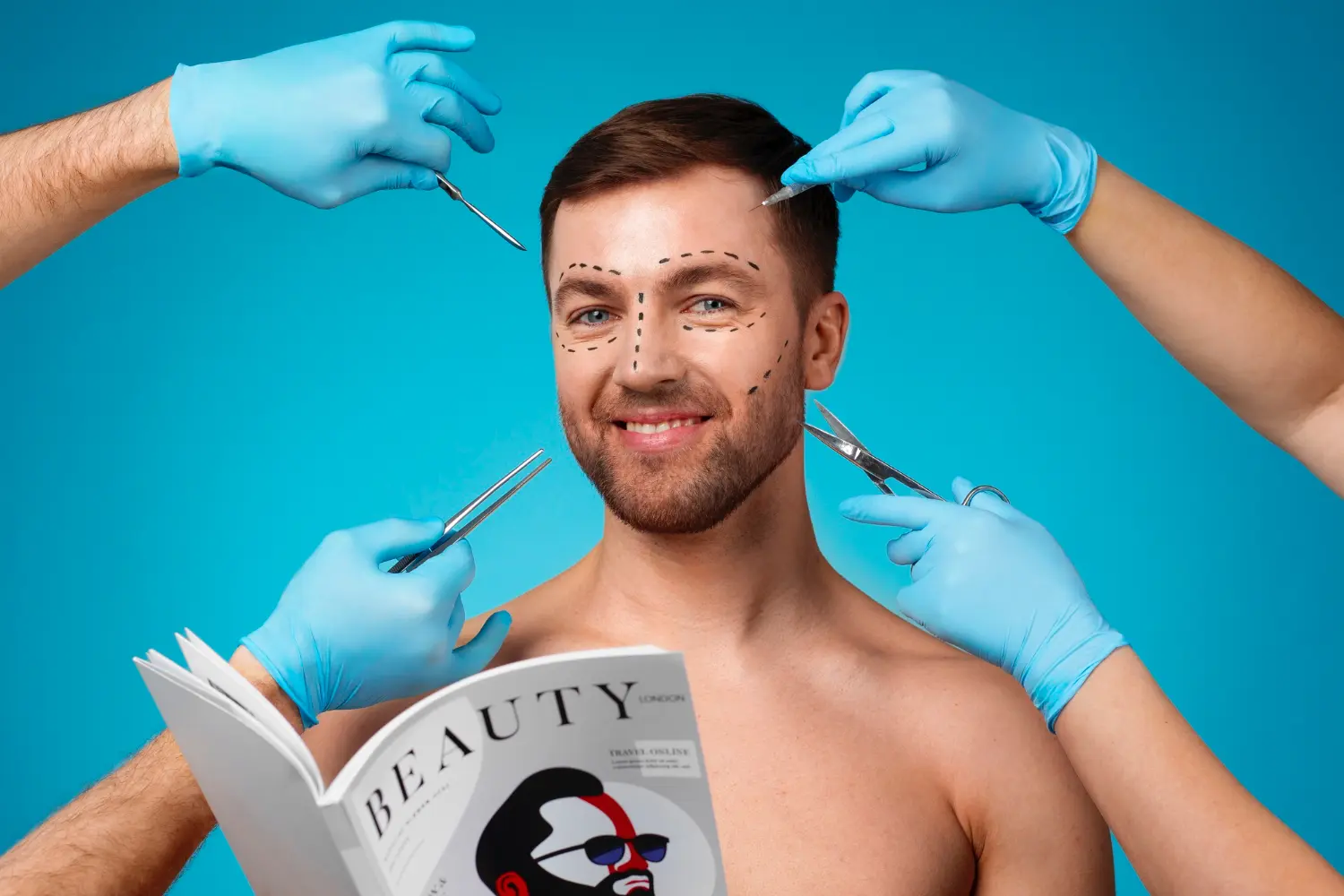
There are dietary supplements being consumed without any oversight — substances whose benefit to an immunologically healthy person eating a balanced diet is, to say the least, highly questionable. Unnaturally hard objects are chewed to strengthen the jaw muscles. If you find this difficult to understand or relate to, you are not alone.
I have apparently fallen out of step with the times and can no longer follow these trends. Sport is for everyone to evaluate on their own terms; style, fashion, and elegance are open to each person's individual interpretation. Medicine's supreme maxim, "primum non nocere" — first, do no harm — applies above all to the relationship between doctor and patient.
But deliberately injuring oneself for a questionable result is, from a medical standpoint, something to be viewed with serious concern. Optimizing the body may be a worthy goal, yet one should never lose sight of the potential side effects — which are far from trivial, particularly when injury is involved.
Turning to Juvenal from the second century, he wrote, rightly: Orandum est ut sit mens sana in corpore sano. "One should pray for a sound mind in a sound body." Whether a shattered facial bone says anything about the state of the skull's contents — I leave that conclusion to each of you, dear reader.
When optimization becomes obsession, when angles matter more than knowledge, then the guiding principles of medicine have been lost — and perhaps a cold plunge is in order, if only for certain body parts.
I will close with the following bon mot for all of us to reflect on: "When the warm weather arrives, remember to dress for the body you have, not the one you wish for." — so let us remain elegant, ladies and gentlemen.

Biohacking, jaw training and even self-inflicted facial fractures: the quest for the perfect body is becoming increasingly extreme. Prof. Dominik Pförringer explores where self-improvement ends and self-harm begins.
Prof. Dominik Pförringer

By
Univ.-Prof. Dr. med. Dominik Pförringer

ADHD isn't just a childhood condition. More and more adults are being diagnosed, often after years of uncertainty. Psychiatrist Prof. Andreas Menke explains how to recognize ADHD, which treatments can help, and why the condition can also come with unique strengths.
Christine Bürg & Marianne Waldenfels

An interview with
Prof. Dr. med. Andreas Menke