© Magnific
June 7, 2026
Prof. Dominik Pförringer
The E-Bike sells laziness as progress and comfort as sustainability. Prof. Dominik Pförringer on effortless health, moral vanity and green self-deception.

By
Univ.-Prof. Dr. med. Dominik Pförringer
In the past, cycling was a simple affair. You got on your bike, pedaled, and depending on your enthusiasm and urgency, you sweated more or less, arriving at the top of the hill or in the beer garden. Unfortunately, this is largely history now.
Today, it's twice as technical, three times as complicated, and actually ridiculous – similar to a pilot's seriousness before takeoff: activate the display, check the battery level, choose the support mode, calculate the range. Then you roll to your destination at 25 km/h without any effort – and later, over a vegan latte macchiato chai, you claim to have done “sports.”
The E-Bike is perhaps the most elegant self-deception of our time. It looks like movement, sounds like sustainability, and feels like progress. In reality, it is often the motorized indulgence trade for one's own guilty conscience. The urban e-biker sits, is pushed, smiles mildly and foolishly, and tells themselves: “At least better than in the car.”
What a form of lying to oneself and one's environment. It's the same insanity as the scrapping bonus back then for drivable cars, a building block of the great green eco-lie.
Let's be honest: Many people switch to e-bikes not because they wouldn't be mobile otherwise, being older, having health restrictions, or needing to commute long distances. For these people, an electric bike can be helpful. But an e-bike is an enormous risk, especially for the elderly, those with osteoporosis and blood thinning.
The heightened comedy begins where perfectly healthy adults in functional jackets, fitness watch and a 2,000-watt self-image can only manage the shortest distance with electric tailwind. The urban warrior complements his armor with a helmet and cycling glasses….and of course, please subsidized by taxes. How else?
Germany moves less and less, sits more and more, and already calls the short way to the charging station an activity. The modern non-thinker optimizes his diet, tracks his sleep, buys ergonomic chairs, takes supplements, uses apps to remind him to breathe.
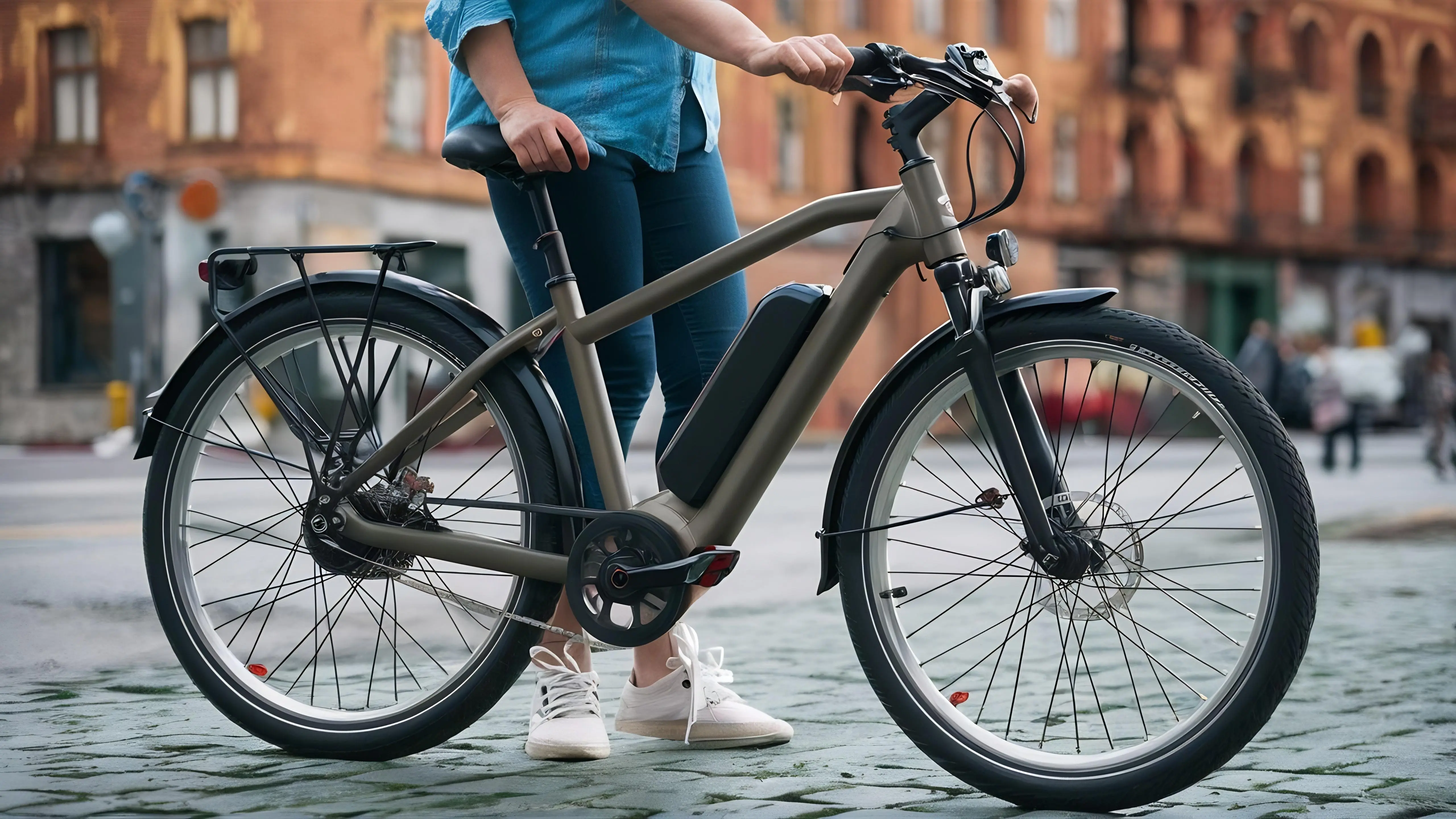
But when the body is actually supposed to do something, namely convert energy into muscle power then lithium must first be packed into batteries and new equipment purchased. Modern man wants health, but please without any effort of his own. Wash me, but don’t get me wet. He wants exercise, but with a battery.
The e-bike fits perfectly into this time. You can look sporty without being sporty. You can appear ecological without thinking about the consequences of your actions. You can talk about 'active mobility' while the motor does the work.
The serious core is obvious: We are becoming more immobile. Not because the e-bike exists, but because it symbolizes an attitude, a mindset. A society that avoids all resistance, shortens every path, and shuns every effort cannot be surprised when body and mind become sluggish, when the economy goes downhill.
The back hurts, the knees creak, stairs are avoided, and the last real physical challenge is pulling the charging cable out of the socket. Green electricity, of course, enriched with a healthy dose of Czech nuclear power.
An e-bike is not a halo on two wheels. It is a vehicle with a battery, electronics, raw materials, wear and tear, and a highly questionable environmental balance. Anyone who boasts about being particularly environmentally friendly should at least admit that lithium, production, disposal, and battery replacement don’t fall from the sky like organic muesli.
Above all, it should be considered that often a conventional bicycle that works and would be healthy is pointlessly taken out of circulation.
So, a hefty tax on e-mobiles is sensible – not as a punishment for mobility, but as a reminder that even green-painted comfort consumes resources vigorously. Those who ride with electric assistance use infrastructure, technology, and batteries whose environmental costs are real. These revenues can then be invested in real movement promotion: sports offers, preventive measures, more sports in schools, stairs instead of escalators.
The electric bicycle is not the downfall of the Western world. But it is a wonderful symbol of our time: the non-thinker wants to become faster without exerting himself; live healthier without changing uncomfortable habits; appear environmentally conscious without giving up personal comfort. A big naive calculation? No, a lie.
Maybe we should get the old bike out again and start pedaling. Not out of ideology, but out of self-preservation. Humans have Legs get, no charging port. Ideology is not to be confused with idiocy and yet often found in the same heads. So: KdW = Battle of the Bulge, let's tackle it, today is a good day to start with it.