© Magnific
June 5, 2026
Christine Bürg
- Health
- Mental Health
- Mind
How to Stay Mentally Strong in Uncertain Times
Neurologist and psychiatrist Prof. Dr. Volker Busch on anxiety, rumination, humor, and the mental immune system
Share article:
© Magnific
June 5, 2026
Christine Bürg
Neurologist and psychiatrist Prof. Dr. Volker Busch on anxiety, rumination, humor, and the mental immune system

 Find a Doctor
Search the network for suitable specialists and contact them directly
Crises, wars, constant stress, fear of the future: many people feel exhausted, overwhelmed, or internally constantly tense. At the same time, the pressure to always function is growing – professionally, privately, and also on social media. Why is it so hard for us to be optimistic today? Why isn't uncertainty automatically a bad thing? And how can we stay mentally healthy when the world constantly presents new challenges?
We discussed this with neurologist, psychiatrist, and psychotherapist Prof. Dr. Volker Busch. The head of the "Psychosocial Stress and Pain" research group at the University Hospital Regensburg has been dealing for years with the question of how people can become more psychologically resilient. His book "Keep Your Head Up – Mentally Healthy and Strong in Challenging Times" was on the Spiegel bestseller list for months.
In the interview, he talks about the mental immune system, the danger of collective fear – and why we should all be a bit more like Snoopy.
Mr. Busch, many people currently appear exhausted, depressed, or insecure. Has our society changed?
Yes, I do feel that way. Many people feel that what used to be taken for granted has suddenly collapsed. Security feels more fragile today – whether it’s about political stability, financial security, or the general future. Things that seemed reliable for a long time no longer feel as self-evident as they once did.
And of course, that affects us humans. When certainties are lost, we go on internal alert. Some experience this emotionally, others physically – with sleep problems, inner restlessness, or feelings of anxiety. This constant uncertainty is mentally exhausting for us.
But you also write in your book: "Uncertainty is better than its reputation." That sounds surprising at first.
Yes, because we almost automatically evaluate uncertainty negatively. In fact, it also has a very productive side. Our brain reacts to uncertainty with increased attention. We become more alert, precise, and creative. I like to refer to this as "uncertainty energy."
For example, when we are worried about losing someone, we often put more effort into the relationship. If we are unsure whether something will succeed, we engage with it more intensely. So uncertainty can motivate us to become active rather than remain passive.
The problem only begins where insecurity turns into fear or even panic. A certain amount of insecurity is part of life – and it can even help us grow.
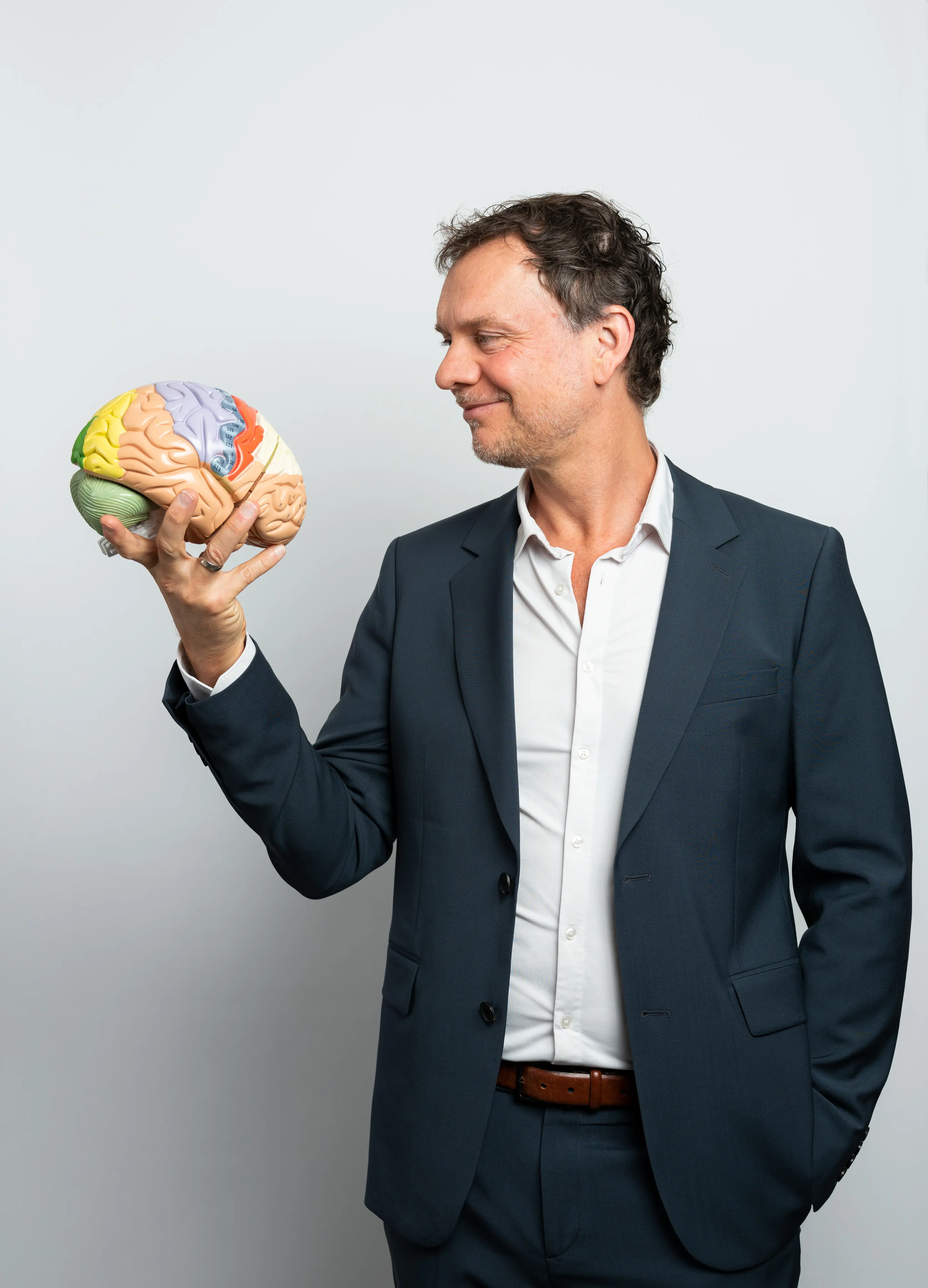
© Droemer
Bestselling author, neuroscientist, and psychiatrist: Prof. Dr. Volker Busch
Nevertheless, many people currently feel that they are constantly afraid. How can one protect oneself from this?
One must be careful not to be constantly infected by the negative. Fear often works like a psychological pathogen. If people around us are constantly spreading panic or we are continuously engaging with negative news, we eventually adopt this mood ourselves – often completely unconsciously.
We live today in a media world where a lot of negativity is conveyed. In talk shows, social media, or news broadcasts, the catastrophic often dominates. No wonder that societal confidence is lost as a result.
That's why it's important to consciously set boundaries: reduce news consumption, distance oneself from constantly negative influences, and protect one's own mental system. Not out of indifference, but for self-care.
In your book, you use the term "mental immune system." What exactly do you mean by that?
The mental immune system is a metaphor for the enormous psychological ability we humans have to cope with stress. No one goes through life without crises. But most people manage to recover from them eventually.
When we are hurt, disappointed, or go through tough times, our psyche often regenerates remarkably well. We learn, grow, and continue to develop. That's why I prefer the term mental immune system over the term resilience. Psyche Resilience often sounds like you simply return to your old state after a crisis—like a rubber ball bouncing back. But people change through crises. They become more experienced, sometimes stronger, sometimes more relaxed. Studies even show that many people face crises more calmly over their lifetime because they have already experienced: I can survive difficult situations.
Can this mental immune system be trained?
Yes, definitely. And often in very simple ways: by learning to consciously endure uncertainty rather than avoiding it.
Many people constantly try to maintain control and avoid unpleasant situations. But this often makes the fear greater. That's why I recommend finding small challenges in everyday life—things that take a bit of overcoming.
This can be a speech, a new hobby, a spontaneous conversation, or something completely mundane like trying a dish you would never normally order. It's only important that it triggers a small sense of uncertainty.
.
Because every time we experience: "I've done it," our inner strength grows. In psychology, this is also referred to as uncertainty tolerance training.
Many people know the feeling of not being able to switch off at night and constantly brooding. Is there a way out of this spiral of thoughts?
Yes – and interestingly, the solution often lies less in thinking and more in doing.
Today, we spend an incredible amount of time in our heads. Many studies show that active doing is one of the best ways to interrupt brooding. When people work with their hands, build, paint, craft, or garden, certain thought centers in the brain shut down.
That's why occupational therapy works surprisingly well for some people. Those who create or craft something break out of the constant carousel of thoughts. I often say: We think too much and do too little.
You also say that confidence can be trained. How does that work?
Confidence doesn't arise from being able to completely control the future. It arises from focusing on the next meaningful step.
Many people make the mistake of mentally jumping too far ahead: What will happen in five years? What if everything goes wrong? Our brain often gets overwhelmed by this. A more helpful question is: What can I do now? What is in my hand today?
If someone is worried about their job, the next step might be further education. If someone is ill, the next step might mean taking good care of their own body. This focus on what is immediately achievable reduces fear – and from that emerges confidence.
What personally helps you when you feel that everything is getting too much?
Nature. Absolutely. Whether it's the woods, mountains, or just moving outside – it helps me incredibly. In nature, perspective changes. You suddenly realize how small your own problems actually are.
We often take ourselves very seriously in our society. In nature, many things are put into perspective. And that's exactly what I find relieving.
Do you also observe that especially young people are increasingly under pressure?
Yes, very much. We live in a society where everyone should be as special as possible. Nobody wants to be average or "disappear." Likes, attention, and reach have become new status symbols.
That creates enormous pressure. Many young people define their worth by being seen and validated. When this validation is missing, some fall into a deep crisis.
Especially social media can lead to people losing themselves because they constantly feel the need to play a role.
What can you impart to young people?
That true self-worth is created only in real life. Through relationships, friendships, family, meaningful tasks, and real experiences. The virtual space can give attention short-term – but true inner stability usually does not arise there. People need real roots.
You also write that humor has enormous power.
Absolutely. Humor is much more than just laughter. Humor is an attitude towards life. Humorous people often manage to gain a different perspective even in difficult situations. They don't completely lose their lightness. Especially in times of crisis, this can be incredibly important.
Historically, people have always used humor to psychologically get through tough times. That's why I really hope that as a society we don't lose this humor.
Finally, we have to talk about Snoopy. What can we learn from him?
A lot, I think. Snoopy always dares to enter new situations. He tries things out, stays curious, and never loses his humor. At the same time, he doesn't take life too seriously all the time.
And this is perhaps one of the most important skills of all: to remain courageous, to stay playful, and not to take oneself too seriously all the time.
That's why I like to say: We should be a little less like Charlie Brown in life – and a little more like Snoopy.

Implant or your own tissue, now or after treatment — or perhaps no reconstruction at all? Plastic surgeon Dr. Juliane Bodo explains what role radiation plays, what risks to expect, and why no one should make this decision under pressure.
Christine Bürg & Marianne Waldenfels

An interview with
Dr. med. Juliane Bodo

A single hydrogel injection into the knee may relieve osteoarthritis pain for years. Orthopedist Dr. Ivo Breitenbacher has treated around 200 patients with it and explains who the procedure is right for and where its limitations lie
Christine Bürg & Marianne Waldenfels
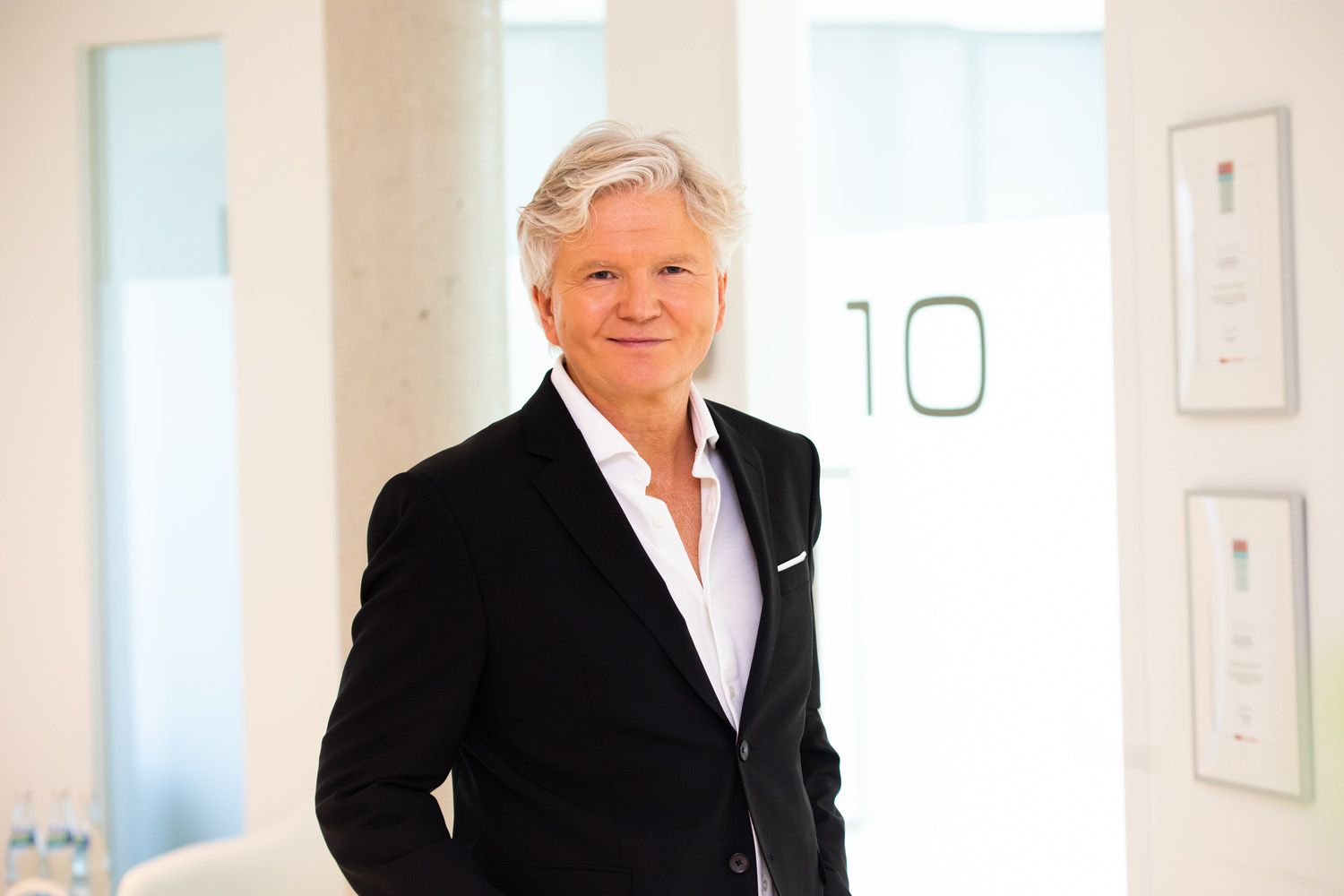
An interview with
Dr. med. Ivo Breitenbacher

Almost everyone has seen them, and most people ignore them: tiny specks and strands drifting across their vision. Usually, they’re harmless. But sometimes they signal an emergency where quick action can save your sight. Ophthalmologist Dr. Mirka Höltzermann explains which warning signs to watch for.
Christine Bürg & Marianne Waldenfels
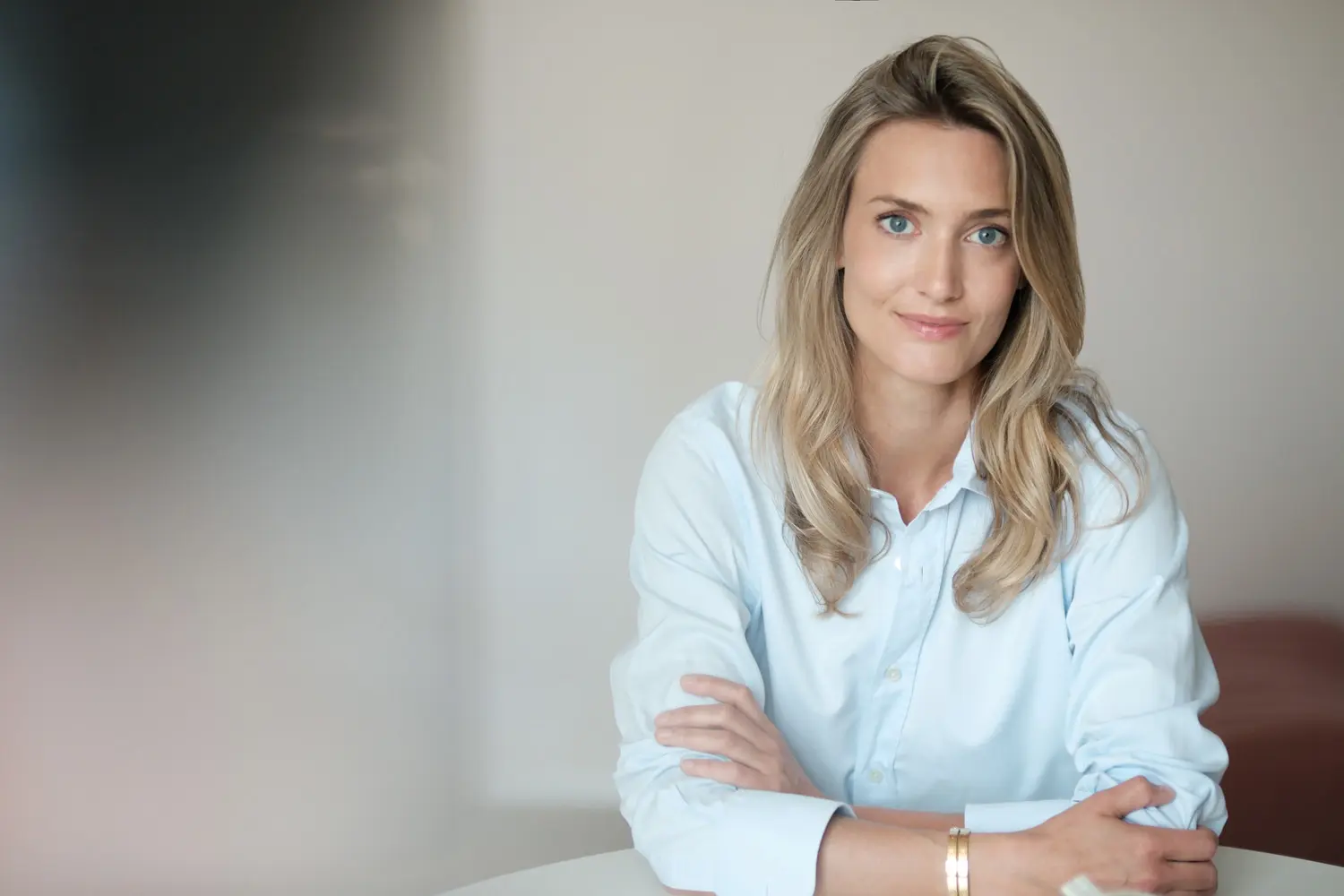
An interview with
Dr. Mirka R. Höltzermann
Can fasting relieve hot flashes and other menopausal symptoms? Dr. Verena Buchinger-Kähler shares remarkable cases from her clinical practice and explains how women respond to prolonged fasting – and what science has revealed so far.
Christine Bürg & Marianne Waldenfels

An interview with
Dr. med. Verena Buchinger