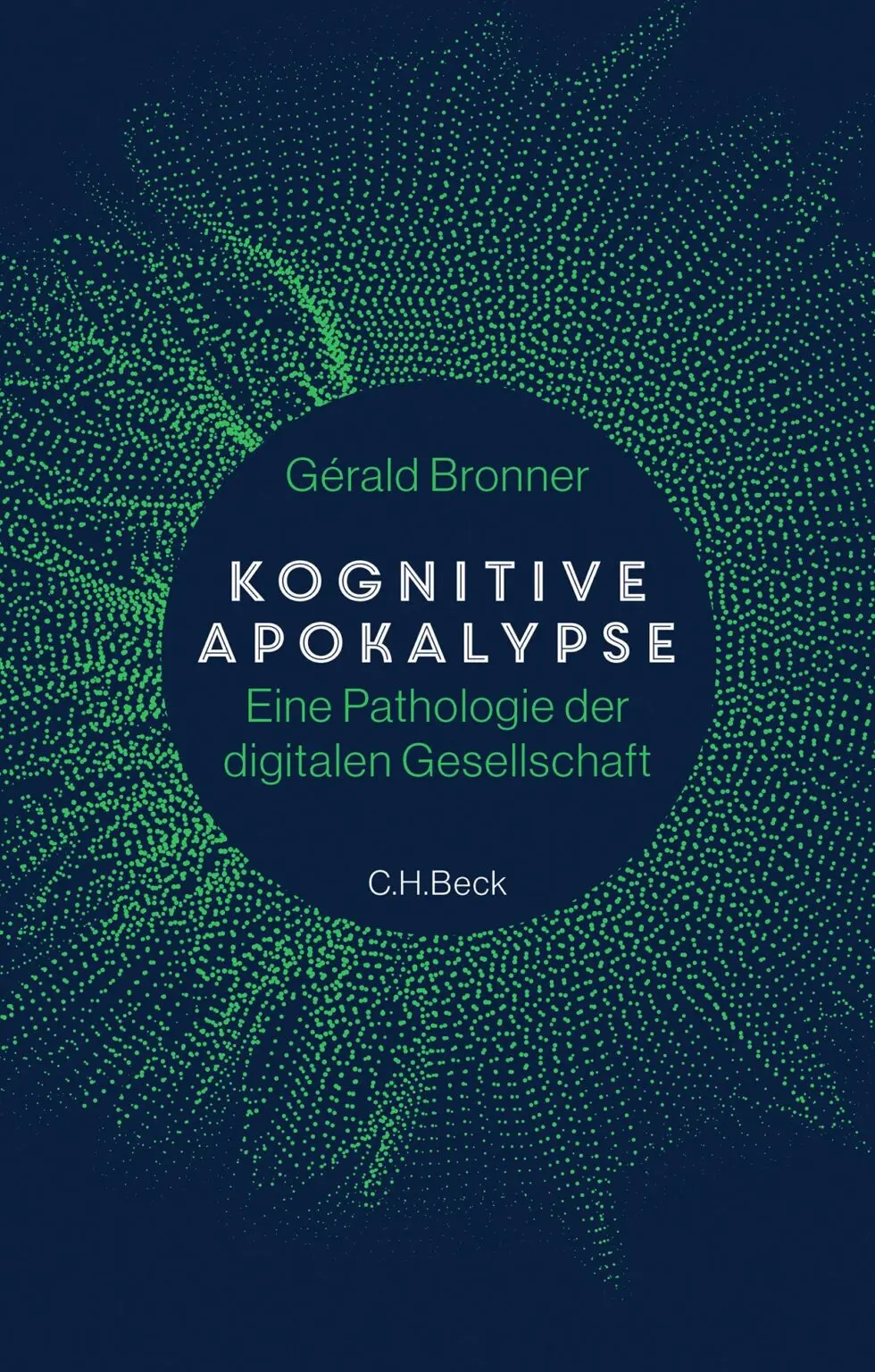
We work less, live longer, and have more free time than ever before – theoretically. Practically, we spend up to eight hours a day on screens, absorbed by cat videos, TikTok, and trivial conflicts. In his book "The Cognitive Apocalypse," Professor Bronner warns about the consequences of this development: algorithms reinforce populist tendencies, fake news spreads rapidly, and the shared reality that democracies need crumbles. A conversation about our brains, social media, and why we urgently need to counteract.
Free Brain Time: The Untapped Treasure of Modernity
Professor Bronner, in your book "The Cognitive Apocalypse," you write, among other things, that we have more "available brain time" today than ever before in human history, but we don't really use it. What do you mean by this term?
Let's take a normal workday with 24 hours. Subtract the working hours, the time we sleep, dress, wash, eat, get stuck in the subway, then we have time that we have mentally available. This free brain time has increased significantly in all countries. Since the beginning of the 19th century until today, it has increased eightfold. We work shorter, more productively, we have paid vacations, a pension, a higher life expectancy, household appliances, and much more. All this together gives us the most valuable treasure of humanity: mental availability – time to think.
Why we feel overwhelmed despite having more free time
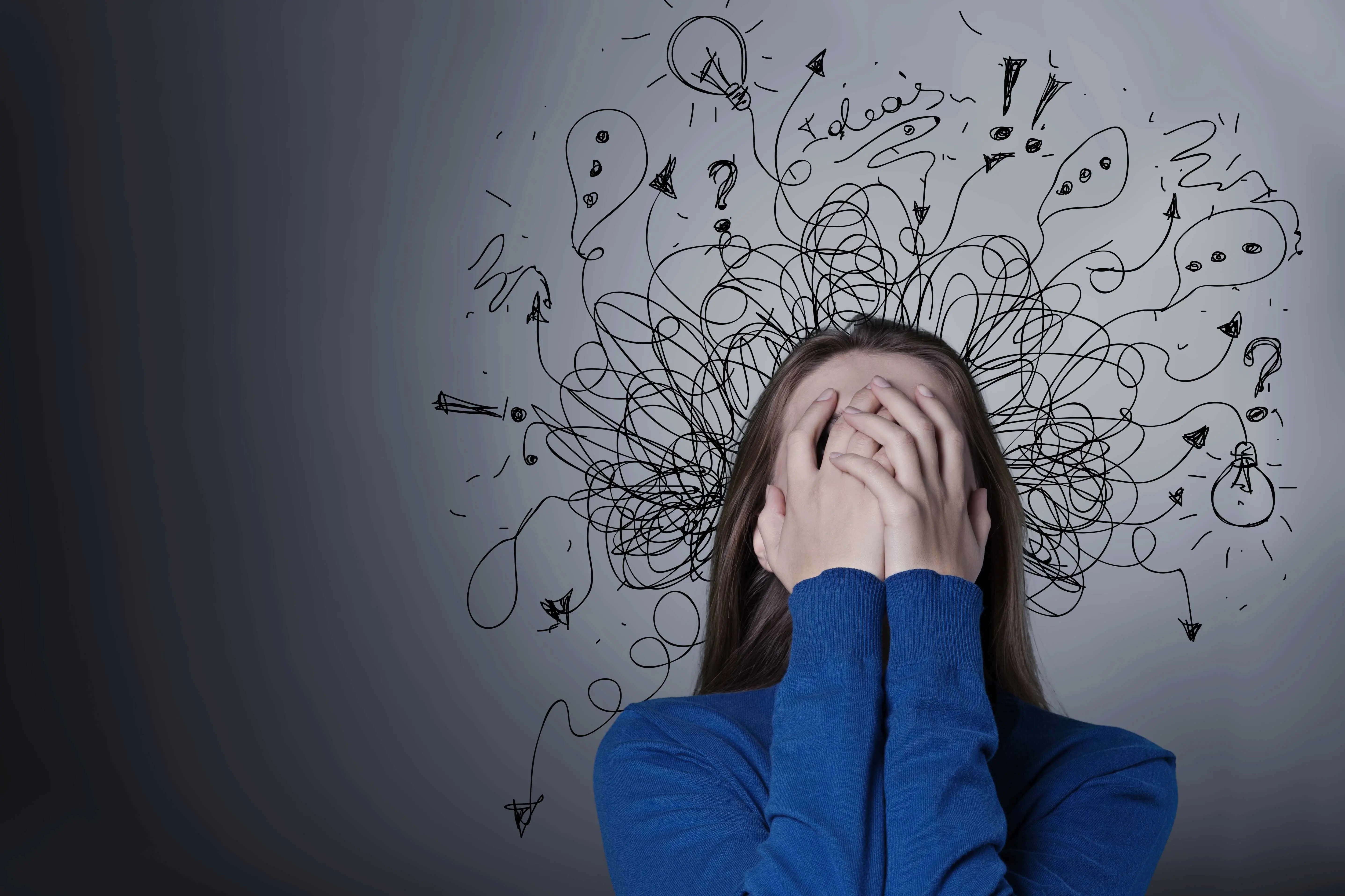
Why do we constantly feel that we actually have no free time at all? This is because this mental availability is absorbed by all sorts of activities – especially by screens. Numerous surveys show this. We even have the impression of intellectual overload because we are always doing three things at once: checking emails, receiving texts, looking at pictures, reading an article, ads popping up, and so on.
All this leads to a feeling of mental oversaturation. This applies to all age groups, but especially to young people. The younger you are, the larger the share of free brain time absorbed by staring at screens.
What does that specifically mean? In the USA, it's up to eight hours a day. This absorbs almost all of the available free brain time. In Europe, we're not far behind.
FOMO and night sentries: When smartphones steal the night
They say that even at night we wake up to check the smartphone screen. There are more and more so-called night sentries, people who leave their phones on so they can receive messages all night. About half of young adults check their messages at least once a night, afraid of missing something on social networks.
There is already a technical term for this: FOMO – Fear of missing out. This leads to the critically important sleep time for youth development becoming increasingly shorter, as screens also reduce our biological time during the night.
The power of trivial content: Why cat videos win
However, computers and smartphones are also work tools.
Right, but many young people are not using it for work, rather they spend time on TikTok videos and video games. Even though there are many interesting contents, such as philosophy courses, we are more likely to watch funny cat videos. The real question is not how much of our free brain time we spend in front of a screen, but what we do with it.
Why are we so attracted to such shallow entertainment? This is precisely what I describe as cognitive apocalypse. I don't mean the interpretation of the word as the end of the world, but the etymological sense of the word: the revelation and obsession of our brain. Never before has so much information been available on Earth. In the last two years alone, 90 percent of the information available worldwide today has been produced.
And this trend continues to accelerate. This huge information market, available on our screens anytime and anywhere, is characterized by an unprecedented competition and deregulation. To survive, the supply of information must adapt to the intuitive demand of our brain.
The Cocktail Effect: How Our Brain Filters Information
What does our brain actually ask for? Only certain information predominantly captures our attention. Which ones, depends on the way our brain works. In psychology, this is often described with the cocktail effect. Imagine you're at a party. There's loud chatter all around, but there are certain words that stand out from this noise.
For example, the word sex: We will hear it because we are interested in sexuality. This has been proven in studies multiple times. The most clicked videos worldwide by far are pornographic content, even in countries where pornography is condemned for religious reasons. Of course, no one will admit it, but these are global statistical facts.
Apart from sex, does everyone react to the same keywords? No, there are mental variations, and all egocentric information is also important. If someone in a crowd says your first name, you will hear it. Or when I hear the word sociology, I perk up. Besides sex, terms like fear, conflict, violence capture everyone's attention. There is a recent study of 140,000 press titles in the US, both left and right press, showing that over the past 20 years all these terms have increased significantly in the media.
Algorithms as new gatekeepers: The end of classic journalism
Have the media educated us on this interest in conflicts and violence, or have we, the readers, demanded these topics so strongly that the media had to respond to this demand?
Both developments go hand in hand. Of course, journalists are more likely to report on delayed trains than on-time ones. But things have accelerated because journalists used to fulfill a role as gatekeepers: They decided what made the headlines. Rumors and unverified information were not published.
Today, however, algorithms increasingly decide what is editorially valuable. On Facebook, for years, posts where an angry emoticon appeared in a comment were highlighted. Why? Because it was found that topics that make us angry keep us longer on social networks. Because we want debates, because we want to contradict. Conflict attracts our attention, even when it is trivial.
When slaps become more important than wars
Do you have an example of this? Let us remember March of last year. In Ukraine, the war had begun; in France, there were presidential elections, but for almost 48 hours, all eyes were on a tiny event in the USA: Will Smith slapped the host of the Oscars ceremony. A completely irrelevant matter that captivated us all nonetheless. We wanted to see the slap, we wanted to know why he had given it, we wanted to reconstruct the story… It is our brain that entices us to do so. We know perfectly well that it is not interesting, and yet we can hardly resist it.
Why does our brain steer us towards such trivialities?
It is probably rooted deep in our evolutionary past, because we are primarily social apes. My hypothesis is that conflict is seen by our brain as important information. It is almost like a reflex.
The problem is that the deregulation of the information market reveals exactly those aspects that are deeply hidden in our brains. It is a bit like the prehistoric man stepping onto the stage of the present. A paradoxical relationship emerges between the very old functioning of our brain and the hyper-modernity of social networks.
One percent produces 33 percent: The dominance of the radicals
And can that become dangerous? Due to the incredible competition in this vast information market, a breeding ground for neopopulism is created, which notoriously fuels fear and potential for conflict and is proportionally overrepresented by algorithms. Meanwhile, the number of journalists, the gate-keepers, is decreasing everywhere because the advertising revenues vital for journalism's survival are now flowing to Facebook, Google, and into their social networks.
The conclusion is: One percent of social network accounts produce 33 percent of the available information. And within this one percent, you find radicals, vaccine skeptics, conspiracy theorists, etc. It’s even worse on youth channels: On TikTok, there’s an extremely high proportion of misinformation: People speak of 20 percent. That's gigantic and a real problem.
Lazy Thinking: The danger of lazy thinking
What can be done about it? When it comes to spreading false information, there are many variables at play, but one of the most dangerous is what's known as lazy thinking. It describes the downgrading of our intellectual vigilance. Experiments show that we can relearn logic and reasoning through stimulation of analytical thinking.
We must therefore return to a teaching of methodical and rational thinking already in schools. That is the best way to regulate this market without curtailing freedoms, such as through censorship. This way, we can respond to the cognitive apocalypse and still save the situation. However, if we just let it happen and don’t act, then it becomes critical.
What we can do against the cognitive apocalypse
You warn that the current situation could develop into a 'life-threatening risk for humanity.' Is it really that bad? It won't lead to a collapse of civilization, but I think that liberal democracies as we know them will gradually be absorbed by this cognitive apocalypse. Democracies around the world are currently threatened by populism or have already fallen for it. We are facing the great risk that people will live in the same society but no longer in the same world.
However, a functioning democracy needs a common intellectual space where people debate, argue, and dispute a certain, generally accepted view of the world. But this is exactly what is currently missing, for example, in the USA: A significant part of the population is completely convinced that Donald Trump, not Joe Biden, won the last presidential election. When the proportion of lies, of "alternative facts," as we call them in sociology, prevails, citizens of different opinion groups no longer live in the same world.
What consequences can this have? People are stuck in so-called echo chambers of the internet, where they become radicalized and increasingly agitated among themselves. The propensity for violence increases and democracy develops cracks. One has the impression that society is still the same, but that is no longer true. If we do not engage soon, we are lost. That is certain. So it is up to us to fight against it.
FAQs
What is meant by "free brain time"?
Free brain time refers to the time available to us for thinking and intellectual activities after deducting work, sleep, eating, and other essential activities. According to Professor Bronner, this time has increased eightfold since the 19th century.
How much time do people spend on screens daily?
In the USA, people spend up to eight hours a day in front of screens, absorbing almost all available free brain time. Figures in Europe are similarly high.
What is FOMO and how does it affect sleep?
FOMO stands for "Fear of Missing Out" – the fear of missing something. Around half of young adults check their messages at least once a night, leading to so-called "sleep procrastination" and reducing valuable sleep time.
Why are we so attracted to trivial content?
Our brains are evolutionarily predisposed to respond strongly to certain stimuli like sex, conflict, fear, and violence. These mechanisms stem from our prehistoric past and are exploited by algorithms.
What is the cocktail effect?
The cocktail effect describes the phenomenon where we can filter out specific words from a jumble of voices – such as our name or terms that interest us. Our attention works similarly with the flood of information on the internet.
How do algorithms influence our information intake?
Algorithms have replaced journalists as gatekeepers and increasingly decide what content we see. They favor conflict-rich and emotional content because it keeps us on platforms longer – regardless of its relevance or truth.
Why are social media dangerous for democracy?
One percent of social media accounts produce 33 percent of all available information, including a disproportionate number of radicals and conspiracy theorists. This leads to "echo chambers," where people become radicalized and no longer share a common reality.
What is "Lazy Thinking"?
Lazy Thinking refers to the lowering of our intellectual vigilance. It is one of the most dangerous variables in the spread of misinformation and can be countered by analytical thinking.
What can be done against the cognitive apocalypse?
Professor Bronner recommends a return to methodical and rational thinking starting in schools. By stimulating analytical thinking, we can relearn logic and argumentation without resorting to censorship.
What is the proportion of misinformation on TikTok?
On TikTok, the proportion of misinformation is about 20 percent – a huge problem, especially since the platform is mainly used by young people.
Prof. Gérald Bronner teaches sociology at the Sorbonne and Diderot Universities in Paris. In 2022, he was appointed by Emmanuel Macron as the director of the research commission on the digital age. His book "Cognitive Apocalypse" (C.H. Beck Verlag) has won several important awards in France.