© Cottonbro/Pexels
March 31, 2026
Dr. Andrea Gartenbach
Dr. Andrea Gartenbach is a specialist in internal and functional medicine. In her latest column for Premium Medical Circle, she explores when wearables like smartwatches can be beneficial—and when health tracking may become counterproductive
Never before have people had so much information about their own bodies. Smartwatches calculate sleep scores, fitness trackers analyze stress levels, and apps promise insights into our physiological performance. But the crucial question is: How useful is this really? Do these data actually show our health or just a small part of it?
A serious medical perspective observes not just individual values, but the behavior of the entire system. The human organism is in a constant process of adaptation. Sleep, stress, exercise, nutrition, and mental demands continuously influence the regulation of the body.
Wearables make it possible to visualize this dynamic in everyday life. This creates a new form of observation. While traditional diagnostics primarily provide snapshots and individual measurements, continuous data show how physiological processes change over time.
This temporal development is particularly interesting from a medical point of view. If certain parameters shift over days or weeks, they can provide clues about stress, recovery, or lifestyle changes.
The real value for the patient lies less in the individual biomarkers (which, incidentally, are more or less accurate depending on the wearable) than in the ability to recognize physiological patterns.
Continuous measurements often show correlations that are hardly noticed in everyday life. Lack of sleep, alcohol, intensive training phases, or chronic stress often leave clear marks in physiological parameters. When these correlations become visible, a more differentiated understanding of the effects of certain lifestyle factors emerges.
If you adjust your behavior accordingly, this tracking can definitely contribute to a healthy lifespan.
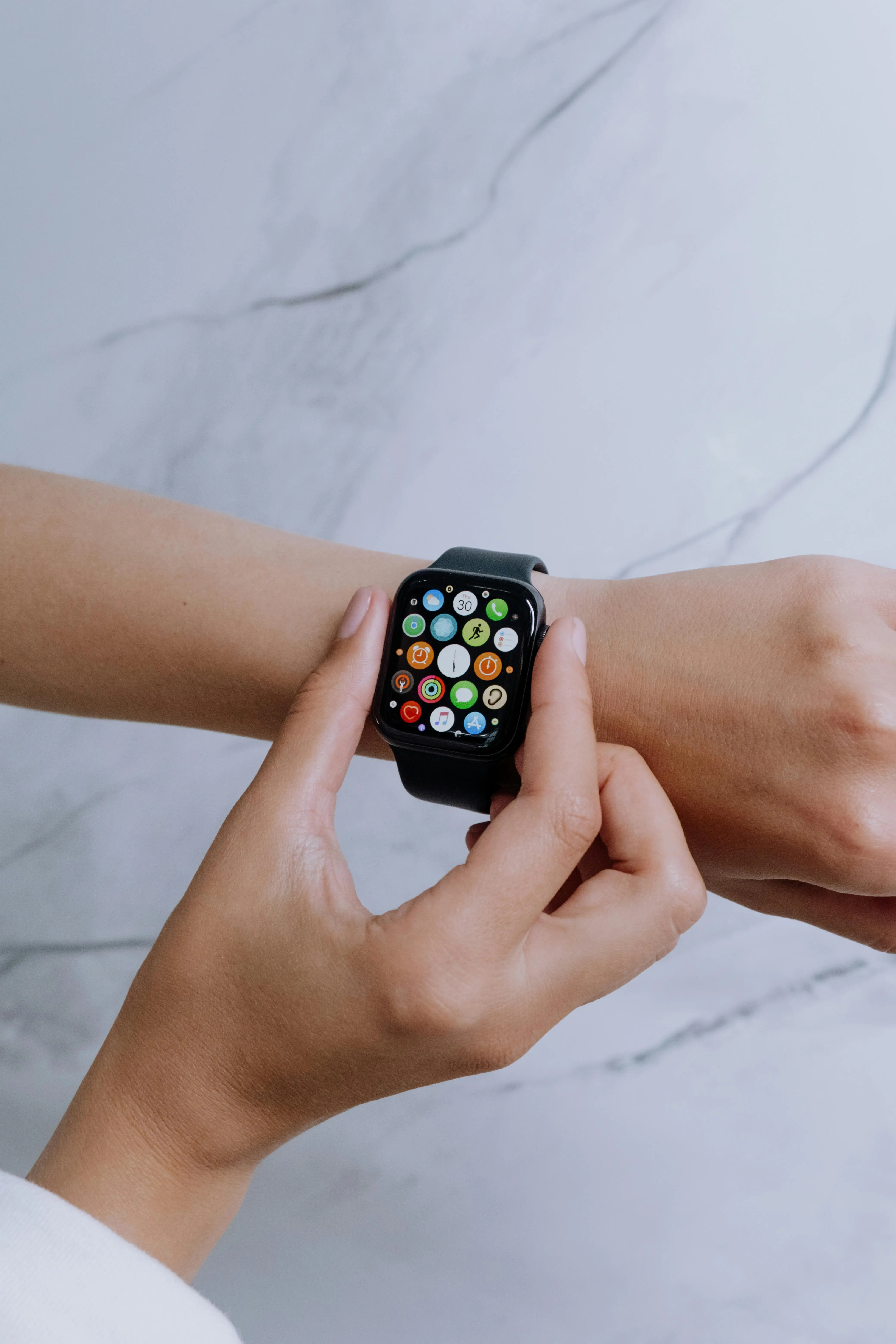
Ironically, however, the attempt to fully control our health can destabilize a system we actually want to strengthen: the autonomic nervous system.
For people with strongly perfectionistic or control-oriented personality structures, constant tracking can actually be counterproductive. There is a risk that health is increasingly defined by the values displayed by wearables. Numbers replace one's own body perception.
This issue can be particularly clearly observed in sleep tracking. In sleep medicine, the term orthosomnia already exists. It describes the phenomenon that constant observation of one's own sleep data can lead to sleep problems or worsen existing ones.
We also see similar effects in general health tracking. The data is overinterpreted, and decisions are more oriented towards apps than one's own body feeling. In such cases, tracking loses its actual usefulness.
Data should provide guidance. They should not begin to control life.
Tracking is useful for people whose everyday life is heavily influenced by cognitive stress. Highly performance-oriented individuals often lose touch with their bodily signals over time. Stress is no longer consciously perceived but merely compensated for.
In such situations, tracking can provide a more objective perspective. It makes visible what is happening in the body, even if we do not yet feel it subjectively.
For the practical use of wearables, it is sensible to focus on a few central parameters. These include sleep duration and sleep rhythm, resting heart rate, heart rate variability as an indicator of autonomic regulation, and general activity level. These values often provide a good impression of how the body responds to stress and how well recovery processes occur.
Many other measurements can provide additional information, but they are less crucial for the fundamental understanding of one's own body.
Another helpful strategy is not to view tracking as a permanent state. In many cases, a limited period of observation is sufficient to recognize recurring patterns. After a few weeks or months, a relatively clear picture often emerges of which factors particularly influence sleep quality, recovery, or performance.
This knowledge can then be used without permanent measurement.
Ultimately, the focus of longevity medicine is on how well an organism can respond to the demands of life. Physiological systems do not work statically. They continuously change and adapt to new conditions.
Wearables can help to better understand these processes. However, they do not measure health itself. Their benefit arises mainly when the data obtained is placed in a larger context and helps to sharpen one's own body awareness.