© Anna Shvets
July 30, 2026
Marianne Waldenfels
Can a gentle facial massage support the brain's natural cleaning process? A new Cell study has, for the first time, mapped the complete drainage pathway of cerebrospinal fluid. Here's why that matters for dementia research — and what remains unproven.
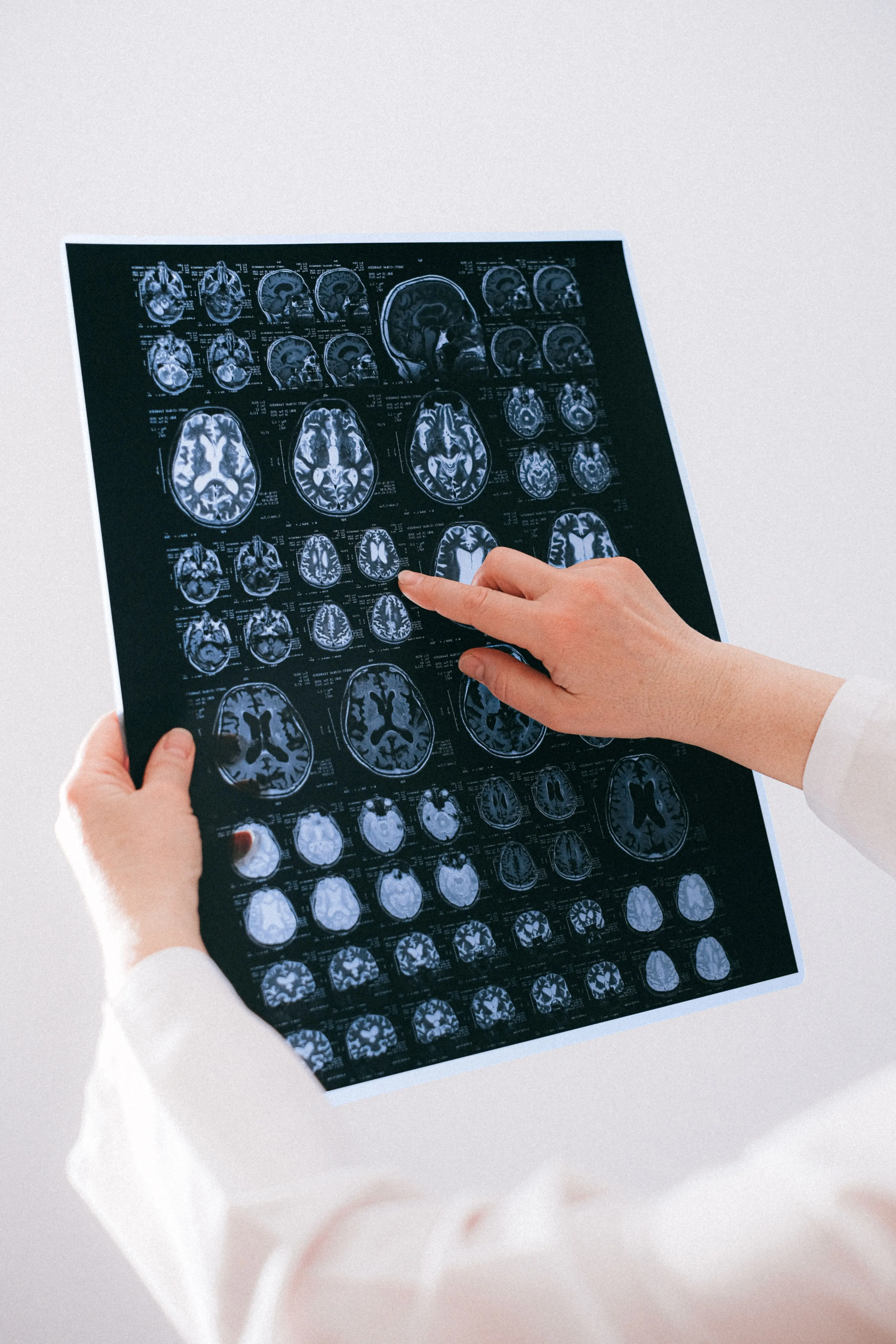
Our brain has its own cleaning system. Around the clock, it transports metabolic waste through cerebrospinal fluid — including proteins such as beta-amyloid, which are associated with Alzheimer's disease. When this "waste disposal" system no longer functions properly, such deposits can build up in the brain.
An international research team led by Dr. Koh Gou-young from the Institute for Basic Science (IBS) in South Korea has now mapped, for the first time, the complete pathway through which the brain disposes of these waste products. The Cell-published study also contains a surprising finding: in their experiments, lymphatic drainage could be improved through a gentle massage of the face and neck.
Context matters, however: it has not yet been demonstrated in humans that such a massage reduces the risk of dementia or prevents Alzheimer's disease. What the study does provide, for the first time, is a biological mechanism that could explain why mechanical stimulation of the lymphatic vessels might have any effect at all.
It has long been known that the brain transports metabolic waste via cerebrospinal fluid. But one crucial question remained unanswered: how does this fluid pass through the protective meninges (arachnoid) and into the lymphatic vessels?
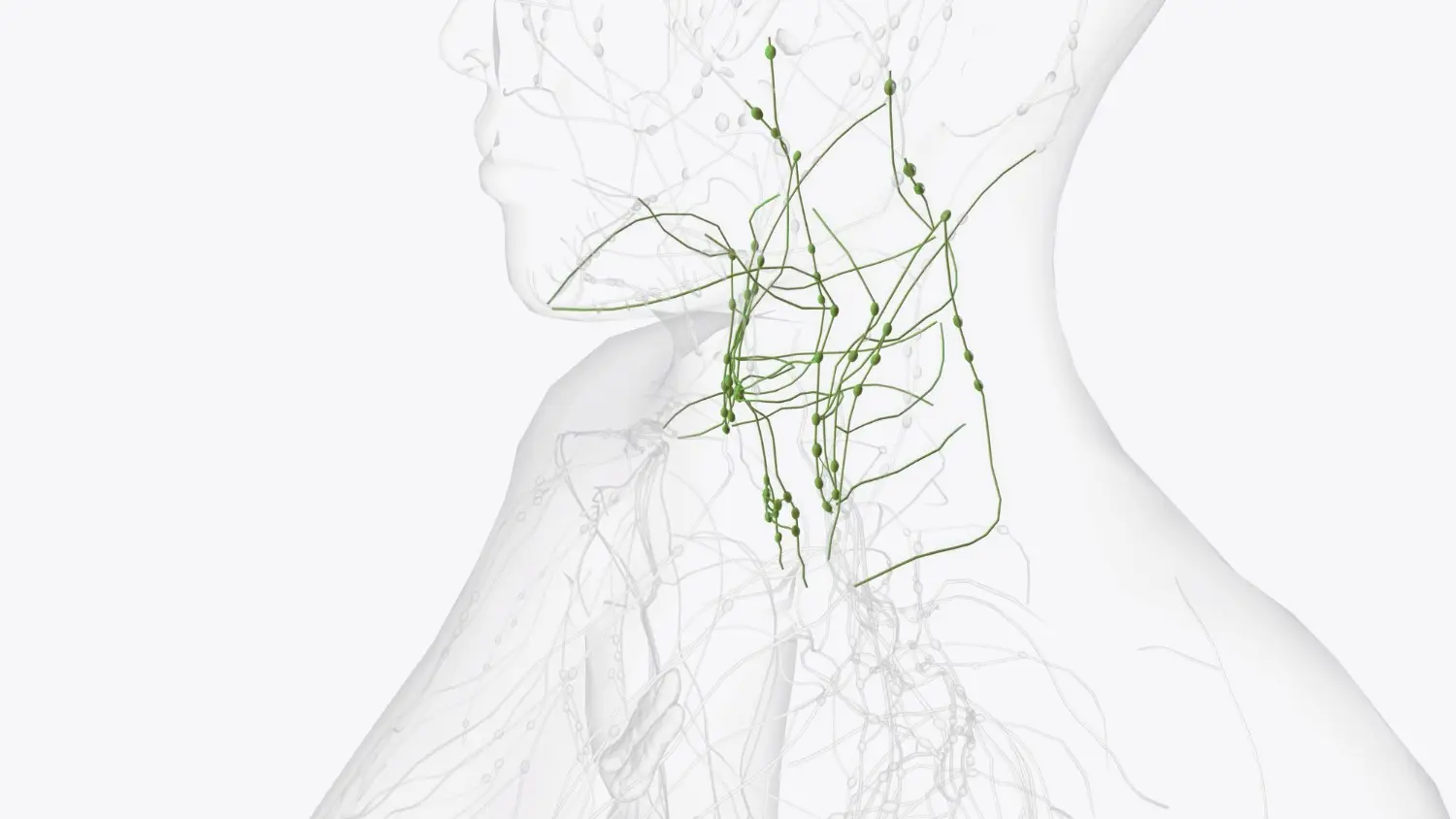
Koh's team has now filled exactly that gap. Using high-resolution 3D imaging and electron microscopy, the researchers discovered tiny openings in the arachnoid. These so-called arachnoid fenestrations appear to serve as passageways through which cerebrospinal fluid flows directly into the lymphatic vessels around the nose and eyes, before eventually draining to the lymph nodes in the neck.
"We have finally solved the long-standing mystery of how cerebrospinal fluid crosses the arachnoid," Koh explained in media reports following the study's publication.
The findings were particularly striking in older test animals. With advancing age, the researchers found significantly fewer of these microscopic openings — and as a result, fluid removal functioned measurably worse.
In further experiments, they were able to partially reverse this age-related decline. By administering the lymphatic vessel growth factor VEGF-C via gene therapy into the nasal mucosa, the lymphatic vessels regenerated, and fluid drainage once again reached nearly the level seen in young animals.
For now, this remains purely basic research. By the researchers' own assessment, many years will likely pass before this approach could lead to any possible treatment for humans.
The study was conducted primarily in mice. For key anatomical findings, the researchers also examined crab-eating macaques, whose lymphatic system more closely resembles that of humans.
Whether the results can actually be translated to humans remains to be established through further studies. Investigations on human tissue are planned, as are long-term safety and efficacy studies of potential therapies.
Study co-author Hong Sun-pyo therefore stresses that the first priority must be to better understand how these newly discovered drainage pathways function in humans. In the long term, however, they could open the door to new treatment approaches for a range of neurodegenerative diseases.
One part of the study is likely to attract particular attention, however. In an earlier paper, the research team had already described lymphatic vessels in the facial area around the eyes and nose. The new findings now provide a plausible explanation for why gentle mechanical stimulation of these regions might support lymphatic drainage.
In laboratory experiments, a light massage improved fluid drainage. Based on this, Koh describes a simple self-massage that anyone can easily perform.
Context is crucial here, however: this observation comes from animal experiments and laboratory-based studies. To date, no clinical study exists showing that facial massages reduce the risk of dementia or prevent Alzheimer's in humans.
The technique is simple, costs nothing, and can be performed several times a day:
• Use light pressure — roughly equivalent to the pressure of a blueberry resting on the skin. According to Koh, firmer pressure provides no additional benefit.
• Using both index fingers, stroke from the outer corner of the eye down along to the jawline.
• Then stroke from the sides of the nose down to the jawline.
• Finally, stroke downward from the chin along the neck, toward the lymph nodes at the back of the neck.
Koh himself describes the potential benefit in deliberately modest terms: the exercise costs nothing, feels pleasant, and can serve as a mindful alternative to reaching for the smartphone during short breaks.
The real significance of this study does not lie in the notion that facial massages could now be considered protection against dementia. Far more important is the fact that researchers have, for the first time, mapped the complete drainage pathway of cerebrospinal fluid — a key insight for understanding the brain's natural "cleaning function."
Should these results be confirmed in humans in the future, they could ultimately pave the way for new therapies that support the removal of harmful protein deposits. The recommended facial massage, by contrast, remains for now an interesting, low-risk measure whose potential benefit still needs to be scientifically proven.

Will artificial intelligence replace doctors? Digital health expert Prof. Dominik Pförringer explains which tasks AI will take on in the future, where its limits lie, and why the personal doctor-patient conversation remains irreplaceable.
Christine Bürg & Marianne Waldenfels

An interview with
Univ.-Prof. Dr. med. Dominik Pförringer

The first GLP-1 weight-loss pill has been approved in the EU. Can it compete with Ozempic, Wegovy & Co.? Cardiologist Prof. Uwe Nixdorff explains the tablet's advantages and limitations compared with injections.
Christine Bürg & Marianne Waldenfels

With
Prof. Dr. Uwe Nixdorff

"Feel good, live better" – in this podcast episode, Dr. Alexander de Heinrich shares how he helps his patients achieve a body they feel truly comfortable in.
Christine Bürg

An interview with
Dr. Alexander de Heinrich

Many people start their day with a "half-empty battery," says sports medicine physician Dr. Lutz Graumann. He explains why recovery matters more than many people realize—and how sleep, nutrition, exercise, and simple habits can help restore your energy
Christine Bürg & Marianne Waldenfels