© © Freepik
February 3, 2026
Judith Cyriax
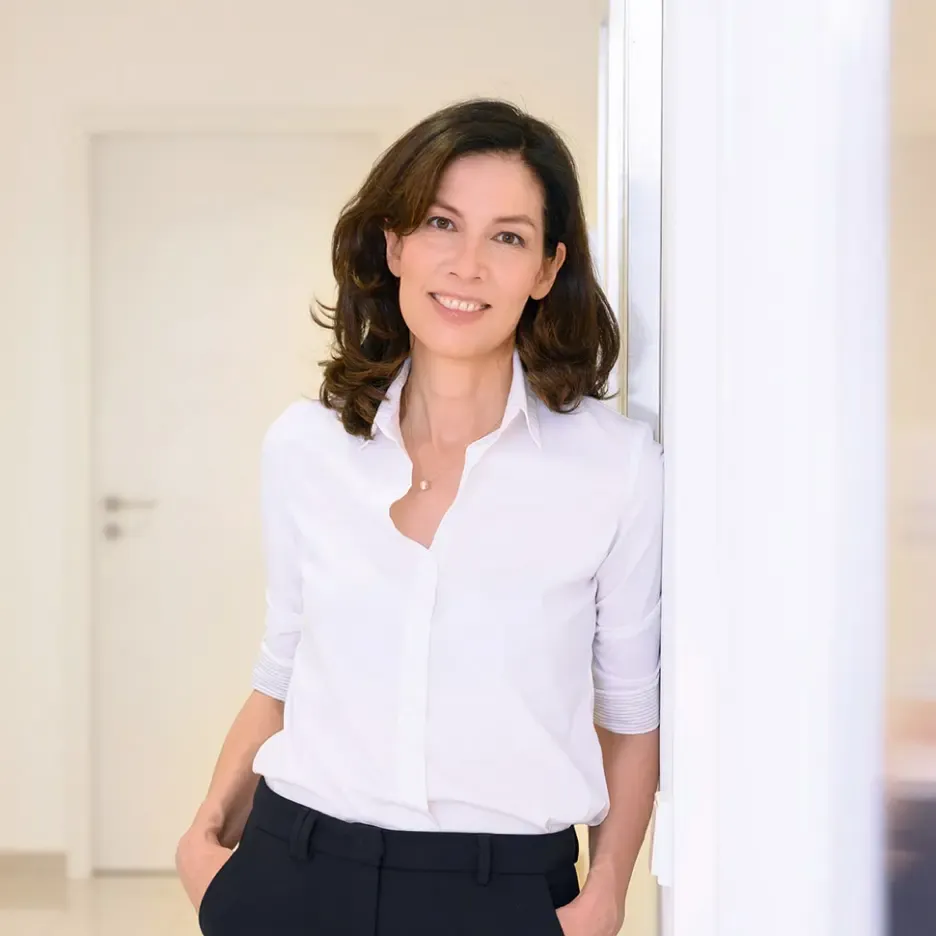
Plastic surgeon Dr. Caroline Kim explains why cosmetic procedures often go wrong – and how to truly achieve natural results.

An interview with
Dr. med. Caroline Kim
Fresher, healthier, more radiant, and in most cases, preferably a bit younger. The trend in cosmetic surgery is increasingly moving towards naturalness , according to statements by plastic-aesthetic surgeons . The desire of the patients: The exterior should not be completely changed, they just want a "better version of themselves."
Nevertheless, in reality – especially on social media – you often encounter faces that anatomically could not really exist: misplaced eyebrows, huge lips, overly narrow noses, or dimples that resemble pits. That's one phenomenon. The other – many of the treated faces seem to have the same (doctor) parents, as they all resemble each other in one way or another.
We spoke with Dr. Caroline Kim , a specialist in Plastic and Aesthetic Surgery, about the desire for optimization, changing ideals of beauty, and why the eye for the right measure is still often lost.
How can it be that naturalness is propagated in aesthetic medicine when there are more and more faces where hardly anything appears natural? Keyword Russian lips, pig noses, or bullhorn lift.
Trends keep emerging, sometimes lasting longer, sometimes shorter. With Russian lips, the goal is to lift only the middle lip area, the so-called heart shape, with hyaluronic acid, rather than increasing the overall volume of the lips. This overly full middle of the lips is not natural, yet a beautiful result can still be achieved.
The so-called bullhorn lift, on the other hand, reduces the distance between the upper lip and the tip of the nose, making more lip red visible and emphasizing the cupid’s bow – both attributes of a youthful face.
A simple procedure in itself, but the scar that results often runs permanently as a visible line below the nostrils. As for the pig or hedgehog nose: The nose is shortened and lifted so that you can look into the nostrils from the front.
A completely nonsensical endeavor that has not really been established in Germany yet.
Of course, these are extreme examples, but even classic procedures do not always result in beautiful outcomes. Every now and then you come across a face where you inevitably think: What does that look like?
In fact, you only ever see what did not go optimally in a procedure. Why? If there is an aspect of the face that is so dominant that it captures the attention of the observer, you can't help but focus entirely on it.
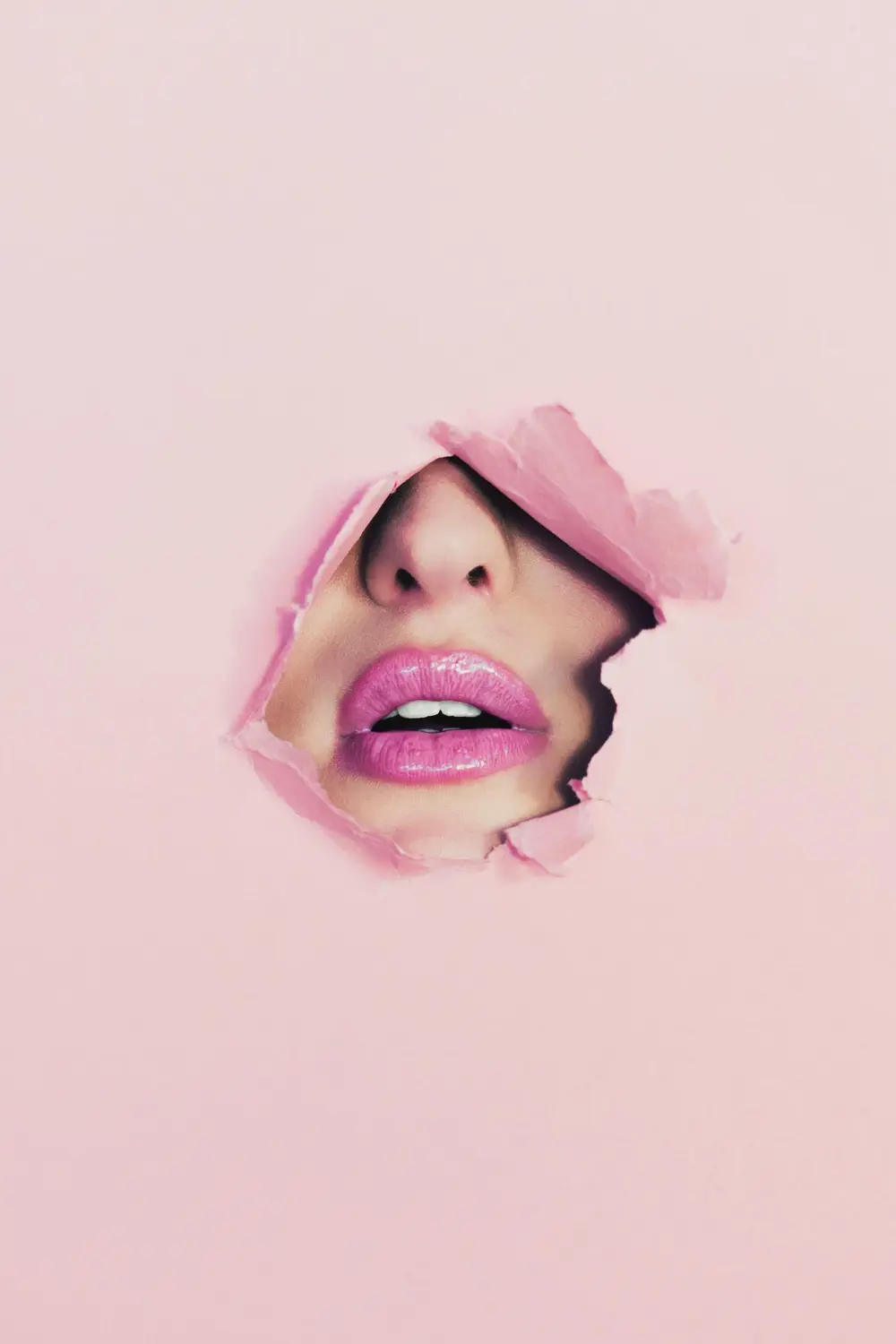
The brain always wants to see a coherent whole, but for example, cannot do so with a totally overfilled lip, as the overall harmony is disrupted. Everything that is very well done, on the other hand, is not noticeable. And fortunately, most treatments go very satisfactorily.
But how can it even happen that you look so obviously unnatural?
When one decides on an aesthetic measure, one often changes something that has been bothering them for a while. Usually, this is a rather small procedure that, however, triggers a quite positive effect. On the patient themselves, but also in their environment. One feels more attractive,younger and more vital , receives compliments. Many want to then enhance this effect, hoping that with more procedures they will look even better. And thus they sacrifice their naturalness for the ambition of perfect attractiveness. A fallacy, because too many treatments usually have the opposite effect.
Wouldn't it then be the doctor's duty to intervene here?
Definitely, but unfortunately there is always a doctor somewhere who continues. We call that overtreatment.
Old techniques, new standards: Why earlier procedures are noticeable today
Not only beauty trends change over time, but also the treatment methods and surgical techniques become more innovative and better. Unfortunately, you can see this in people who, for example, had something done 20 years ago. Why is that?
In general, the techniques used at the time and the results achieved no longer meet today's standards. For example, a few years ago, it was assumed that fillers were the key to maintaining youthfulness. Today we know that while you can fill a nasolabial fold with fillers, the filler can migrate here, as well as in other areas.
In the case of the nasolabial fold, it tends to migrate outward and upward, making the fold even more pronounced and noticeable in the end. In the next step, a facelift is desired, although actually it would be better to dissolve the filler.
The expertise of doctors has also changed. It is no longer: once learned, always applied. Through numerous further training courses, medical congresses, and of course, personal experiences and insights, we doctors can achieve significantly better and always more natural results.
Can the mistakes of the past be effectively treated or corrected, and how can this be avoided in the future?
When dealing with very experimental people, it is sometimes not so easy. Some things can be reversed, others unfortunately cannot. A botched Lower eyelid lift for example, is not easy to correct. Hyaluronic acid that has encapsulated or migrated into the tissue can be easily dissolved. And you don't have to worry that the antidote, the so-called hyaluronidase, will also remove the body's own hyaluronic acid because it is constantly being regenerated.
What should be observed very critically, however, is the currently so hyped Buccal Fat Removal. Here, the cheek fat is surgically removed, making the face slimmer, cheekbones appear more defined, and also the cheekbone and jawline are more strongly emphasized. However, since this procedure is permanent, this fat is missing in old age, leading to a sunken appearance and ultimately making patients age faster. Personally, I would always advise against it.
While with older patients one often feels that something is off, especially young women opt for aesthetic procedures that give them a standard look – away from individuality towards a kind of conformity of facial features.
Here you can surely find the answer in social media, where influencers , models, or actresses set certain beauty ideals such as fuller lips or more defined eyebrows, thereby creating a uniform look. And since young women often emulate the visual ideal of their role model, they opt for these aesthetic changes.
Fortunately, these are minimally invasive procedures, so they can be reversed or fade over time, keyword Botox. And the desire to look like someone else is known to diminish with age.
How do you achieve a natural result with a minimally invasive or invasive procedure?
The focus is on achieving a certain harmony and softness of appearance, which is usually achieved by breaking repetitive directional impulses. A simple example: If a person has hooded eyelids and slightly drooping corners of the mouth, the face appears tired, sad, and old.
If I only remove the hooded eyelids and thus create an open look, the corners of the mouth no longer weigh as heavily – the face appears happier. If a distracting mole is removed, nearby wrinkles appear much less conspicuous because the eyes are no longer sharply focused on this region.
Also good to know: Vertical wrinkles and scars are much more noticeable than horizontal ones. That's why it’s always worthwhile to treat the so-called frown line and lip lines to make the whole face appear fresher. If you like, we create optical illusions by cleverly diverting attention from small optical flaws. In general, there are a few rules in aesthetic medicine with which the patient and their environment will not experience any unpleasant surprises.
We specialists can achieve a great effect with small interventions by balancing asymmetries and disproportions, thus reducing the perception of details through this harmonization. Quite often it turns out in the first consultation that there is much less need for action or treatment than initially assumed by the patient.