© © Jonathan Knowles/Photodisc via Getty Images
In surgery, the replacement of joints has long been routine.
January 1, 2023
Unknown Author
This is hip: Latest research brings orthopedics alternative treatment methods
These are impressive numbers: almost 230,000 people in Germany alone receive an artificial hip joint. 170,000 patients receive knee endoprostheses and about 60,000 shoulder joints. For the individual affected, the procedure usually means a massive turning point in life – away from years of chronic pain and restricted mobility towards a new, carefree mobility.
Joint replacement has long been routine in surgery. Over 70 years ago, the British orthopedist George Kenneth McKee implanted the first truly usable and durable artificial hip prosthesis—still made of stainless steel at the time. Today, parts with components made of polyethylene, ceramic, and titanium are predominantly used.
The developments in this field have been perfected over the past years to such an extent that no further major revolutions are to be expected in the near future, says Prof. Dr. Andreas Imhoff, who led the Department and Polyclinic for Sports Orthopedics at the University Hospital rechts der Isar in Munich for over 25 years.
"We have a success rate of 95 percent for hip joints. That's really very good. Of course, we want to get even better, but we will never reach 100 percent because the patient himself, especially his psyche, of course, also plays a crucial role. Ultimately, the body has to relearn how to properly handle the joint. In this, physiotherapy also plays a very important role," says the internationally renowned expert, whose successfully treated patients include such prominent names as the kings of Malaysia and Saudi Arabia and top athletes like Bastian Schweinsteiger.
Professor Dr. Andreas B. Imhoff is considered one of the world's most renowned experts in the field of orthopedics.
There is a lot of research being done in the direction of individual prostheses that are tailored to the patient, but these can only be used in special cases because they are not financially feasible in large quantities through the healthcare system. In general, the trend, according to Prof. Dr. Imhoff, is much more in the direction that replacing a joint should be the last option. Minimally invasive procedures that repair what can still be repaired are his principle of the hour. And that for several reasons.
Although endoprostheses today have a lifespan of up to 20 years, at the same time the average Life expectancyof people has increased. Preserving the natural joint as long as possible to avoid having to replace an artificial one twice is therefore the top priority. This is especially important because re-implantation alone, due to the patient's older age and longer surgery time, brings more risk of complications. On the other hand, there are promising approaches in the fields of autologous blood therapy, the cultivation of artificial tissue and cartilage transplantation. This last topic in particular holds great potential.
While endoprostheses today have a lifespan of up to 20 years, the average life expectancy of people has also increased.
“We have worked very intensively on this over the past 20 years,” says Prof. Dr. Imhof. “Today, we can cultivate cartilage from harvested cells in the lab and then transplant it into the joint arthroscopically, which is minimally invasive. This allows us to successfully treat cartilage damage that would have previously led to joint replacement.” With the help of growth factors derived from the blood, it is also possible to generate tissue in the lab to help, for example, a tendon heal better on the bone.
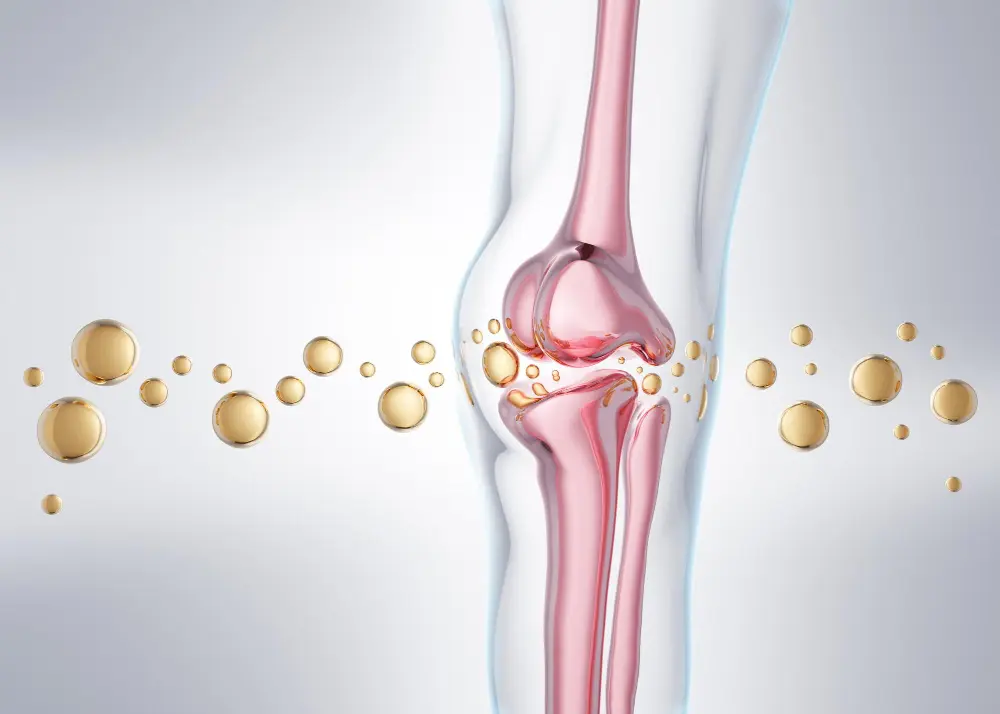
When it comes to early-stage osteoarthritis, therapy with autologous blood, perhaps in combination with hyaluronic acid, is a good way to 'slow down the degeneration,' says Prof. Dr. Imhoff. 'It doesn't bring about a cure, but if we can slow down the inflammatory component, the wear process doesn't continue as before – you gain time.'