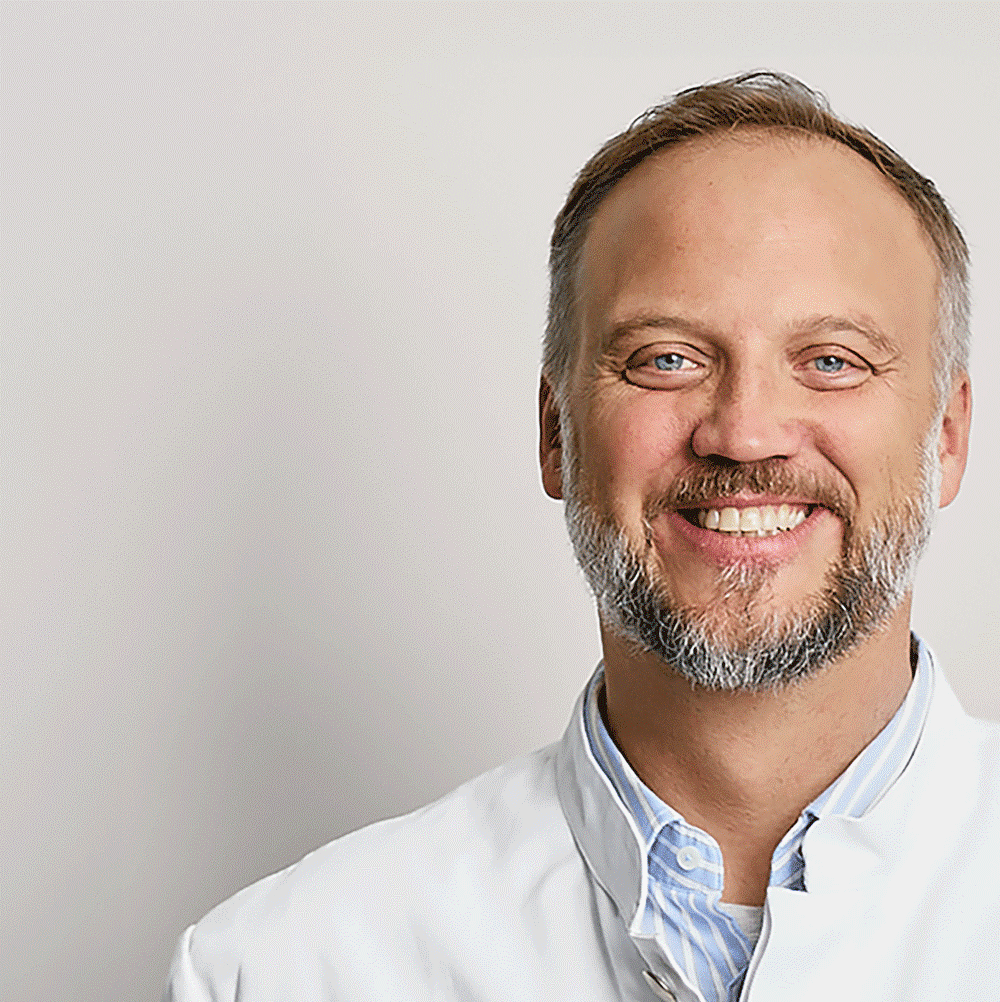
Prevention should not only detect diseases early — it should stop them from developing in the first place. Dr. Jan Hennigs explains which examinations are genuinely worthwhile today, why cardiovascular risks are so often underestimated, and how artificial intelligence is set to transform the field of prevention.
Prevention today means far more than routine check-ups. Dr. Jan K. Hennigs, specialist in internal medicine and pulmonology, founding director of Medicine & Science at YEARS, and medical director of the first YEARS clinic, explains which examinations are truly worthwhile, why cardiovascular risks are so often underestimated, and how modern diagnostics can help detect diseases earlier.
In this interview, the preventive medicine physician also discusses longevity, personalized medicine, and the role of artificial intelligence in the medicine of tomorrow.
Dr. Hennigs, you say that the medicine of the future begins before illness sets in. What do you mean by that?
We still treat many diseases only after they have already developed. Yet today we have the ability to identify numerous risks much earlier and take targeted countermeasures.
This is precisely what we mean by modern preventive medicine. Our goal is to keep people healthy for as long as possible while also gaining a better understanding of why age-related diseases such as cardiovascular disease, diabetes or dementia develop in the first place.
That is why we combine evidence-based diagnostics with scientific research. Only by developing a deeper understanding of the biological processes of aging can we prevent disease more precisely in the future.
Why preventive medicine needs to be rethought
Prevention is often associated with deprivation or unpleasant doctor's visits. How can this perception be changed?
Prevention should not be thought of as reactive medicine. It is, rather, an investment in one's own health.
That is why we have deliberately created an environment that differs from a conventional medical practice. Our patients spend the day in their own private suite, where many of the examinations also take place. This creates a calm atmosphere and allows people to focus entirely on their own health.
But the more important message is this: prevention isn't about giving something up. It's an opportunity to identify risks early and take an active role in shaping your own health.
Heart health: which tests provide the greatest benefit
In your view, which examinations offer the greatest health benefit today?
The most important area is clearly cardiovascular prevention. This is where early diagnostics can make the greatest difference.
One value that is frequently underestimated is lipoprotein(a). It is largely determined by genetics and is one of the most significant risk factors for heart attack and stroke. Men should have it measured at least once in their lifetime, and women ideally as well — possibly multiple times, depending on their individual circumstances.
An elevated value does not automatically mean that someone will become ill. However, it does indicate that other risk factors — such as cholesterol or blood pressure — should be managed with particular consistency.
Why does heart health play such a central role in preventive medicine?
This is where we have the greatest opportunity to make a difference. Current studies show that people gain significantly more healthy years of life when they avoid or keep five key risk factors under control: obesity, smoking, diabetes, high blood pressure, and elevated cholesterol levels.
Those who keep these so-called "Big Five" under control can gain an average of more than ten additional healthy years of life — a finding that underscores just how significant the impact of consistent risk management truly is.
Your health check covers considerably more than the usual preventive examinations. Why do you take such a comprehensive approach?
Aging doesn't affect just one organ — it affects the entire body. That's why we look at multiple organ systems at once, from cardiovascular health and lung function to metabolism, bone health, and cognitive performance.
Our aim is to build as complete a picture of a person's health as possible. Often, it is the combination of different examinations that reveals findings a single examination alone would not uncover.
Why is such a comprehensive diagnostic work-up worthwhile even for people who feel completely healthy?
Many diseases develop over years without causing any symptoms.
This is precisely the phase where prevention offers the greatest benefit. If we detect changes early, we can often intervene before any symptoms appear at all.
This is ultimately the decisive difference between conventional medicine and preventive medicine: we want to stop diseases from developing in the first place — not simply treat them once they are already causing symptoms.
Why fitness reveals more about your health than many lab results
Physical fitness is now recognized as an important biomarker for healthy aging. What can performance diagnostics tell us about this?
It reveals far more than just fitness level. By examining the cardiovascular system both at rest and under exertion, we get a very comprehensive picture of overall physical capacity.
The health check includes, among other things, a resting ECG, heart rate variability measurement, a cardiac ultrasound, and a spiroergometry test. Many people know this as a VO₂max test. In reality, it provides far more information than just maximum oxygen uptake. We can see how the heart, lungs, and metabolism work together under physical exertion, and how well the body adapts to the demands placed on it.
We also measure various blood values under exertion, such as lactate and blood gases, giving us a very precise picture of physical performance and potential risk factors.
Why does fitness play such an important role in long-term health?
Because it is closely linked to our biological age. A low resting heart rate, good endurance, and high physical resilience are not just signs of good fitness — they are also associated with a lower risk of cardiovascular disease and many other age-related conditions.
That is why performance diagnostics is not about measuring peak athletic performance. Rather, it helps identify individual weaknesses and address them in a targeted way.
You also assess balance, muscle strength, and flexibility. Why are these values particularly meaningful?
Because they reveal a great deal about how well the body is functioning overall.
We assess balance using electronic measurement systems capable of detecting even the smallest weight shifts. Simple tests such as the single-leg stance can also provide valuable insights into coordination and equilibrium.
Another important parameter is hand grip strength. It may seem unremarkable at first glance, but it is now considered one of the most thoroughly researched markers of physical capacity. Studies show that it is closely associated with overall muscle strength, cardiovascular health, and the risk of frailty in old age.
The examination is supplemented by a video-assisted analysis of major joint mobility. Together, these elements create a comprehensive picture of physical function — one that goes well beyond conventional fitness metrics.
Can your examinations also provide indications of future conditions such as Alzheimer's?
A reliable prediction is not yet possible today. The methods currently available are not sufficient for that.
What we can examine, however, are genetic risk factors. Certain genetic variants increase the likelihood of developing Alzheimer's over the course of a lifetime. While this knowledge cannot replace a diagnosis, it can help put individual risk into better context.
What is the benefit of this knowledge if no curative therapy is currently available?
Even without a cure, this information can be extremely valuable. Someone who knows they have an elevated genetic risk can optimize known influencing factors with particular diligence – such as exercise, diet, sleep, or the management of blood pressure and cholesterol.
In preventive medicine especially, the principle holds that the earlier we identify risks, the greater our chances of positively influencing the course of a disease.
Genetics and mental health: what modern prevention can achieve today
One unusual component of your health check is mental health. Why do you consider it an essential part of the process?
Because physical and mental health are inseparably connected.
We therefore capture not only classical medical parameters, but also stress, sleep quality, and psychological strain. To this end, we use scientifically validated questionnaires that can provide indications of depression, anxiety disorders, or chronic stress. We also measure heart rate variability, which similarly allows conclusions to be drawn about individual stress levels.
For us, prevention means seeing the whole person – and mental health is naturally an integral part of that.
Mental illness is still frequently stigmatized. Is that something you experience yourself?
Yes, and it surprises us every time. Even people who are highly successful professionally and appear perfectly healthy on the outside often report significant psychological burdens. And yet many find it difficult to speak openly about it or to seek help.
Seeking help for depression or chronic stress should feel just as natural as seeking help for high blood pressure or diabetes.
What happens if an examination reveals an elevated cancer risk or an abnormal finding?
The most important thing is to ease people's fears first. An abnormal finding does not automatically mean that someone is seriously ill.
Genetic tests in particular can reveal an elevated risk. When that is the case, the focus shifts to tailoring prevention to the individual — whether by conducting follow-up checks more frequently or scheduling additional examinations.
If there is a specific suspicion of a serious illness, we work closely with specialized centers. Our role is to identify risks early and refer patients to the appropriate specialists.
Fortunately, only a small proportion of suspected cases are confirmed. That said, when a disease is detected early, it often significantly improves the chances of recovery.
So the health check doesn't end with the diagnosis?
Quite the opposite — in fact, real prevention only begins afterward.
At the end of the examination day, we begin by discussing all results that are already available. Some findings — such as genetic analyses or specialist laboratory tests — take a little more time. For this reason, a follow-up consultation takes place a few weeks later, at which all results are reviewed together.
At least as important as the diagnosis, however, is the question: what does this mean for everyday life?
Individual prevention instead of standard medicine
What does this individual prevention plan look like?
Every person brings different prerequisites and risks. That is why there is no standard plan.
Together, we develop concrete goals and measures — always based on the examination results and the current scientific evidence.
The focus begins with the four most important levers for healthy aging: exercise, nutrition, sleep, and mental health.
Only then do additional measures come into play. Dietary supplements can be helpful, but they are no substitute for these fundamentals.
If conditions requiring treatment are identified — such as high blood pressure, lipid metabolism disorders, or blood sugar irregularities — we will of course treat those as well.
You often mention personalized early warning systems. What exactly do you mean by that?
Today, we often assess health based on individual measurements taken at a specific point in time.
I believe this will change. What will matter in the future is how values evolve over time. Small changes can often signal very early on that a disease is developing — long before conventional threshold values are exceeded. This is precisely the kind of trend we want to better understand going forward.
To that end, you also collect biological samples for research. What is the idea behind that?
Our goal is to observe aging processes over the long term. That is why we ask our patients to make blood, urine, or stool samples available for research purposes. In some cases, we even archive living immune cells.
The key advantage is that new scientific discoveries can later be applied to samples that have already been collected. When new biomarkers are developed in the future, changes can be tracked over many years.
I believe that it is precisely these long-term observations that will prove decisive in helping us better understand aging in the future.
How artificial intelligence is changing preventive medicine
Artificial intelligence is currently transforming many areas of medicine. What role will it play in prevention?
A very significant one. In some areas, we are already seeing this development today.
Artificial intelligence already supports us very reliably, particularly in medical imaging. We use it, for example, in early skin cancer detection. Suspicious skin changes are first recorded automatically and then evaluated with the help of AI. We use similar systems in fundus photography to identify early signs of age-related eye diseases.
I am convinced that AI will support many diagnostic processes in the future and help physicians identify risks even earlier.
Where do you see the greatest advances coming in the next few years?
I believe we will be able to predict diseases far more precisely than we can today.
With each new study, our understanding of how aging processes develop and which factors actually influence disease risk continues to grow — and as a result, our risk models are becoming increasingly accurate.
Methods such as liquid biopsy will also continue to evolve. In the long term, they could help detect certain cancers far earlier than is currently possible. At the same time, many research groups are working to develop reliable markers for biological age. The methods available so far are not yet precise enough for this purpose, but progress is being made very rapidly.
Dr. Hennigs, if you could give our readers just one piece of advice for a long, healthy life — what would it be?
Don't let the constant stream of new health trends unsettle you.
The most powerful levers have long been known: regular exercise, a balanced diet, sufficient sleep, and good mental health. Modern diagnostics, genetics, and artificial intelligence can help identify risks earlier and make prevention more personalized — but they can never replace the foundations of a healthy lifestyle.