© Freepik
August 16, 2026
Sharon Burbat
CBD oil has gone from niche product to wellness staple, marketed as a gentle, natural remedy. But many of its promised benefits don't hold up to scientific scrutiny — and new questions are emerging about its safety.
CBD oil has grown from a niche product into a mainstream wellness trend. The drops are said to promote relaxation, pain relief, and better sleepBut while the list of claimed benefits is long, the scientific evidence tells a considerably more sobering story.
That cannabidiol — CBD for short — actually has effects in the body is not in doubt. For certain rare forms of epilepsy, it is even approved as a prescription medication. For many other popular uses, however, the evidence is far weaker. And the widespread assumption that a plant-based substance is automatically safe is now showing significant cracks.
In February 2026, the European Food Safety Authority (EFSA) updated its assessment of CBD and set a surprisingly low provisional safety limit for intake through food supplements.
Cannabidiol is one of the so-called cannabinoids — the naturally occurring compounds found in the hemp plant Cannabis sativa. Unlike THC, CBD does not produce a high, but that doesn't mean it has no effect. The substance influences various signaling pathways in the body, including the endocannabinoid system, which plays a role in regulating mood and immune processes, among other things. Exactly how CBD produces its various effects, however, is not yet fully understood.
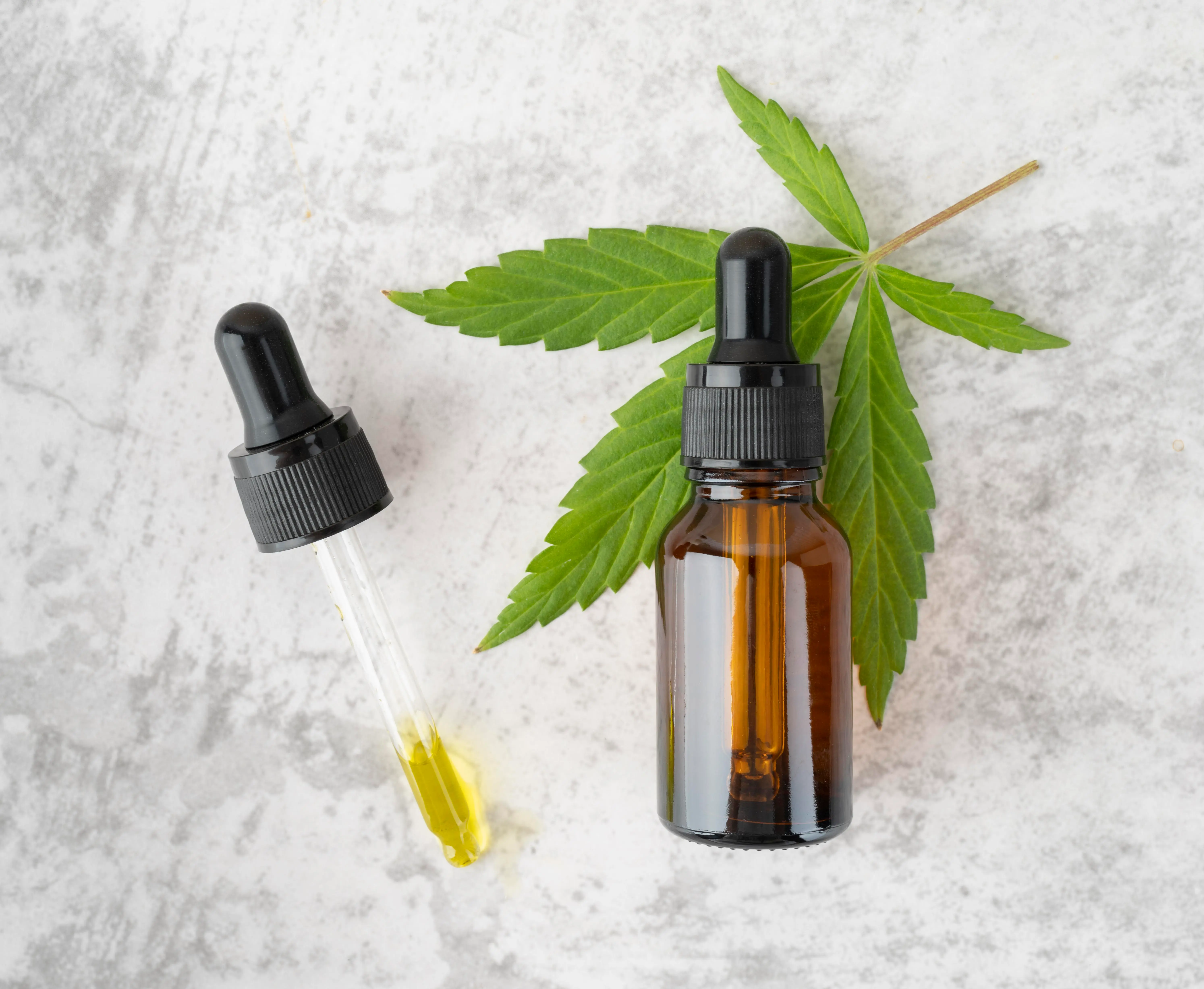
In commercially available CBD oils, cannabidiol is typically extracted from industrial hemp and blended with a carrier oil. Concentration and composition can vary considerably from product to product. Approved CBD medications are in an entirely different category: their active ingredient content, quality, dosage, and intended use are precisely defined and rigorously tested.
By far the strongest evidence exists for certain forms of epilepsy. In the European Union, Epidyolex — a medication containing cannabidiol as its active ingredient — has received approval for treating seizures associated with Lennox-Gastaut syndrome, Dravet syndrome, and tuberous sclerosis complex.
For many of the conditions for which CBD oils are marketed or used, the research picture is considerably less clear.
Small wheels, big overconfidence: E-scooter accidents are rising sharply. Prof. Dominik Pförringer on a mobility trend that is sending more and more riders to trauma wards.
Prof. Dominik Pförringer

By
Univ.-Prof. Dr. med. Dominik Pförringer

They promise longer, fuller lashes — but some eyelash serums contain potent prostaglandin derivatives. A new analysis by the CVUA Karlsruhe raises safety concerns. Ophthalmologist Dr. Tabitha Neuhann explains the risks — and why some changes to the eyes may be permanent.
Christine Bürg & Marianne Waldenfels

With
Dr. med. Tabitha Neuhann
Pain: CBD is frequently credited with pain-relieving and anti-inflammatory properties. Preclinical studies offer some interesting findings in this direction. In humans, however, the data are far less clear-cut. Moreover, studies on cannabis and pain often examine preparations that contain both THC and CBD, and the results of such studies cannot simply be applied to pure CBD or to commercially available CBD oils.
Sleep: CBD is also popular as a natural sleep aid. The claim that it generally helps people fall asleep faster or sleep more deeply for longer has not yet been convincingly supported by science. In a small randomized, placebo-controlled study from 2024, 30 people with insomnia received either 150 milligrams of CBD or a placebo every evening for two weeks.
For most of the sleep parameters examined, CBD did not outperform the placebo. The only exception was objectively measured sleep efficiency, which was higher in the CBD group after two weeks.
Anxiety and stress: Here too there are hints of possible effects, but the findings are not yet robust enough to support general treatment recommendations. A systematic review of randomized trials published in 2024 found that existing studies used widely varying CBD dosages and covered different anxiety disorders, yielding partly contradictory results.
Self-medicating with CBD to treat an anxiety disorder, chronic pain, or a sleep disorder is not something the available evidence supports.
In February 2026, the EFSA published an updated safety assessment of CBD as a novel food.
The EFSA established a provisional safe intake level of 0.0275 milligrams of CBD per kilogram of body weight per day. For an adult weighing 70 kilograms, this works out to approximately 2 milligrams of CBD per day.
That figure may seem alarming, but it does not mean that two milligrams is a recommended daily dose, nor that higher amounts are automatically harmful. Because of ongoing scientific uncertainties, the EFSA applied an additional safety factor in its calculations.
Furthermore, the provisional limit applies only to certain food supplements containing CBD of at least 98 percent purity, without nanoparticles and subject to additional conditions. For people under 25 years of age, pregnant and breastfeeding women, and individuals taking medications, the EFSA was unable to establish the safety of CBD at all.
The fact that CBD does not produce a high does not mean it is free of side effects.
Known side effects include fatigue and drowsiness, diarrhea, reduced appetite, and changes in liver enzyme levels. Experience with the medical use of cannabidiol has also shown that liver problems can occur, particularly at higher doses.
Potential interactions with medications are another important consideration. CBD can affect the enzymes responsible for breaking down various drugs, which may alter their concentrations in the body. Anyone who regularly takes medications should therefore consult a doctor or pharmacist before using CBD. This is precisely the group for which the EFSA was also unable to establish a safe intake level in its current assessment.
The distinction between an approved medication and freely available CBD products is crucial. An approved CBD medication is evaluated for quality, efficacy, and safety, and is licensed for specific medical indications. An over-the-counter CBD oil is simply not in the same category.
Specific health claims should also raise suspicion. Statements suggesting that CBD treats pain, anxiety disorders, or sleep disorders may not legally be advertised as medical effects for an ordinary food or food supplement.
Anyone using a CBD product should pay close attention to clear information about the manufacturer, composition, and CBD content. Independent laboratory analyses can indicate whether the stated quantities are actually present and whether the product is, for example, contaminated with THC or other unwanted substances. However, such analyses neither replace a medicinal authorization nor automatically make a product a legally compliant food item.
CBD is pharmacologically active — and for precisely that reason, a nuanced view is essential. For certain rare forms of epilepsy, cannabidiol has been well studied as a medication; for sleep problems, pain, or anxiety, the evidence is considerably weaker. At the same time, the new EFSA assessment makes clear that important questions about safety remain unanswered. Anyone wishing to use CBD for specific complaints, or who regularly takes medications, should seek medical advice before doing so.