© Freepik
March 3, 2026
Dr. Andrea Gartenbach
Dr. Andrea Gartenbach is a specialist in Internal and Functional Medicine and an expert in longevity. In her current column for Premium Medical Circle, she explains why the autonomic nervous system is the crucial lever for healthy longevity—and how we can actively train resilience.
In modern preventive medicine, we talk a lot about biomarkers, blood sugar, lipid profiles, micronutrients, telomeres, and mitochondria. We measure, analyze, optimize. Yet, one of the crucial levers for healthy longevity lies a level above: in the autonomic nervous system.
It is the invisible control center of our body. It regulates heartbeat and vascular tension, digestion and immune response, hormonal rhythms and energy production. Most importantly, it decides whether the body remains on alert or can switch to a state of regeneration and repair. The basis for this is always the same question: Is there danger or is safety assured?
This assessment does not happen consciously or rationally. If a situation is classified as threatening by the limbic system, the sympathetic nervous system takes over. Within seconds, catecholamines such as adrenaline and noradrenaline are released. Heart rate and blood pressure rise, glucose is mobilized, muscles tense up.
In parallel, the hypothalamus-pituitary-adrenal axis activates cortisol production. Cortisol provides energy and modulates inflammatory responses in the short term. In the short term, this is a masterpiece of evolution. However, if this state of alarm remains permanently active, it becomes a problem.

Dr. Andrea Gartenbach, MD, specialist in internal and functional medicine, expert in longevity and former elite athlete
When catecholamines and cortisol no longer rise and fall situationally but remain chronically elevated, the system dynamics change. Persistent sympathetic dominance enhances oxidative processes, impairs insulin sensitivity, and promotes disturbances of the vascular endothelium, which normally regulates blood flow and vascular protection. The brain is also not unaffected: Persistent stress activation alters neuronal connections in the limbic system.
We become more irritable, impulse control decreases, emotional reactions become faster and more intense. At the same time, cortisol loses its natural daily rhythm; it is too low in the morning, too high in the evening. This disrupts sleep architecture, thyroid function, and metabolic balance. Inflammatory signaling pathways remain active while repair mechanisms take a back seat.
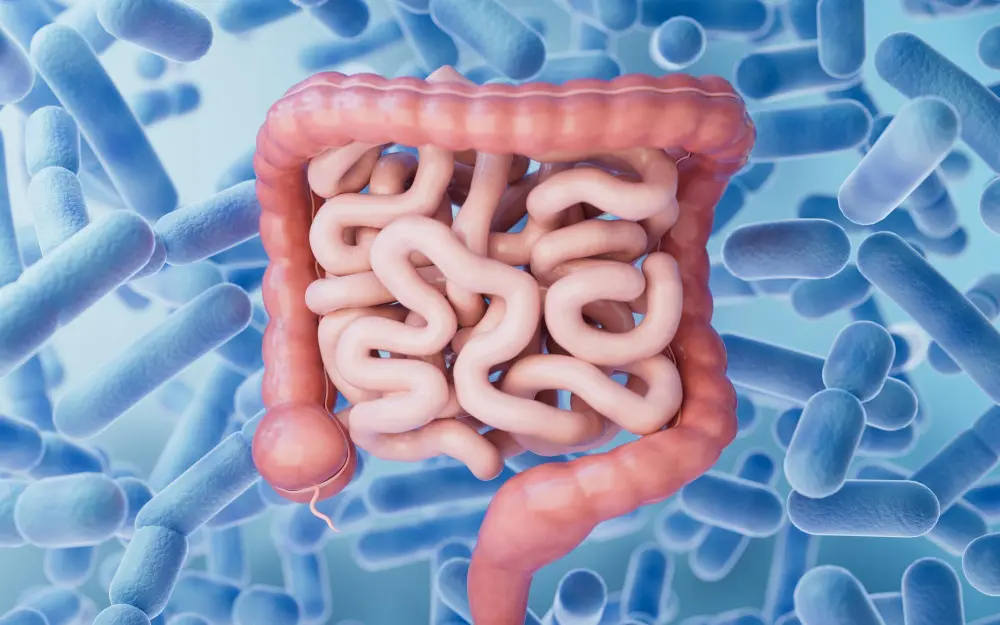
The gut-brain axis reacts particularly sensitively. Chronic stress activation changes the microbiome, increases the permeability of the intestinal barrier, and intensifies systemic inflammatory processes. In turn, these send signals back to the brain and stabilize the state of alarm. This creates a biological cycle that, if not interrupted, accelerates aging processes at the cellular level.
This is where our autonomous regulatory ability comes into play, i.e., the body's ability to return from alarm mode to a state of repair and regeneration. For this, we need the parasympathetic nervous system. It is the antagonist of the sympathetic nervous system and that part of the autonomic nervous system responsible for calming, digestion, immune balance, sleep, and tissue building.
When it is active, catecholamine levels drop, the stress axis calms down, inflammatory cytokines are modulated, and heart rate variability increases. Digestion and nutrient absorption improve, and cellular repair mechanisms are favored.
Security arises not only from external conditions but also from internal regulatory processes. We often think of parasympathetic activation in terms of meditation, breathing exercises, or other vagal impulses. And these methods help, no question. But they are only part of the equation. One of the most important influencing factors is the quality of our interpersonal relationships.
Humans are deeply social beings. For millennia, belonging meant protection, while isolation meant danger. Accordingly, our nervous system reacts sensitively to social signals. If a relationship is experienced as reliable and supportive, social closeness can dampen the stress response. In contact with a calm, well-regulated counterpart, the autonomic nervous system stabilizes.
A trusting look, a secure conversation, the feeling of connection are biologically read as safety. Oxytocin modulates the stress axes, serotonin stabilizes mood and sleep, and vagal activity increases.
Equally effective, for better or worse, is the influence of our own thoughts. The brain only differentiates to a limited extent between real threats and imagined scenarios. Persistent negative self-assessments, pronounced self-criticism, or repeated catastrophizing can therefore activate the same neuronal and autonomic stress responses as external stressors.
They increase sympathetic activity, raise heart rate and stress hormone release, and keep the organism in a state of persistent alertness. Conversely, cognitive regulation, i.e., the ability to consciously observe, reassess, and alter the significance of thoughts, is a key lever of self-regulation.
Like other biological adaptation processes, this regulatory ability can be trained. No one expects to effortlessly move heavy weights on the first attempt in the gym. Muscle strength comes from repetition, dosage, and time. It's similar with the nervous system. Our stress resilience, which can be measured by heart rate variability, doesn’t improve overnight.
Meditation, too, only unfolds its effects through regular practice. Breathing exercises, acoustic stimuli, or social rituals act as repeated training stimuli for the regulatory system. Every consciously employed form of regulation supports the transition from alertness to a state of physiological safety. Over time, the adaptability of the system increases. We become more resilient and can switch more quickly from tension to relaxation.
Health as interplay: The framework for everything else
In the end, health is not a one-dimensional project, but the result of many factors interacting with each other. But a system that is not constantly under stress responds differently to stimuli, uses resources differently, and regenerates more reliably. It is the framework for all our health efforts, so to speak. This framework is created in everyday life: through restful sleep, joy in what we do, regular exercise, in moments of conscious breathing and mindfulness, in sustainable relationships, and in the ability to pause between stimulus and response.