Why Sugar Matters More to Our Bodies Than We Think
Sugar is widely blamed for weight gain and poor health. But cancer researcher Dr. Johannes Coy believes this view is far too simplistic. In this interview, he explains why our bodies need sugar, which types are problematic — and which might even offer health benefits.
Few food ingredients have as bad a reputation as sugar. It is said to promote obesity and diabetes, drive inflammation, and even feed cancer cells. Yet Dr. Johannes Coy, biologist and cancer researcher, makes the case in his book "Die Zuckerrevolution" (GU) for a more nuanced view.
Coy discovered the gene TKTL1 and an associated metabolic pathway whose significance for the development of the human brain was later also investigated by research teams at the Max Planck Society. In this interview, he explains why sugar is far more than just fuel for our cells, why he considers fructose to be particularly problematic, and what he means by "intelligent sugars".
Dr. Coy, you write that sugar is the fuel of evolution and the key to cellular health. When did it become clear to you that we have been thinking about sugar in entirely the wrong way?
It was a gradual process, closely tied to my work in cancer research. We are constantly told that sugar is inherently harmful and only makes us sick. But when you look at evolution, you quickly realize: without sugar, we simply would not exist in the form we do today. The key insight for me was recognizing that the body uses sugar not merely as an energy source, but as a fundamental building block for the formation and repair of DNA in our cells — and that realization requires us to rethink our entire perspective on sugar.
You consistently draw a distinction between "good" and "bad" sugar. What is the difference?
The classic industrial sugar (glucose and fructose) found in so many foods drives up blood sugar levels and, when consumed in excess, promotes disease. On the other hand, there are so-called "intelligent sugars" such as tagatose. What makes these sugars remarkable is that they work in a completely different way biologically: they do not cause blood sugar to rise, are tooth-friendly, and can be used beneficially by the body without causing harm. So the question is not "sugar yes or no" — it is about choosing the right kinds of sugar.
In your view, would a completely sugar-free diet actually be harmful to health?
There are people who have no choice but to eat a sugar-free diet due to the climate where they live. The Inuit of Greenland and Canada are one example. Because of the climatic conditions in those regions, plants cannot grow, and so their food contains none of the sugar that plants would otherwise provide.
Traditionally living Inuit have therefore been forced into a sugar-free diet while at the same time consuming very large amounts of fat and protein through fish and marine mammals. This diet also supplies large amounts of omega-3 fatty acids. One might assume that such a sugar-free diet rich in omega-3 fatty acids would be very healthy and conducive to a long life. But the opposite turns out to be true.
Inuit who follow this diet have a very short lifespan. From an evolutionary perspective, a completely sugar-free diet is actually a contradiction in terms, because our cells — especially those in the brain — depend on glucose. When we deprive the body of all carbohydrates, we force it into a permanent state of emergency. This may be sustainable as a short-term therapeutic measure, but as a long-term diet it ultimately deprives cells of sugar as an essential building block for repair and regeneration.
Why Sugar Is More Than Just Energy for Our Bodies
Can you explain to a non-specialist why the transketolase gene TKTL1 is so significant?
Think of TKTL1 as a molecular factory — or a pair of scissors inside the body. This enzyme takes sugar and cuts it precisely into the building blocks a cell needs in order to divide or repair itself. It is essentially the master switch for cell growth. What is remarkable — but also dangerous — is that this mechanism plays a central role in both healthy processes and in disease.
TKTL1 generates the building blocks that allow healthy cells to stay young, but it also does the same for unwanted cells such as cancer cells that can kill us. Viruses, too, exploit the activation of TKTL1 to hijack our cells and use them to produce more viruses.
What does TKTL1 have to do with the remarkable expansion of the modern human brain?
It is essentially the engine of our intelligence. It was only through this enzyme that evolution was able to extract, in large quantities, the building blocks from sugar required for the growth of our highly developed brain. It enabled modern humans to form significantly more nerve cells than Neanderthals. Without the TKTL1 enzyme and the sugar metabolism linked to it, we would not be sitting here today having this conversation.
What Sugar Has to Do With Our Brain
What role does sugar metabolism play in concentration, learning, and memory?
When the brain is optimally supplied with the right sugars, the TKTL1 factory runs like clockwork, delivering the building blocks needed for new nerve cells and their repair. In practical terms, this simply means the brain works better. You think faster, concentrate for longer, and retain what you have learned more effectively. In essence, it protects the brain from mental decline by preserving function and enabling repair.
Are there connections between sugar metabolism and neurodegenerative diseases such as dementia or Parkinson's?
Yes, very close ones. When sugar metabolism in the cells is no longer functioning adequately, the body's own protective and repair mechanisms break down, leading over time to chronic damage in nerve cells. This is precisely where research comes in: if we understand how cells use sugar and repair themselves, we can also discover entirely new approaches to counteracting the degeneration of nerve cells in diseases like dementia before it is too late.
"Sugar Feeds Cancer" — Is That Really True?
Many people are familiar with the saying: "Sugar feeds cancer." What do you make of that claim?
It is an extremely reductive statement that often leads to false conclusions. What is true is that aggressive cancer cells have an enormous appetite for sugar (glucose) — that much is correct. But they use it in a completely different way from healthy cells: they use it to rapidly generate large numbers of building blocks for new cells while simultaneously building a protective shield of lactic acid that allows them to hide from the immune system.
Fruit sugar (fructose) promotes the growth of cancer cells even more strongly than grape sugar (glucose). Because table sugar contains fructose, and because fructose is frequently added directly to foods — for example in the form of fructose syrup — consumption of fructose has risen enormously in recent decades. It is therefore particularly important to keep fructose intake low.
Which Types of Sugar Are Better — and Which Should You Avoid?
You mention types of sugar that can actually be beneficial to health. Which ones are they — and why?
First and foremost, tagatose deserves a mention — a natural sugar that is now being used in healthy chocolates and beverages. It can even make a cola healthy. Tagatose tastes almost exactly like table sugar, but has significantly fewer calories, does not cause blood sugar levels to rise, and even protects teeth against cavities.
The European Food Safety Authority has officially confirmed these health-promoting properties. Trehalose is another healthy, natural sugar: it supplies the brain with glucose in a steady, even manner and counteracts the breakdown of nerve cells.
In addition, trehalose promotes the elimination of unwanted cells through autophagy — the process by which the body clears out damaged cells that accelerate aging. Tagatose and trehalose are two members of the "intelligent sugars" family, which is further complemented by other healthy, natural sugars such as galactose, mannose, allulose, ribose, and isomaltulose — all of which have positive effects in the body and help keep us healthy.
Which sugar would you avoid as much as possible in everyday life?
Without question, classic table sugar (glucose and fructose — i.e. sucrose), as well as fructose in the form it is often found in cheap processed foods and soft drinks, such as corn syrup. Too much table sugar, and fructose in particular, overloads our metabolism and promotes inflammation while feeding exactly the wrong metabolic pathways in the body. If you significantly reduce your intake of table sugar and fructose, you have already done half the work when it comes to your health.
Fructose is often misunderstood, because people think: "It comes from fruit, so it must be healthy." Eating a whole piece of fruit is perfectly fine, precisely because of the fiber it contains — fiber slows the rise in blood sugar and promotes a faster sense of fullness.
What is dangerous is the isolated, industrial fructose found in juices and soft drinks, which goes straight to the liver without any detour and promotes fatty liver disease. More recent studies also indicate that excessive fructose intake causally promotes cancer growth. I cannot warn strongly enough against this kind of excessive fructose consumption.
What Really Influences a Healthy Sugar Metabolism
What role do exercise, muscle mass, and sleep play in healthy sugar metabolism?
A fundamental one! Muscles are the body's biggest sugar vacuum cleaner. The more muscle mass we have and the more we move, the more efficiently excess sugar is transported into the muscles, stored there, and burned. This rapid transfer of sugar from the blood into the muscles protects us from high blood sugar levels and the damage that elevated blood sugar triggers.
Factors such as sleep deprivation create pure biochemical stress: they raise cortisol levels and completely disrupt insulin regulation. That is why the interplay of healthy nutrition, adequate sleep, and regular exercise is so important for our overall health.
What does that mean in practice for our diet?
In everyday life, my primary recommendation is to adjust your diet so that your intake of table sugar and fructose is not too high, and to make use of natural sugar alternatives such as tagatose, trehalose, galactose, or allulose. It is also important not to overlook the fact that carbohydrates in bread, pasta, cakes, and rice are essentially sugar-rich foods, so these should also be taken into account when thinking about sugar intake.
If you eat a pizza and drink a beverage containing tagatose and/or allulose alongside it, the resulting rise in blood sugar is less pronounced, because tagatose and allulose slow the absorption of glucose from the intestine. This reduces the blood sugar spike, which in turn means less damage caused by elevated blood sugar.
The slower absorption of sugar from the intestine also leads to a more steady supply of sugar to the body and a longer-lasting feeling of satiety. By avoiding blood sugar spikes, less insulin is released, which means less sugar is converted into fat. As a result, sugar can be used more evenly and effectively by the body.
What is your view of artificial sweeteners such as aspartame and sucralose?
Honestly, not a positive one. These artificial sweeteners trick the brain into perceiving sweetness that delivers no energy whatsoever, yet still trigger insulin release along with the inflammation that accompanies it.
On top of that, they damage the gut microbiome, and there is even data raising suspicions that they may be carcinogenic. The better approach is to use real, functional sugars such as tagatose instead. These work biologically like real sugar but without the harmful effects associated with artificial sweeteners.
Has your own diet changed fundamentally as a result of your research?
Yes, it really has changed. I am anything but an ascetic — enjoyment plays a major role in my life. On weekends, for example, I love spending time in the kitchen, and cooking brings me genuine pleasure. That said, I have adapted classic, indulgent recipes — for cakes and desserts, for instance — to make them healthier.
The key factors are healthy sugars and fiber-rich flour blends. I do this above all because in daily life I can feel directly how beneficial this change is and how much more balanced my energy levels are as a result.
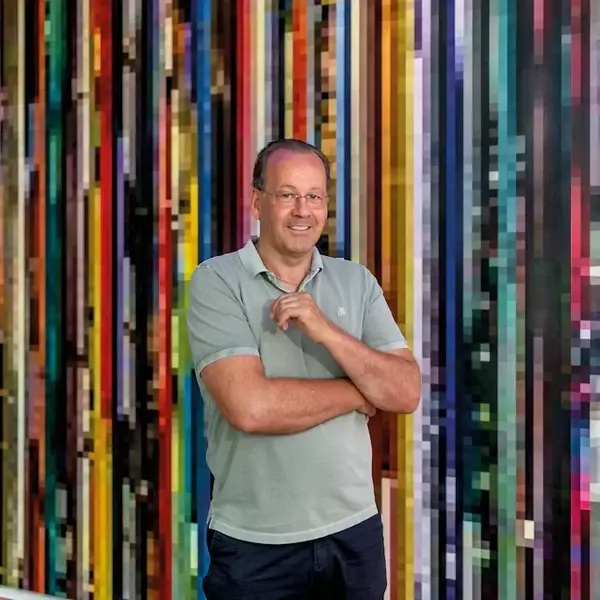
Dr. Johannes Coy is a biologist and cancer researcher. He discovered the gene Transketolase-like 1 (TKTL1) and an associated metabolic pathway that plays a fundamental role in human development.
Die Zuckerrevolution by Dr. rer. nat. Johannes Coy and Judith Finlayson
How sugar influences our health, nutrition, and metabolism — prevention and cellular health reimagined