© Anthony Shkraba
When dates are eaten in the evening, they may promote melatonin production.
September 3, 2026
Björn Brand
Dates can help get digestion moving. But can they also help with constipation? Here’s what studies reveal about their effects on the gut and the gut microbiome.
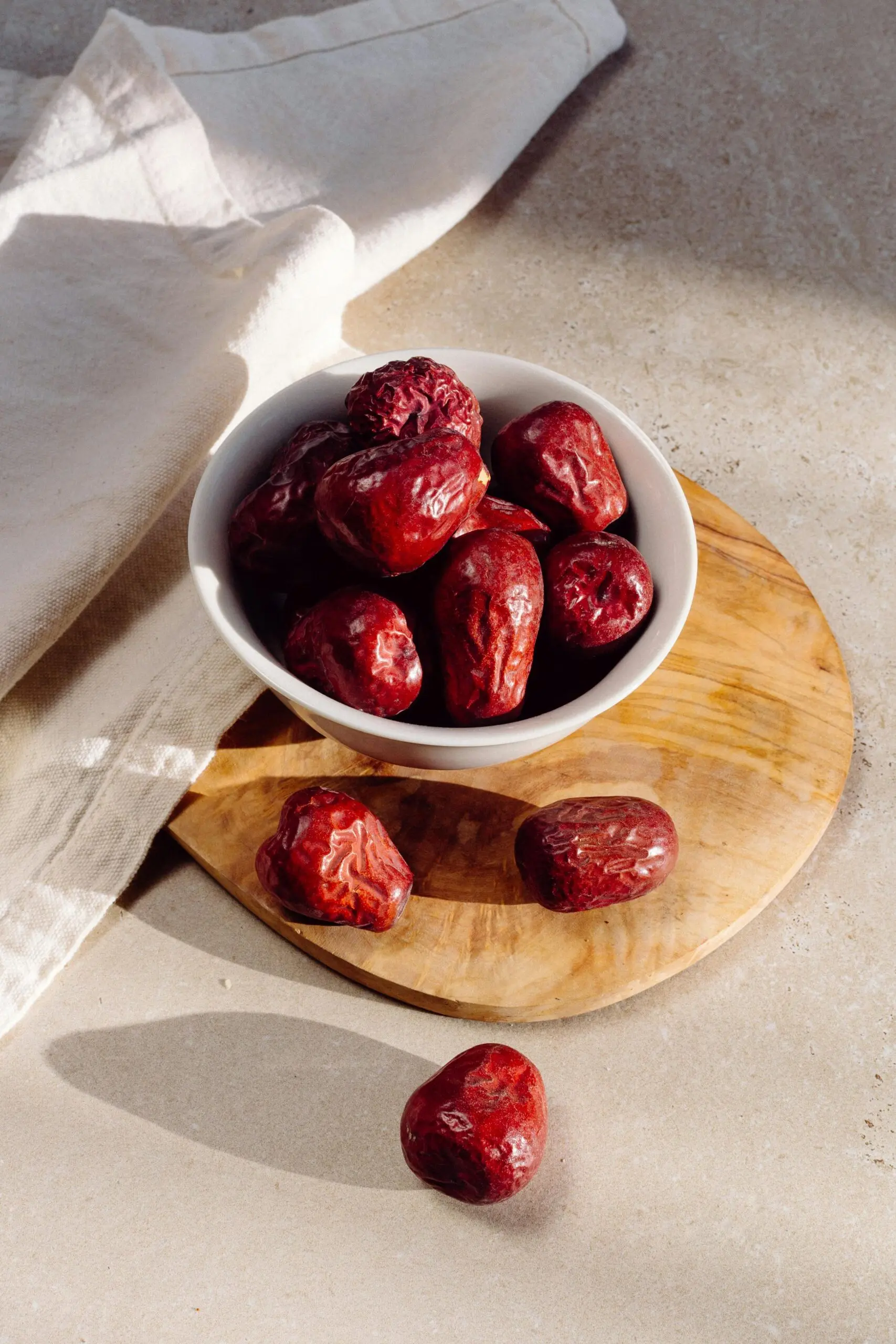
Dates have a reputation for getting digestion moving and are often recommended as a natural remedy for constipation: the fruits are rich in fiber, and at least one human study has demonstrated a measurable effect on stool frequency. But the key question quickly gets complicated — how many dates per day are actually beneficial, and at what point can they cause bloating and other discomfort?
When it comes to how dates affect digestion, their fiber content is of particular interest. Exactly how much fiber the fruits contain varies depending on the variety and degree of ripeness.
A 2025 study published in the journal Scientific Reports, which examined four date varieties, found between 3.2 and 7.4 grams of fiber per 100 grams. Notably, more than 90 percent of this was insoluble fiber, consisting mainly of lignin, cellulose, and hemicellulose. The smaller soluble fraction consisted primarily of pectin.
Insoluble fiber is not digested in the small intestine. It can increase stool volume and thereby support regular bowel movements. Soluble fiber, by contrast, can bind water and is partially fermented by gut bacteria. Both forms can therefore play a role in maintaining regular digestion.
There is no scientifically established quantity as yet. However, one of the few human studies to directly examine the effect of dates on digestion does at least offer a point of reference.
In a randomized crossover study, 22 healthy adults ate seven dates per day for three weeks — approximately 50 grams in total. Compared with the control phase, both the number of bowel movements and stool frequency increased significantly. There was no increase in diarrhea.
That said, seven dates per day is not a scientific dietary recommendation. The study was small, involved only healthy adults, and did not compare this quantity with smaller portions. Whether three or four dates, for example, would produce a similar effect cannot be inferred from these findings.
The fiber content also warrants some context: depending on the variety, 50 grams of dates provides only a portion of the recommended daily fiber intake. The German Nutrition Society recommends adults consume at least 30 grams of fiber per day. Dates can contribute to meeting this target, but should not be the sole source.
What matters, then, is less a specific number of dates and more the overall diet. People who tolerate dates well can include them regularly. For those with sensitive digestion or a previously low-fiber diet, it is advisable to start with a smaller portion and increase gradually. Adequate fluid intake is important throughout.
The combination of fiber content and the findings of the small human study suggests that dates can support regular bowel movements. Whether they also relieve existing constipation, however, has not yet been adequately studied.
In general, fiber is one of the most important dietary factors in managing constipation. It can increase stool volume and influence stool consistency. Quantity alone is not the only consideration, though: anyone who significantly increases their fiber intake should also drink enough fluids, as otherwise symptoms can actually worsen in some people.
In cases of chronic constipation, simply eating more fiber is not necessarily sufficient. The condition can have a range of underlying causes, and not every form of constipation responds equally to a higher-fiber diet. For constipation that is persistent, sudden in onset, or severe, the cause should always be investigated by a doctor.
In addition to fiber, dates contain other incompletely digestible carbohydrates that gut bacteria can in principle make use of. Laboratory studies suggest that certain components of the fruit may influence the growth of gut bacteria and the production of short-chain fatty acids.
In humans, however, such an effect has not yet been convincingly demonstrated. In the human study mentioned above, the bacterial groups examined and the short-chain fatty acids measured did not change significantly, despite the increase in stool frequency.
These results reveal an interesting discrepancy: the effect on digestion does not necessarily go hand in hand with measurable changes in the microbiome.
Current research also approaches a possible prebiotic effect with caution. Dates do contain substances that can serve as food for gut bacteria. However, the existing human evidence is not sufficient to classify the whole fruit as a scientifically proven prebiotic.
Not in the conventional sense. Dates do not act like a medical laxative, but their fiber content can help support normal bowel function.
How quickly such an effect sets in is also not sufficiently understood. The widely cited claim that dates produce a laxative effect within one to three days cannot be scientifically substantiated. For acute or severe constipation, a rapid or reliable response should therefore not be expected.
Yes — particularly if the gut is not used to larger amounts of fiber. A sudden increase can lead to bloating, a feeling of fullness, or changes in bowel habits.
Those who are sensitive should start with a small portion and only increase the amount if it is well tolerated. If discomfort regularly occurs after eating dates, the quantity should be reduced.
There is currently no convincing scientific evidence to support this. Soaking makes dried dates softer and allows them to absorb water, but a stronger digestive or laxative effect has not been demonstrated.
Both contain fiber. How much fiber a date provides depends on factors including the variety, degree of ripeness, and water content. There is no scientific evidence that one type is fundamentally better for digestion than the other.
Dates contain substances that gut bacteria can utilize. However, in the most important human study conducted to date, no significant change in the bacterial groups examined was detected after three weeks of consuming seven dates per day. A beneficial effect on gut flora is therefore not yet considered established.