© Vanessa Loring
October 7, 2026
Christine Bürg & Marianne Waldenfels
Cut out sugar, reduce carbohydrates, avoid certain foods: there’s no shortage of advice about diet and cancer. Oncologist Dr. Gesche Brannolte-Raab explains what the evidence shows – and what she recommends to her patients.

An interview with
Dr. med. Gesche Brannolte-Raab
In Germany, more than half a million people are diagnosed with cancer every year. At the same time, the idea persists that the right diet can influence whether a tumor develops or even grows. Sugar in particular is repeatedly suspected of literally "feeding" cancer.
But can a tumor actually be starved through diet? Do you have to give up sugar after a cancer diagnosis? And what role do alcohol, highly processed foods, and dietary supplements play? Dr. Gesche Brannolte-Raab, specialist in internal medicine, hematology, and oncology and co-author of the book "Nutrition and Cancer," explains what diet can and cannot achieve – both during cancer therapy and in prevention.
How much influence does our diet have on cancer risk?
It plays a major role, especially in colorectal cancer. Obesity is also an important factor in the development of cancer – and a great many people are affected by it today.
A lot is also connected to sugar metabolism, insulin resistance, and diabetes – all of which are influenced by diet and lifestyle.
What mistakes do we most commonly make with our eating?
You can't really make that many mistakes, strictly speaking. Things have become a bit too complicated these days. People think they need to eat all sorts of wonder foods – some superfood or supplement or another.
What we really should do is get back to basics: more variety, less processed food, less alcohol. These are things everyone already knows, yet many people still struggle to put them into practice in daily life.
After a cancer diagnosis, the rules can seem to change overnight. What matters most when it comes to eating during therapy?
Eating a balanced diet during cancer therapy can be genuinely difficult. Most of the time, you're just relieved to be able to eat anything at all, because your appetite has disappeared. On top of that, there may be problems with the oral mucosa, irritation, diarrhea, or nausea.
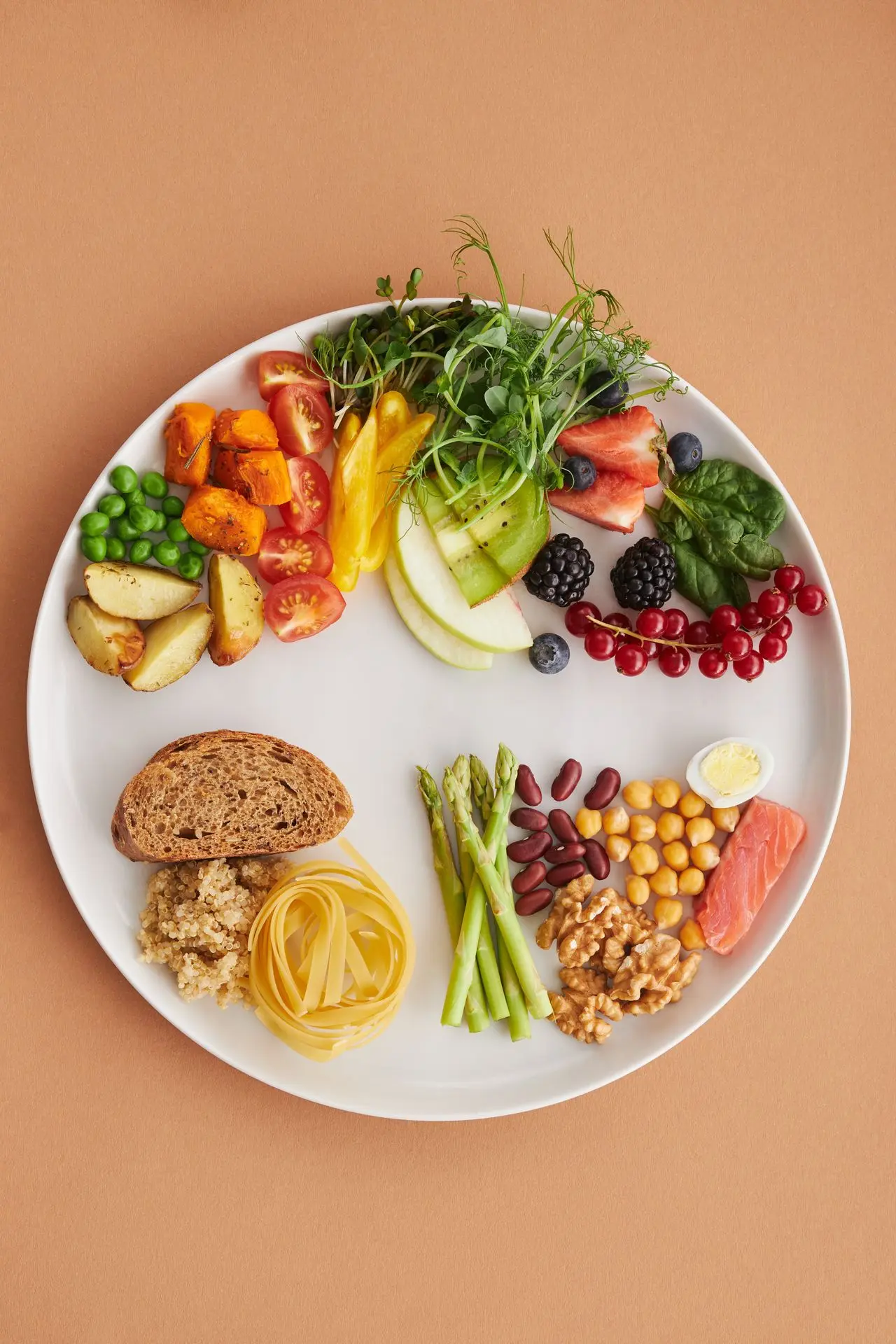
You have to work with what's possible. Above all, you should try not to lose too much muscle mass. Preparing food in advance can help. We cover this in our book as well – Carolin Kotke has put together great meal-prep ideas specifically for chemotherapy. Having things ready makes it easier to keep going, so you don't end up saying, "Nothing is working today, so I'll just skip eating." Because skipping meals would only accelerate muscle loss.
What do you recommend to patients who feel nauseous during cancer therapy or can barely eat?
When you're feeling nauseous, colder foods that don't have a strong smell often help. Small, practical tips like this are easy to put into practice.
For patients who, for example, are only having surgery or hormone therapy, my advice is: try to develop a genuine appreciation for the Mediterranean diet. And ask yourself: how can I adjust my habits in a way that truly benefits my body?
It shouldn't be all about restrictions. Many people feel an immediate sense of panic after a cancer diagnosis and think: now I can't have this anymore, and I can't have that anymore.
Do cancer patients need to give up sugar entirely?
No. But it's certainly worth thinking about eating fewer processed, sugary foods – candy bars or cake, for instance. Those are things you could reasonably cut out.
But the body needs sugar, and so does the brain and the muscles. Cutting everything back can sometimes cause real problems – with cognitive performance and alertness, for example. That's why the focus should be on reducing artificial, added sugars rather than eliminating sugar altogether.
Is there such a thing as an anti-cancer diet that can starve a tumor?
That's an oversimplification – if it were that straightforward, everyone with cancer would already be doing it. There are some studies out there, including research on fasting and on the ketogenic diet, as well as on higher protein and lower carbohydrate intake. Various approaches are certainly worth exploring.
But there is no single, definitive cancer diet. The Mediterranean diet has the strongest evidence behind it – though even that encompasses a wide variety of foods, and it's worth clarifying exactly what it includes. The bottom line is: you cannot starve a cancer through diet.
There is one indulgence, however, where you take a very firm stance: alcohol.
Yes, I'm unequivocal on that: zero alcohol. People are always taken aback at first, of course, because for many it's an important part of their quality of life.
But the reality is that alcohol is a cellular toxin, and every sip carries some cancer risk. That's something people need to understand.
What nutrition myths do you come across most often among your patients?
In oncology, you hear it almost immediately: "Cancer doesn't like raspberries." Or: "Cancer feeds on sugar." And almost reflexively, patients tell me: "I've cut out sugar completely now."
That can actually make some sense when it comes to highly sugary foods. But the body does need some sugar. Foods with a favorable glycemic index, like oats, are in fact quite beneficial.
With breast cancer patients, who tend to be very well-informed, I also frequently encounter this myth: "I'm not allowed to eat soy anymore." There is no data to support this. Soy binds to a different estrogen receptor and is not the type of estrogen that breast cancer patients need to be concerned about.
What can diet do to ease the typical side effects of cancer therapy?
Making sure to get enough protein is important. When that's not possible through food alone, protein shakes can sometimes help fill the gap. There are also amino acid supplements for situations when nothing else works.
But the key question is always: what is actually possible at that moment? Everyone's appetite is different. Some patients do well with a yogurt; others say, "All I'm craving is a pretzel" because of the saltiness.
It's very individual. The right support depends on which specific problem arises – diarrhea calls for a different approach than constipation.
For chemo brain, I find omega-3 to be very valuable. Sometimes creatine as a supplement can help as well. And beyond nutrition, I always tell patients: do a sudoku or a crossword puzzle every day, because the brain needs to stay active.
Should every cancer patient be taking vitamins or micronutrients?
Generally, no. I do work extensively with dietary supplements myself, including with cancer patients. But levels should be measured first – or a proper assessment carried out – so that any supplementation can be targeted and meaningful.
The important thing is to measure first, rather than immediately reaching for an all-in-one supplement on the assumption that: I have cancer, so I must need this. That often makes little sense. And at high doses, you also have to watch out for potential interactions.
What else can help people get through cancer therapy more easily?
First and foremost, exercise. That applies at every stage – whether in prevention, during therapy, or in follow-up care.
And as in other phases of life, strength training has proven its value. Nobody really wants to do it – especially women, whom I always have to encourage. But it helps, including when it comes to reducing side effects.
I also think maintaining a consistent sleep routine during treatment is important. The usual rhythm often gets disrupted – many people spend a lot of time in bed and find themselves with a completely different day-night cycle. Making an effort to restore some regularity really matters.
Cancer patients also need to feel a sense of self-efficacy. Suddenly everything is unfamiliar – chemotherapy, surgery – and every neighbor and acquaintance has an opinion on what they should or shouldn't do. The key is to stay grounded in yourself and start by reconnecting with your own body. That, too, makes a real difference in how therapy goes.
If you could name just three dietary rules for cancer prevention, what would they be?
Even if no one wants to hear it: cut out alcohol – that's number one. Then it's variety. Plenty of secondary plant compounds, lots of vegetables, nuts, and seeds – these belong on the plate if you want to age healthily. In essence, the same principles that apply to cancer prevention also apply to longevity.
You should also pay attention to quality protein and very good fats. For me, that is the absolute foundation.
And what protects against cancer beyond diet?
Exercise. Exercise. Exercise. From a conventional medicine standpoint, it's also essential to be clear: take advantage of preventive screenings and don't neglect vaccinations. Colonoscopies and mammograms are part of that. And then – as with the topic of longevity – social connections should not be underestimated. They keep us young and matter in this broader context as well.
Cancer therapy is becoming increasingly personalized and advanced. Is prevention being underestimated as a result?
Oncology is bringing new drugs to market at a rapid pace, and a great deal is being invested in research. At conferences, we're sometimes left speechless by all the new medications – increasingly individualized treatments, immunotherapies, and therapies targeting the molecular level. It really is remarkable.
But when we consider how many people develop cancer over the course of their lives, it would of course be equally desirable to invest as much energy in prevention. Because some of these cases simply wouldn't arise.
You have been working with cancer patients for 25 years. What keeps you in oncology to this day?
I once spent a year outside of oncology and realized something was missing. This field is truly special. Today I see not only oncology patients but also many prevention patients. A very particular bond forms with people who have cancer, and that is enormously fulfilling.
In my current practice, I feel I've found my calling, because I'm able to bring together different healing disciplines. I can see that patients are doing so much better than they were in the days when I only knew conventional medicine.
Being able to accompany people through serious illness in a more holistic and comprehensive way is deeply fulfilling.

Cut out sugar, reduce carbohydrates, avoid certain foods: there’s no shortage of advice about diet and cancer. Oncologist Dr. Gesche Brannolte-Raab explains what the evidence shows – and what she recommends to her patients.
Christine Bürg & Marianne Waldenfels

An interview with
Dr. med. Gesche Brannolte-Raab