© Sami Aksu
January 12, 2024
Julia Werner
Narcissists as evil manipulators – that's the cliché. But research sees it more nuanced. What narcissism really is and why it changes the world.
Psychology is today, like so many other fields that once required real expertise, democratized. Assessments of any person's mental state are given by amateur psychologists at the dinner table, of course not without first extensively consulting the famous diagnostician Dr. Google have been asked.
The diagnosis is, because it is a hyped social media topic, then also gladly: The guy is a narcissist. People who think well of themselves no longer have a good standing. In the eyes of others, they are megalomaniacal monsters, without any ability to empathize, driven by evil intentions. The web is full of their victims, who explain everything about their manipulation techniques (gaslighting) and the way out of the toxic relationship (breaking off contact).
In the past, a man who broke a woman's heart due to his narcissism was simply attachment-disordered and the vain boss with little inclination to team diplomacy was simply inept. Today she is personality-disordered. And then there was also this orange man who stomped onto the world stage, elbowing his way to the front row at the NATO summit and plunging the United States into one of its greatest social crises with his megalomania.
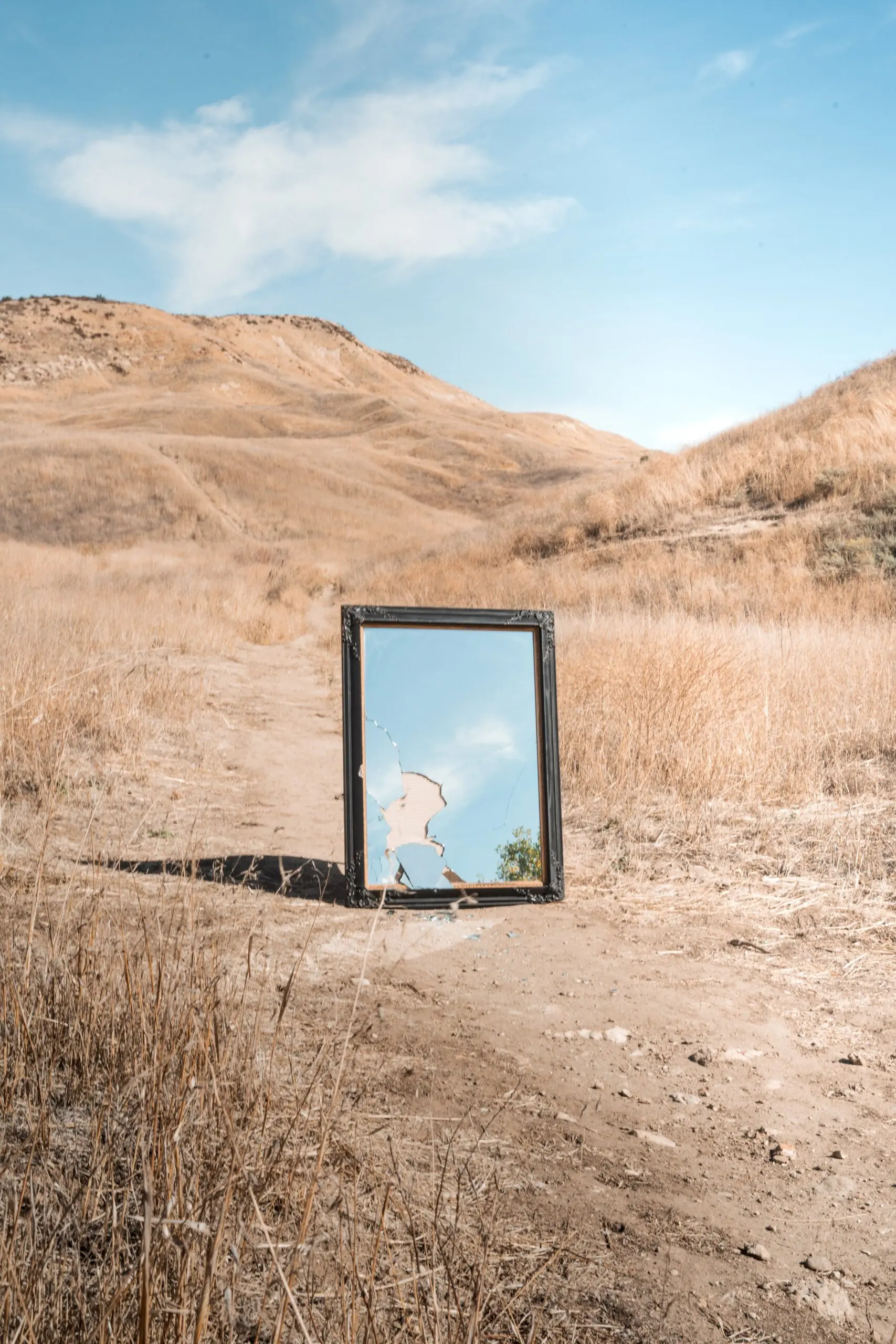
It seems like we've been living among energy vampires all along and have only now uncovered them. All these psycho monsters are named after Narcissus. According to Greek mythology, he fell in love with his own reflection in the smooth river, which backfired. He died from unfulfilled longing for this beautiful creature and turned into the flower of the same name. Thanks to him, vanity hasn't had a glorious reputation for centuries.
However, the slightly megalomaniac personality has never had a worse standing than now. Didn't we just call them charismatic people in the past? At the moment, with a few exceptions, they seem to prefer keeping a low profile out of fear of Dr. Google. As is generally known, googling when feeling unwell is not a good idea.
It's easy for a slight twinge in the stomach area to turn into incurable stomach cancer. The fact that narcissism itself is not a disease , but a spectrum of personality traits, of course makes it more difficult to move on from a failed relationship. But it's important.
Within all of us, there is at least a spark of narcissism, otherwise we probably wouldn't have even made it through the first weeks of our lives: Sigmund Freud established the concept of "primary narcissism." By this, he meant the infant's libido, which is solely focused on its own body and its satisfaction. In other words: the survival instinct.

The psychoanalyst Paul Federn introduced the concept of 'healthy narcissism' in the 1930s and described it as an 'appropriate feeling of self-love.' Healthy? That was somehow lost in all the reporting of recent years, which mainly focused on protecting oneself from narcissists. It's high time to change the perspective.
The most significant researcher on the field of narcissism at the international level, Mitja Back , this year published his work Me! The Power of Narcissism (Kösel-Verlag) and it is nothing less than a paradigm shift. The professor of psychological diagnostics and personality psychology at the University of Münster clears up some stereotypes on the subject.
Yes, narcissists strive for status, but that doesn't make them villains. Do narcissists have the reputation of being power-hungry manipulators who steamroll over souls like bulldozers, that they are the guardians of dark traits, perhaps simply thanks to pop culture – like the Bret Easton Ellis adaptation American Psycho? Really evil narcissists, according to Beck in an interview with the NDR, are simply psychopaths – with narcissistic traits. Not the other way around.
Narcissism in itself is not a disease. It lives among us and to some extent within us, quite balanced between both genders and in all professions. However, it is more common in those where more prestige is to be expected: in the media business, among lawyers, and of course in the executive suite.
So what drives narcissists? According to Mitja Back, they really just want what makes everyone feel good: the drug of positive attention. Narcissists want to be admired. They think they deserve better treatment than others.
And, perhaps most importantly, they firmly believe that they will achieve great things in life. All characteristics that the psychological term grandiosity summarizes. And which of course sounds quite unsympathetic.
“Every morning I wake up with the most beautiful feeling – the feeling of being Salvador Dalí,” said the Spanish artist and probably the most eccentric narcissist of all time. Anyone who often shakes their head because self-love seems to be the educational goal of an entire generation must of course ask themselves: What is actually wrong with this attitude? Back also names the most important positive aspect of being convinced of oneself: It makes one very, very brave.
Anyone who is creatively active knows how much of it is necessary to put something on a blank sheet of paper or canvas – and then to present it to some form of public.
Narcissistically inclined personalities dare to do so. And more: According to Back, their talents are seduction, change, progress. Narcissists are able to generate positive feelings in other people, to carry them along on the path to new terrain – so to speak: to change the world.
It is no coincidence that Barack Obama’s political opponents spent years arguing over whether he was a narcissist. The British ex-Prime Minister David Cameron, for example, as one of his staff members recounted, described the US president behind closed doors as the most self-loving person he had ever met. Indeed, the man still loves to hear himself speak to this day. So do we, however – no matter how often he included “my intelligence service” and “I” in his speeches.
When Obama was elected as the first black president of the USA in 2008, he inspired the entire world with a joyful sense of new beginnings – a collective experience of hope through a single man (and “his” team, of course).
Then there’s Elon Musk. An unlikable person with questionable attitudes, no question. But also: the man who planted the vision of e-mobility in our heads. It’s no coincidence that he wants to transport humanity into space. A person lower on the narcissism spectrum might have the idea too. But also the doubt: Can it be done? What if I fail? And above all: What do others think?
Rarely has anyone failed as often as Musk. Supersonic train fail or not – he continues to take full risks, and others watch him with admiration. Incidentally, narcissists don’t care much about others, but not in the way Dr. Google and Coach Instagram explain to us. Contrary to popular belief, they are by no means incapable of empathy.
In studies, Mitja Back found that the difference between normal people and narcissists in this respect is only marginal. The truth is: They are simply less interested in their fellow human beings.
They prefer to focus their energies on their own interests rather than on coping with the fringe figures. What results are, so to speak, collateral advantages. Great art, groundbreaking literature, technological progress.
A relationship with a narcissist is not necessarily toxic under this premise. Rather, as the professor says, one should ask oneself beforehand what one actually wants. Security, deep connection, loyalty? – Can become a challenge with a narcissist. Excitement and dreams? – Bingo!
By the way, there are no differences between female and male narcissism, but as long as full equality is not yet established, it is primarily the men who lead some DAX companies to unprecedented heights because they are so special.
And the women – unless they are called Lady Gaga, for example – who simply adapt their narcissistic tendencies to the spheres of influence assigned to them by the patriarchy: with a helping syndrome in the form of publicized donations, charities, or the supermom Insta account (look how good I am!) – or pathologically pronounced vanity, meaning revolving around themselves with sports, makeup, and photo filter madness.
But that is not necessarily a bad thing. Better to sacrifice a few bills and celebrate yourself for it than not to do it. You see: It pays off to be a little less ashamed of your own narcissistic whims from now on, and not to find your fellow human beings so terribly boring. A little arrogance has never harmed the world.
But what does science currently say about the question of where narcissism actually comes from? For a long time, it was assumed that it arose in its extreme form primarily due to maternal coldness in childhood, and the resulting lack of self-confidence made the narcissist a helpless pawn of his fate and the perfect actor, who had no idea that he was a sick narcissist.
Mitja Back also refutes this, saying that a narcissist usually always knows exactly how he is perceived by others, he even plays with it. The researchers now find exactly the opposite to be plausible as a source:
Narcissism indeed develops in childhood, but rather through the constant glorification of the child. So anyone who is concerned about the future of humanity just has to go to the playground, where every slide down is applauded like winning the Nobel Prize in Medicine. They won't all be whiny failures, but are already little Dalis and Obamas.

© privat
Professor Mitja Back