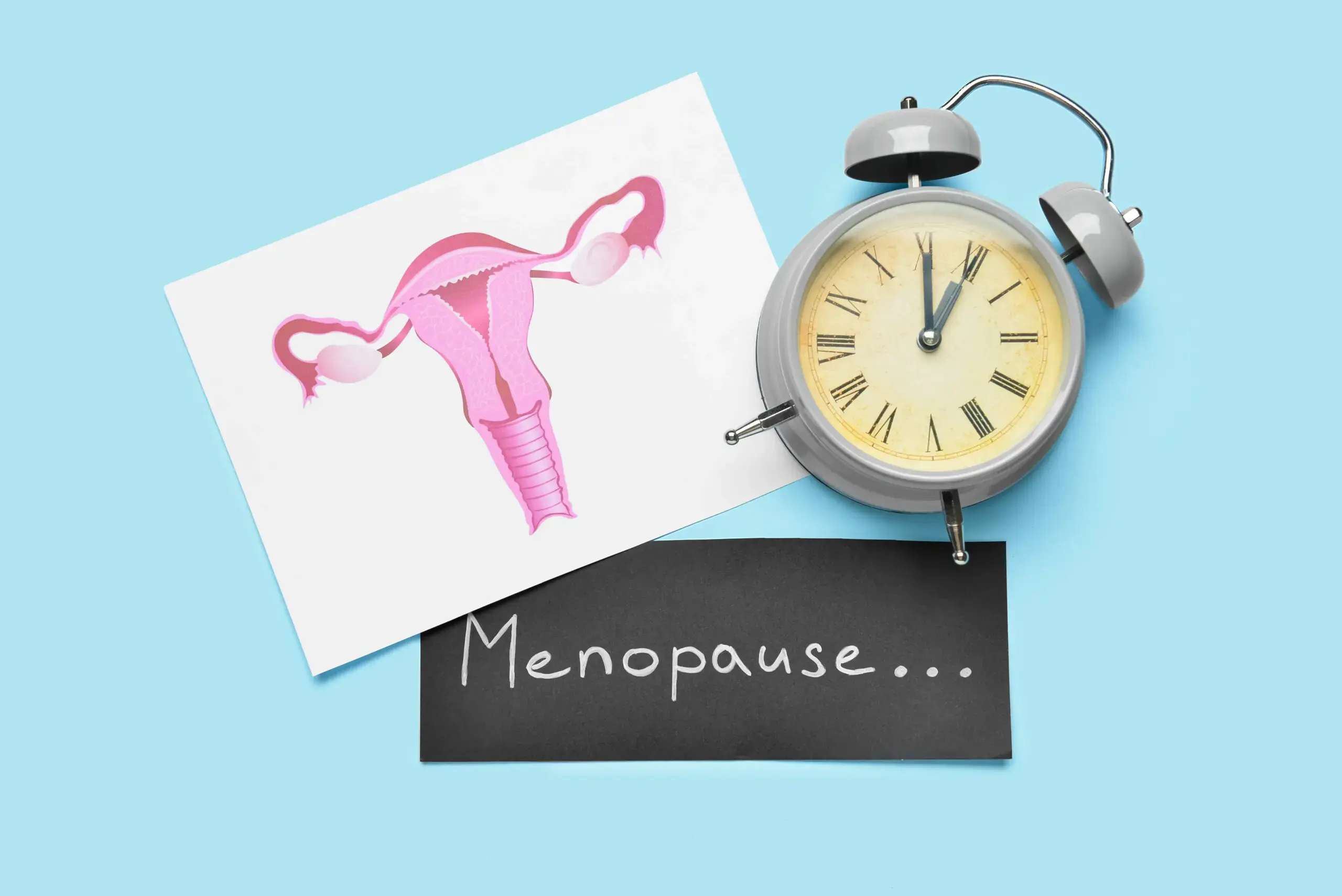
The most common and typical complaints during menopause include:
Hot flashes and sweating
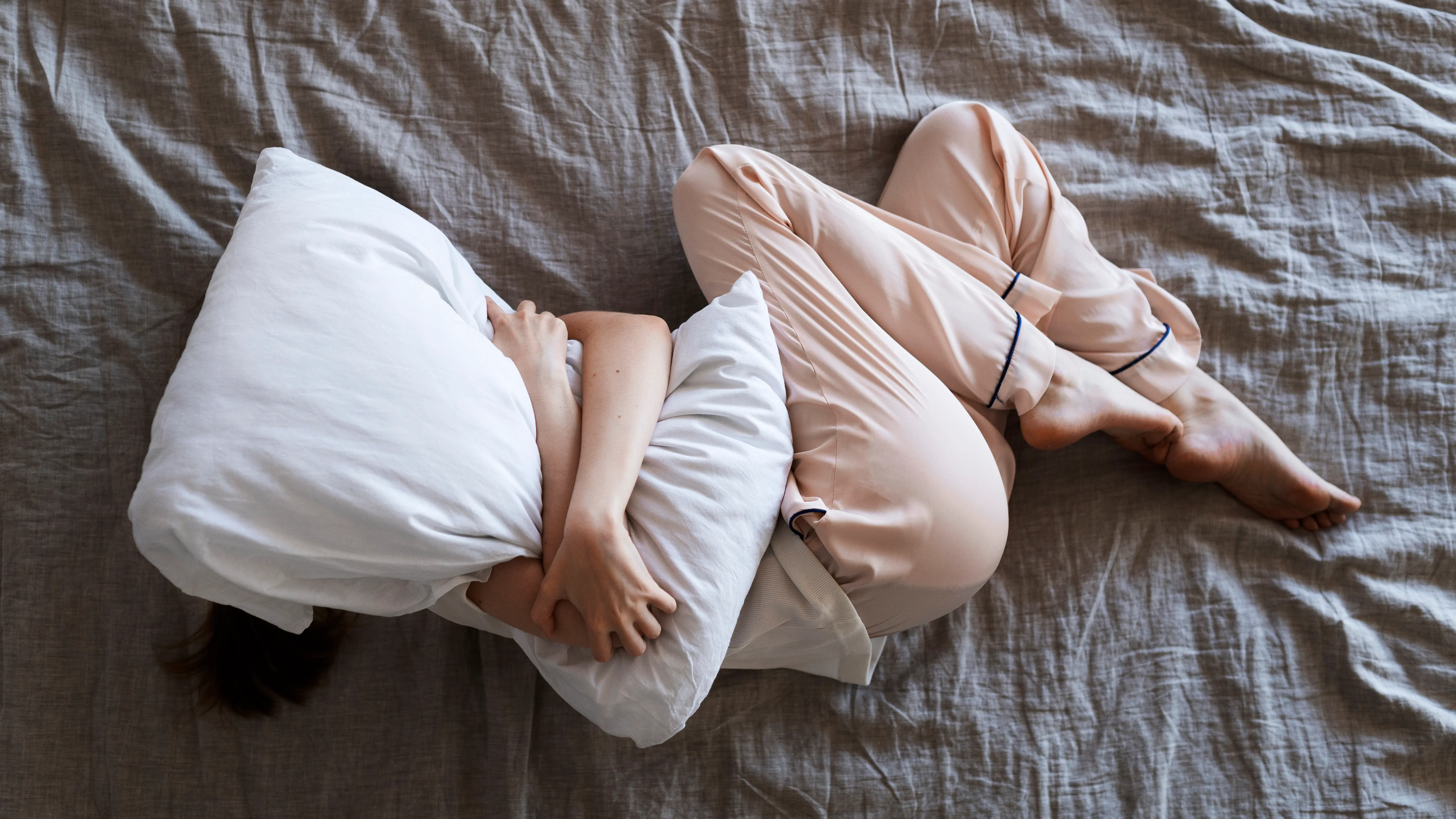
Sleep disturbances
Mood swings and irritability
Cycle disorders (irregular or missed period)
Vaginal dryness
Weight gain, especially in the abdomen
Joint and muscle pain
Concentration problems (“Brain Fog”)
In addition to these common complaints, there are numerous other possible symptoms that may be related to hormonal changes. Below you will find a comprehensive overview.
1. Sleep disturbances
Sleep problems are among the first and most common signs of menopause and often occur already in perimenopause, even before other typical symptoms such as hot flashes begin. Many women report difficulties falling asleep, frequent night awakenings, or early morning waking without being able to fall back asleep.
How do sleep disturbances occur? The declining estrogen level affects the production of melatonin, the sleep hormone, and disrupts the deep sleep phases. Additionally, the hormone deficiency affects body temperature regulation, which can lead to night sweats that further disturb sleep.
By the way: Women need on average half an hour more sleep per night than men and are more sensitive to disruptive noises. Sleep problems improve for most women after menopause.
2. Mood swings
When the mood-lifting effects of estrogens decrease, many women experience emotional roller coasters reminiscent of premenstrual syndrome (PMS). These mood swings are among the early symptoms and often occur at the beginning of perimenopause.
How do mood swings manifest? Affected women report sudden irritability, baseless sadness, inner restlessness, and general dissatisfaction. Some women feel like they are undergoing a personality change and "are no longer themselves." Mood can switch from elation to despair in a very short time.
Menopause Symptoms: Early Signs & the Most Common Symptoms
Why does this happen? Estrogen influences the production of serotonin and other neurotransmitters responsible for mood regulation. Hormonal fluctuations during perimenopause lead to an imbalance of these messenger substances in the brain.
3. Night sweats
Night sweats can be so intense that nightgowns and bedding are drenched and need to be changed. These sweats not only disturb the sleep of the affected woman but often also that of the partner.
Why does night sweating occur? It is suspected that the declining estrogen levels affect the hypothalamus, the part of the brain that regulates body temperature. It reacts hypersensitively and mistakenly sends the signal that the body is overheating. In response, blood vessels dilate and sweat production is massively stimulated.
4. Hot flashes
Hot flashes are the most well-known and for many women the most distressing symptom of menopause. About 75 percent of all women are affected. Unlike sleep disturbances, hot flashes usually occur at the onset of actual menopause and not at the first signs.
What do hot flashes feel like? A hot flash typically begins with a sudden feeling of heat that rises from the chest area and spreads over the neck and face. The skin visibly reddens, especially on the face, neck, and chest. Intense sweating begins within seconds, followed by chills as the body cools down again. An episode usually lasts 30 seconds to 5 minutes.
How do hot flashes occur? The decreasing estrogen level affects the hypothalamus, the temperature control center in the brain. It becomes oversensitive to slight temperature fluctuations and mistakenly triggers cooling mechanisms, even though the body temperature is normal. The blood vessels suddenly expand, blood rushes to the skin surface – a hot flash occurs.
When will it get better? Most women experience hot flashes over a period of 2 to 5 years. However, in about 10 percent of cases, they can last up to 10 years or longer. The intensity usually decreases in postmenopause.
5. Osteoporosis
With the hormonal changes, there is an accelerated loss of bone density. Estrogen plays an important role in bone formation and inhibits bone-resorbing cells. After menopause, women lose 1-2 percent of their bone mass annually, even up to 5 percent per year in the first years after menopause.
What is osteoporosis? In osteoporosis, the bones become increasingly porous and brittle. The risk of fractures, especially in the vertebrae, hips, and wrists, increases significantly. The disease develops gradually and initially causes no pain.
6. Vaginal Dryness
Because during menopause the vagina is less well supplied with blood and the glands in the cervix produce less mucus, the lining in the vagina becomes drier and thinner. This is a typical symptom of postmenopause and affects about 40-50 percent of women.
Accompanying symptoms:
Itching and burning in the intimate area
Pain during intercourse (dyspareunia)
Increased susceptibility to vaginal infections
Sometimes the labia contract
The fatty tissue of the vulva decreases
7. Loss of libido
It is common for women, especially after menopause, to have less interest in sex. The decline in sex hormones, particularly testosterone and estrogen, plays a central role. About 20-40 percent of women in menopause report decreased libido.
Interesting: In some cases, the opposite occurs - some women experience an increase in libido, possibly because the removal of contraception is liberating or because the relative ratio of testosterone to estrogen changes.
8. Breast pain
When water retention forms in the breast and its structure changes because the glands that produce milk regress and connective tissue increases, feelings of tension, pulling pain, and sensitivity to touch can occur. These symptoms are particularly pronounced in perimenopause when hormone levels still fluctuate greatly.
9. Depression
Not only the body but also the soul can suffer when menopause begins. Lack of drive, persistent sadness, and hopelessness are possible signs. The risk of depression is about twice as high during perimenopause as before.
10. Menstrual irregularities
During perimenopause, the cycle becomes more irregular. Bleeding may occur less often, stronger, more frequently, or weaker. Some women experience spotting or very long periods. This is one of the first and most obvious signs of the onset of menopause.
11. Headaches
An existing migraine may worsen during menopause, especially in perimenopause when estrogen levels fluctuate significantly. Many women report more frequent headaches. After menopause, this usually improves for most women.
12. Dizziness
Just like in puberty, women experience dizziness or vertigo more often during menopause. The hormonal changes affect the autonomic nervous system, which disrupts the sense of balance in the ear. Nausea can be an accompanying symptom.
13. Weight gain
On average, women gain five to seven kilograms during menopause. The metabolism slows down by about 15 percent, and the basal metabolic rate decreases. At the same time, fat distribution in the body changes dramatically: fat accumulates less on the hips and thighs, and more on the abdomen. The body shape changes from "pear" to "apple."
14. Cardiac arrhythmias
In the earlier phases of menopause, some women suffer from palpitations and heart flutters. Later, along with hot flashes, some report heart pounding and dizziness. Estrogen has a protective effect on the cardiovascular system. After menopause, the risk of heart attack increases significantly and aligns with that of men.
15. Joint pain
Joint complaints in the knees, hips, fingers, and shoulders are among the most common, yet least known menopausal complaints. About 50-70 percent of women are affected. The symptoms arise from accelerated degeneration of joint cartilage, as estrogen also has a protective effect here.
16. Hair loss
Hair follicles shrink, causing the hair to grow more slowly and fall out more easily. The scalp hair becomes thinner and less dense. Sometimes the underarm hair stops growing altogether. This is due to the altered ratio of estrogen to androgens.
17. Fatigue
Fatigue and exhaustion are often the result of sleep disturbances and night sweats during menopause, but are also directly related to hormonal changes and mood swings. Many women report persistent lack of energy.
18. Difficulty concentrating
Not only hot flashes, sleep problems, and stress can harm concentration, but fluctuating estrogen levels themselves can be a reason. Many women report "brain fog" – a foggy feeling in the head. Concentration problems usually disappear after menopause.
19. Dry skin
The skin becomes thinner, less elastic, and drier. Estrogens ensure that the skin is sufficiently moisturized. Because about 30 percent less collagen is produced during menopause and sebum production decreases, the skin becomes more prone to dryness and wrinkles.
This also applies to:
Scalp (can lead to itching)
Eyes (reduced tear fluid leads to redness and dryness)
20. Bladder weakness
Incontinence is a common but often unspoken symptom during menopause. An overactive bladder or urge incontinence with sudden, uncontrollable urges to urinate along with urine loss affects about 30-40 percent of women after menopause.
Causes:
Estrogen deficiency weakens pelvic floor and bladder muscles
Connective tissue loses elasticity
Mucous membranes become thinner
21. Flatulence
Metabolism changes, becomes sluggish, and hormonal changes affect the digestive system. The result: bloating, constipation, and digestive issues. About 40 percent of women report increased digestive problems.
22. High blood pressure
During menopause, the risk of high blood pressure and coronary heart disease increases. Estrogen has a vasodilatory effect and protects the blood vessels. After menopause, this protection is lost. Regular blood pressure checks are important.
23. Gum issues
Saliva production decreases, resulting in a dry mouth. This increases the risk of cavities and gum diseases such as periodontitis. Bone loss can also affect the jawbone and promote tooth loss.
24. Tingling in the extremities
It becomes more common for hands, feet, arms, and legs to tingle. The cause can be a nerve-related sensory disorder. Sometimes it also feels like the feet are burning. This can be related to hot flashes and night sweats, where increased blood flow causes a sudden rise in core body temperature.
25. Body odor
It is not surprising that increased sweating from hot flashes and stress also affects body odor. At the same time, the sweat becomes more concentrated because the body can no longer regulate water balance as effectively.
26. Anxiety
The hormonal changes can cause anxiety which may worsen at night or in certain situations. About 15-20 percent of women experience anxiety for the first time during menopause or a worsening of existing anxieties.
Why does anxiety occur? Estrogen influences the production of GABA, a calming neurotransmitter. The declining hormone level can lead to an imbalance that favors anxiety. Other physical changes and the psychological burden of menopause can also increase anxiety.
27. Panic attacks
Anxiety can lead to panic attacks, which come unexpectedly and unprepared. Symptoms include heart palpitations, shortness of breath, sweating, trembling, and the feeling of losing control.
Acute help during a panic attack:
4-7-8 breathing: Inhale for 4 seconds, hold for 7 seconds, exhale for 8 seconds (repeat several times)
Become aware: "It is a panic attack, it will pass, I am not in danger"
Drink cool water or let it run over your wrists
5-4-3-2-1 technique: See 5 things, hear 4, touch 3, smell 2, taste 1 (grounds you in the present)
Progressive muscle relaxation
28. Allergies
Since histamine levels are elevated during menopause, allergies may worsen now. Some women even develop new allergies or intolerances they didn't have before.
29. Brittle nails
Brittle, splitting nails can sometimes occur due to a lack of keratin and the reduced estrogen effect on the nail matrix. They grow slower and break more easily.
30. Increased facial hair growth
Some women complain about increased facial hair growth and the so-called "lady's beard" after menopause. The reason is the changed hormone ratio: While estrogen levels decrease, testosterone levels remain relatively constant, making its effects more pronounced.
31. Muscle pain
Muscle pain or muscle tension is not uncommon during menopause. Additionally, muscle mass begins to decrease at age 35, and this process accelerates during menopause. Without targeted strength training, women lose up to 1 percent of muscle mass per year.
Why does muscle pain occur? Estrogen has anti-inflammatory effects and supports muscle regeneration. Hormone deficiency can lead to muscle tension, slower recovery after exertion, and diffuse muscle pain. The muscle breakdown itself can also cause discomfort.
32. Changed discharge
Sometimes vaginal discharge changes during menopause. If it is odorless and yellowish, there is no cause for concern. Other forms may indicate conditions such as bacterial vaginosis, infections, a tumor, or vaginal yeast. In any case, it should be clarified by a doctor.
33. Water retention
Water retention occurs especially at the beginning of menopause due to the (still) high estrogen level. Initially, the production of progesterone decreases, leading to estrogen dominance. Also, before ovulation, when estrogen levels rise, women retain more water, which can lead to swollen hands, feet, and a puffy face.
34. Nausea
Similar to pregnancy, where the hormonal balance changes, women often struggle with nausea during menopause. Sometimes this is caused by ovarian cysts or medications intended to alleviate other menopausal symptoms.
When do which symptoms occur? The timeline
Menopausal symptoms do not develop all at once but follow a typical pattern over the different phases. This knowledge helps women to better classify and understand their symptoms.
Early symptoms (Premenopause and early Perimenopause)
The first signs of menopause usually appear between the ages of 40 and 45 and are often subtle:
In the active transition phase, roughly between the ages of 45 and 51, the most intense symptoms occur:
Hot flashes and night sweats
Increased sleep disturbances
Weight gain, especially around the abdomen
Onset of vaginal dryness
Changes in libido
Joint pain
Heart arrhythmias
More severe mood swings up to depression
Hair loss
Dry skin
Breast tenderness
Late symptoms (postmenopause)
After the last menstrual period, around 51-52 years, long-term changes develop:
Osteoporosis risk increases
Bladder weakness increases
Increased facial hair growth
Progressive skin and hair changes
Gum problems
Increased risk of cardiovascular diseases
Important: Hot flashes and sweating can last 2-5 years, in about 10 percent of women up to 10 years. They usually subside thereafter. Many other symptoms also improve after postmenopause when hormone levels stabilize at a low level.
When to see a doctor?
A doctor's visit is advisable if:
Very severe symptoms that significantly reduce quality of life
Depressive moods or anxiety disorders
Unusually heavy or prolonged bleeding
Bleeding after menopause
When home remedies and lifestyle changes do not help
For questions about hormone therapy
Frequently asked questions about menopausal symptoms (FAQ)
When does menopause start?
On average, menopause begins between the ages of 45 and 50, but it can start earlier or later depending on the individual. The first signs (perimenopause) often appear from the age of 40. Some women experience premature menopause before the age of 40, affecting about 1 percent.
How long do the symptoms last?
The entire transition phase lasts an average of 7-10 years. Hot flashes and night sweats, the most distressing symptoms, last 2-5 years for most women, and up to 10 years for about 10 percent. Many symptoms subside after menopause when hormone levels stabilize.
Can menopause occur earlier?
Yes, about 1 percent of women experience menopause before the age of 40 (premature menopause or premature ovarian insufficiency). Causes can include: genetic predisposition, autoimmune diseases, chemotherapy, radiotherapy, or surgical removal of the ovaries. Women with premature menopause should definitely receive medical care, as the risk of osteoporosis and cardiovascular disease is increased.
What is the difference between perimenopause and menopause?
Perimenopause is the transition phase before the last menstrual period, during which hormone levels fluctuate and most symptoms occur (average 4-5 years). Menopause itself is the time of the last spontaneous menstrual period, but this can only be determined retrospectively (after 12 months without a period). Postmenopause is the time after that.
Do I have to expect all 34 symptoms?
No, definitely not! Every woman experiences menopause differently. About 30-40 percent of women have hardly any symptoms. Most experience 3-5 different symptoms in varying degrees. Only a small portion suffer from many severe symptoms simultaneously.
Are all symptoms treatable?
Most symptoms can be well managed, either through lifestyle changes, herbal remedies, or, in case of severe complaints, hormone therapy. There are effective strategies for almost every symptom. It is important not to hesitate to seek medical help if quality of life is severely limited.
Can I still get pregnant during menopause?
In perimenopause, pregnancy is still possible, although increasingly unlikely. Only after 12 months without menstruation (for women over 50) or 24 months (for women under 50) can pregnancy be safely ruled out. Until then, contraception should be used if pregnancy is not desired.
Are menopausal symptoms a sign of illness?
No, menopause is not an illness but a natural biological phase. The symptoms arise due to hormonal changes. However, if symptoms are severe and significantly impact quality of life, treatment is meaningful and important. After menopause, the risk for certain diseases (osteoporosis, cardiovascular diseases) increases, making preventive care important.
What examinations are important during menopause?
Annual gynecological examination
Mammography every 2 years from age 50 (early detection of breast cancer)
Bone density measurement with increased risk of osteoporosis
Blood pressure control
Check cholesterol and blood sugar levels
In case of severe symptoms: hormone status can be helpful
Does hormone therapy really help and is it safe?
Hormone replacement therapy (HRT) is the most effective treatment for moderate to severe menopausal symptoms. According to studies it can reduce hot flashes by 80-90 percent, improve sleep and quality of life, and protect against osteoporosis. In women under 60 and within the first 10 years after menopause, the benefits clearly outweigh the risks. HRT should be tailored individually (lowest effective dose, shortest necessary duration) and be under medical supervision.
Conclusion: Well-informed through menopause
Menopause is a phase of profound physical and hormonal changes that every woman experiences differently. None of the 34 possible symptoms are experienced by all women, and many go through this time with few or no complaints.