© Magnific
August 5, 2026
Marianne Waldenfels
Chronic insomnia is more than just poor sleep. Dr. Leonie Maurer explains when sleep problems require treatment, why cognitive behavioral therapy is the first-line treatment, and why sleeping pills are usually not the best long-term solution
Sleep disorders are among the most common health problems of all: around one third of adults report difficulty falling or staying asleep, and approximately one in ten suffers from chronic insomnia. Despite this, many people seek help only late in the process, or rely on sleep hygiene tips, dietary supplements, or sleep trackers.
Yet medical guidelines recommend cognitive behavioral therapy as the first-line treatment for chronic insomnia. This therapy is now also available digitally — for example through somnio, the first permanently approved prescription app (DiGA) for the treatment of insomnia.
Sleep researcher Dr. Leonie Maurer explains in this interview when sleep problems require treatment, why sleep medication typically only helps in the short term, and what role digital therapies will play in patient care in the future.
Dr. Maurer, almost everyone sleeps poorly on occasion. From a medical perspective, when does a bad night stop being just that and become insomnia requiring treatment?
We speak of insomnia requiring treatment when difficulties falling asleep, staying asleep, or waking too early occur on at least three nights per week and persist over an extended period — we refer to chronic insomnia when this lasts for three months or more.
What matters is not simply total sleep duration, but whether there is meaningful daytime impairment — such as persistent fatigue, reduced performance and concentration, irritability, or a growing preoccupation with one's own sleep. The occasional poor night, for example during a period of acute stress, is normal and generally resolves on its own.
Insomnia requires treatment above all when symptoms persist over an extended period, occur despite adequate opportunity for sleep, and cause significant distress.
Many people believe they simply need more discipline or better sleep hygiene. Why is that often not enough for true insomnia?
Sleep hygiene is a sensible foundation, but has been shown to have limited effectiveness in treating insomnia. Chronic difficulties falling and staying asleep are maintained by learned psychophysiological mechanisms — in particular, a conditioned association between the bed and wakefulness, cognitive hyperactivation, and heightened physical tension.

"Feel Good, Live Better". In this podcast episode, Dr. Sarah Quick explains why one in three children today has allergies — and how they can be treated.
Christine Bürg

An interview with

Stress, diet, and teeth grinding can all affect how our teeth age. Dentist Dr. Paul Leonhard Schuh explains the role of healthy gums, lifestyle, and modern dentistry in maintaining a healthy, natural-looking smile.
Christine Bürg & Marianne Waldenfels

An interview with
Dr. Paul Schuh

Biohacking, jaw training and even self-inflicted facial fractures: the quest for the perfect body is becoming increasingly extreme. Prof. Dominik Pförringer explores where self-improvement ends and self-harm begins.
Prof. Dominik Pförringer

By
Univ.-Prof. Dr. med. Dominik Pförringer

ADHD isn't just a childhood condition. More and more adults are being diagnosed, often after years of uncertainty. Psychiatrist Prof. Andreas Menke explains how to recognize ADHD, which treatments can help, and why the condition can also come with unique strengths.
Christine Bürg & Marianne Waldenfels

An interview with
Prof. Dr. med. Andreas Menke
These factors cannot be adequately addressed by general advice alone. Many people with insomnia are already very mindful of their sleep habits and follow numerous sleep hygiene recommendations — yet these measures frequently fall short. What does work are the core components of cognitive behavioral therapy for insomnia (CBT-I): sleep restriction, stimulus control, and cognitive restructuring.
The answer, then, is not more discipline, but rather the consistent application of targeted, evidence-based techniques that individuals work through step by step.
What are the most common causes behind chronic sleep disorders?
The central risk factor for developing insomnia is a heightened tendency to respond to stress with sleep problems. People who react to stress with disrupted sleep are more likely to develop chronic insomnia. In most cases, insomnia does not arise from a single cause, but from the interplay of several factors.
These include predisposing factors (e.g. genetic predisposition, heightened arousal), triggering events (stress, loss, surgery), and factors that sustain the sleep disorder over the long term.
Women are significantly more affected by insomnia than men. Contributing factors include hormonal transition phases such as perimenopause and menopause, during which sleep becomes more vulnerable and warrants greater attention. Women also frequently face a higher burden due to multiple roles and a greater tendency toward rumination.
Social factors such as shift work, holding multiple jobs, and financial stress are often underestimated. Sleep disorders also very commonly co-occur with other conditions — such as depression, anxiety disorders, or chronic pain.
What long-term health consequences can untreated insomnia have?
The effects of insomnia tend to show up most quickly and noticeably in brain function — reduced concentration and memory, increased error-proneness, and impaired emotion regulation. Beyond this, untreated insomnia is an independent risk factor for the development of depression and anxiety disorders, and can exacerbate existing mental health conditions.
In addition, persistently disrupted sleep over the longer term can adversely affect cardiometabolic and cardiovascular processes and significantly reduce overall quality of life.
Many people turn to sleep medication. When can it be useful — and what are its limitations?
Prescription sleep medications can be an option in acute, short-term stressful situations and often provide rapid symptomatic relief. Their limitation, however, is that they do not address the underlying causes of insomnia — they primarily treat the symptoms.
With longer-term use, side effects, tolerance, and dependence can develop. For this reason, many classic sleep medications are intended for short-term use only. The first-line treatment for chronic insomnia is cognitive behavioral therapy for insomnia (CBT-I), not medication.
The behavioral therapy approach is more demanding than taking a pill, but it gives people the opportunity to regain lasting control over their own sleep.
With somnio, there is now a prescription app for insomnia. Which patients are particularly well suited to digital therapy?
somnio delivers the guideline-recommended CBT-I in a structured, largely one-to-one digital format. The content is presented through sequential modules, accompanied by a continuous digital sleep diary. A prerequisite — as with any form of guided self-help — is the motivation to actively work on one's own sleep, along with a basic willingness to use a digital application.
Within these prerequisites, digital therapy is suitable across all age groups and genders. A key advantage is its low access threshold: the therapy can be used regardless of location or time and is available without long waits for a therapy slot. The digital sleep diary in particular makes it easier for many people to maintain continuous self-monitoring and track their therapeutic progress.
How strong is the evidence for digital applications in sleep disorders? What do existing studies show?
The evidence for digital applications is today considerably stronger than many people assume. For an application to be approved as a digital health application (DiGA) and become reimbursable, it must meet three requirements: certification as a medical device, demonstration of the highest standards of data protection and data security, and proof of clinical effectiveness.
Proof of effectiveness is established through randomized controlled trials compared to standard care, generally taking into account long-term effects over three to six months.
For somnio, several randomized controlled trials are available, all of which consistently demonstrate a large effect on insomnia severity. In addition, real-world analyses involving several thousand users show comparable response and remission rates under everyday conditions; positive effects have also been observed in comorbid depression.
Specifically, users fall asleep on average around 29 minutes faster and spend approximately 64 minutes less time awake during the night. Around 64% show a significant reduction in insomnia symptoms, and around 41% no longer show any insomnia symptoms after completing the program.
Where do you see the limitations of digital therapies? When is an app alone no longer sufficient?
An app cannot make a diagnosis. The starting point should always be a medical or clinical assessment to determine what problem is actually present and which treatment is appropriate — ideally supplemented by ongoing monitoring. Digital therapy reaches its limits particularly in more complex situations.
For example, if insomnia is accompanied by depression, an anxiety disorder, or an addiction that should be treated as a priority, a specialist must determine the appropriate course of action. Acute, serious psychiatric situations also require in-person care.
Digital applications should be understood not as a replacement for personal therapy, but as an integral part of care: a low-threshold, immediately accessible entry point, with the option to step up to in-person therapy when needed.
Many people try to optimize their sleep with smart rings or sleep trackers. Can these devices help — or can they actually leave some people more sleepless than before?
Wearables can certainly be helpful for raising awareness of the importance of sleep and for observing one's own sleep habits more closely. At the same time, their readings should not be treated as precise measurements. The automatic recording of sleep duration and sleep stages remains an approximation and can sometimes differ considerably from medical assessments conducted in a sleep laboratory.
It becomes problematic when tracking leads to a compulsive drive to optimize sleep: some people become heavily focused on their sleep score and increasingly judge the quality of their sleep by the data rather than by how they actually feel. In sleep medicine, this phenomenon is known as orthosomnia.
In such cases, a tracker can create additional pressure and thereby worsen the sleep problem. It may then be helpful to consciously set the device aside for a while and return to trusting one's own sense of how well one has slept.
What mistakes do you observe most frequently in people with sleep problems?
A common pattern is failing to process the day's stress and bringing it to bed. Many people sleep considerably better on vacation than in everyday life, which illustrates just how much accumulated strain and tension can affect sleep.
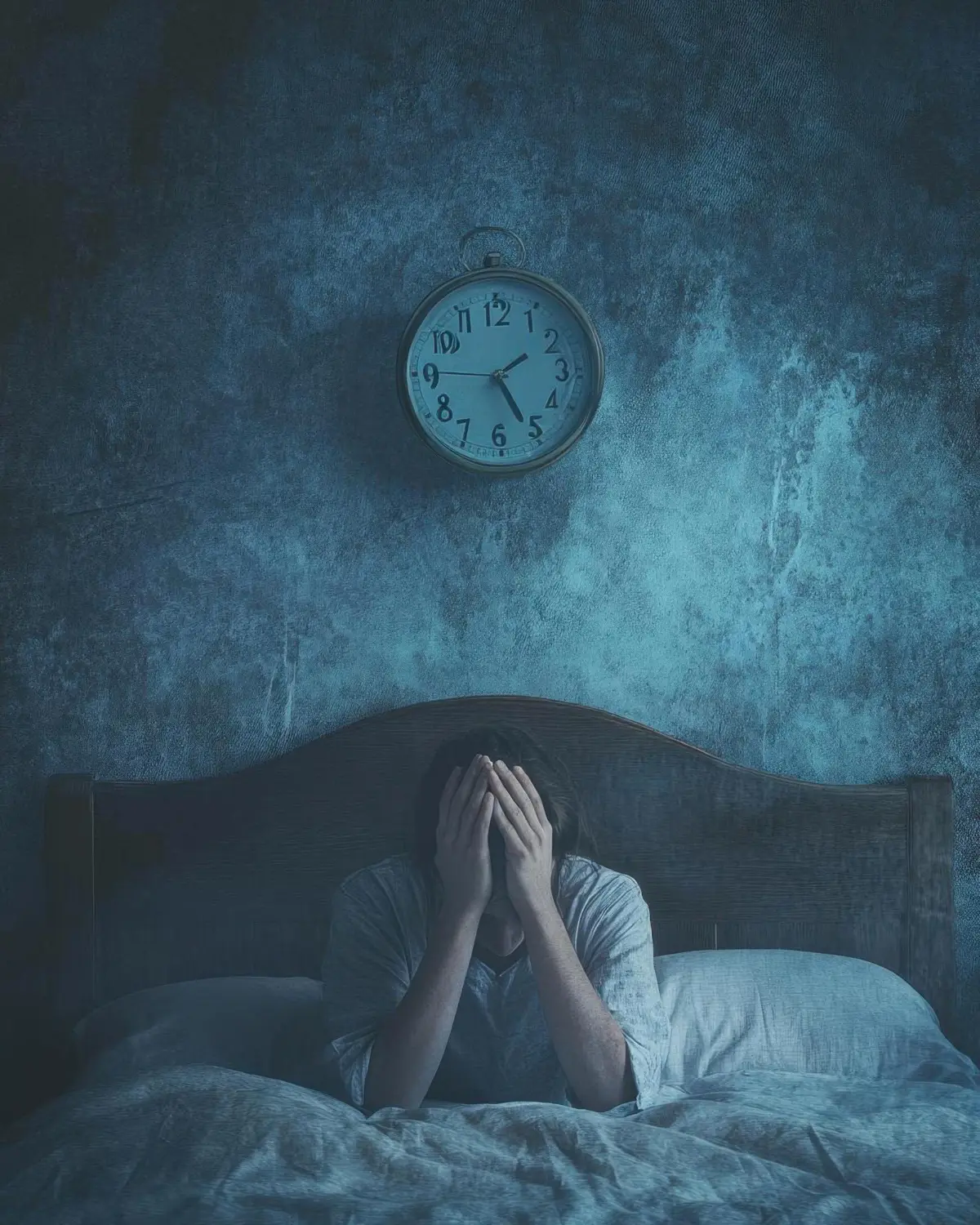
At the same time, we often see people trying to actively control their sleep. Sleep, however, cannot be forced. You can create favorable conditions for it, but you cannot deliberately will yourself to sleep. The attempt to control it — for example by constantly checking the clock — increases pressure and tends to keep you awake.
Another common mistake, driven by worry about getting too little sleep, is going to bed earlier and earlier or lying in bed late into the morning to "catch up" on missed sleep. This, however, weakens sleep pressure and increases the time spent awake in bed — a pattern that tends to maintain rather than resolve sleep problems. People also frequently put up with sleep problems for a long time, or mask them with self-medication, before seeking effective, cause-oriented treatment.
Are there new developments or research findings in sleep medicine that you personally find particularly exciting?
What I find particularly exciting is how rarely sleep disorders occur in isolation. When sleep is also treated in the context of comorbid conditions such as depression or chronic pain, the underlying condition often improves as well. For many people, sleep is a readily accessible point of intervention.
At the same time, it is becoming increasingly clear how closely sleep is linked to the brain's long-term health. Good sleep appears to play an important role in the brain's regenerative and "clean-up" processes — a field that is gaining growing significance in relation to the prevention of neurodegenerative diseases such as Alzheimer's.
Countless tips circulate on social media — from magnesium to mouth taping. Which trends do you view with skepticism, and which are actually useful?
Many social media trends are far more popular than they are scientifically supported. Mouth taping, for example, is potentially risky in cases of undetected sleep apnea and has so far been insufficiently studied. Magnesium is only beneficial in cases of a proven deficiency and is not an established treatment for insomnia.
Melatonin is also frequently misunderstood: it is the body's own regulator of the sleep-wake rhythm, but not a classic sleeping pill, and it is not recommended as standard therapy for insomnia. Well-supported measures, by contrast, include keeping regular sleep-wake times, getting plenty of daylight during the day and darkness at night (light is the strongest zeitgeber), maintaining a quiet sleep environment, and paying attention to one's own signals of tiredness.
For established insomnia, however, CBT-I remains the most effective intervention. No social media trend is a substitute for evidence-based treatment.

© mementor by Resmed
Dr. Leonie Maurer, sleep research expert