© Enis Yavuz
August 4, 2026
Christine Bürg & Marianne Waldenfels
Stress, diet, and teeth grinding can all affect how our teeth age. Dentist Dr. Paul Leonhard Schuh explains the role of healthy gums, lifestyle, and modern dentistry in maintaining a healthy, natural-looking smile.

An interview with
Dr. Paul Schuh
Beautiful teeth shape your overall appearance and can make a face look younger. At the same time, stress, teeth grinding, and gum disease often leave visible marks. Dentist Dr. Paul Leonhard Schuh explains which factors age our teeth, why function and aesthetics go hand in hand, and what modern dentistry can offer today.
Dr. Schuh, many people want to keep their teeth looking young and healthy for as long as possible. How can you actually tell that teeth are young — and what changes over the course of a lifetime?
Young teeth are defined by harmonious shapes, a natural color, and an intact surface free of wear. They also need to complement the gums, the smile, and the face as a whole. For a natural appearance, it is not just the individual tooth that matters — it is the interplay of all these structures together.
As we age, this balance shifts. Teeth wear down, the gums can recede, and the proportions of the smile change. Functional factors play a role as well: the jaw joints, musculature, and even posture are all connected to the teeth. Stress is also a major factor. People who frequently clench or grind their teeth accelerate natural wear and age their teeth more quickly.
What role do the gums play in all of this?
A very significant one. Healthy gums are just as important to a youthful smile as healthy teeth. When gums recede due to inflammation or periodontitis, the teeth appear longer and dark gaps form between them — which can make the entire face look older.
That is why prevention is not just about caring for the teeth — it also means keeping the gums healthy.
What can people do to keep their gums healthy for as long as possible?
Good oral hygiene is of course essential. But I believe that diet has a considerably greater impact on gum health than we are currently able to demonstrate scientifically.
In my view, people who eat a balanced diet and address any nutritional deficiencies are well placed to keep their gums and bones healthy in the long term. Even those with a genetic predisposition can often maintain healthy gums for longer as a result. Diet will therefore play an even greater role in prevention going forward.
Stress, diet, and teeth grinding can all affect how our teeth age. Dentist Dr. Paul Leonhard Schuh explains the role of healthy gums, lifestyle, and modern dentistry in maintaining a healthy, natural-looking smile.
Christine Bürg & Marianne Waldenfels

An interview with
Dr. Paul Schuh

Biohacking, jaw training and even self-inflicted facial fractures: the quest for the perfect body is becoming increasingly extreme. Prof. Dominik Pförringer explores where self-improvement ends and self-harm begins.
Prof. Dominik Pförringer

By
Univ.-Prof. Dr. med. Dominik Pförringer

ADHD isn't just a childhood condition. More and more adults are being diagnosed, often after years of uncertainty. Psychiatrist Prof. Andreas Menke explains how to recognize ADHD, which treatments can help, and why the condition can also come with unique strengths.
Christine Bürg & Marianne Waldenfels

An interview with
Prof. Dr. med. Andreas Menke
You have already mentioned diet. What should people pay particular attention to from a dental perspective?
Diet is something I engage with closely. The oral cavity is the body's gateway, and what we eat plays an important role in oral health.
The most obvious factor is, of course, sugar. But highly acidic foods can also attack tooth enamel, and certain foods can promote inflammatory processes. That is why I consider a balanced, predominantly plant-based diet with adequate protein intake to be beneficial.
Micronutrients can also matter. What I find particularly interesting at the moment is the influence of B vitamins on bone health and wound healing. There are current studies looking at the impact that good vitamin B levels may have following surgical procedures. We do not have all the answers yet, but we know far more today about what deserves our attention.
Which factors accelerate the aging of teeth?
In my view, stress is one of the biggest factors. With patients we have been seeing for many years, we often notice that particularly stressful periods in their lives also leave their mark on their teeth.
Many people unconsciously process stress through their teeth at night — grinding, clenching, or rubbing them together. That is why we frequently use occlusal splints, which protect the teeth and relieve pressure on the jaw joints and musculature.
But many people also clench their teeth unconsciously during the day — in stressful situations, for example, or during focused work. We see this frequently during strength training as well. This causes the teeth to wear down more quickly and lose length. A certain degree of wear is a natural part of aging. However, when it is compounded by constant clenching or grinding, teeth age significantly faster.
What do you look for before recommending an aesthetic treatment to a patient?
First and foremost, I listen carefully. I want to understand what the patient actually expects. In my view, this is one of the most important steps of all.
Medically, we can achieve a great deal today. But if we treat patients without addressing their real wishes, the outcome will not be a good one.
That is why we always consider aesthetics and function together. We do not carry out purely aesthetic corrections without first evaluating function — because only when the bite is functionally balanced can the result remain stable over the long term.
Sometimes a small correction is all that is needed. A tooth may have been damaged in an accident, or its shape simply does not match what the patient had in mind. The key question is always: will the planned solution also hold up in the long term?
Clear aligners like Invisalign are now widely used. Why have they become such a common part of aesthetic treatment?
Invisalign is essentially an orthodontic treatment using clear aligners. The great advantage is that today we can achieve a great deal even with relatively minor tooth movements.
That is why this type of treatment is now often integrated into our therapy concept. By first moving the teeth into the correct position, we can often take a much more minimally invasive approach later on. In some cases, this even allows us to avoid more extensive restorations while still achieving a beautiful aesthetic result.
Aesthetic dental treatment often involves a significant investment. How can patients get a sense in advance of whether they will actually be happy with the result?
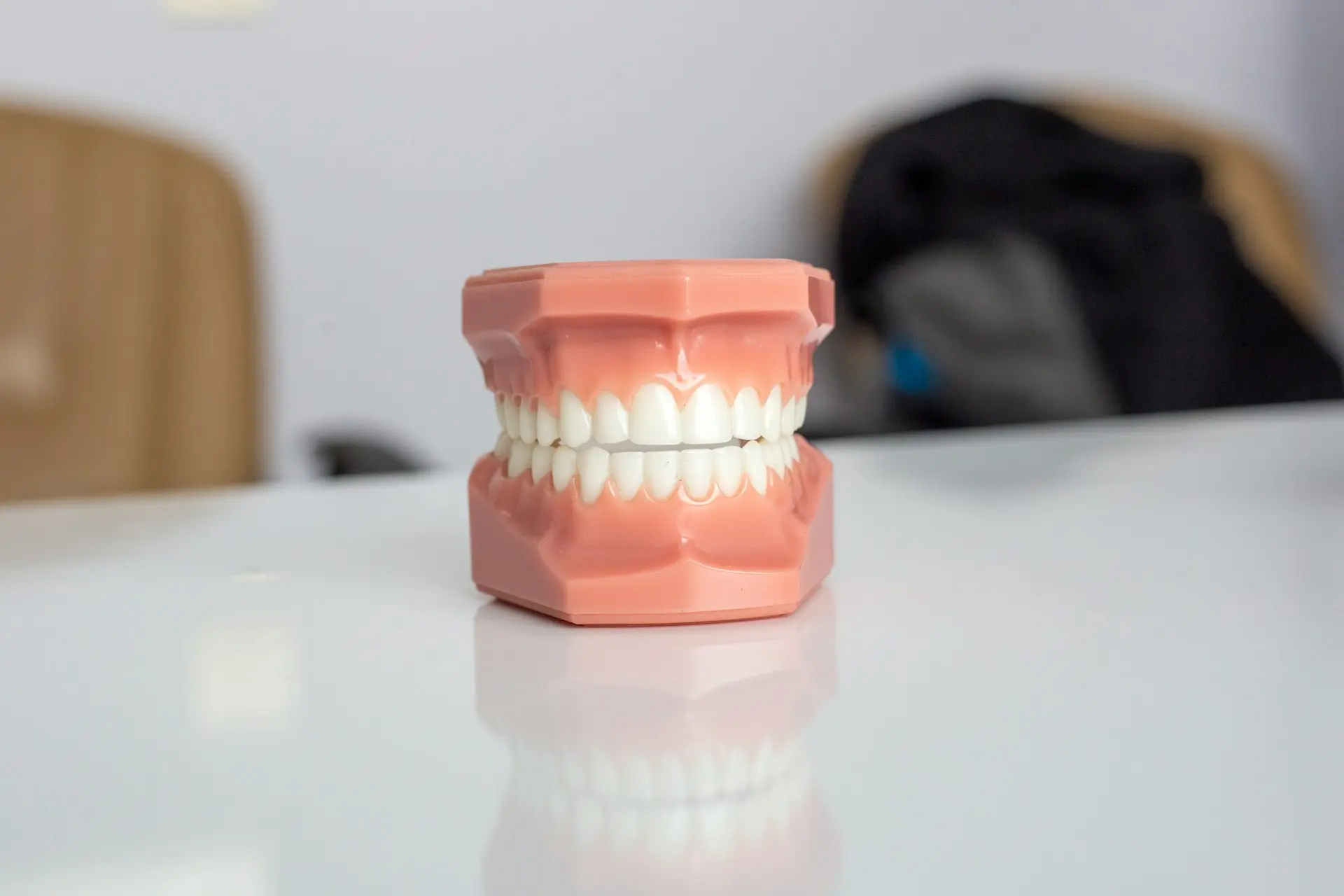
Digitalization has brought enormous advances here. In the past, we could show patients a plaster model and explain what the final result might look like — but that required a great deal of imagination.
Today we work with digital smile design. We analyze the face, lips, gums, and tooth alignment, and can visualize the planned result before treatment even begins. This makes it much easier to align expectations.
What is particularly exciting is that we now use artificial intelligence for this as well. It analyzes facial proportions and suggests a suitable tooth aesthetic based on natural tooth shapes. Patients can then view the planned result in an app using a before-and-after comparison.
The great advantage is that we never show anything that cannot actually be realized. The proposed tooth shapes come from real datasets and can be manufactured exactly as shown. This gives both the patient and us significantly more confidence.
Veneers are among the best-known aesthetic treatments. When are they a good option?
Veneers are thin ceramic shells that can permanently improve the shape and color of teeth. They are primarily considered when the desired result can no longer be achieved through more minimally invasive methods.
Many patients ask whether healthy tooth structure needs to be ground down for this. Today, that is far from always the case. If tooth alignment has been corrected beforehand — with Invisalign, for example — we can often work much more conservatively. In some cases, no preparation at all is required.
How long veneers last depends above all on the precision of the work — from preparation and bonding through to the patient's oral hygiene. The dental technician also plays a crucial role. The better the collaboration between dentist and dental technician, the more natural and long-lasting the result will be.
Bleaching is a topic that comes up a lot. What do you advise your patients?
Bleaching is certainly a major topic. That said, I am not a fan of whitening toothpastes. They typically contain stronger abrasive particles that can remove surface stains, but over time they also wear away tooth enamel. The whitening effect is often far less than people expect.
Professional bleaching, on the other hand, is generally safe for healthy teeth. The key factors are the concentration of the bleaching agent and the application time — both of which can be precisely controlled in the practice.
During or shortly after treatment, the teeth may temporarily become more sensitive. This sensitivity typically subsides again after a short time.
How long does the result last?
People adjust to their new tooth color very quickly. That is why we usually whiten the teeth somewhat more strongly at first, as they tend to darken slightly again over time.
As a general rule, it is sufficient to refresh a bleaching treatment approximately every two to three years.
It is also important to know that only natural teeth can be whitened. Fillings, veneers, and other ceramic restorations do not change color. That is why it is always worth checking which restorations are already in place before undergoing bleaching.
Are there people you would advise against bleaching?
Yes. With certain conditions affecting the tooth enamel — such as so-called chalky teeth (MIH) — bleaching should be avoided, as the enamel is already compromised.
In addition, the effect tends to be less pronounced in older age. As we age, more dentin forms while the enamel becomes more transparent, which means the teeth can no longer be whitened as effectively as in younger years.
You mention "Delivering Happiness" on your website. What does that mean to you?
"Delivering Happiness" captures what makes our profession so special to us. When I was studying, I thought dentistry was mainly about placing fillings, making crowns, or performing root canal treatments. I never would have expected that patients would one day hug you out of gratitude or have tears of joy in their eyes.
Over time, I have come to see that dental treatment can give people back far more than just beautiful teeth. When we care for patients holistically — bringing together function, aesthetics, and health — it frequently improves their quality of life as well.
That is exactly what we mean by "Delivering Happiness." We want our patients to leave the practice feeling good. When we see how profoundly a treatment can affect a person, that is, for me, the most rewarding part of this profession.