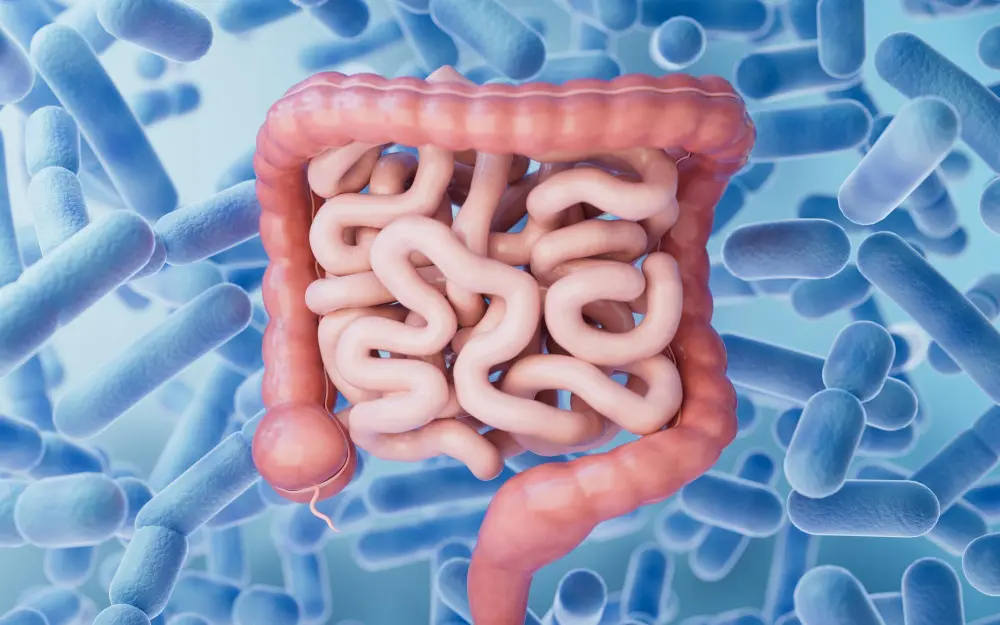
Two people can be exactly the same age and yet have very different prospects for healthy aging. One possible explanation lies, of all places, in the gut.
A new study from Denmark reveals how closely the composition of our gut microbiome is linked to chronic inflammatory processes in the body. One finding stands out in particular: in some young adults, researchers observed values that people with a different gut microbiome only reached decades later. These findings could reshape our understanding of what it takes to stay healthy for as long as possible.
Why Chronic Inflammation Plays a Role in Aging
Aging isn't just something that happens on the surface. Our immune system also changes over the years, and in many people, low-grade inflammatory processes gradually intensify without any obvious symptoms. Researchers call this inflammaging, a term that blends the English words for inflammation and aging.
This kind of persistently elevated inflammatory activity can contribute to the development of cardiovascular disease, diabetes, and other age-related conditions. Yet not everyone is affected to the same degree. Some people show elevated inflammatory markers even at a young age, while others maintain comparatively favorable values well into old age.
Increasingly, one organ is drawing researchers' attention — one you might not immediately associate with longevity: the gut. The trillions of microorganisms living there do far more than aid digestion. They are in constant communication with the immune system and can influence processes throughout the entire body through their metabolic byproducts.
What Gut Bacteria Reveal About Our Age
Danish researchers set out to determine just how close this connection really is. For their study published in Nature Communications, they examined 1,199 adults between the ages of 20 and 72. They analyzed each participant's gut microbiome, measured inflammatory markers in the blood, and compared a range of health characteristics.
The results were striking: the composition of the gut microbiome was more strongly associated with nearly all of the inflammatory markers studied than chronological age was. A closer statistical link to the microbiome was also found for a number of metabolic values.
One group in particular stood out: participants with a comparatively low-diversity gut microbiome. The researchers described this pattern as the Bacteroides-2 type.
On average, these participants had higher inflammatory markers, less favorable blood lipid levels, and lower physical fitness. Notably, this pattern was by no means confined to older individuals.
Inflammation Levels at 20 Like Those of Others in Their Late 50s
For certain inflammatory markers, the differences between microbiome groups were so pronounced that, statistically speaking, people with a different gut microbiome only reached comparable values roughly 37 years later. In other words, a 20-year-old could already display an inflammatory profile that, in others, only emerged in their late 50s.
This does not mean that their gut was literally 37 years older. The researchers were comparing specific blood values, not the biological age of the body as a whole.
Can the Gut Microbiome Reveal How Healthy We'll Stay in the Future?
The gut microbiome may have far more to tell us about our health than previously thought. The researchers didn't stop at inflammatory markers — they also found a link to conditions that only emerged years later.
To explore this, they tracked participants' health data over a period of up to nine years. The findings: people with the unfavorable Bacteroides-2 profile had a 21 percent higher relative risk of receiving a new hospital diagnosis. These diagnoses were by no means limited to gut diseases — they also included cardiovascular, respiratory, and neurological conditions, as well as other disease categories.
Among people with a particularly diverse gut microbiome, the opposite pattern emerged: they had lower inflammatory markers and received new hospital diagnoses less frequently over the observation period.
The gut microbiome could thus serve as a kind of early warning system. Its composition may offer clues about health risks long before any disease is diagnosed. No reliable individual risk test can be derived from this yet. But the findings point to the considerable potential the microbiome could hold for early detection.
What You Can Do for a Healthy Gut Microbiome
Unlike our date of birth, the composition of the gut microbiome is not set in stone. More than anything else, diet shapes which bacteria thrive in the gut. A wide variety of plant-based foods — such as vegetables, legumes, whole grains, and nuts — can help foster a diverse microbiome.
Whether dietary changes can specifically alter the unfavorable Bacteroides-2 profile associated with higher inflammatory markers in the study has not yet been established. Convincing clinical evidence is also still lacking for the idea that probiotics or specialized microbiome treatments can slow biological aging.
For anyone looking to support their gut health, expensive microbiome tests or special supplements aren't necessary — at least not yet. What matters most is what ends up on the plate each day, and how much we move.