© Magnific
October 5, 2026
Marianne Waldenfels
“Leaky gut” during menopause? A new study shows that the gut barrier begins to change years before the final period. The findings could help explain why inflammation increases during this stage of life.
On Instagram and TikTok, "leaky gut" has been a recurring topic for years. The permeable gut is blamed for fatigue, skin problems, and weight gain, and women going through menopause are targeted with dedicated cures, powders, and programs. Scientifically, very little of this has been substantiated. In particular, reliable data on whether the gut actually changes during menopause has been sorely lacking.
A new study published in the prestigious Journal of Clinical Investigation now offers the first solid evidence that menopause does alter the intestinal lining — and earlier than previously thought.
A US research team led by Albert Shieh analyzed data from 964 women for the study. All of the participants are enrolled in SWAN, a long-running American study that follows women through midlife over many years. All participants reached menopause naturally, and none were taking hormones or medications known to affect the gut or inflammation, such as ibuprofen, cortisone, or antibiotics.
The researchers examined stored blood samples that had been collected at various points before, during, and after menopause. They measured two values: one indicating whether cells of the intestinal lining were being damaged, and another suggesting whether components of gut bacteria were entering the bloodstream and activating the immune system there.
As long as the women were still having regular periods, both values remained stable. Then the picture shifted: the marker for damage to the intestinal lining began rising about two and a half years before the last period, followed roughly half a year later by the marker for bacterial components in the blood. Both continued to climb until about six years after the final period, at which point the values stabilized again.
The two values were linked: the more the first rose, the more the second did as well. This is consistent with the idea that a weakened gut barrier allows more bacterial components to pass through into the bloodstream.
The researchers interpret the fact that these values shift specifically during this phase as evidence of a connection with declining . It was already known from studies in mice that menopause makes the gut wall more permeable and promotes inflammation. The new study suggests that the same mechanism operates in humans.
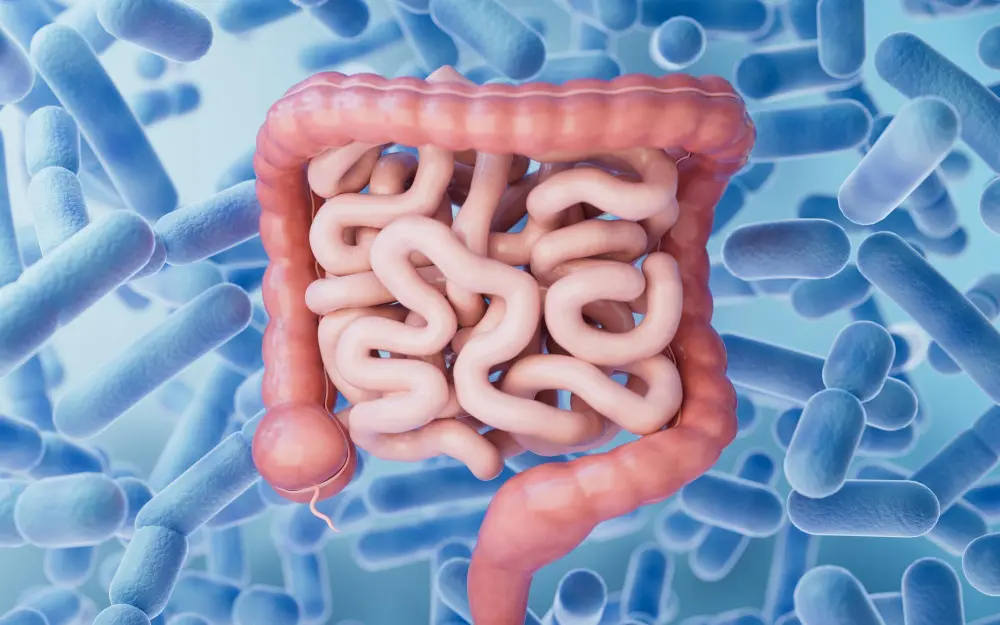
"Leaky gut" refers to the idea that the intestinal lining is no longer adequately sealed, allowing substances from the gut to enter the bloodstream where they do not belong — prompting the immune system to respond with inflammation.
The term is especially popular in self-help books and on social media, where it is held responsible for a wide range of complaints, from fatigue to skin problems. "Leaky gut syndrome" does not exist as a recognized medical diagnosis. That the gut barrier can become more permeable, however, is well established — for example, in chronic inflammatory bowel diseases. The new study suggests that menopause may apparently contribute to this as well.
Many clinics offer stool or blood tests for "leaky gut," often as out-of-pocket services. These tests frequently measure zonulin, a protein said to regulate the permeability of the gut wall. However, researchers at the University of Leipzig showed in 2018 that a widely used test kit does not actually measure zonulin but other proteins with a similar structure.
The manufacturer confirmed this finding. Other values commonly measured in such tests, such as calprotectin or alpha-1-antitrypsin, are established markers — but they indicate inflammation in the gut rather than a "leaky gut." Anyone considering such a test should ask precisely what is being measured and what the result actually means.
With menopause, low-grade inflammation increases in many women. This kind of inflammation is considered a possible contributing factor to conditions that are common during this phase of life, including osteoporosis and cardiovascular disease. Where exactly this inflammation originates has not yet been fully explained. The gut barrier may be part of the answer.
There was already an early hint of this: in a previous pilot study by the same team involving 65 women, higher gut marker values were associated with greater inflammation and lower bone density. That pilot study was small, however, and the researchers now plan to examine whether the association holds up in larger analyses.
• The study is large and methodologically sound: it followed the same women over many years rather than simply comparing younger women with older ones.
• Only blood values were measured, which indirectly suggest a weakened gut barrier. The permeability of the gut itself was not directly measured.
• Symptoms such as bloating or digestive problems were not recorded in the study. Whether the altered values produce noticeable effects remains an open question.
• Whether the gut changes actually contribute to osteoporosis or other conditions has not yet been established.
• Women taking hormones were excluded from the study, so it does not answer whether hormone therapy prevents this effect.
All in all, the study adds an important new piece to the puzzle of understanding menopause. It is not, however, evidence that women over 45 generally have a "leaky gut" or need to treat one.
No specific treatment can be derived from the study at this point. Whether the changes to the gut barrier during menopause can be influenced by diet, exercise, or hormone therapy has not yet been established. Specialized "leaky gut" programs or dietary supplements are therefore not automatically beneficial.
What remains are the recommendations that apply to gut health in general: a high-fiber diet rich in whole grains, legumes, vegetables, and fruit, combined with regular physical activity. Anyone experiencing new or persistent digestive complaints during menopause should seek a medical evaluation — because whether the changes measured in this study actually cause symptoms was not investigated.