© Cedric Fauntleroy
October 5, 2026
Nils Behrens
95 percent of 35- to 44-year-olds in Germany have periodontitis. Health expert Nils Behrens tests the first toothbrush with a camera and AI – and explains why oral health may be an overlooked factor in longevity.
This week, I held a toothbrush that watches me while I brush. A camera in the brush head films the teeth, an AI detects the gaps between them, and directs a fine jet of water precisely into those spaces. On my smartphone, I can watch myself live, tooth by tooth, in close-up. It is the first device of its kind on the market. What I saw had little to do with white teeth — but everything to do with my life expectancy.
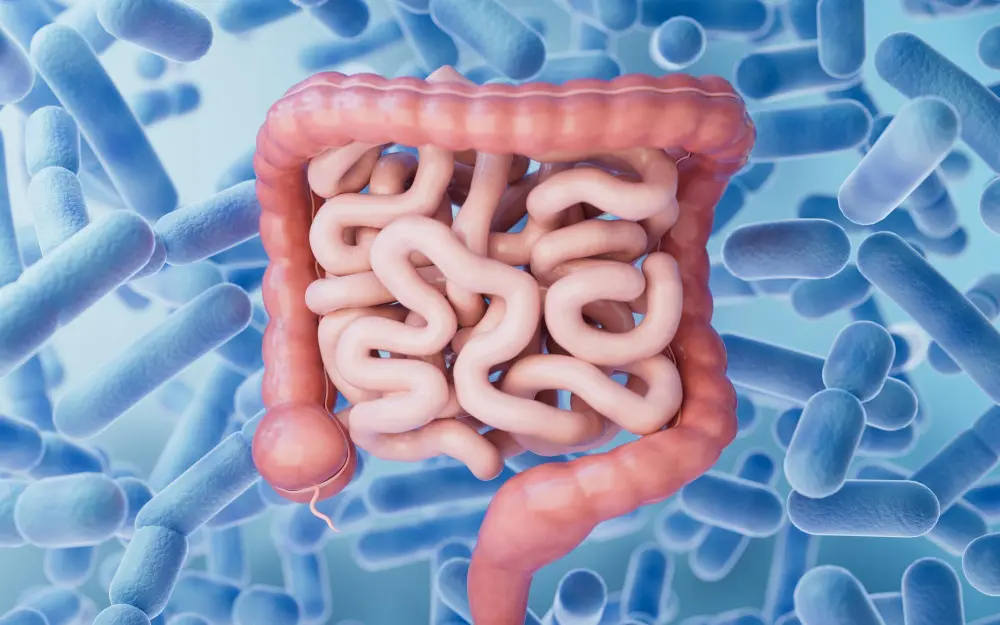
Most people file dental care under cosmetics. From a longevity perspective, that is a costly misconception. The mouth is home to around 700 species of bacteria, making it the body's second-largest microbiome after the gut. When this community falls out of balance, a chronic inflammation develops at the gum line that almost no one notices, because it causes no pain.
The bacteria and their inflammatory mediators enter the body through tiny blood vessels, fueling processes associated with vascular aging.
The scale of the problem is laid out in the Sixth German Oral Health Study from March 2025: it found periodontitis at some stage in 95.1 percent of 35- to 44-year-olds, while among 65- to 74-year-olds, 52.7 percent suffer from a severe form. Tooth decay has been declining in Germany for years. Periodontitis has not.

Nils Behrens is the host of the health podcast HEALTHWISE and Strategic Brand Partner of Sunday Natural. Previously, he spent over 12 years as Chief Marketing Officer and the face of the Lanserhof Group, as well as host of the successful Forever Young podcast. In over 350 expert interviews, he explored pathways to a longer and healthier life.
Just how relevant this connection could be is illustrated by an analysis of the American ARIC cohort involving over 6,000 participants followed over 25 years, presented at the International Stroke Conference 2025. Those who used dental floss regularly had a 22 percent lower risk of ischemic stroke and a 44 percent lower risk of the cardioembolic variant.
An important caveat: this is an observational study. I cannot claim that dental floss prevents strokes. People who floss may simply tend to lead a more health-conscious lifestyle overall. Even so, the direction of the data is strikingly consistent — and that holds for the brain as well: a large US population analysis from 2024 links the burden of periodontitis pathogens with a higher risk of dementia. Bleeding gums do not cause Alzheimer's disease. But as a modifiable co-factor, oral health deserves far more attention than we currently give it.
Back to the self-experiment. My biggest takeaway had little to do with the technology itself. I already knew that too much pressure damages the gums — the recommended amount is around 100 grams. What surprised me was a second finding: I simply brush over certain areas too quickly. Right where the hand position becomes awkward — at the back left of the lower jaw — the brush skims across the surface. In the bathroom mirror, those spots look perfectly fine. Under the camera, they do not.
We track steps, sleep and blood sugar. Yet the one movement we all perform twice a day has been running on autopilot for most people for decades. In the Healthwise podcast, this pattern keeps coming up: the most effective health levers are often hidden inside routines we consider trivial and never think to examine.
A analysis led by Professor Stefan Listl from the Heidelberg Institute for Global Health, published in 2024 in the Journal of Dental Research, puts the burden of dental disease in Germany at around 45 billion euros per year, of which 27.8 billion euros are treatment costs. Few areas of medicine offer a more favorable ratio of prevention effort to avoidable downstream costs.
To start, an honest self-assessment is enough — no high tech required. Four practical guidelines:
1. Test for bleeding. Run dental floss through all the gaps between your teeth. If there is bleeding anywhere, inflammation is present. Clean that spot more thoroughly afterward — not more gently.
2. Clean between your teeth every day. The spaces between teeth account for around 40 percent of the tooth surface. Those who only brush leave nearly half of it untouched.
3. Mind your pressure and how long you spend on each area. An electric toothbrush with a pressure sensor helps. Make a point of spending extra time on areas that are hard to reach.
4. Have your gums measured. Ask your dentist about pocket depth and the aMMP-8 test, which detects active bone loss in saliva before any damage becomes visible.
Whether a toothbrush with a camera will be standard bathroom equipment in five years, I cannot say. What the self-experiment convinced me of was something else entirely: for the first time, I am getting feedback on a routine I have been performing blindly for forty years.
You do not need to reinvent your dental care. But taking an honest look at it for once could be one of the simplest investments you make in a long, healthy life.
All articles by Nils Behrens on premiummedicalcircle.com can be found here!