© Magnific
October 8, 2026
Christine Bürg & Marianne Waldenfels
Less stress, better focus, greater peace of mind: EXOMIND aims to improve mental resilience through magnetic stimulation. Dr. Neda Nabavi explains how the treatment works, what changes she has observed in her patients, and why she considers brain health essential to longevity medicine.

An interview with
Dr. med. Neda Nabavi
When longevity comes up, the conversation usually centers on muscle mass, metabolism, hormones, or skin quality. The brain rarely gets a mention — which is surprising, given that mental clarity and emotional stability are crucial to how well we age.
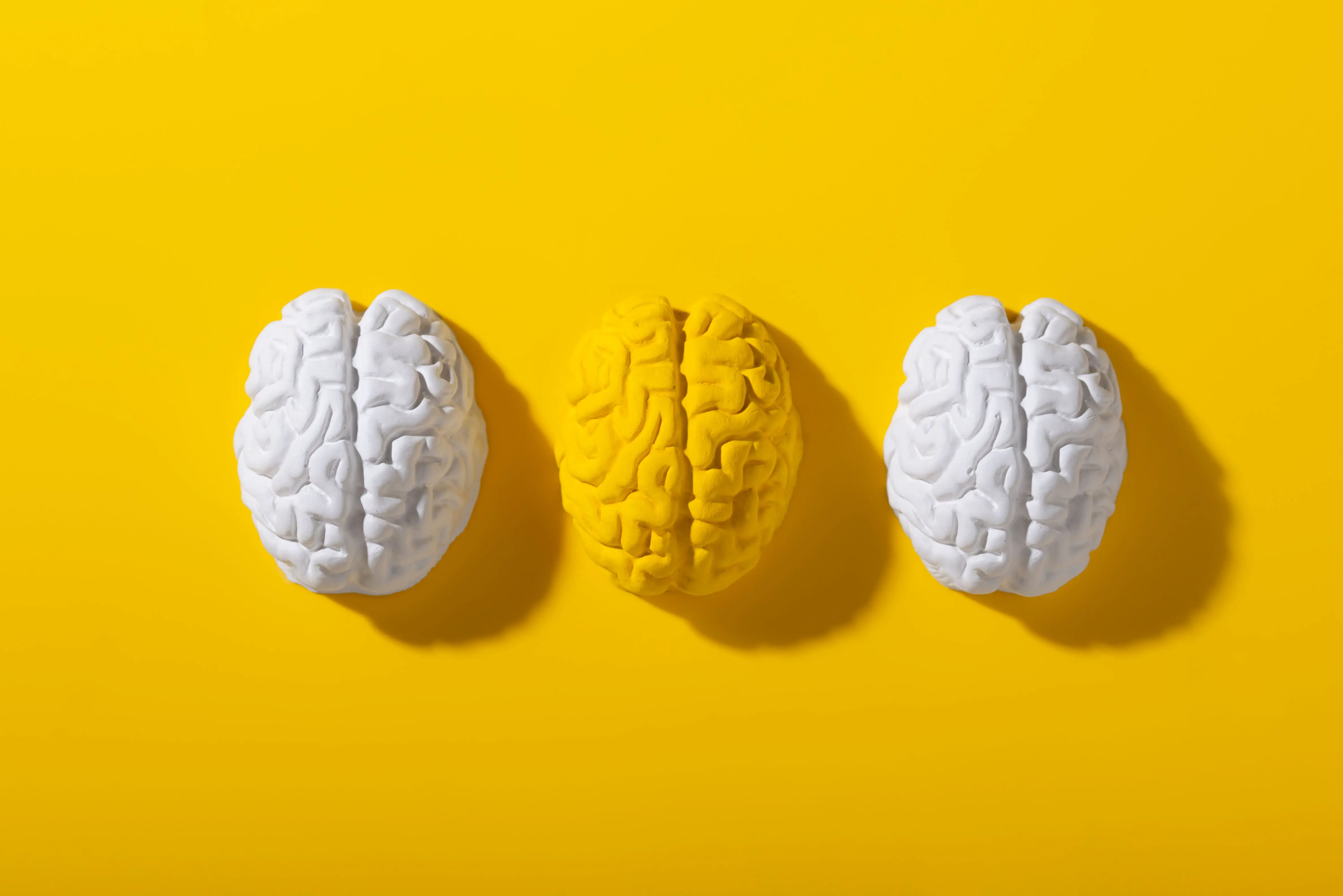
This is where EXOMIND comes in. The treatment uses magnetic impulses to stimulate specific brain regions and enhance the brain's adaptability. The underlying technology, transcranial magnetic stimulation (TMS), has been used in medicine for years, particularly for depression. What is new is its application beyond classical disease patterns — for stress, exhaustion, inner restlessness, and difficulty concentrating.
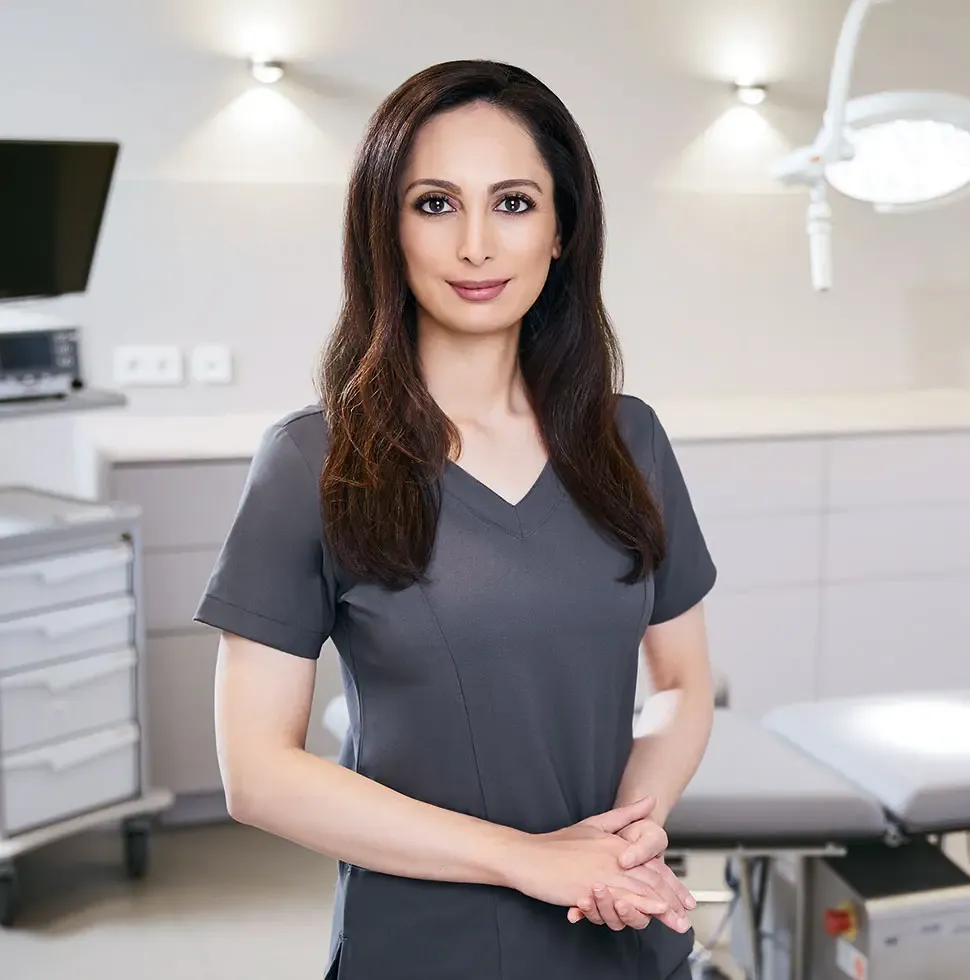
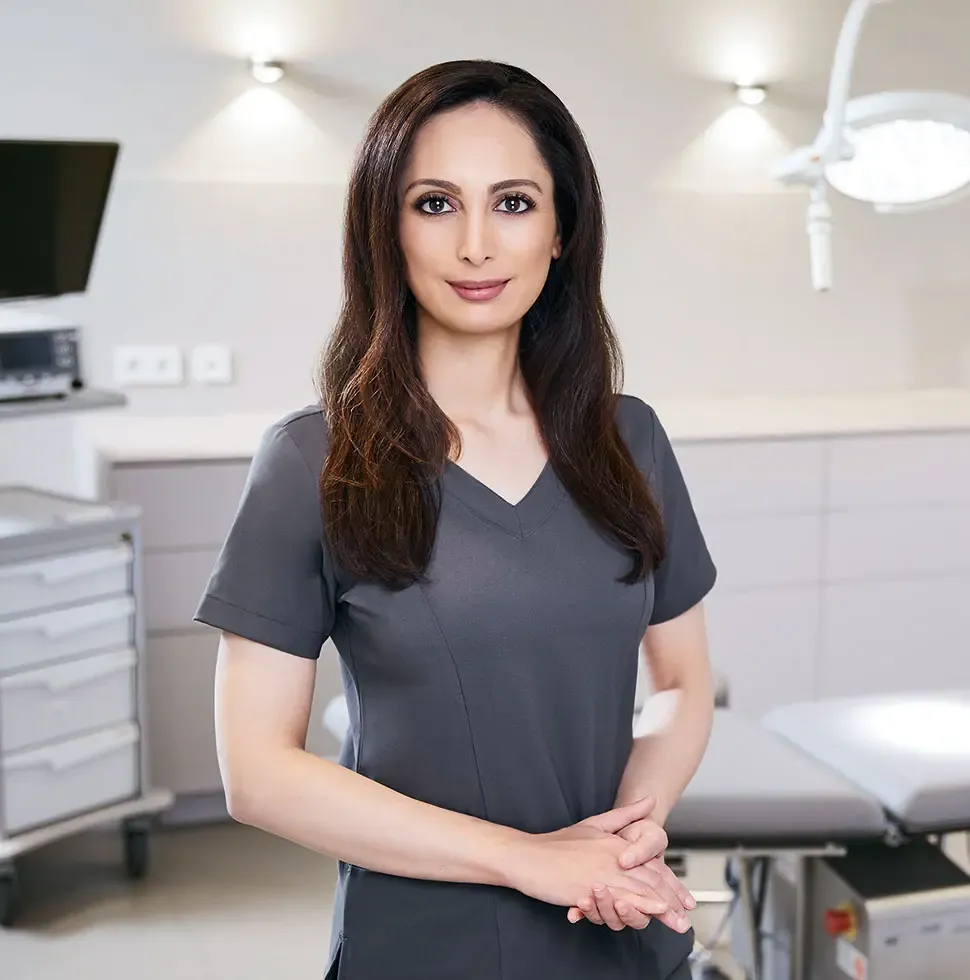
Dr. Neda Nabavi, a specialist in plastic and aesthetic surgery, offers EXOMIND at her practice in Hamburg. In this interview, she shares her experiences to date, some surprising observations about her patients, and the potential she sees in the treatment for the future of longevity medicine.
Dr. Nabavi, with EXOMIND you are treating not the skin but the brain. What is behind this approach?
For me, the brain is one of the most important — and yet long-neglected — building blocks of longevity. We can talk about muscle mass, metabolism, skin quality, hormones, and nutrition, but if we lose mental clarity, emotional stability, and the ability to cope with stress, a truly essential part of healthspan is missing.
That is precisely why I find EXOMIND so compelling. The technology is based on transcranial magnetic stimulation — TMS for short. Targeted magnetic impulses induce electrical currents in specific areas of the cerebral cortex. One key target region is the dorsolateral prefrontal cortex, which is involved in emotional regulation, attention, decision-making, and impulse control, among other things.
The concept that matters most to me here is neuroplasticity. Our brain is not a static organ. Throughout life it retains the ability to adapt its activity patterns and neural connections. Repeated TMS can influence exactly these neuroplastic processes.
A simplified way to think about it: we are giving the brain a targeted training stimulus and enabling certain neural networks to communicate with each other in new ways. Scientifically, that is far more interesting than the idea of a short-term
Depending on the protocol, TMS has been used medically for years — particularly for depression and other neuropsychiatric conditions. At the same time, very interesting fields of research are emerging around stress regulation, cravings, cognitive function, and brain health.
What has surprised you most about your experiences with EXOMIND so far?
What has genuinely surprised me from the very beginning is one consistent observation: everyone feels happy after an EXOMIND treatment — and remarkably so, regardless of the reason they originally came to see us.
I don't mean an artificial euphoria. It's more of a shift in baseline mood. Patients describe a greater sense of inner calm and composure. Things that previously stressed them out or threw them off balance suddenly affect them less intensely. Many say: "I'm still in the same situation, but I react to it differently." And I find that actually far more compelling than any promise of eliminating stress entirely.
Beyond that, patients report improved focus, mental clarity, and performance. Some feel they are less easily distracted or can complete tasks with greater concentration. Others describe, above all, a higher resilience to external stressors.
For me, that distinction matters: resilience doesn't mean life suddenly becomes stress-free. It means our system is better equipped to handle it.
I also see very interesting changes in behavioral patterns and cravings. One patient at my practice, who had smoked around 20 cigarettes a day for many years, stopped smoking after just the first treatment and was still smoke-free 18 months later.
And this is not an isolated case — it has been observed in multiple other patients as well. Experiences like this illustrate very clearly why the connection between prefrontal networks, self-regulation, and behavior is so scientifically compelling.
What can someone expect if they choose EXOMIND?
The treatment itself is surprisingly straightforward. You lie relaxed in the treatment chair, the applicator is positioned precisely on your head, and at the start we individually determine the required stimulation intensity through what is known as the motor threshold. After that, the actual stimulation begins.
You remain fully awake and responsive throughout the entire session. There is no anesthesia, no medication, and no downtime. You may feel the impulses as a gentle tingling on the scalp. Afterwards, you can go straight back to your daily routine.
The published EXOMIND protocols typically involve six sessions — for example, twice a week. Depending on the individual situation and indication, however, the protocol can be adjusted. Standard medical TMS protocols, for instance, can be considerably more extensive.
It's important to me not to impose a one-size-fits-all template on every person. We are treating a brain, not a standardized skin type — and for me, that always means taking a thorough medical history, setting clear goals, and monitoring progress.
And how lasting are the results?
This is precisely where neuroplasticity becomes interesting. The idea is not to "switch on" the brain for 25 minutes and then have everything disappear again. Repeated stimulation is intended to trigger changes in neural activity and network function that extend beyond the individual session.
How long an effect lasts, however, depends greatly on the specific indication and on the individual. From established TMS medicine, we know that therapeutic effects can persist well beyond the actual course of treatment. In some patients, maintenance sessions are used at a later stage.
For the newer EXOMIND applications around mental wellness, stress resilience, and performance, however, we still lack the long-term data to say reliably: after six treatments, the effect lasts for exactly this many months.
For that reason, I wouldn't automatically enroll every patient in an ongoing maintenance program. I prefer to look at what has changed, how stable that change is, and whether this person actually needs a top-up.
I find it particularly valuable to actively make use of neuroplastic phases. If someone is experiencing fewer cravings, is more focused, or feels emotionally more stable, that is precisely the right moment to establish new habits. For me, a large part of sustainability lies in exactly that.
What risks should one be aware of before undergoing treatment?
TMS is very well researched overall and, when applied correctly, is generally well tolerated. The most common side effects are temporary headaches or a feeling of pressure or tapping on the scalp. During stimulation, facial muscles may react slightly.
The relevant but rare serious complication is a seizure. That is why I consider a thorough medical history essential before any treatment. An elevated seizure risk, neurological conditions, and medications that may lower the seizure threshold must all be taken into account.
Particularly important are metallic or electronic implants in or near the head — such as certain cochlear implants, neurostimulators, or ferromagnetic implants. Treatment may be contraindicated in these cases. In cases of pregnancy or certain pre-existing neurological conditions, the decision must also be weighed very carefully on an individual basis.
The treatment feels low-threshold, and that is precisely why one must not lose sight of the fact that we are working with a medical technology that influences neural activity. For me, it therefore belongs in a medically supervised setting.
What perspectives does EXOMIND open up for longevity medicine?
For me, brain longevity is an essential part of longevity. A long life on its own is not a particularly compelling goal. We want to remain physically capable for as long as possible — but equally to think clearly, keep learning, make decisions, stay emotionally flexible, and live self-determined lives.
And this is precisely where neuroplasticity becomes a fascinating topic.
Research shows that rTMS can influence neural networks and neuroplastic processes. There are now studies in mild cognitive impairment and Alzheimer's disease in which improvements in cognitive function have been observed, and more recent meta-analyses show clearly positive signals in this area. At the same time, protocols and patient groups vary considerably, so a general preventive longevity effect cannot yet be derived from this.
In healthy individuals, the data are considerably more cautious. Effects on certain cognitive functions are found here too, but so far they are relatively small and not consistent enough to claim that TMS halts the normal aging of the brain.
I think this distinction is important. We cannot say today that EXOMIND prevents dementia or keeps the brain young. That would be getting ahead of the science.
But we can say this: the brain is plastic. We can stimulate neural networks in a targeted, non-invasive way. And we are only just beginning to understand what role such technologies might play in the long term for brain health. For me, this is one of the most exciting areas within longevity medicine.
Could EXOMIND also change our understanding of aesthetic medicine?
I think we first need to ask what modern aesthetic medicine actually wants to be.
If it is exclusively about reducing a wrinkle, then of course you don't need EXOMIND. But my vision of aesthetic medicine has always been a different one.
How we age is not only reflected in our skin. It shows in our muscle strength, our posture, our metabolism, our energy levels, our facial expressions — and very significantly in our brain. How focused am I? How well can I handle stress? How flexibly can I respond to change? How much do I feel I can actively shape my own life?
That is why I don't see EXOMIND as a conventional aesthetic treatment. I see it as a bridge between aesthetics, regenerative medicine, and longevity.
For a long time, aesthetic medicine focused almost exclusively on what is visible from the outside. Now we are increasingly beginning to understand the systems behind it. Skin aging does not exist in isolation. Muscle aging does not exist in isolation. And mental health and physical health cannot be separated from one another either.
For me, this is the direction we are heading: not just looking younger for longer, but functioning well, thinking clearly, staying resilient, and feeling at home in our own lives for as long as possible — in other words, aging better. That is precisely where the next generation of aesthetic medicine begins. And the brain plays a central role in that.

Less stress, better focus, greater peace of mind: EXOMIND aims to improve mental resilience through magnetic stimulation. Dr. Neda Nabavi explains how the treatment works, what changes she has observed in her patients, and why she considers brain health essential to longevity medicine.
Christine Bürg & Marianne Waldenfels

An interview with
Dr. med. Neda Nabavi

Cut out sugar, reduce carbohydrates, avoid certain foods: there’s no shortage of advice about diet and cancer. Oncologist Dr. Gesche Brannolte-Raab explains what the evidence shows – and what she recommends to her patients.
Christine Bürg & Marianne Waldenfels

An interview with
Dr. med. Gesche Brannolte-Raab