© © Ben Hassett/AUGUST
January 1, 2023
Margit Hiebl
Most of us see what is written here in black and white. If not, you are among those who possess a very special gift: synesthesia.
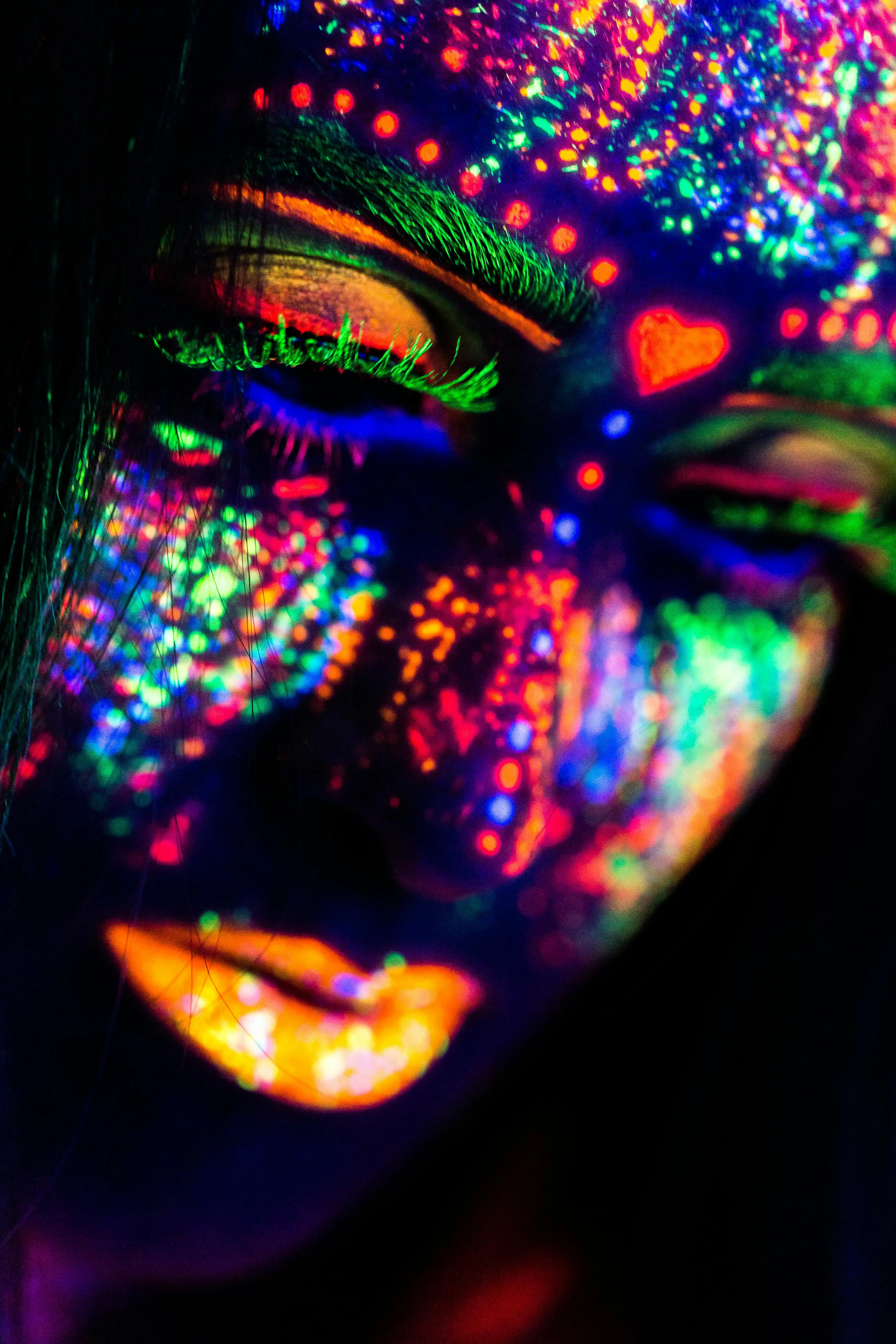
You might see the letters become colorful. You might also hear sounds. And a word tastes sour, smells like violets, or feels rough. What sounds a bit crazy is completely normal for synesthetes. They just connect sensory perceptions differently than other people due to their neural brain structure.
Typical examples are colored hearing, meaning the visualization of sounds in color or the association of colors with letters or numbers. Words can also taste or scents can be colorful. Or tastes are connected with symbols, shapes, and colors. A famous example of this is a sequence from the film Ratatouille, where Remy, the rat with sniffing expertise, sees a true firework of circles, spirals, lines, and colors while savoring cheese and strawberries.
Another type is ideasthesia, where thought processes and emotions are mapped in terms of color and form—the sense of sight or visualization often being involved. Another form is the so-called "ticker-tape synesthesia," where spoken or thought language is seen before the mind’s eye like subtitles or a news ticker. "Mirror-touch" synesthesia is also common, where watching another person causes one to feel mirrored sensations where the other is touched.
"Synesthesia is not a disease, but a variation of human thinking."
"There are well over a hundred different forms, since ultimately any conceivable perception can be coupled with another perception," says Hamburg general practitioner Dr. Caroline Beier, herself a synesthete and chairwoman of the German Synesthesia SocietyAll connections are possible and are perceived as normal by oneself.
"Only in exchange with other people do we notice differences." Since the phenomenon usually appears in early childhood and is therefore perceived as normal by the child, many do not become aware, or become aware late, that they have this talent, as the doctor puts it.
For synesthesia is not a disease, not a hallucination, not an illusion, but a neurobiological variant of human thought that also offers opportunities. It is genetically predisposed and therefore inheritable. However, the mode of inheritance is still unknown and inconsistent, as it can also skip a generation.
Approximately five to fifteen percent of all people, depending on the study, have at least one form of synesthesia. This usually only becomes problematic if too many forms appear at the same time. Then it can lead to sensory overload and overwhelm – because there is no "off" button.
But even seemingly small events can lead to irritations in everyday life: For example, if a floor color in a building does not match the color a "synnie" associates with the floor, it disrupts orientation. Similarly, if the colors of subway lines do not match those that synesthetes assign to them, it can take a while for them to find their way.
One can somewhat empathize with this as a non-affected person, for example, with the famous Stroop test, where one has to name the color of a colorfully printed word that describes a different color. Example: If the word blue is printed in yellow, one might take a moment to say it is blue. But usually, the advantages of sensory diversity outweigh the disadvantages: Synesthetes are considered particularly creative – often demonstrably gifted and highly sensitive. In addition, memory and imagination are much more pronounced.
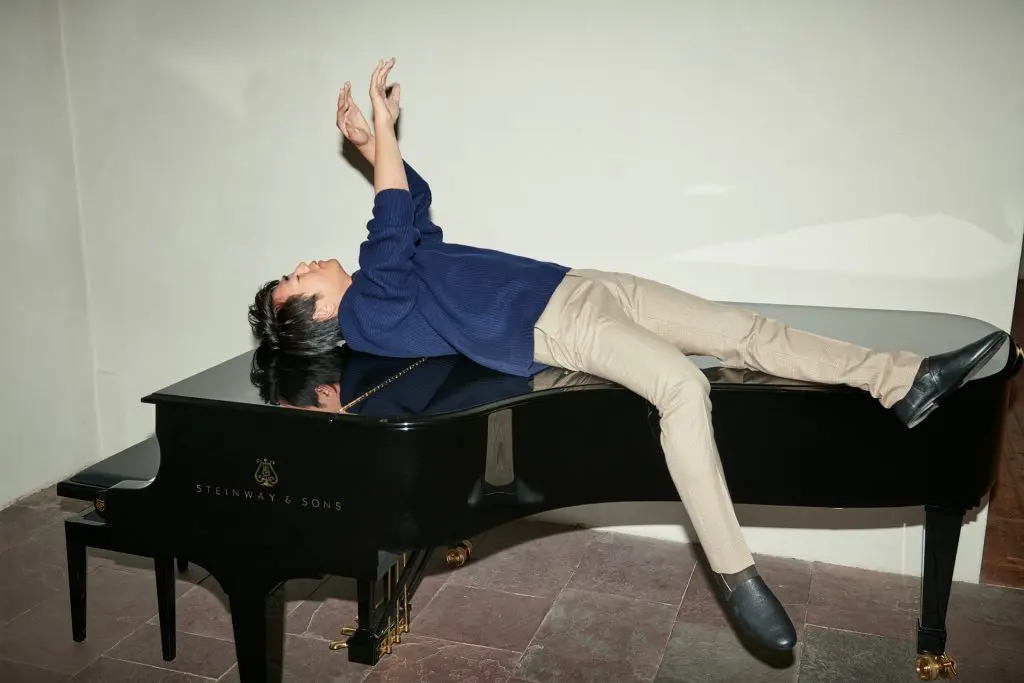
No wonder, then, that among the synesthetes there are many artists. Wassily Kandinsky, for example. The painter could hear colors by forming a connection between colors, shapes, and sounds.
"Color is a means of exerting a direct influence on the soul. Color is the keyboard. The eye is the hammer. The soul is the piano with its many strings. The artist is the hand that deliberately sets the soul vibrating by this or that key," described Kandinsky. Blue sounded like an organ to him, red like a violin, yellow like a trumpet.
The machine-learning experiment Play a Kandinsky, created in collaboration with the Paris Centre Pompidou and Google Arts & Culture, has used AI images like Yellow, Red, Blue from 1925 to bring them to life. This is meant to make it possible to experience how he might have perceived the creative process and how we might interpret it today. Meanwhile, Wassily Kandinsky's synesthesia is seen as one of the central secrets behind his artworks.
Colors and sounds also connect musicians like Pharrell Williams, Billie Eilish, Lady Gaga, Billy Joel, Hélène Grimaud, or Chris Martin, who can literally see whether a sound-image is harmonious. Composers like Franz Liszt, Jean Sibelius, Leonard Bernstein, or Alexander Scriabin are also included.
The latter created for his opus Prometheus 1910 possibly created the first light show in the world: with a part that was played on a color piano, which produced light projections when keys were pressed. And of course, poets and writers must not be missing. Johann Wolfgang von Goethe, for example, Vladimir Nabokov, Marcel Proust, or Elke Lasker-Schüler.
However, not every flowery and blind language or association has a synesthetic background. So, someone who associates vanilla pudding with childhood comfort doesn’t have to be a synesthete. “Synesthesia are predominantly consistent coupled perceptions that very often manifest in visualized color or form,” says Dr. Beier, “for example, when smelling vanilla pudding, a yellow dot always appears before the inner eye or, for example, pressure arises in a body region and consistently occurs.”
Memories of childhood situations or comfort do not belong to it, according to the expert. But often it shows that our language uses many synesthetic terms, even if only a small part of the population is affected. “That is why in linguistics there is also the term 'synesthesia,' which, however, is to be distinguished from the neurologically detectable phenomenon,” says Beier.
Examples of this are terms like fiery red, screaming colors, or round taste. As a rhetorical device, similar to a metaphor, this has been used since antiquity – but especially in the poetry of Romanticism, Symbolism, and Expressionism, to sensory impressions intensify or shift boundaries.
Research in this area is still young but is becoming increasingly specialized with regard to the many different manifestations of synesthesia. And that it's not just a figment of the imagination is proven by MRI scans: For instance, a study showed that synesthetes use parts of the brain normally dedicated to color when hearing certain words.
It is also now known that not everyone perceives the connections equally strongly, nor does everyone, for example, have the same colors for numbers or letters. It is assumed that synesthesia remains unchanged throughout life. But how do you find out if you or your child belong to it?
For example, through a questionnaire on the website of the German Synesthesia Society. There you can also find competent advice if needed and can interact with other synesthetes. And then maybe just enjoy having a special talent and seeing the world a little more colorful.