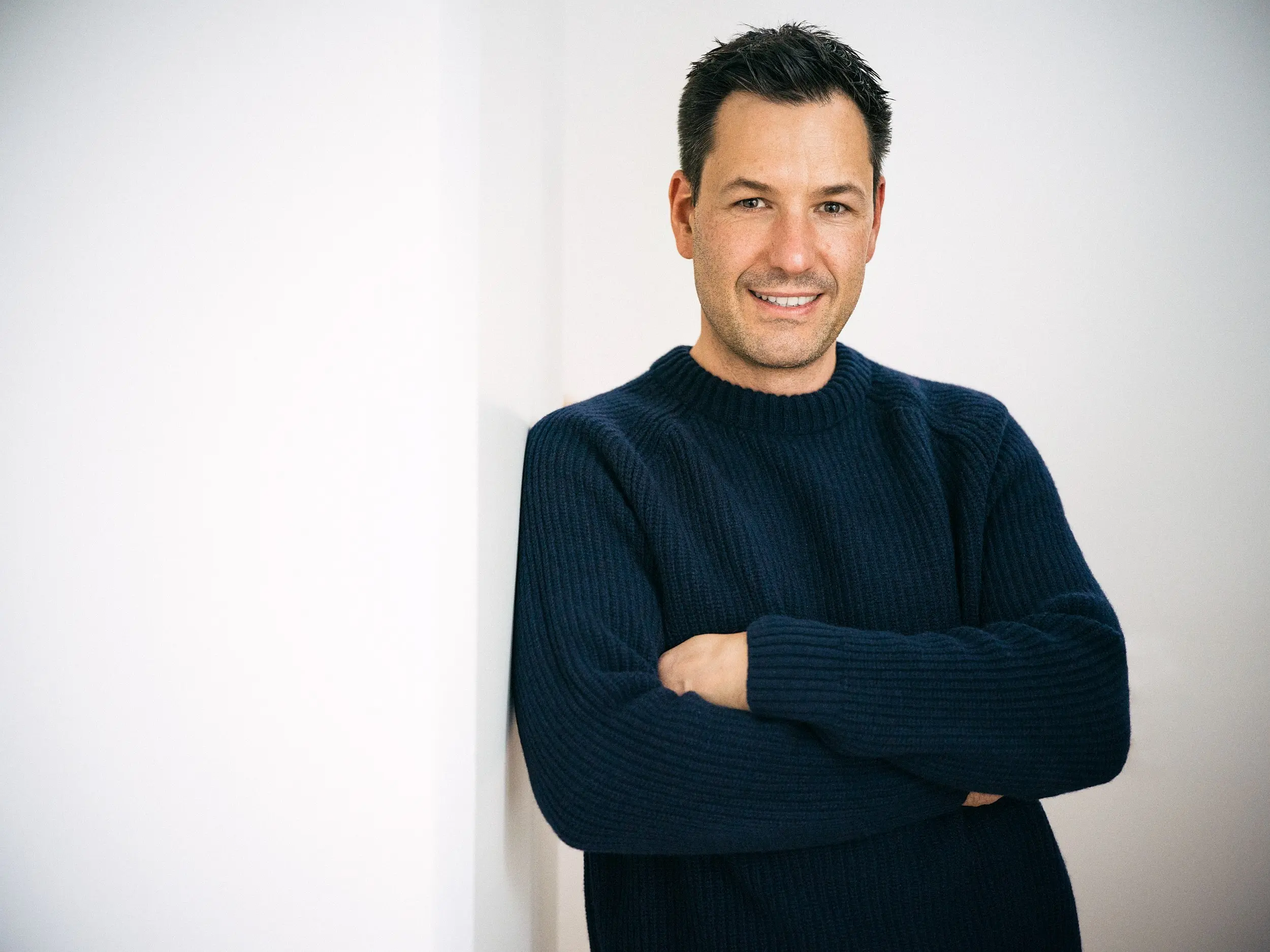
For exactly 40 years, Charles Schumann has been running his bar in Munich, which he named after himself and which has been repeatedly ranked among the best in the world for just as many years. He wrote a book that is still considered the ultimate bar book in New York and Tokyo today.
He models. He loves Japan. He now also makes beer and tea – green tea from Japan, where he runs his own plantation. The now 80-year-old still stands in his venue day after day. Better: he strolls through his Schumann’s with inimitable grandeur. His sporting activities are also legendary – as a boxer, footballer, surfer, swimmer.
Charles Schumann, actually Karl Georg Schuhmann, originally comes from the Upper Palatinate but has long been what one would call a Munich original. He likes to grumble. He sometimes scolds those guests the loudest whom he likes the most. He acts rough but is sensitive if a regular guest hasn't shown up for a long time. "You don't have to come anymore," he then shouts across the venue and means: "Finally, we see you again."
Mr. Schumann, have you ever checked on your phone how many steps you walk daily at work?
No. But I estimate, on a normal working day, I easily walk ten kilometers around the bar.
A life in motion
How often do you exercise?
Every day. I run half an hour four times a week. After Corona, the nights in the bar last longer, so I can no longer manage to run in the morning. Today I only went out in the afternoon. Five kilometers, very slowly at a snail's pace. When I go running in the morning, I also reward myself with a coffee in between.
But when I only sleep five hours, I'm too tired to run and only go out in the afternoon. The last few days have gotten tougher, as there are more people out again. Thursday, Friday, Saturday nights cost us a lot of energy again. I do boxing training once a week; I hope to do it more often in the summer: But Andreas, with whom I train, actually only has time for me once a week.
What do you train there?
Something very important: gymnastics, warm-up exercises, for half an hour.
Stretching or strength exercises?
Strength exercises not at all, more like a kind of dance gymnastics with relaxation exercises. Then there are thirty minutes of movement exercises, also with pads, that's what you call the dinner plate-sized gloves you hit. I hardly do sparring anymore. No one goes up against me anymore, everyone is scared – no, nonsense. We will do ten minutes of sparring at the end again, now that the situation in the gym has normalized. Sparring is the reward for the effort before.
Do you still surf sometimes?
In the summer. On the Atlantic. Surfing would be an exaggeration; I hardly ever take the board with me anymore. I tend to swim now – never alone – and lay on the waves. On vacation, I start with the sport a little later, though. At seven, half past seven, I first go for an hour's run and then swim in the Atlantic for ten minutes.
In Munich, during Corona, I used to run at six in the morning because it was so quiet and there were so few people around. Also, because during the lockdown, I didn't need much sleep. I wake up two or three times a night. I used to always study Japanese vocabulary if I couldn't sleep. Now I just get up early.
Why Charles Schumann still trains
You're eighty years old. Why do you exercise so excessively?
Because I feel better. And because otherwise I wouldn't manage my day, definitely not. And because I'm vain. Also, I think it's good for the Psyche wichtig ist – der gesunde Geist braucht einen gesunden Körper.
Macht so viel Sport Spaß?
Der macht mir immer Spaß, weil ich mich gut fühle dabei.
Dabei oder eher danach?
Dabei und nachher, weil ich mich dabei ja nicht quäle.Ich würde nie hundert Liegestützen machen, um am Ende hundertfünfzig zu schaffen. Habe ich nie gemacht.
Bis vor wenigen Jahren haben Sie auch noch Fußball gespielt. Hat Ihnen der Arzt davon abgeraten, sich bis zur Erschöpfung zu verausgaben?
Habe ich ohnehin nie gemacht. Ich habe nie Sport gemacht, sodass ich tot war hinterher, ganz selten, zwei-, dreimal vielleicht. Sport hat immer Spaß für mich bedeutet. In den ersten Jahren hatte das Schumann’s ja nur nachts auf, da bin ich nachmittags sogar noch zum Jazztanz gegangen. Nur mit Frauen, keine Männer waren da. Außer Holger, der hat damals bei uns als Barkeeper gearbeitet und sich dabei auf Hollywood vorbereitet.
Didn't quite make it. But Holger at least thought that acting also involved proper dance training. I went along for two years and felt really great. I still benefit from that today, I move well during warm-up. If the weather is right, then I feel wonderful. It shouldn't be too cold for warming up.
Already running ten kilometers on the job and then running another five in the morning, and you want to feel wonderful doing it?
I run very slowly. When I think of other people I meet in the morning at Schumann's daily bar, they sleep an hour longer and then sit all day. Some also smoke thirty cigarettes, then you eventually break down because the body can't take it anymore. My mind doesn't work anymore either, so I keep fit. On the other hand, there are also many people who do too much sports who are also done at thirty because they overload their bones.
You yourself smoked for a long time.
Yes, but I quit. And started again at seventy because smoking belongs in a bar. But in the meantime, I've quit again.
Have you never had sore muscles?
Not anymore. When I'm jumping around like a fat beetle in the goal while playing soccer, I feel my bones, of course. But while running, I adjust to my rhythm, and also while swimming.
Breaststroke or freestyle?
Always freestyle. But I'm not a good swimmer. Unfortunately. Not everyone is suited for it. There are swimmers who swim against the water, and those who swim with it. I'm somewhere in between. My son Marvin was born to swim. He quickly became a better swimmer than me. He was also in the swimming club where they were already put through the wringer.
At some point, he said, 'I don't want to drink chlorinated water anymore.' But for me, sports are not necessarily about performance, but about keeping my body in shape. If I don't do gymnastics for a whole week, everything hurts, and I get tension from work, and then the back pain starts.
I do gymnastics every evening for ten, fifteen minutes after work, unless I'm too lazy. In boxing, I'm encouraged to do gymnastics, and Andreas knows exactly what I need to do to relax.
Have you never had a classic sports injury?
Never. Once I had a ligament tear or something like that. I went to one of those famous doctors where you sit in the waiting room for hours and see how soccer players from all over Germany get treated first.
Were you at Müller-Wohlfahrt?
This one time. He discovered that one leg is a bit shorter. Well, you kind of know that already. Then he sent me to different people, for whatever reasons. And then he said: America! He almost wanted to send me to America for surgery. So I asked him if he was a bit crazy.
I'm not a professional athlete. Then he said, go to Straubing for surgery. I almost went there, but the day before I randomly met a masseur who told me: Come to me, we'll get it done. But he couldn't help me either. Then I thought to myself: Leave me alone!
I left the crutches at Müller-Wohlfahrt's door with a note: That's it. And then I walked on one leg for half a year, even during sports, it really hurt. But some things heal best on their own.
That's it? No other injuries?
Once a goalpost fell on my head, it bled, but I didn't even notice the hole in my head at first. My girlfriend Maria then said to me: You're a man made of wood.
Never broke your ribs or nose while boxing?
No, never, I'm too fast. Okay, the nose was broken once.
You grew up on a farm in the Upper Palatinate. What kind of sports do you do as a child there?
My brother was a very good athlete. He discovered it for himself, he's not tall, maybe 1.70 meters, and yet he could jump 1.75 meters high without a coach. He trained while herding cows. His daughter was even Bavarian champion in something. But athletics was not my sport, I played a lot of soccer when I was eleven or twelve.
Were you already in goal back then?
No, I was even worse back then and wasn't really interested in soccer. I only took it more seriously later when I was already working in Harry’s New York Bar in Munich. When we had the sports club, I ended up in goal. Whoever is chosen last has to be the goalkeeper. That's how it was with me too.
What sport was there at the Jesuit school?
There was none at all Sport, that wasn't planned there. You weren't even allowed to walk anymore. We already played a little soccer in the garden. But no one discovered me, like my niece. That's why I never really did sports. After the Jesuits, I went to the Federal Border Guard, I was 18 then, and I completed my high school diploma much later.
I had to leave school. They discovered that I would probably never do what they had envisioned. Of course, they wanted me to become a priest, but I was a naive kid from the farm and watched the women. So they suggested I leave after the intermediate maturity.
What did you have in mind?
I didn't know. Sixty years ago, hardly anyone knew that.
Federal Border Guard officer wasn't a dream job?
Of course not. I wanted to leave and couldn't think of anything better. Anyway, everyone had to do sports there. Cross-country running, a few bottles broke down during that. We tried to avoid it, but I was an above-average running talent, although I hadn't been able to run at the Jesuits before.
Running was also a kind of liberation for me back then. At some point, I was transferred to the Southern Border Command in administration, we had a sports field in North Schwabing, very nice, still exists. I was maybe 22 and very fit. Back then, there were the first runs around Lake Starnberg, we ran them effortlessly.
It was still a people's sport, not competitive sports with timekeeping, we had checkpoints that you had to reach. We were so fast that many checkpoints weren't even set up when we ran past them. It took us four or five hours or so. And because we were so cool, we played two more hours of soccer afterwards.
When did you start swimming?
Very late, I already had my own bar by then. I thought to myself: Damn, it’s not okay that you lie like a dead fish in the water. That’s why I hired a former swimming coach. He taught me how to swim better and be better in the water, the coordination, the movements. Then I was out a lot with Marvin, but he soon stopped swimming with me because I was too bad for him.
Surfing over 40
How did you get into surfing?
By chance. Back then, not every other person bragged about being a surfer. Marvin originally wanted to become a marine biologist, and for that, you have to be able to swim well and also dive. The boys had seen all those diving movies like Deep Blue. At 12 or 13 he wanted to get his diving certificate in Lanzarote. But they told him he had to wait because he was too young.
A year later we went to Sardinia. The Italians also said: No way! But because he was so nice and the Italians are so child-friendly, they took him out to sea. At some point there was a storm, they didn’t want to go into the harbor, but preferred to leave the boat outside and swam ashore.
The next day the diving instructor came and said: Anyone who can swim like that can also dive. Then Marvin traveled to the Atlantic with Sport Scheck for two years, 24 hours with two drivers, and I was terrified. And because you can’t dive all day, he signed up for a surfing course.
Did you register with him?
No, I didn't want to surf at all, I wasn't interested. But Marvin was 14 or 15 at the time and he was whining: I'm homesick, I don't understand anything! They only spoke French. And then I had to join in and translate. That's how I got into surfing. Marvin forced me. I was already over forty.
You don't do that anymore today?
If I'm in Biarritz and feel like it, then yes. If I lived there, I would certainly surf more often.
Do you have your own board at home?
No, just three wetsuits. I have one in the bar that I've never used. The three times a year that I go to the Atlantic, I rent everything. From a friend on site. I don't actually pay anything, I just treat him to a meal.
When running, surfing, and swimming, it’s not necessarily about winning, but with soccer it is.
Was that important to me? No one likes to lose, but I didn't complain after defeats. Only when I was bad in goal, which happened often.
Boxer behind the counter
You didn't start boxing to win either?
No, I never saw boxing as a fight, but to stay fit. I would not have been a good competitor either. I rather understood it as dancing. I owe the fact that I can still move so well today to boxing. If I had run more extremely, I would certainly have knee and joint problems now.
The good reflexes as a goalkeeper – did they also come from boxing?
I think so.
Football is a team sport, some of Schumann's waiters also played with you.
That was really great. But we can't do it anymore because now everyone is soft. We now have more boxers on the team, they prefer to be strong and beautiful.
Reading Tip: Charles Schumann – Homage to a Boss. Schirmer/Mosel Verlag, 176 pages, €19.80