© Kar0329
September 30, 2024
Birgitta Dunckel
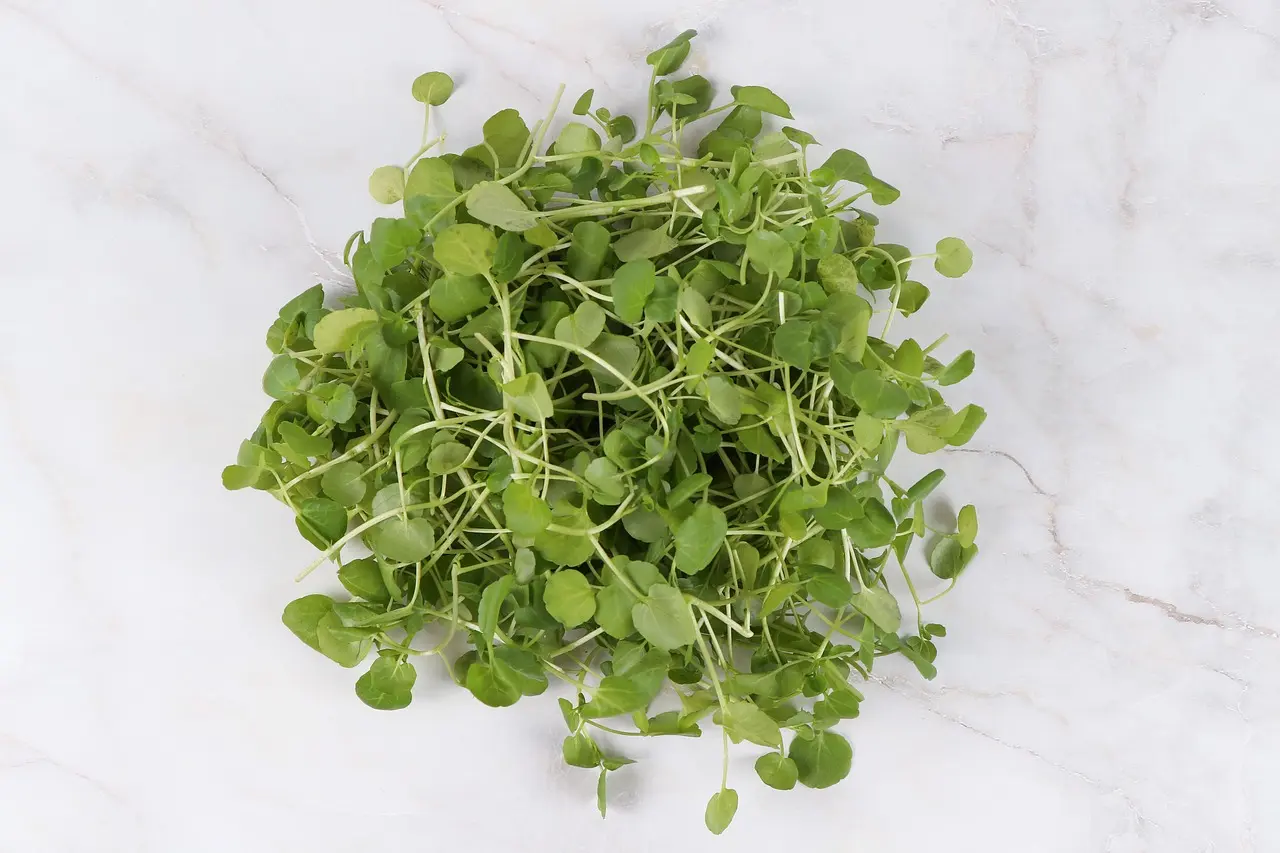
Superfood watercress: The inconspicuous aquatic plant contains countless healthy minerals and vitamins, such as vitamin C, vitamin A, iron, and zinc.
Watercress is considered the healthiest vegetable in the world – at least according to a scientific study by the Centers for Disease Control and Prevention (CDC). The American health institute, the equivalent of the German Robert Koch Institute, awarded watercress the maximum score of 100 out of 100 points for nutrient density, the only food to achieve this.
As a result, it pushed Chinese cabbage with 91.99 points to a clear second place, followed by Swiss chard with 89.27 points in third place.
Watercress received the perfect rating due to its exceptional nutrient density. This value describes the ratio of valuable nutrients to the calorie content of a food. The higher the nutrient density, the more vitamins, minerals, and antioxidants the food contains per calorie and gram – and this is where watercress is unbeatable.
Interesting fact: Of the 41 foods examined in the CDC study, lemon ranked 28th. Although it is the healthiest fruit in the ranking, it is surpassed by 27 types of vegetables – primarily watercress.
Watercress, also known as cress, belongs to the cruciferous family. This healthy plant family also includes kale, broccoli, Chinese cabbage, arugula, Brussels sprouts, and kohlrabi. As the name suggests, watercress prefers to grow near bodies of water – hence the alternative name cress.
Superfood is recognizable by its characteristic features: round, dark green, and fleshy leaves as well as small white flowers. Both stems and leaves are edible and have a pleasantly sharp, slightly mustard-like taste.
The spicy sharpness is due to glucosinolates – natural plant compounds with numerous health benefits. This characteristic note makes watercress a popular ingredient in soups, salads, and smoothies, where it provides an extra kick of sharpness.
The healthiest vegetable in the world is full of valuable ingredients. The nutrient composition of watercress is impressively diverse:
Vitamins in watercress:
Minerals in watercress:
Numerous studies confirm the positive effects of the plant compounds contained in watercress. The secondary plant compounds in the leaves demonstrably act:
To maximize the health benefits of watercress, it should preferably be eaten raw. Cooking or frying can destroy valuable heat-sensitive nutrients – especially vitamin C and B vitamins are reduced.
Served raw and cold:
This way, the full nutrient power of watercress is completely preserved.
An important note: Although watercress is the most nutrient-rich vegetable, it contains comparatively less fiber than other cruciferous vegetables. For comparison: A cup of cooked broccoli provides about 5 grams of fiber, while a cup of watercress contains less than 1 gram.
Since fiber plays an important role in healthy digestion and satiety, watercress should not be the only cruciferous vegetable on your menu.
Nutrition experts advise: Even though watercress is the healthiest of all vegetables, it's healthier to eat a wide range of different vegetables and fruits. This is the only way to ensure a balanced variety of nutrients and benefit from the different health advantages of various foods.
Where can I buy watercress? Watercress can be found in well-stocked supermarkets, at farmers' markets, in organic shops, and sometimes in Asian stores. Alternatively, watercress can be ordered online or grown on your windowsill.
How long does watercress last? Fresh watercress keeps in the refrigerator for about 2-3 days. It is best stored wrapped in a damp kitchen towel or with the stems in a glass of water – similar to fresh herbs.
Can you grow watercress yourself? Yes, watercress is very easy to grow yourself. It only needs moist soil or can even be grown on cotton wool. The seeds germinate after just a few days, and after about 2 weeks, they can be harvested.
How much watercress should one eat daily? Just a handful (about 30-50 grams) of watercress per day can provide a valuable contribution to nutrient intake. Due to its intense flavor, it is usually used in smaller amounts as a seasoning component.
Are there any side effects of consuming watercress? Watercress is generally very well tolerated. In very large quantities, the mustard oils can cause mild stomach discomfort in sensitive individuals. Pregnant women should consult their doctor before regular consumption.
What is the difference between watercress and garden cress? Although both belong to the cruciferous family, they are different plants. Garden cress grows on land and has finer leaves, while watercress (water cress) has thicker leaves and thrives near water. Both are healthy, but watercress has a higher nutrient density.
Conclusion: Watercress rightfully deserves its title as the healthiest vegetable in the world. With its perfect nutrient density of 100 points, numerous vitamins, minerals, and health-promoting phytochemicals, it is a true superfood.

How reishi, cordyceps, and other medicinal mushrooms can ease the pollen season
Marianne Waldenfels