© Dorling Kindersley
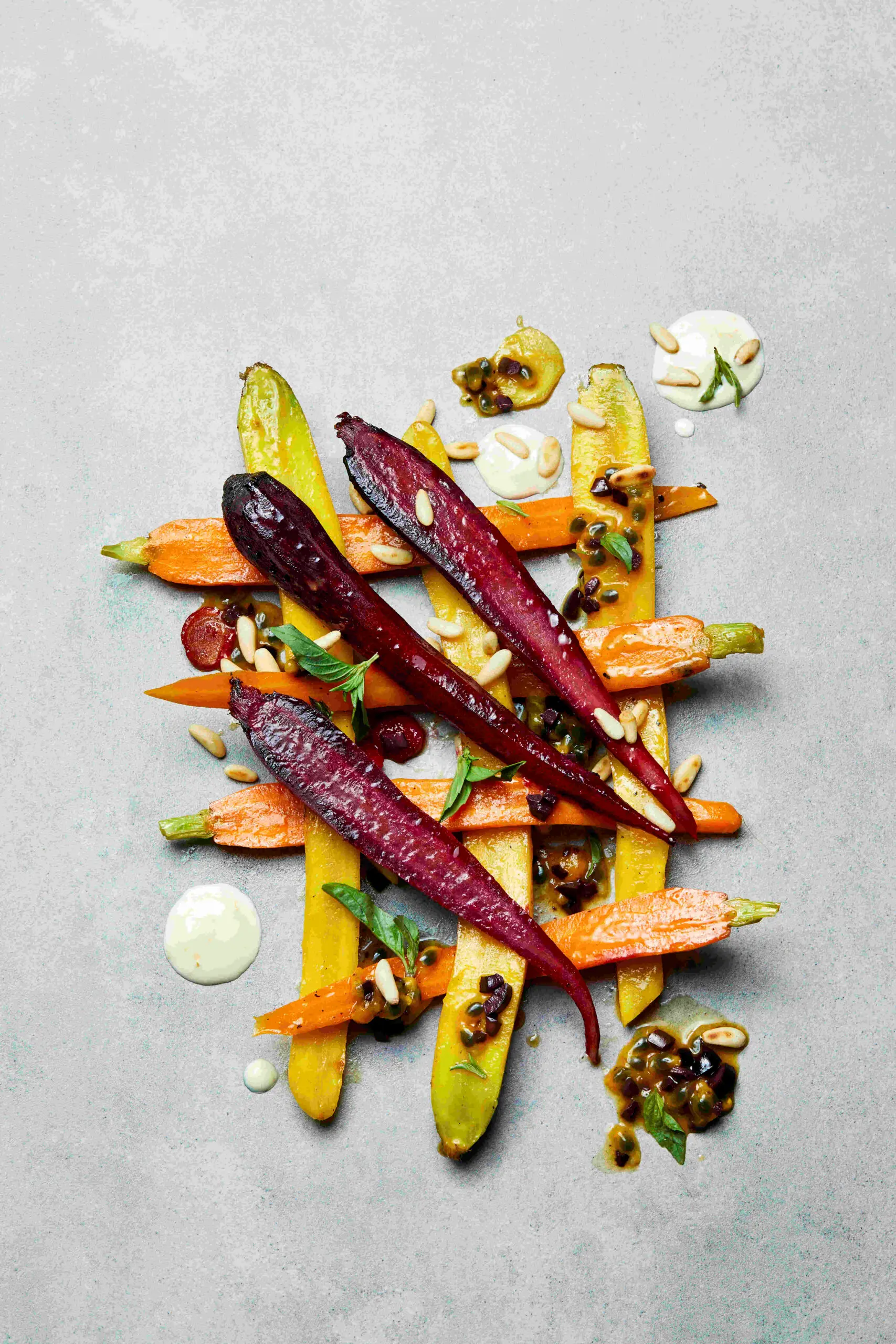
A recipe from Heiko Antoniewicz's brilliant cookbook Aromen: Carrots with passion fruit and olives
January 20, 2025
Marianne von Waldenfels
There's no arguing about taste? Quite wonderfully, indeed! Especially when it comes to food pairing, where things that seemingly do not match come together.
White chocolate with caviar, lobster with blueberries, banana with parsley, oysters with kiwi: Food pairing creates dishes that seem almost absurd at first glance – supported by molecular chemistry.
The term "food pairing" was born when the famous chef Heston Blumenthal experimented with salty ingredients and chocolate in 1992 and discovered that caviar tastes pretty good with white chocolate. The three-Michelin-starred Briton had no explanation for why this was the case.
So he contacted the perfumer and food technician François Benzi and told him about his discovery. Using a gas chromatograph, Benzi found out why the two foods go together.
White chocolate and caviar both contain the substance trimethylamine and are therefore related in taste. So the chemistry has to be right in food too. Benzi had experienced something similar to Blumenthal before – in his garden.
When he smelled a jasmine bush, he suddenly had the scent of liver in his nose. Benzi also examined the substances here. The result: The aromas of both are essentially based on the chemical molecule indole. So he combined both on a plate – and was extremely satisfied with the result.
Blumenthal and Benzi expanded their research and made (food) history. They developed “food pairing trees” that show which spices and ingredients go particularly well together.
To this day, Blumenthal is the owner of the legendary restaurant "The Fat Duck" near London and known for surprising its guests with extraordinary combinations that tickle the palate in a completely new way, such as dark chocolate and blue cheese. According to Blumenthal, they share 73 aromatic components.
The difference from traditional trying and tasting in food pairing is that scientific research forms the basis for it. Foods are broken down into their components, as in molecular cuisine, the so-called key aromas are filtered out and compared with one another.
The individual aromas are recorded by scientists in databases. More than 10,000 have already been deciphered and thus millions of possible combinations have been created. Apparently, good taste has a lot to do with physics and chemistry.
René Redzepi, chef of the world-renowned "Noma" in Copenhagen, combines black olives with white chocolate, for example, in a completely unexpected way. The earthy and salty notes of the black olives are balanced by the sweetness and creaminess of the white chocolate.
At some point, the Spanish star chef Ferran Adrià no longer experimented only with different flavors, but also with different textures and states of matter. In "El Bulli," for example, liquids were pressed into jelly with the help of physical and chemical processes, or dishes prepared with liquid nitrogen that combined the most contrasting flavors and tickled the taste buds in a completely new way.
© Volker Debus
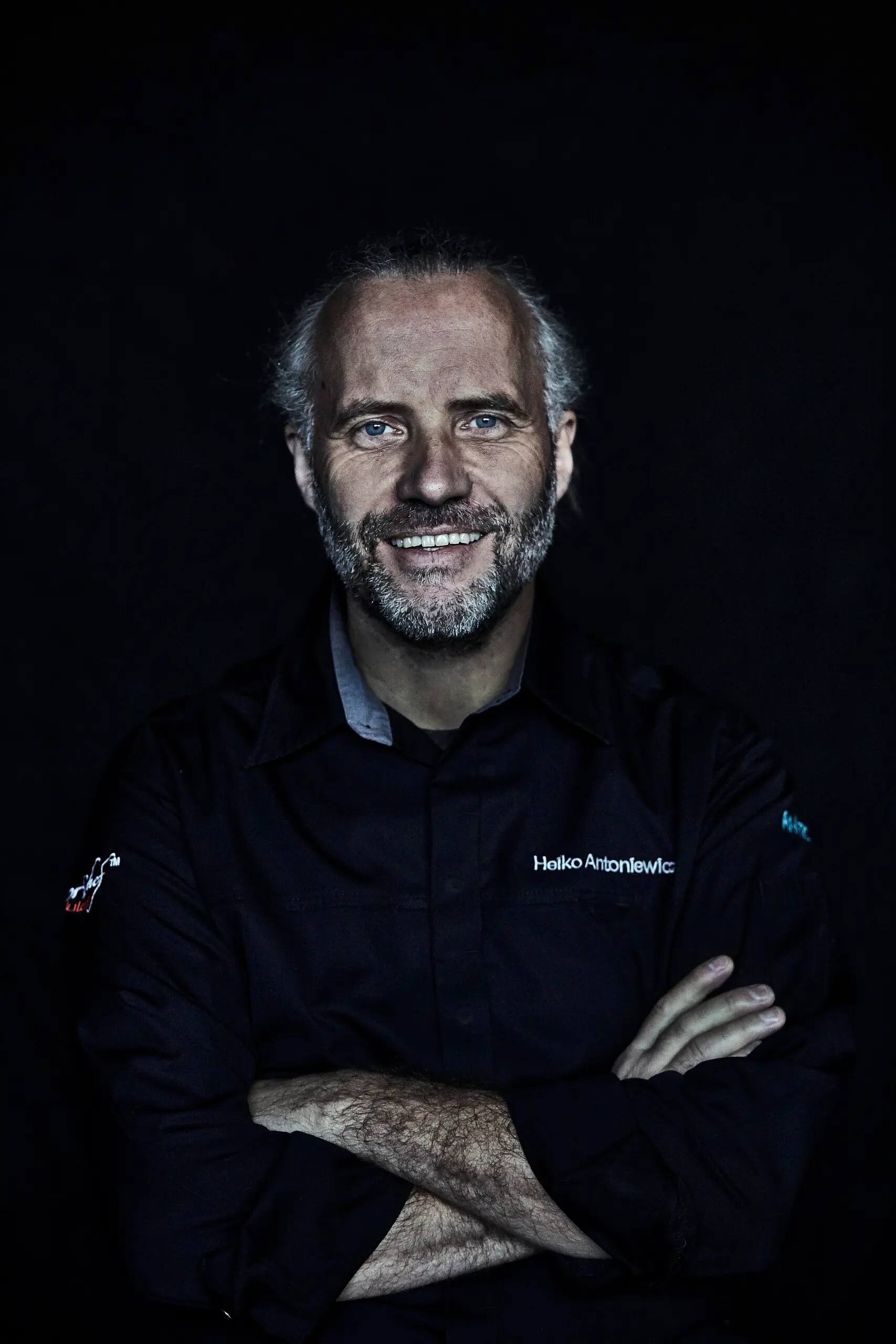
Heiko Antoniewicz – Visionary and Exceptional Chef
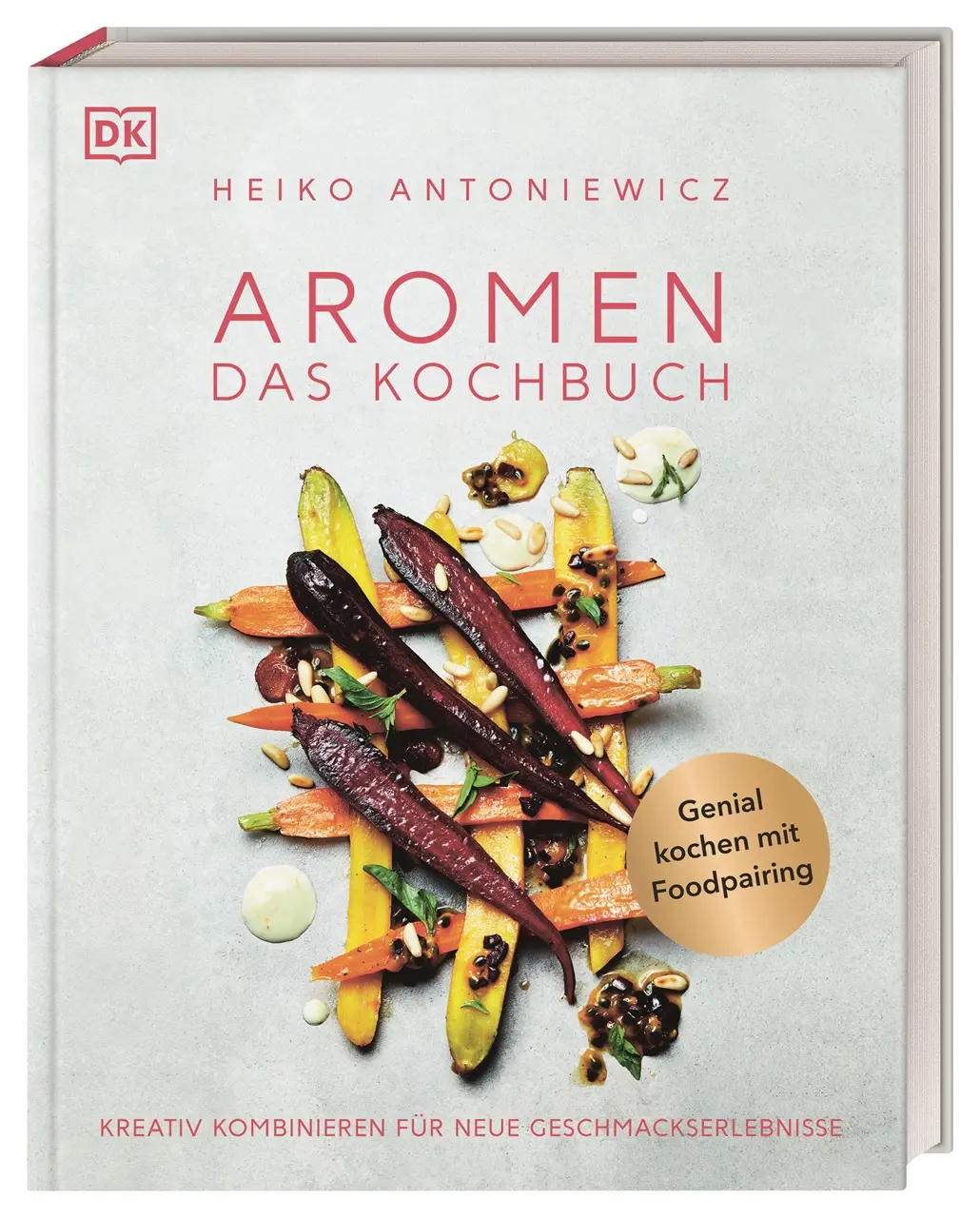
He is considered a pioneer and visionary and is one of the most innovative chefs in the country. Antoniewicz has intensively dealt with the topic of food pairing, among other things, in his cookbook "Aromen" (Dorling Kinderley).
What is your definition of food pairing?
The deliberate harmonization of ingredients. It is a trend that combines intuition with scientific analysis, i.e., the study of aroma harmony and flavor enhancement.
However, food pairing is not just about combining aromas, but also about experimenting with textures and consistencies.
Into which categories are aromas divided?
We distinguish between seven aroma groupings: citrusy, fruity-acidic, floral-fresh, vanilla-like, cinnamon-like, woody, roasted.
Do you consult scientists when creating new recipes?
Yes. However, science tends to confirm what I do and gives me new ideas. There is also nothing wrong with trusting your intuition. When I was a little boy, I used to eat Nutella and mustard together on impulse. Today I know why it works. Because hazelnuts and mustard harmonize very well together - they have the same aroma profiles.

© Dorling Kindersley
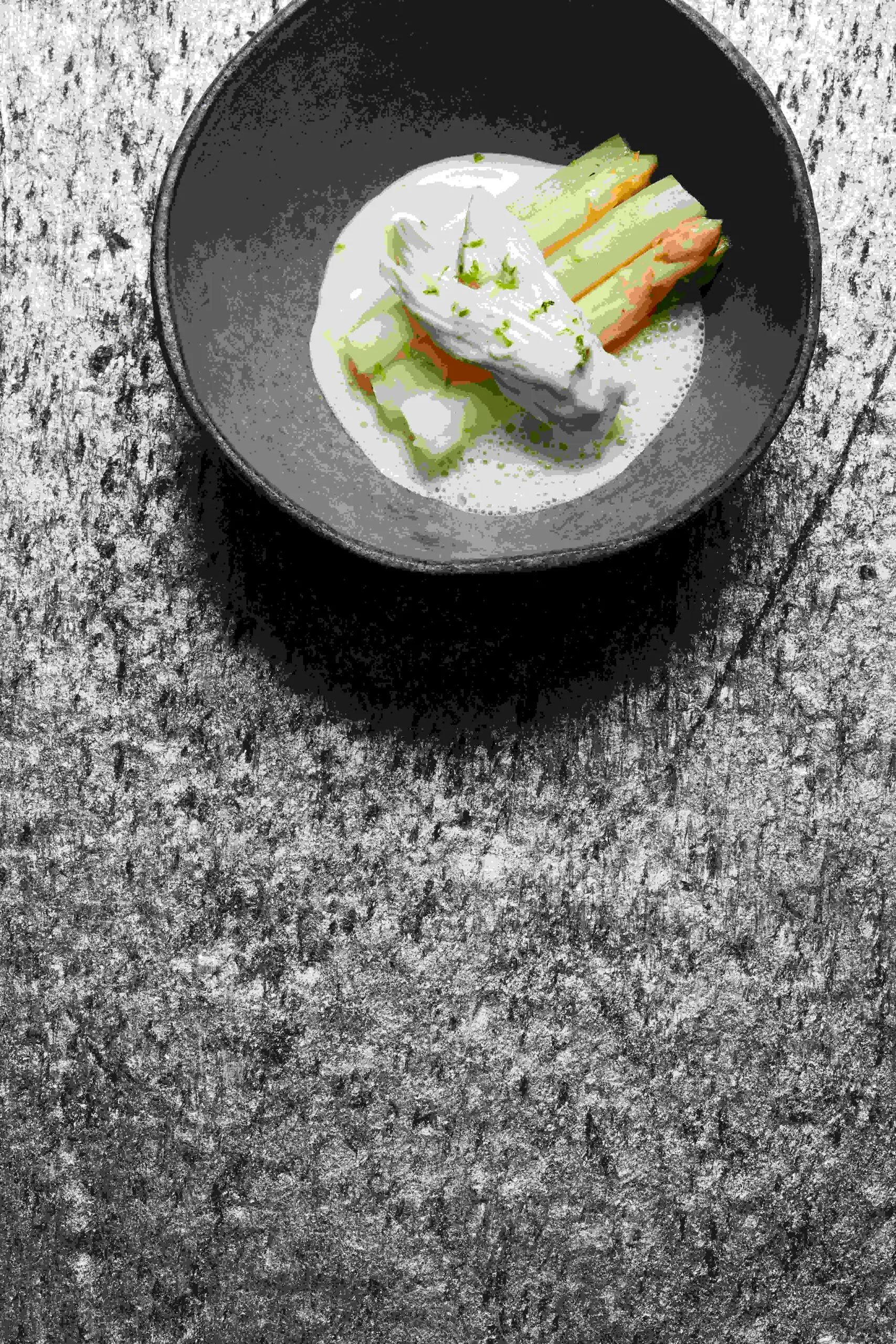
A creation from Sascha Antoniewicz's cookbook "Aromen": White chocolate with cardamom and young chicken.
ADo you also occasionally work in the laboratory?
I have repeatedly spent a lot of time in sensory laboratories to delve deep into the subject. Gas chromatographs are used there to liquefy and sensorially characterize the aromatic substances.
I also use laboratory equipment in my kitchen that allows for the much better extraction of aromatic substances, such as a rotary evaporator.
Is there a very simple rule for food pairing?
Foods with the same key aroma can be paired particularly well. Like enhances the flavor.
Why do the most impossible combinations seem to taste the best?
Like attracts like, but contrasts do the same. For example, fish with mustard sauce. We like to combine it with mint as a third ingredient, because it creates greater tension.
If you only combine products with similar key aromas for a long time, you will not discover much new. It is worth being brave and trying seemingly contradictory aroma and taste combinations. I often trust my intuition.
How do we perceive tastes?
Through the taste buds on the tongue, each containing over 100 taste buds. These buds resemble an inverted onion in structure and contain sensory cells with taste receptors on their surface.
These can recognize individual molecules that are part of the food and transmit the received stimuli to the brain. The sense of taste is well defined and is divided into five categories: sweet, sour, salty, bitter, and umami.
By the way, the temperature at which a dish is served also plays an important role. Because temperature can also create tension.

In 90 exceptional recipes, the flavor expert and trendsetter Heiko Antoniewicz plays with aromas and conjures up daring delicious creations such as cucumber salad with rhubarb or pea ragout with elderberry foam and roasted bacon. Dorling Kindersley Verlag
What role does the sense of smell play in taste experiences and especially in food pairing?
A very large one. Everything we taste is initially made up of 80 percent scent. Everyone knows this: When you have a cold, everything tastes the same somehow. This is because the nose is closed and you can't smell anything.
My advice: Be bold and play with flavors
Because actually the best sense of taste is the sense of smell. That's why herbs are so popular in the kitchen. The scent of herbs goes directly to the limbic system and triggers a feeling. The better the food smells, the stronger the emotional bond you build with it.
What combination can a food pairing beginner relatively easily replicate?
Warm ripe bananas with some maple syrup in a pan, then make a sweet parsley pesto. Mix or finely grind flat-leaf parsley with simple syrup or sugar syrup.
Add a few peanuts to bind and some olive oil. Then serve everything together. Bananas and parsley harmonize wonderfully. My advice: Be bold and play with flavors.
My basic rule: try, try and try again. And: Sensitize your sense of taste by paying close attention to what the dish or ingredient you are currently eating tastes like.