© PMC | AI
Radiation Therapy
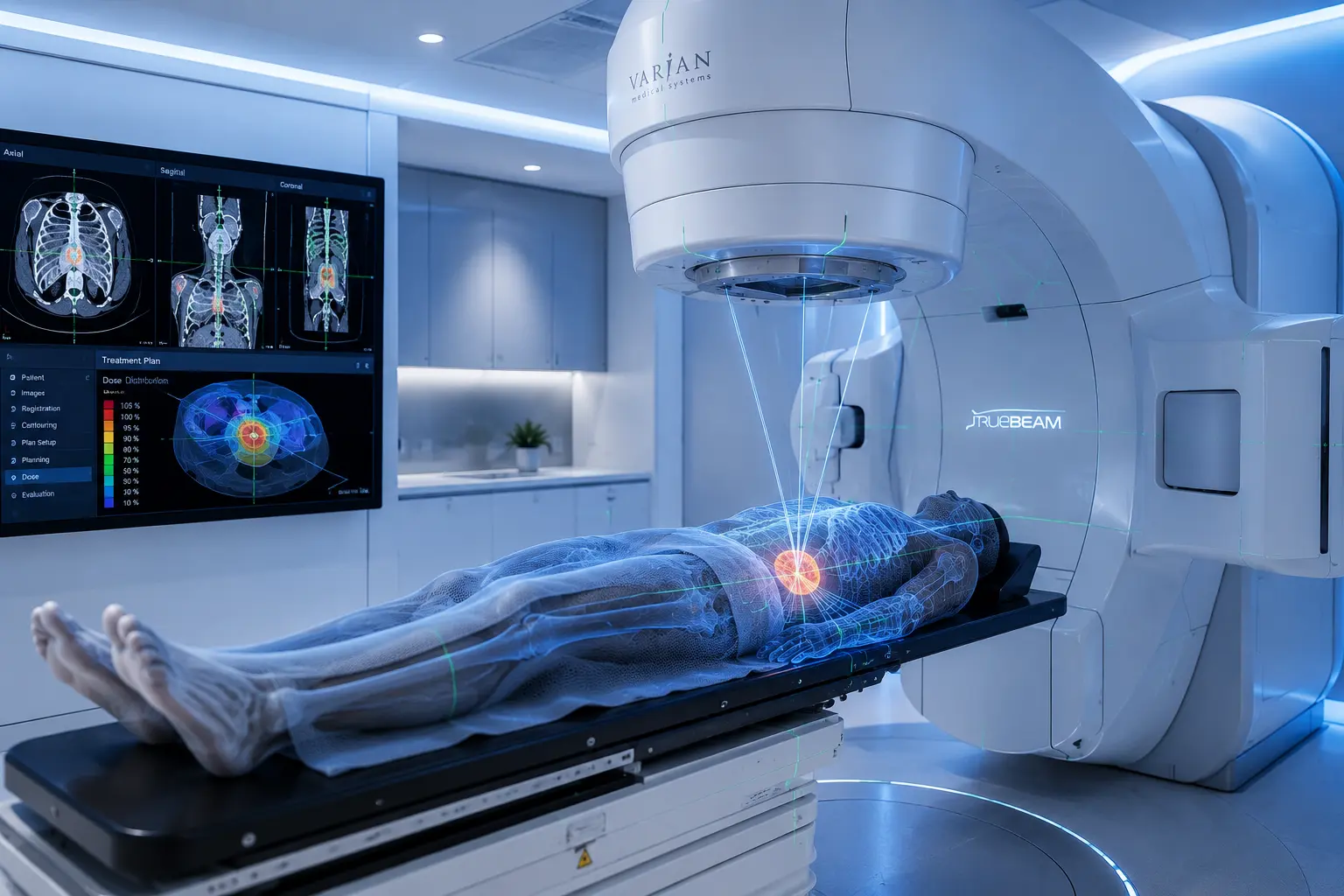
Radiation therapy, also known as radiotherapy, is a key component of modern cancer treatment and a distinct medical specialty in its own right. It is, however, closely linked to diagnostic radiology, since both disciplines rely on radiation and imaging techniques. While diagnostic radiology uses technologies such as X-ray, CT, or MRI to visualize and diagnose disease, radiation therapy serves a therapeutic purpose. At its core, radiation therapy involves the delivery of high-energy, mostly ionizing radiation — radiation with enough energy to damage the DNA of cells, which is precisely what makes it effective in treating cancer. Why?Tumor cellsare generally more vulnerable to this damage than healthy tissue, because they divide more rapidly and have less effective repair mechanisms. Radiation either causes cancer cells to die directly or prevents them from continuing to divide, therebyhalting tumor growth or reducing the size of the tumor. Another cornerstone of radiation therapy is precise treatment planning, which draws heavily on imaging techniques from radiology: CT, MRI, or PET scans are used to determine the exact location, size, and shape of the tumor. From this information, an individualized radiation plan is developed to ensure that the radiation is directed at the tumor as accurately as possible while largely sparing the surrounding healthy tissue. Radiation therapy can be used in a number of ways: as a standalone treatment, in combination with surgery or chemotherapy, or to relieve symptoms (palliatively) when a cure is no longer achievable. Depending on the clinical situation, radiation is delivered from outside the body using specialized equipment (teletherapy) or from within, by placing radioactive material directly in or near the tumor (brachytherapy).
Stereotactic Radiosurgery
Stereotactic radiosurgery is a highly precise form of radiation therapy that enables tumors to be treated with a very high radiation dose in an exceptionally small number of sessions — often just one to five appointments. Despite its name, it is not a surgical procedure in the traditional sense, but rather an externally delivered, pinpoint-focused form of irradiation. This level of precision is made possible by modern positioning systems, real-time surface tracking, and continuous imaging control, which keep the tumor in focus to within millimeters even during slight movements or breathing. In particularly sensitive areas of the body — such as the brain, the spine, or regions near vital organs — this technique allows for intensive yet well-controlled treatment while largely protecting the surrounding healthy tissue.
Online-Adaptive Radiation Therapy
Online-adaptive radiation therapy accounts for the fact that the body changes from day to day: tumors can shrink, organs can shift, and fluid levels can fluctuate. With this approach, a current image of the body is captured before each session using high-resolution imaging and computer-aided analysis, allowing the radiation plan to be updated daily. This ensures that the tumor receives the optimal dose while healthy tissue is protected as much as possible and side effects are minimized. For organs whose position changes frequently — such as the prostate — this continuous adaptation is especially valuable, as it ensures the radiation consistently reaches exactly where it needs to.
Experts for this Treatment Method
All Experts in this Department
Show All
- Radiology and radiation therapy
Prof. Dr. Hendrik Wolff
Life Beam
- Radiology and radiation therapy
Prof. Dr. Marc Regier
Radiologie München im Alten Hof
- Radiology and radiation therapy
Prof. Dr. Christopher Herzog
Radiologie im Rotkreuzklinikum
- Radiology and radiation therapy