© PMC
Services
Radiation Therapy Is Much More Than Technology and Physics
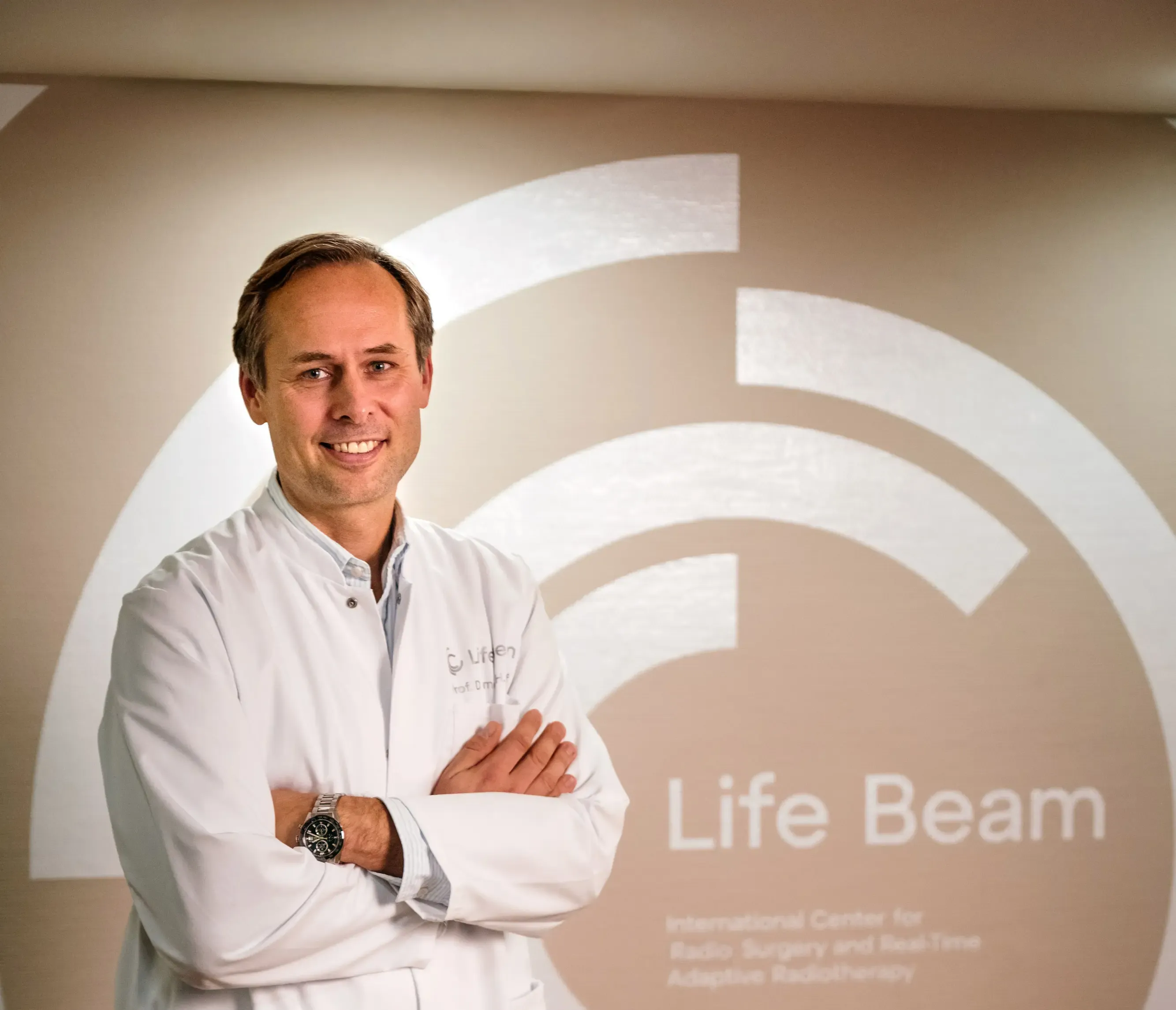
"The most wonderful thing is when patients walk out of here knowing: everything is going to be alright," says Prof. Dr. Hendrik Wolff. Those who come to him carry a difficult diagnosis — and fear — fear of the tumor, of radiation, and of whether and how life will go on. Transforming that fear into confidence, and showing his patients a clear path forward, is what matters most to this specialist in radiation therapy.
For many years, one question drove him: How can cancer be treated more precisely while better protecting the surrounding healthy tissue? The answer now lies in a technology that Prof. Dr. Wolff describes as a quantum leap: online adaptive radiation therapy combined with stereotactic radiosurgery.
With this new technology, it is possible to analyze before every treatment session whether the tumor has changed or an organ has shifted. The treatment plan can then be adjusted immediately for each session. At the same time, the system monitors every movement during treatment with an accuracy of less than one millimeter — allowing for significantly more precise irradiation and far better protection of healthy tissue.
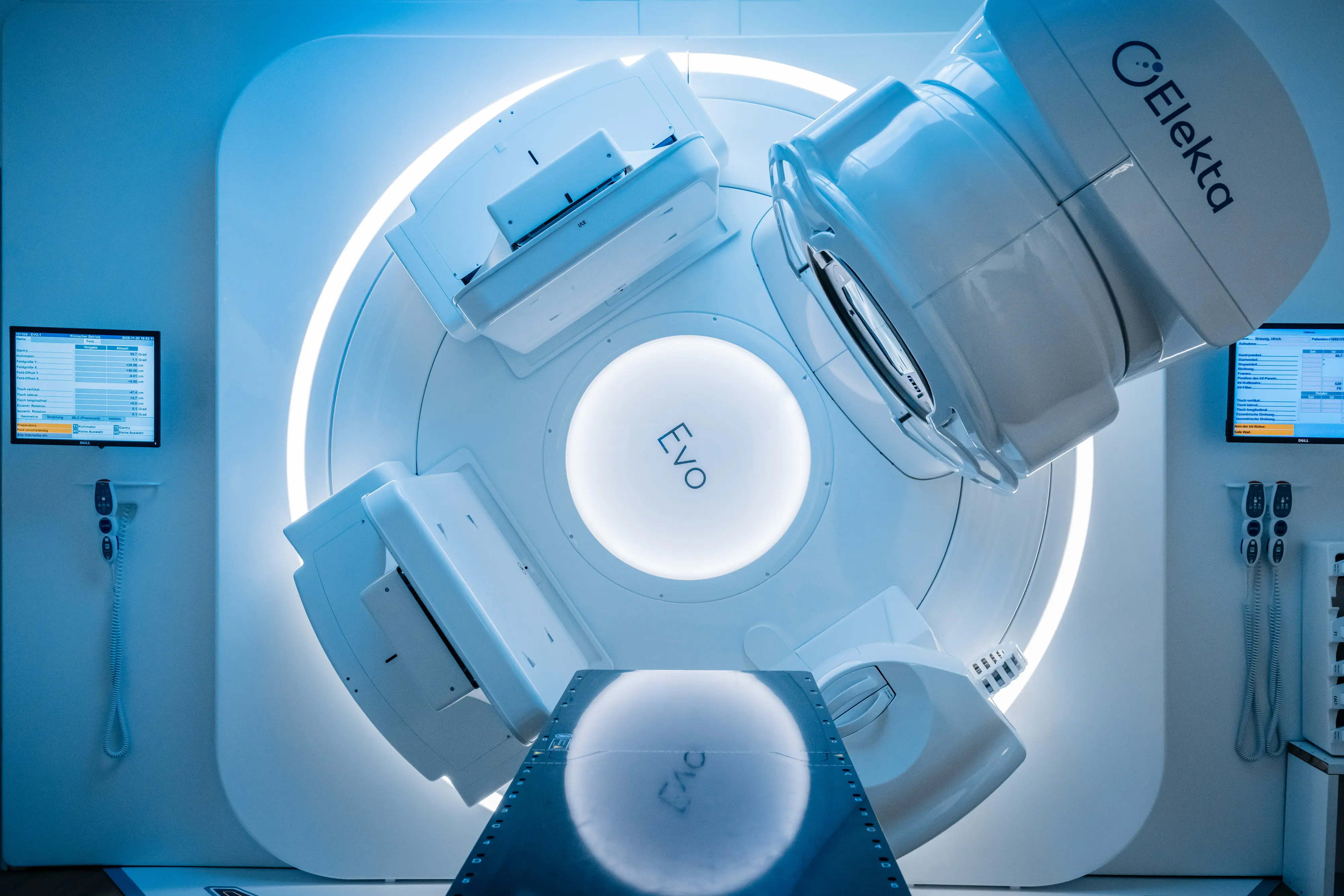
Prof. Dr. Wolff is among the first physicians in Germany to have established CT-based online adaptive radiotherapy (ART) in combination with high-precision stereotactic positioning as part of clinical routine. With LIFE BEAM, the center for online adaptive radiation therapy and radiosurgery based at Klinikum Schwabing, he has built a modern unit for Radiologie München that makes this future technology available in an outpatient setting as well. At its heart is the "Elekta Evo," currently the most advanced linear accelerator available, combined with monitoring technology and software from Brainlab — in a setting he affectionately calls "Starship Enterprise."
© PMC
Präzise Strahlentherapie mit modernster Elekta EVO Technologie für eine individuell abgestimmte Krebsbehandlung
© PMC
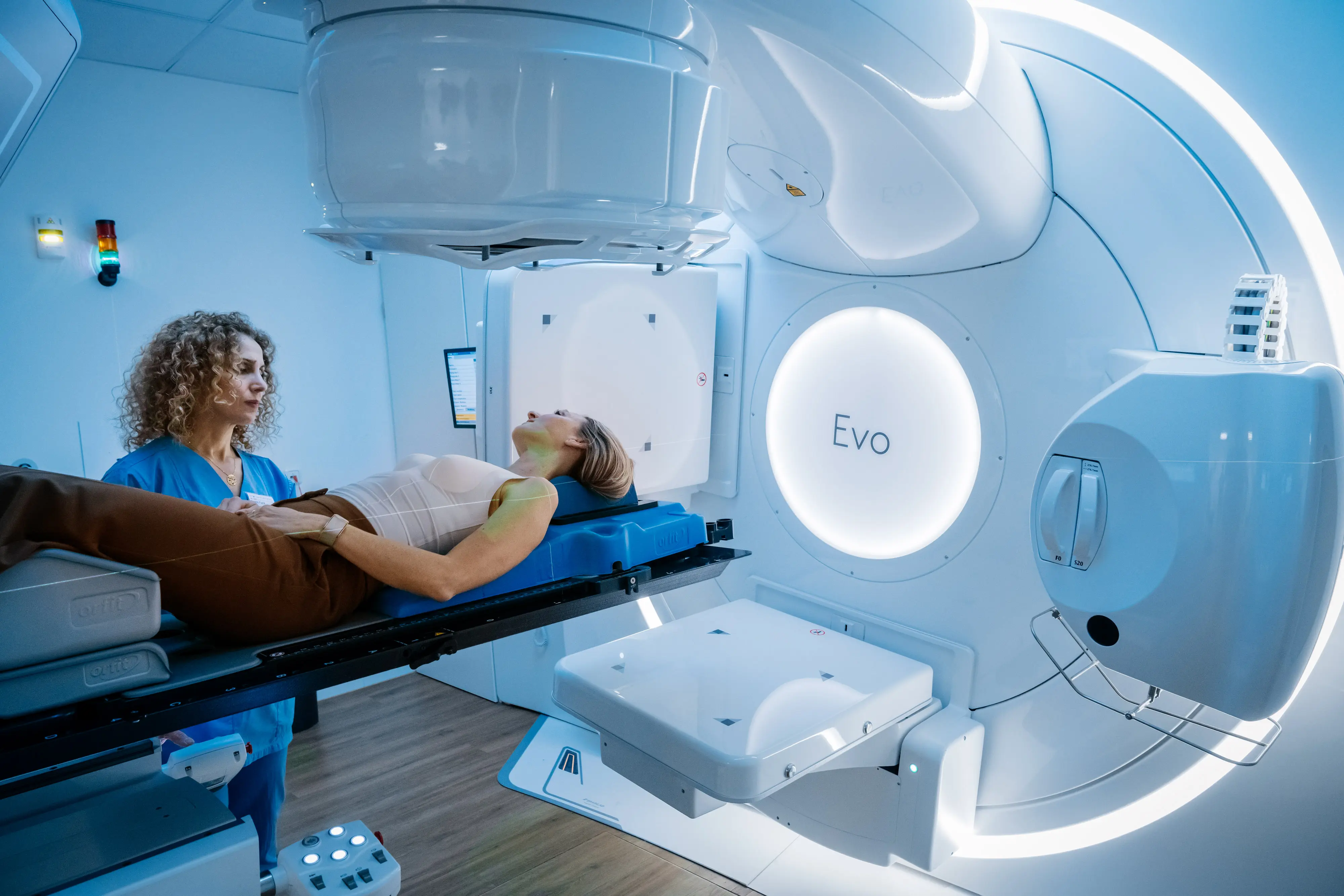
Präzise Vorbereitung einer Patientin auf die bildgeführte Strahlentherapie mit modernster Elekta EVO Technologie
© PMC
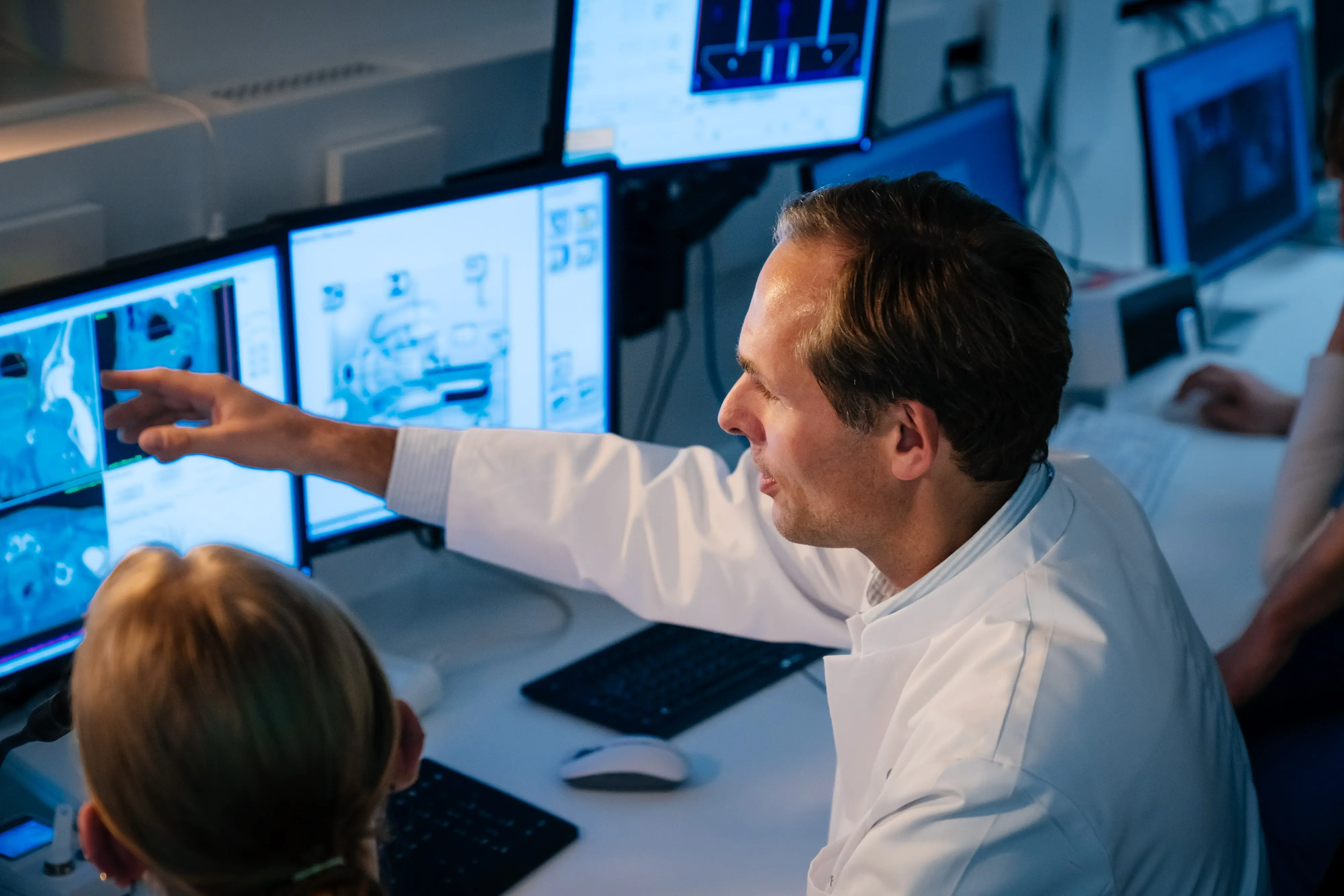
Individuelle Befundbesprechung anhand modernster radiologischer Bildgebung
© PMC
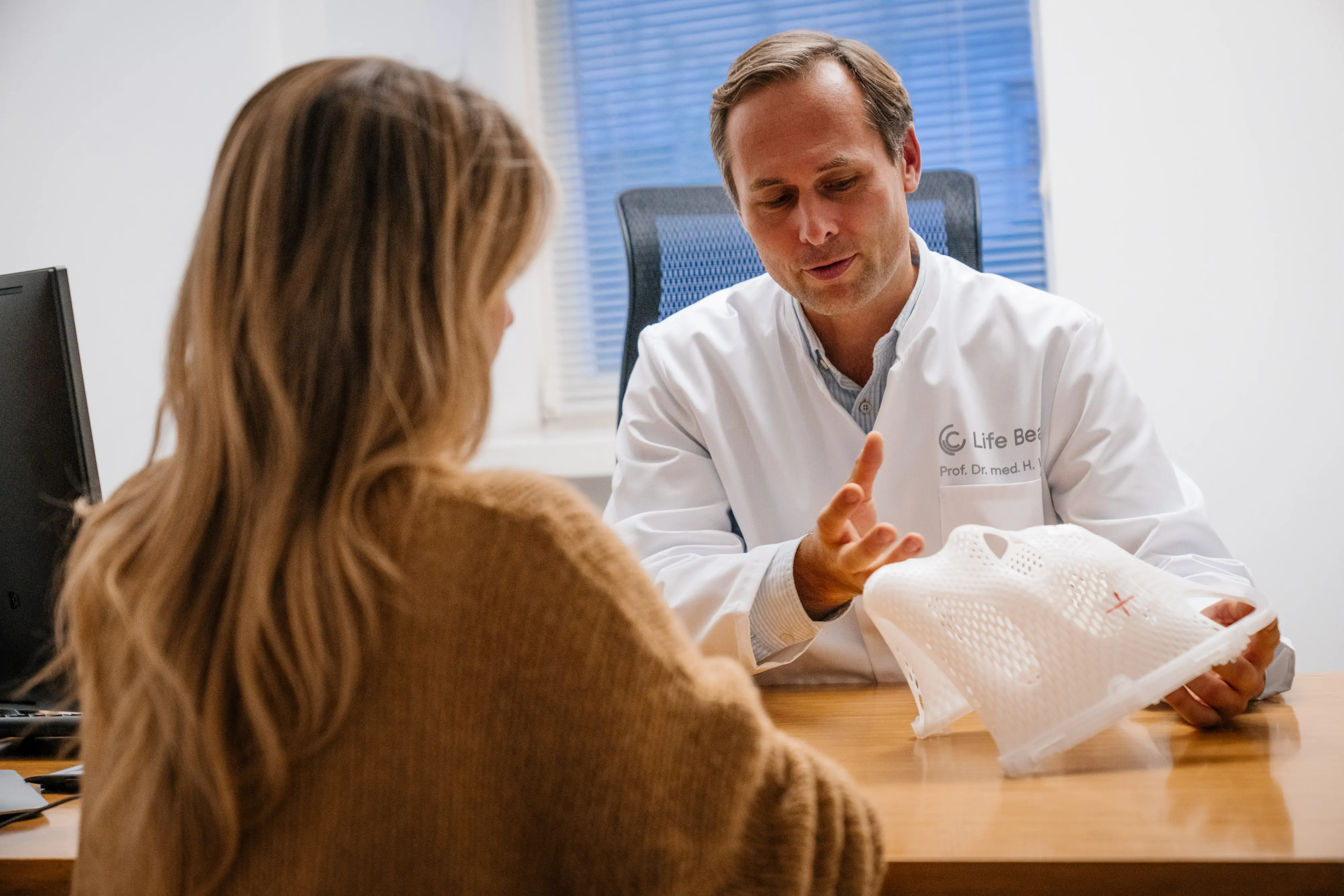
Persönliche Beratung und individuelle Therapieplanung im direkten Patientengespräch
© PMC
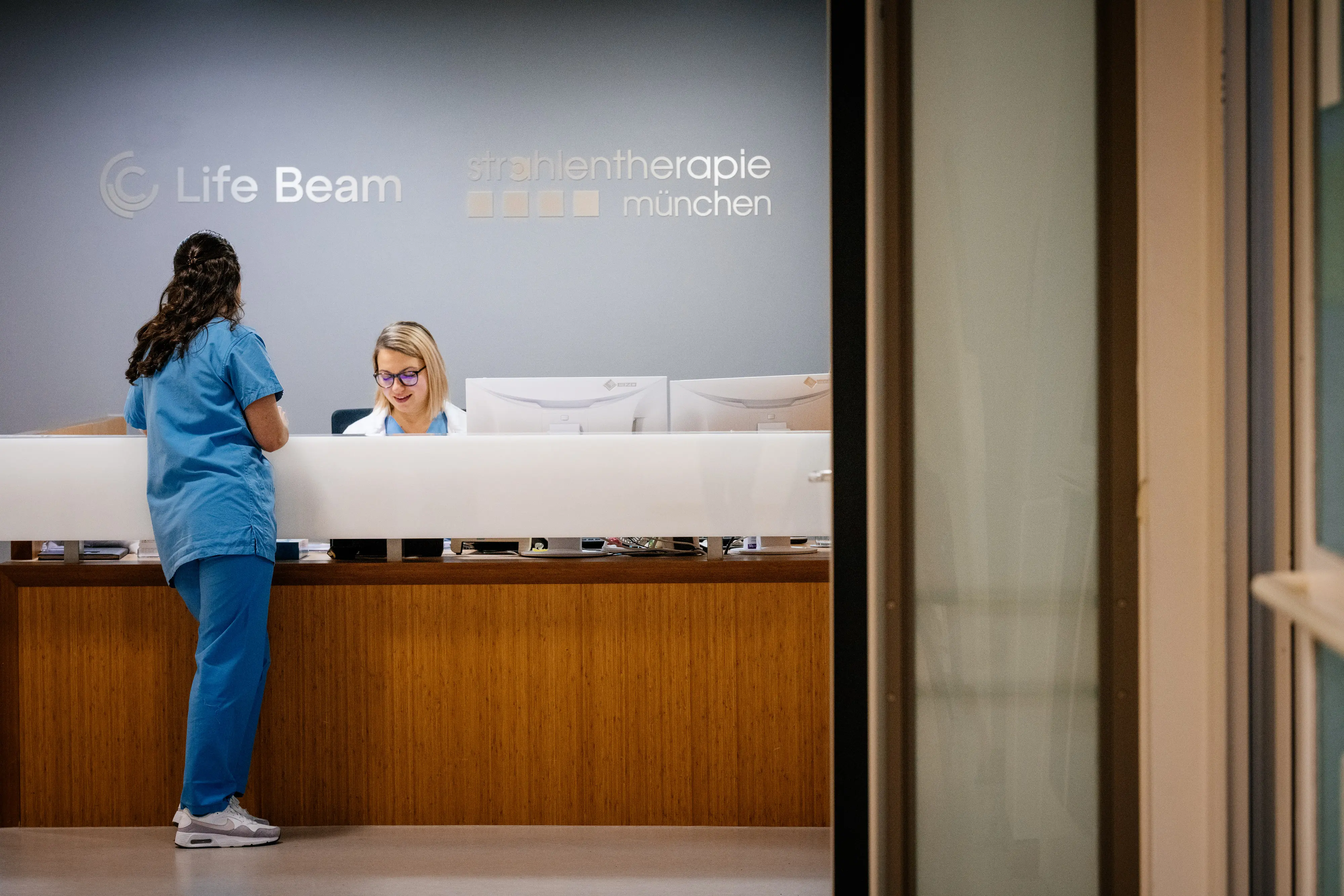
Der moderne Empfangsbereich bietet einen angenehmen und professionellen Start in den Praxisbesuch
© PMC
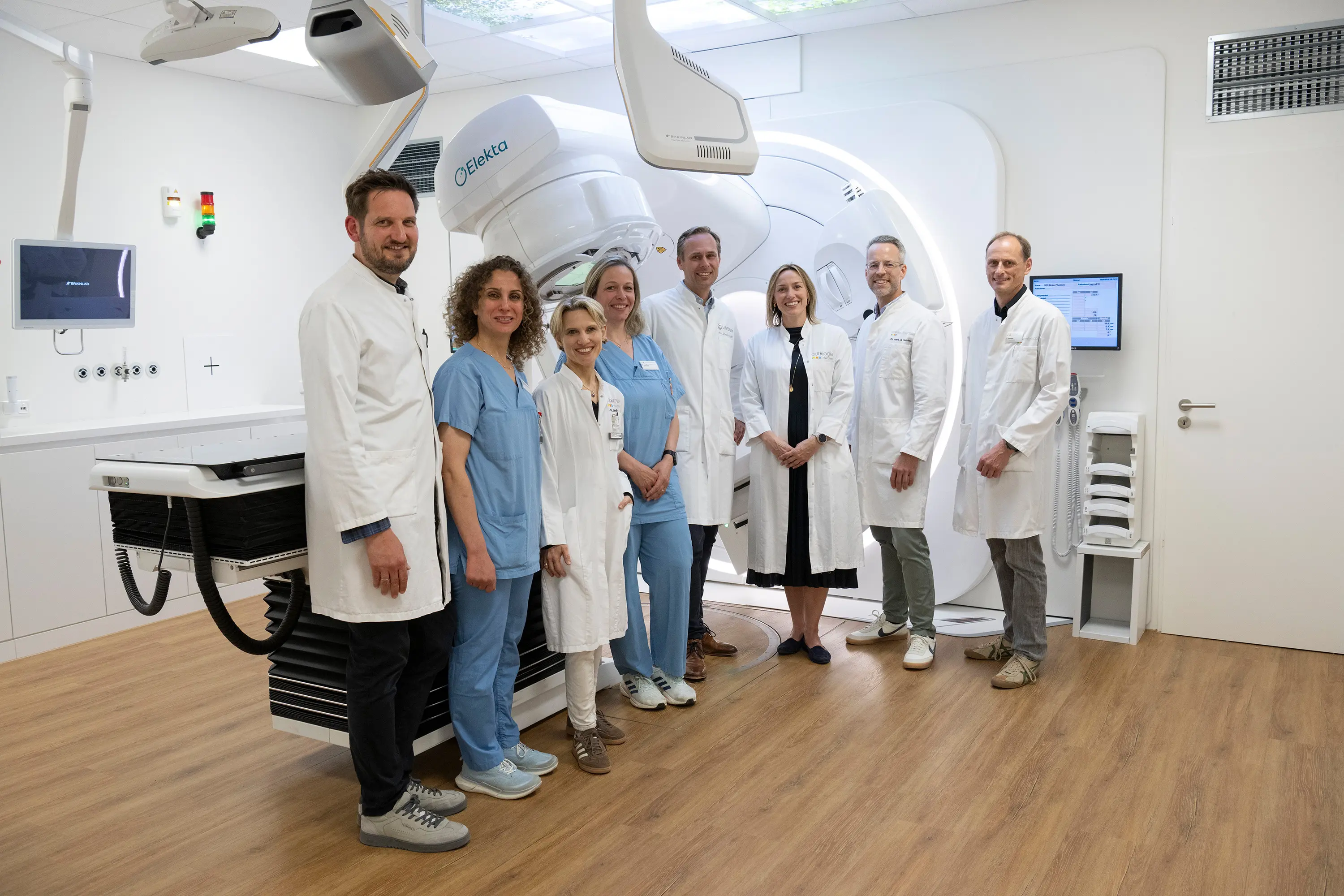
Das interdisziplinäre Team um Prof. Dr. med. Hendrik Wolff steht für Kompetenz und persönliche Betreuung
"We don't just want to press a button on a machine — we want to truly care for our patients."
Prof. Dr. med. Hendrik Wolff
When Wolff began his specialist training, radiation therapy that adapts to the patient during every treatment session was still a vision of the future. The treatment plan was established once — markings were made on the skin — and carried out unchanged over weeks. Position and anatomy could not be monitored in real time, which led to inaccuracies whenever the patient moved during treatment or when the tumor changed, or when filling states (air, urine, or stool) shifted. In addition, many treatments required only small radiation doses spread across up to 39 sessions in order to keep side effects on surrounding tissue within acceptable limits.
The new, completely markerless technology opens up entirely new possibilities: the tumor can not only be irradiated more precisely, but healthy tissue and surrounding organs receive significantly less radiation — or none at all. At the same time, the number of treatment sessions can be reduced considerably, meaning less strain, less time in the clinic, and a better quality of life during therapy — one that fits more easily into everyday life.
The numbers speak for themselves: for a brain metastasis, today often only a single treatment is needed instead of a series of ten to fifteen fractions — with barely any impact on the healthy brain. For prostate cancer, the number of sessions has been reduced from 39 to as few as five in some cases. And for lung metastases, eight to ten fractions have often been replaced by just one. This is made possible in part by so-called breath gating — sub-millimeter-precision real-time tracking of breathing movements — which further increases accuracy. Patients can even control the LINAC (linear accelerator) themselves through their breathing. "A psychological effect not to be underestimated," says Prof. Dr. Wolff. "Because this way, patients can actively contribute to their own recovery."
"You always have to think from the end: What does it benefit the patient? How much strength can they invest? What does it do to their quality of life?"
Prof. Dr. med. Hendrik Wolff
Despite his enthusiasm for the technology, what remains decisive for him is what it means for the individual. "You always have to think from the end: What does it benefit the patient? How much strength can they invest? What does it do to their quality of life?" says Prof. Dr. Wolff. "Because just because you can do something doesn't mean it's always the best course of action."
That is why he takes a great deal of time for the initial consultation with patients who come to him after radiation therapy has been indicated at the regularly held interdisciplinary tumor board. Everything is discussed calmly and thoroughly first. A planning CT and a treatment schedule are then drawn up, and treatment begins just a few days later. It always brings him joy when people leave his practice visibly relieved. "Radiation therapy is simply more than technology and physics," says Wolff.
After therapy, there is a closing consultation and follow-up appointments. Three months on, it is assessed how the tumor has responded to treatment — that is how long the body's own immune system needs to break down the tumor cells damaged by the radiation. Prof. Dr. Wolff compares this to a major construction site after a high-rise collapse: first the excavators clear away the rubble stone by stone, and after three months the site is clean.
For him, modern therapy extends beyond the radiation itself. That is why, two years ago, he founded his own support center attached to the practice — another long-held dream. There, specialists accompany patients with nutritional counseling, exercise programs, yoga, acupuncture, pelvic floor training, and mental support. "We don't just want to press a button on a machine — we want to provide comprehensive care for our patients."
Just because you can do something doesn't mean it's always the best course of action.
Prof. Dr. med. Hendrik Wolff
It sounds like a perfect match — and yet it almost never happened. Originally, the Emden-born physician wanted to become a cardiologist. It was only by chance that he found his way to radiation therapy: his neighbor in the student dormitory in Göttingen was a junior doctor in the field and offered him a doctoral thesis topic. That chance encounter turned into a passion for radiation therapy — and ultimately a scientific career.
At just 34 years of age, he received a call to a professorship — the major goal he had been consistently working toward. At the same time, Munich offered him the opportunity to build something entirely new. He chose the freedom to realize his own vision of modern radiation therapy over an academic career. Here he could introduce cutting-edge technologies more quickly, develop new treatment concepts, and combine medicine and business administration — both of which he had studied. For him, it is the dream job. And what was once a vision has become reality.
What is the next vision? "First, to gain even more experience with the new technology, to advance studies, to keep getting better." He is confident that this will increasingly allow even advanced cancer to be transformed into a chronic condition — one that people can live well with. And for that, as he himself says, he gives 150 percent. Also "because it is simply a lot of fun to practice and advance this modern medicine with the best team in the world."
"It is only the combination of online adaptive radiation and radiosurgery that makes the difference. Patients feel this leap immediately: fewer sessions, fewer side effects, more life during therapy."
Prof. Dr. med. Hendrik Wolff