Osteoarthritis, Herniated Discs, Tennis Elbow: When Is Surgery Really Necessary?
For osteoarthritis, herniated discs, and tennis elbow, surgery is often no longer the first option. Orthopedic specialist Dr. Yvonne Ebel explains which treatments can offer alternatives — and why movement and muscle building can sometimes make a surprising difference.
Just a few years ago, many patients with joint or back problems ended up in the operating room relatively quickly. Today, the goal is to hold off on surgery for as long as possible — and there are significantly more options available to do so. Dr. Yvonne Ebel draws on shockwave therapy, hyaluronic acid, platelet-rich plasma, and acupuncture.
In this interview, the orthopedic specialist explains what these treatments can achieve, why movement is so important for painful joints, and at what point she still recommends surgery to her patients.
Dr. Ebel, how much has the treatment of orthopedic conditions changed in recent years?
The evidence base for non-surgical treatment has improved enormously. We now have solid studies showing that conditions such as herniated discs and knee osteoarthritis can be managed well without surgery. At the same time, the options for conservative therapy have advanced considerably.
When you consider acupuncture, shockwave therapy, or specialized agents like platelet-rich plasma and hyaluronic acid, a great deal has changed. The healthcare system itself also plays a role, of course, but that alone would be too simplistic an explanation.
Why is conservative orthopedics still so often underestimated?
When people hear "conservative orthopedics," many think only of painkillers or ibuprofen and have no idea how much more the term encompasses. On top of that, the results of such treatments tend to appear gradually. With a hip replacement, by contrast, you have a very clear before-and-after picture and an immediate sense of success. Patients want quick solutions and quick results. Non-surgical approaches often take more time — and that, I think, is the biggest difference.
Could it also have something to do with the word "conservative"? After all, the procedures you use are quite modern.
Yes, the word "conservative" does sound rather old-fashioned — like a step backward, like a wait-and-see approach. I think the term "regenerative" would actually be more fitting. We now have excellent, targeted, and modern procedures that can relieve symptoms without surgery.
Shockwave therapy and platelet-rich plasma treatments, for example, and also acupuncture. These are procedures that can provide very targeted relief.
Why Treatment Before Surgery Matters
Surgery can resolve the acute problem — but not necessarily its underlying cause. What does that mean for treatment?
A patient with severe knee osteoarthritis who has been overweight their whole life and has built up little muscle will only benefit from a knee replacement in the short term without accompanying therapy. Without targeted muscle building, good long-term outcomes simply won't follow. What typically happens during rehabilitation should really begin before surgery — in the form of prehabilitation. That way, patients go into surgery well prepared, with stronger muscles and a healthy target weight.
I'd like to name a few orthopedic conditions and ask you to briefly explain how you typically treat them and why. Let's start with a herniated disc.
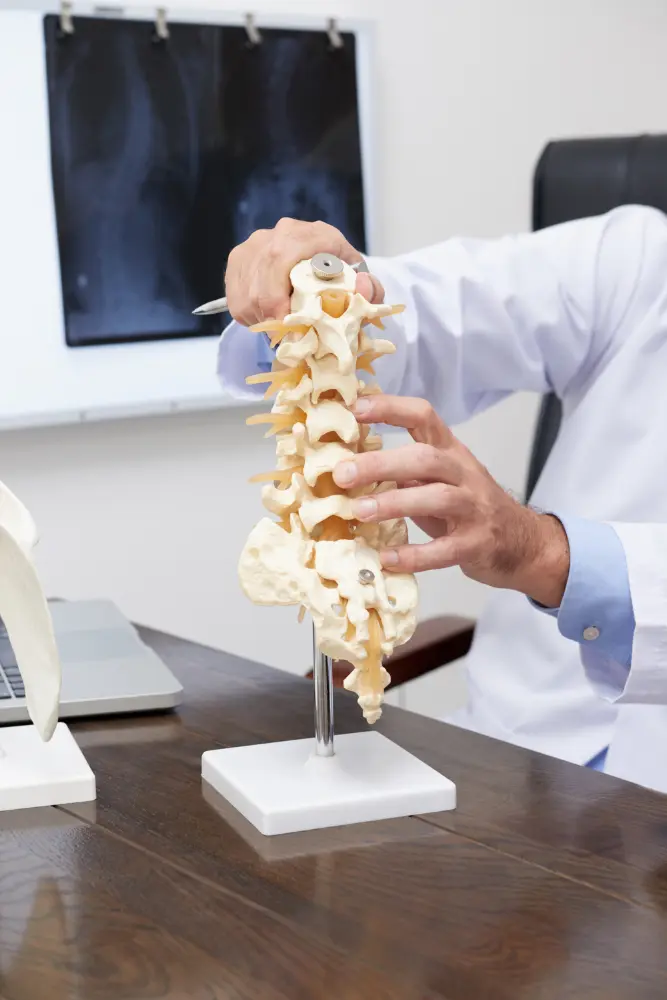
In most cases, a herniated disc can be managed well with targeted pain therapy and appropriate exercises. We know that 80 percent of herniated discs resolve on their own or can be treated without surgery — provided there are no neurological deficits or other complications.
Knee osteoarthritis?
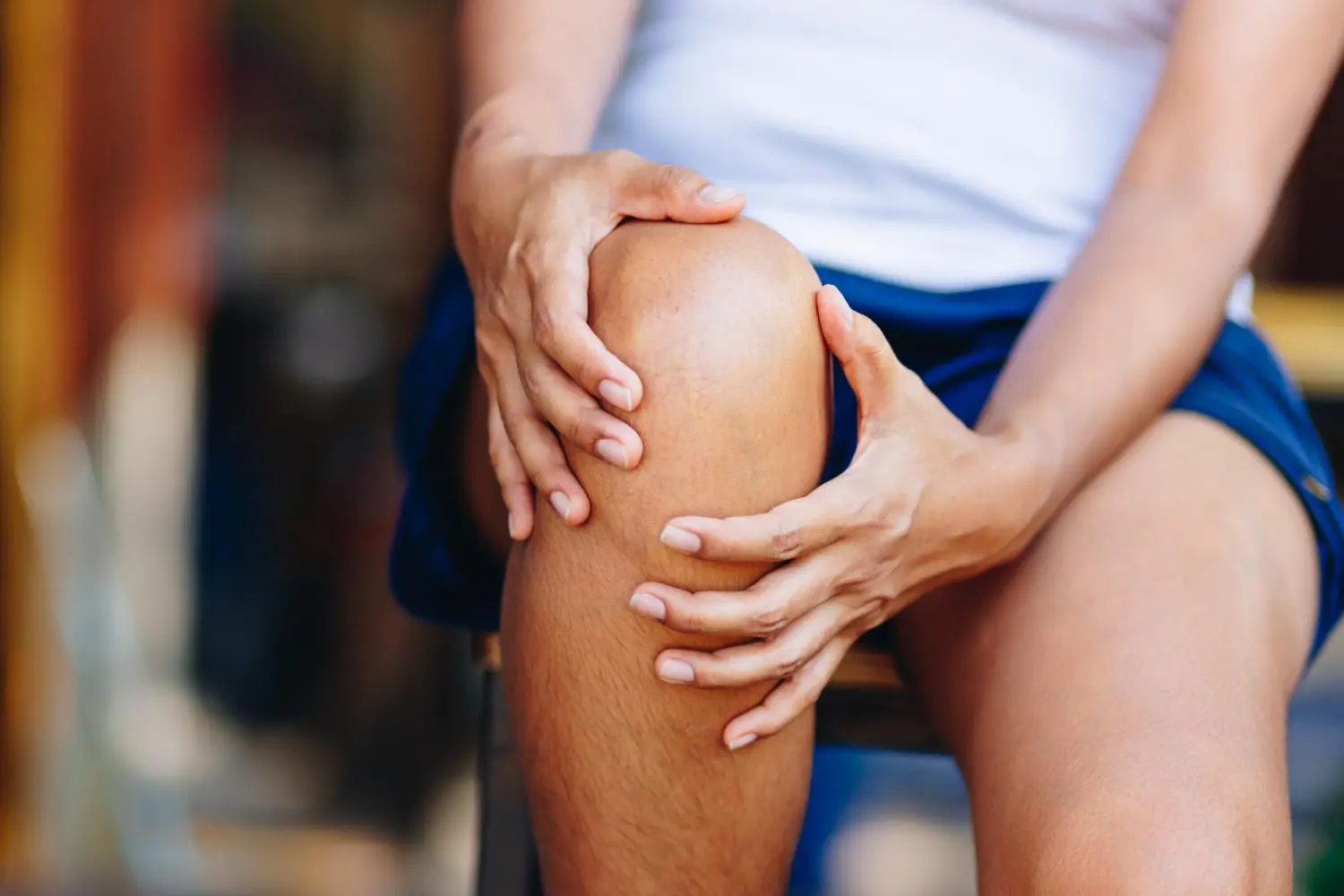
As straightforward as it sounds, the starting point is really muscle building and weight reduction, because the goal is also to actively achieve an anti-inflammatory effect in the joint. Supplementary injections with platelet-rich plasma or hyaluronic acid can also be beneficial.
Calcific tendinitis of the shoulder?
Calcific tendinitis of the shoulder can often be managed conservatively with pain therapy, which is the first-line treatment — it can be extremely painful, especially in the early stages. In some cases, a cortisone injection may also be appropriate. It really varies from patient to patient.
A heel spur?
Shockwave therapy has a well-established role here, as it has a locally anti-inflammatory effect and promotes blood flow to the tissue. I also typically recommend good orthotic insoles for pressure relief, along with regular stretching of the Achilles tendon and calf muscles.
Frozen shoulder?
With frozen shoulder, there is sometimes no structural correlate at all. We don't fully understand why it is so painful or why movement becomes so restricted. More recently, we are increasingly seeing that women going through menopause are affected. The joint capsule shrinks in the process. I always tailor treatment to the individual patient. Sometimes an injection with a painkiller can be helpful, followed by targeted physiotherapy or supplementary acupuncture.
Tennis elbow?
With tennis elbow, the tendon tissue is typically poorly supplied with blood locally. Shockwave therapy is very well suited here. At tendon attachment sites, cortisone is best used with caution. Platelet-rich plasma can also be helpful — as can local eccentric strength training.
Hyaluronic Acid, Acupuncture, and Botulinum Toxin
You see yourself as a bridge between patients and surgical colleagues. What does ideal post-operative treatment look like?
As a practicing orthopedic specialist, I am always the link between the surgeon and the post-operative period. Key elements include early mobilization, scar treatment, and targeted strengthening of stabilizing muscles, especially after joint replacement procedures. But motivation also plays a major role: patients need support to actually get moving, carry out their exercises, and stick with them over time.
Why do hyaluronic acid injections into the knee have such a poor reputation?
The problem is that the IGeL Monitor rates hyaluronic acid very critically, and the impression often arises that it doesn't work. Based on my experience, I can say that hyaluronic acid preparations are getting better and better. The right indication is key. For mild to moderate osteoarthritis, they work fairly well in my experience and have a cushioning effect.
In the past, hyaluronic acid was, I believe, frequently injected into inflamed joints and did not achieve the desired effect in terms of cushioning and reducing inflammation. That has changed. For me, it is an integral part of treatment and, for the right patient at the right time, a useful tool.
You have mentioned acupuncture several times. For which conditions do you particularly like to use it?
Acupuncture does not work structurally but rather on the meridian level, on the neurological level. It can reduce pain syndromes and improve tension states and functional complaints. I like to use it for chronic back pain or knee osteoarthritis. For me, it is a great complementary tool alongside other therapies and exercise. It also gives patients a wonderful opportunity to slow down and relax. I've had good results with it, and patients love it.
You also use botulinum toxin. What for? Most people know Botox mainly from aesthetics and wrinkle treatment.
We orthopedic specialists have been familiar with botulinum toxin for quite some time through pediatric orthopedics. It has an established role there, for example in cases of shortened calf muscles or in patients with spasticity, to relax the musculature. It can also be used very effectively for tension in the cervical spine region, for chronic headaches, and in some cases locally for tennis elbow. It works well and is a useful addition to other treatment approaches.
Why Movement Is So Important in Osteoarthritis
Weight management is often underestimated in relation to joint health. You say: every extra kilogram means five kilograms on the knee.
Yes, that's true. Overweight patients very frequently complain of knee pain. We know from studies, particularly involving women, that excess weight is linked to the development of knee osteoarthritis. And indeed, due to biomechanics, every extra kilogram on the scale translates to roughly five kilograms of additional load on the knee.
Weight loss is totally underestimated in orthopedics. Anyone who has ever lost a significant amount of weight knows that it can also reduce back and knee pain. In orthopedic treatment planning, this is sometimes not addressed enough. People often jump straight to more intensive treatment measures, when weight reduction is sometimes the foundation that should be addressed first.
For a long time, the advice was to protect the joints by avoiding sports and impact movements. What do we know today?
In many patients with osteoarthritis, inflammation eventually enters the joint, bringing pain with it. The automatic reaction is then: "I'll rest, I'll stop moving." But that is precisely the crux of the matter.
We know that cartilage and bone tissue, or even a meniscus, are nourished through movement, because nutrients reach the tissue via diffusion. That is why movement is so important, especially when you already have a degree of osteoarthritis. Complete rest is actually the worst thing you can do to your joint.
Is there a patient case that particularly surprised you?
I experience many wonderful moments with my patients all the time. One that has stayed with me is a patient in his early sixties who had suffered a stroke and consequently had hemiplegia on his left side, while at the same time having severe knee osteoarthritis. He was very difficult to mobilize, had severe knee pain, and wasn't making progress with the usual therapies and pain management.
It took a lot of persuading to get him to agree to hyaluronic acid injections in his knee. Eventually, with a great deal of encouragement, we went ahead with it. Two weeks later he came back with a beaming smile, was able to walk noticeably better, and was much more mobile. He was endlessly grateful. This is a case where you can see that sometimes small measures can improve a person's quality of life significantly. That, of course, motivates me enormously to keep working in this field.
I also remember a patient who had been walking on her tiptoes since childhood and had developed an extreme shortening of the Achilles tendon over the years as a result. She simply wasn't making progress with the usual therapies. Then the topic of Botox came up as a way to relax the musculature.
After a long back-and-forth and approval from her health insurance, we carried out the treatment. For her, it was a real eye-opener: suddenly she had a normal gait pattern again and could bring her heels down to the ground. For her too, it was a moment that significantly improved her quality of life.
Which New Procedures Could Become Important?
Which new procedures do you find particularly promising? For example, muscle-building devices, stem cell therapy, and weight-loss injections.
There are now good devices that can locally stimulate and promote muscle building. In orthopedics, we repeatedly face the challenge that we need local muscle development, but many patients cannot be motivated to do strength training.
Such devices can act as a catalyst for muscle development. This is also familiar from professional sports. It's a field that will continue to evolve and is not yet well established in Germany. These devices can also be used after surgery, for example, to build muscle locally.
We've already covered platelet-rich plasma. Stem cell therapy is also an area where stem cells can be harvested from fatty tissue, processed, and then introduced locally into joints for regenerative purposes. That is also an interesting method.
And of course there are the GLP-1 receptor agonists, the so-called weight-loss injections, which I believe have also revolutionized orthopedics by now. Patients are sometimes under considerable pressure to lose weight, especially when they are facing surgery. In some cases, it is stated quite clearly: lose 20 kilograms in six weeks, and then we can operate on you.
With these agents, weight loss works very well in my experience. I think we will see a great deal more development in this area, not least because the preparations themselves continue to advance. It's a very exciting field.
When Surgery Becomes Necessary After All
Your focus is on non-surgical treatment. In your view, when does an operation become unavoidable?
There are very clear thresholds at which conservative therapy reaches its limits. With the spine, for example, that point comes when neurological deficits appear. In those cases, you need to act quickly. With osteoarthritis where virtually no joint space remains and it is truly bone on bone, the options are eventually exhausted — and surgery becomes necessary. And then, of course, there is the entire field of trauma surgery.
You have to be self-critical and honest enough to say: this is no longer working. When a patient has been treated conservatively for a certain period of time without success, you owe it to them to be completely straightforward and actively recommend surgery, referring them to the appropriate specialist.
And finally, a personal question: what do you love most about your profession?
I feel very fortunate to be able to treat and sometimes truly inspire such a wide range of patients. Often it really comes down to just a few small pieces of advice that you pass on. When patients put them into practice and see results, that is the greatest motivation I could ask for.