© Magnific
September 1, 2026
Christine Bürg & Marianne Waldenfels
Do you really have to constantly work on yourself to live a long, healthy life? Longevity expert Nils Behrens has little time for the pressure to optimize. In this interview, he reveals which trends have disappointed him and why social relationships are so important for longevity
Longevity is booming. But anyone who engages with the topic can quickly get the impression that achieving a long, healthy life requires optimizing every aspect of daily life: strength training, nutrition, sleep, supplements, breathing exercises, and the right morning routine. Nils Behrens has been intensively focused on longevity for years – and has little regard for this pressure to optimize.
Behrens has conducted more than 350 conversations with physicians, nutritionists, and other health experts. In his book "Spaziergang zur Unsterblichkeit" (A Walk Toward Immortality), he distills six areas that play a role in a long, healthy life. In this interview, he explains why a single push-up can be a good start, which longevity hacks have disappointed him – and why he says: "I hate longevity."
Mr. Behrens, if you could give just one everyday tip for each of your six longevity areas – what would they be?
The first area is exercise and movement. I've been repeating this tip for quite some time, but I genuinely stand behind it: do one push-up a day. I'm a firm believer in routines and streaks – I don't like breaking a chain. That one push-up is something you can truly do every single day, and it sends your body a signal: attention, muscles, I still need you.
I do this every day myself. Some days I only manage ten, other days I manage 60. The average is probably around 30. But I do it every single day. It's a promise you can actually keep.
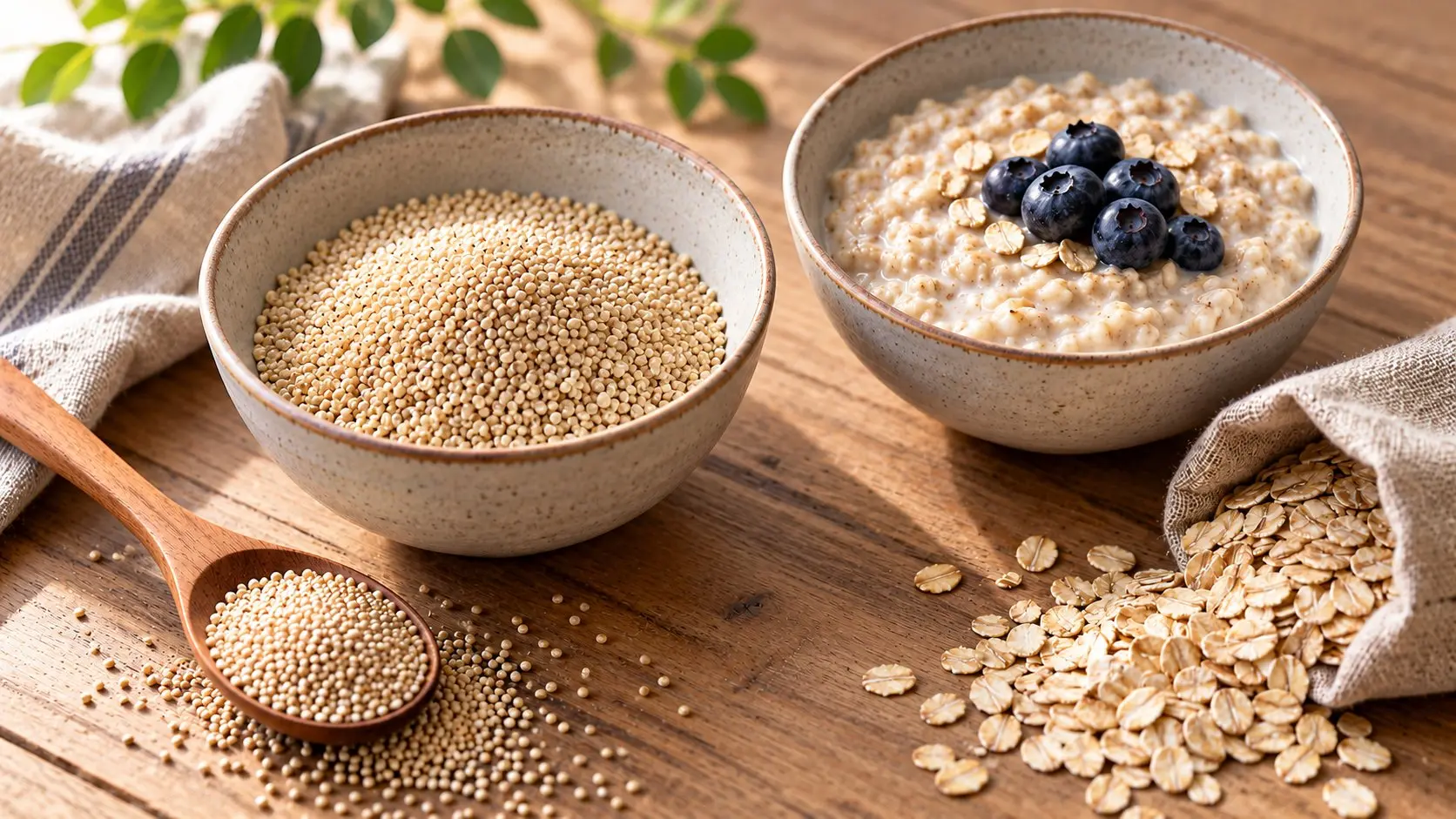
Number two is nutrition. The best thing you can do for your gut is give it variety. I like challenges, and if you aim to incorporate 30 different plant-based foods into your diet each week, you've already done a lot right. I notice, especially when traveling, that a good breakfast buffet can easily provide twelve to fifteen different plant-based foods in a single meal.
I now buy things like those eight-herb frozen herb mixes, for example. And for anyone who wants to add even more variety, my advice is: put one fruit or vegetable in your basket each week that you wouldn't normally buy.
The most important and simplest tip for : most people focus on what they do in the last two or three hours before bed. But what really matters is how you start your day. If you begin with enough – actually go outside. Significantly less light reaches you indoors than it does outside. This gives your body the signal: attention, the day is starting now. It's a very effective way to get into a healthy rhythm.

Tip number four is breathing. I used to think: what's the point of such short breathing exercises? But when you regularly focus consciously on your breathing – even for just three to five minutes – you end up breathing more consciously throughout the day.
The simplest technique that pretty much anyone can do is, for me, box breathing: inhale for five seconds, hold for five seconds, exhale for five seconds, and hold again for five seconds. I love doing this on final approach when I have to close my laptop anyway.
The fifth area is mindset. The most important topic for me here is curiosity: staying genuinely open to new subjects, new impulses, and new experiences. That's why I think the question "When did you last do something for the first time?" is a great little challenge. Regularly doing things for the first time has a stimulating effect on the brain. And if that feels like too much effort, languages are a wonderful option. There's something special about engaging with another language.
Category six is social connections. My favorite longevity hack is "message a friend every day" – writing to a friend each day. It gives you a sense of connection. The opposite of loneliness isn't company, it's connectedness. Even just writing someone "Good morning" and getting a "Good morning" back shows you how it gives you the feeling of not being alone. That sense of connection is truly important.
Do you really have to work on all these levers simultaneously in order to age healthily?
I think the real question is what it actually means to fulfill these six building blocks. Imagine that in each of these six areas, you have the option to go in one direction or the other. One path maximizes your healthy longevity – your healthspan – while the other leads in the opposite direction. And somewhere in between, there's naturally a neutral path as well.
This is easy to illustrate with nutrition. We typically eat several times a day, and with each meal we have the opportunity to move in one direction or the other. But it doesn't always have to be the optimal choice. My favorite dish, for example, is creamed spinach with a dollop and eggs, maybe with potatoes on the side. That might not push us entirely in the optimal direction, but it doesn't push us in completely the wrong direction either. That's okay. You won't maximize your healthy longevity with it, but you won't ruin it either.
That's why I deliberately didn't write a dogmatic book, but simply highlighted what is relevant and important. Then you have to decide for yourself what you can actually integrate into your life.
If not everything has to be perfect: what would you still not neglect when it comes to longevity?
For me, there are three main areas. The best insurance for a long, healthy life is simply muscle massFull stop. It's logical: if we can no longer move through life under our own power because our muscle mass has deteriorated too much, things go downhill fast. Muscle mass also plays a key role in absorbing the impact of falls. If you're more frail, a fall can quickly lead to a fracture.
Then nutrition and stress play an important role. Sleep is also a vital repair mechanism – if you're not repairing enough, that's clearly a problem. The last point is social connections, because for me the meaning of life is very closely tied to connection with other people. So I would say: you do need all of these areas to a certain degree, and can only work with what's possible given your own circumstances.
You write: "I hate longevity, but I love the idea of extending life in a way that truly feels like living." Why do you hate longevity?
I think it's wrong to impose things on yourself that might help you live longer but make you completely unhappy or bring you no joy. Now, you could say: I hate exercise, it brings me no joy. But then you need to find the right kind of exercise for you.
A good example for me is the trend of drinking apple cider vinegar first thing in the morning. That's not for me. I prefer to stabilize my blood sugar through other means. For instance, I try to take a few steps after eating. That does me a lot of good and makes me happier than drinking apple cider vinegar.
This dogmatic approach – you must do this and you must do that – is something I struggle with.
You've personally tried many longevity trends and tools. What has disappointed you?
Quite a lot, actually. I think there are many technical devices that are complete nonsense. For example, I once bought a device that was supposed to support and measure your breathing training at the same time. For me, it was completely useless.
I'm also personally not very convinced by all the options for raising NAD+ levels – both infusions and so-called precursors like NMN. These are all things where I personally haven't noticed any difference.
Most people try these things to get more energy. And I believe that a lack of drive and energy often has other causes. Even looking at it purely biochemically, I think the issue for many people is more that their mitochondria are not in good shape – those being the powerhouses of the cells.
What helps you personally when you're under stress?
The fastest way for me to truly relax is still breathing. Even if it might sound a little esoteric: when you wake up in the morning and first connect with your breath – rather than immediately reaching for your phone, you sit up straight for a moment and breathe consciously – that already has an incredibly positive effect.
When you notice during the day that you're tense, the so-called physiological sigh is, for me, the quickest option: inhale twice – one deep breath through the nose followed immediately by a second short one – and then exhale noticeably longer. That brings me down quickly.
My most important recovery tool besides endurance sport is actually heat. I love lying in the bath. And when I have the chance to go to the sauna, I find that incredibly beneficial too. Exposing yourself to intense heat – through a hot bath or a sauna – is for me one of the most wonderful ways to unwind.
So does the perfect morning routine not have to look the same for everyone?
The "Miracle Morning" is actually a clearly defined concept. At first I followed those instructions too, but today I no longer do – instead, I've developed my own personal Miracle Morning. I mainly use it when, for logistical or other reasons, I don't have time for a proper workout.
I have a certain routine that I genuinely make time for. It consists of stretching exercises, strength exercises in the form of bodyweight training, and meditation. And I write by hand. I simply notice how incredibly helpful writing things out by hand is for me.
In the original Miracle Morning, I believe reading something inspiring is also part of it. That doesn't work for me. By morning I'm already too rushed, or too much in the mindset of: I want to get on with the day. I can meditate and write, but I can't manage to read peacefully in the morning. And for me, that's exactly the key point: these routines always have to fit you and your personal day.
Why do you say longevity has less to do with the future than with the present?
Viewing longevity as a topic for the future is, for me, the wrong approach. For me, it's truly about the present. Honestly, the right word might not even be longevity, because everything I do for my longevity makes me feel good right now, and I do it for myself right now. And if it means I get to live longer in the end, I think that's genuinely wonderful – and I'm happy to take it as a bonus.
One of your rules is to invest in the three F's: family, friends, and strangers. Why do strangers belong there?
Family is of course something you should invest in, because it's a different kind of bond. Just this morning, for example, I had a brief phone call with my brother. We don't do that often enough, but we're both currently working on building more closeness again.
But why strangers? Because it's in the nature of things that people drift apart over time. It doesn't always have to involve death or illness. Sometimes you simply grow in different directions. I notice this in my own life — some of my long-standing friends my own age are developing differently than I am. Nothing negative happens; there's no falling-out. You just find that you're spending less time together, because you no longer have as much in common.
That's why it's incredibly important to keep letting new people into your life. I think the advice to have friends of all age groups is absolutely wonderful — friends of every age. I have a coffee group in Hamburg where the youngest member is 31 and the oldest is 68. There are twelve of us, a real mix. And it's incredibly enriching to discover how alike and yet how different you can all be at the same time.

Medfluencers enjoy a high level of trust and reach millions with health advice. But on social media, reach often counts for more than scientific evidence. Prof. Dominik Pförringer examines the troubling intersection of medicine, influence, and commercial interests.
Prof. Dominik Pförringer

By
Univ.-Prof. Dr. med. Dominik Pförringer

Wegovy is now available as a pill. But how does it compare with the weekly injection? Prof. Uwe Nixdorff explains the key differences in effectiveness, use, and side effects.
Christine Bürg & Marianne Waldenfels

With
Prof. Dr. Uwe Nixdorff

When pregnancy doesn’t happen, the uncertainty can take a heavy toll on couples. Reproductive medicine specialist Dr. Bernd Lesoine explains why age matters, when to seek medical advice, and which treatments offer the best chances of success.
Christine Bürg & Marianne Waldenfels