The new issue of Premium Quarterly
March 25, 2025
Pia Landgrebe
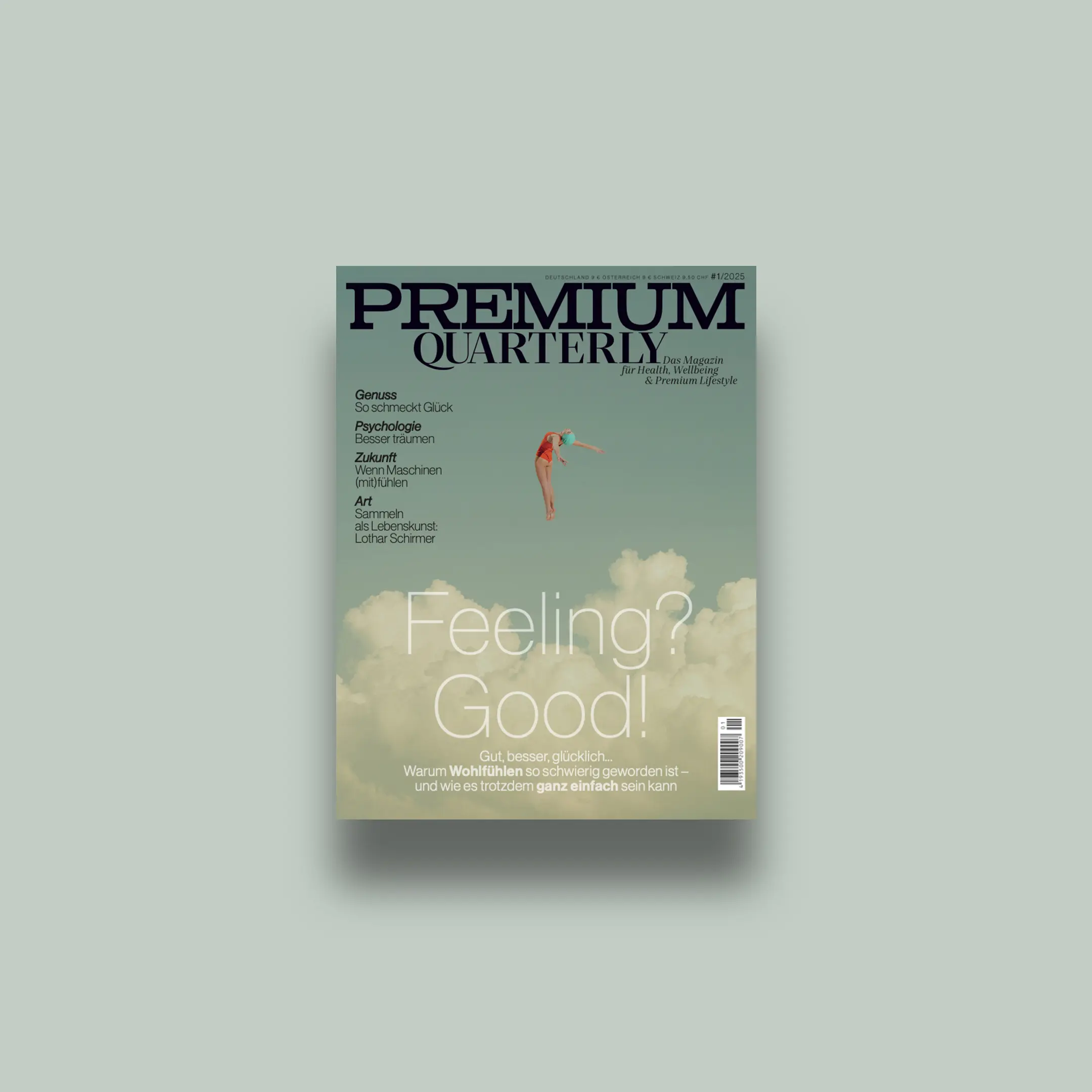
Why is it so hard to simply feel comfortable and why does even relaxation seem to have become part of the to-do list? Premium Quarterly is dedicated to exactly these questions in the first issue of 2025.
Have we unlearned how to simply feel good? And what does 'Feeling Good' really mean today? Between scientific findings, societal trends, and very personal stories, the first issue of the year shows why true well-being is more than just a spa visit - and how we can sustainably cultivate it.
Attached you will find a selection of topics from the new issue of Premium Quarterly:
Wellness is a billion-dollar business - and yet more and more people feel burned out. While 1,800 billion dollars are spent annually worldwide on wellness offerings, the number of mental illnesses is growing rapidly.
Philosopher Michael Bordt sees a misunderstanding: Many meditation techniques and mindfulness programs are more about mood management than true inner peace. And sociologist Hartmut Rosa warns: Wellness cannot solve the real problem: the lack of resonance in our everyday lives. Instead of chasing ever-new feel-good trends, true connectedness could be the key to sustainable well-being.

Why has feeling well become so complicated?
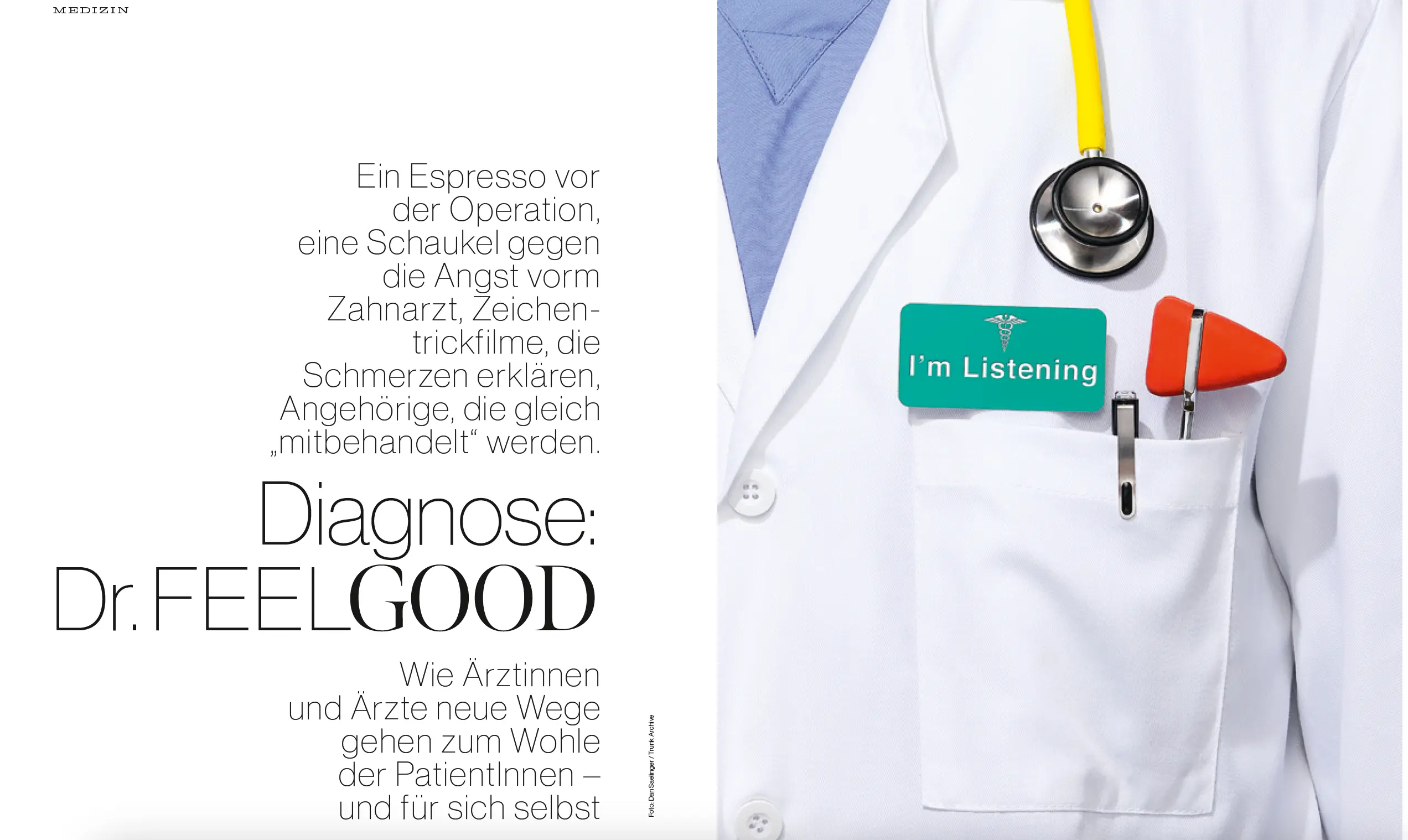
A doctor's visit is associated with stress for many - but what if medicine could feel different? Premium Quarterly asked doctors of the Premium Medical Circle how they rethink the patient journey - from communication to healthcare design. Dr. Lukas Kohler from the Munich Institute of Aesthetics LVATE recommends that you should not even consider treatment if you feel uncomfortable.
Pain specialist Dr. Claudius Gall uses social media and explanatory videos to alleviate fears, while heart surgeon Dr. Ferdinand Vogt actively involves relatives in the treatment. The physical environment also plays a role: "There are studies that show that patients recover faster when they can look out into nature," says Dr. Caroline Kim, who designed her new practice with a view of greenery.

Cardiac surgeon Dr. Ferdinand Vogt involves the relatives of his patients from the outset.
Dreams have always fascinated, irritated, and raised questions. Are they just random brain activities or encrypted messages from our subconscious? While some see them as mere random products of the brain, others see an opportunity to process experiences or even prepare for real situations. Pleasant dreams relax, nightmares can be distressing, while the special thing about lucid dreams is that you know you are dreaming during the dream itself.
By the way, one of the most common nightmare themes is the fall into the abyss, followed by exams and fear of failure, being naked in public, being chased, injury, and the death of loved ones. How do they arise? Studies show that a genetic factor plays a role. Also, "thin-skinned" people are more susceptible. Our current stress level, side effects of medication, or mental illness can also promote nightmares.

For a long time, people believed that dreams are encrypted messages.
How does taste sound? For Alexander Herrmann it's like a volume control: "If you put a lot of umami in a dish, it's like turning up the volume control. It makes the dish more intense, stronger, fuller." But too much of it can drown everything out - "then you no longer hear the song, just noise."
In an interview with Premium Quarterly, the star chef explains why fermentation is a flavor booster, why he tried Maggi but never used it for cooking, and why bread seasoning is "the curry of home" for him. His secret tip for more flavor? Brown butter. "One or two spoonfuls of it - and it's a true flavor booster."

Alexander Herrmann also reveals which ingredient quickly adds umami to any dish.