Other Treatment Methods
- Acute and chronic pain conditions
- Dementias
- Diagnostik neurologischer Erkrankungen – Methoden & Verfahren
- Epilepsy
- Erkrankungen peripherer Nerven
- Motor neuron diseases
- Movement disorders
- Muscle diseases
- Neuro-Onkologische Erkrankungen
- Neuroimmunological diseases
- Neurovascular diseases
- Polyneuropathies
- Therapien neurologischer Erkrankungen – Medikamente & Verfahren
- Wirbelsäulenerkrankungen
© PMC
Movement disorders
Movement disorders
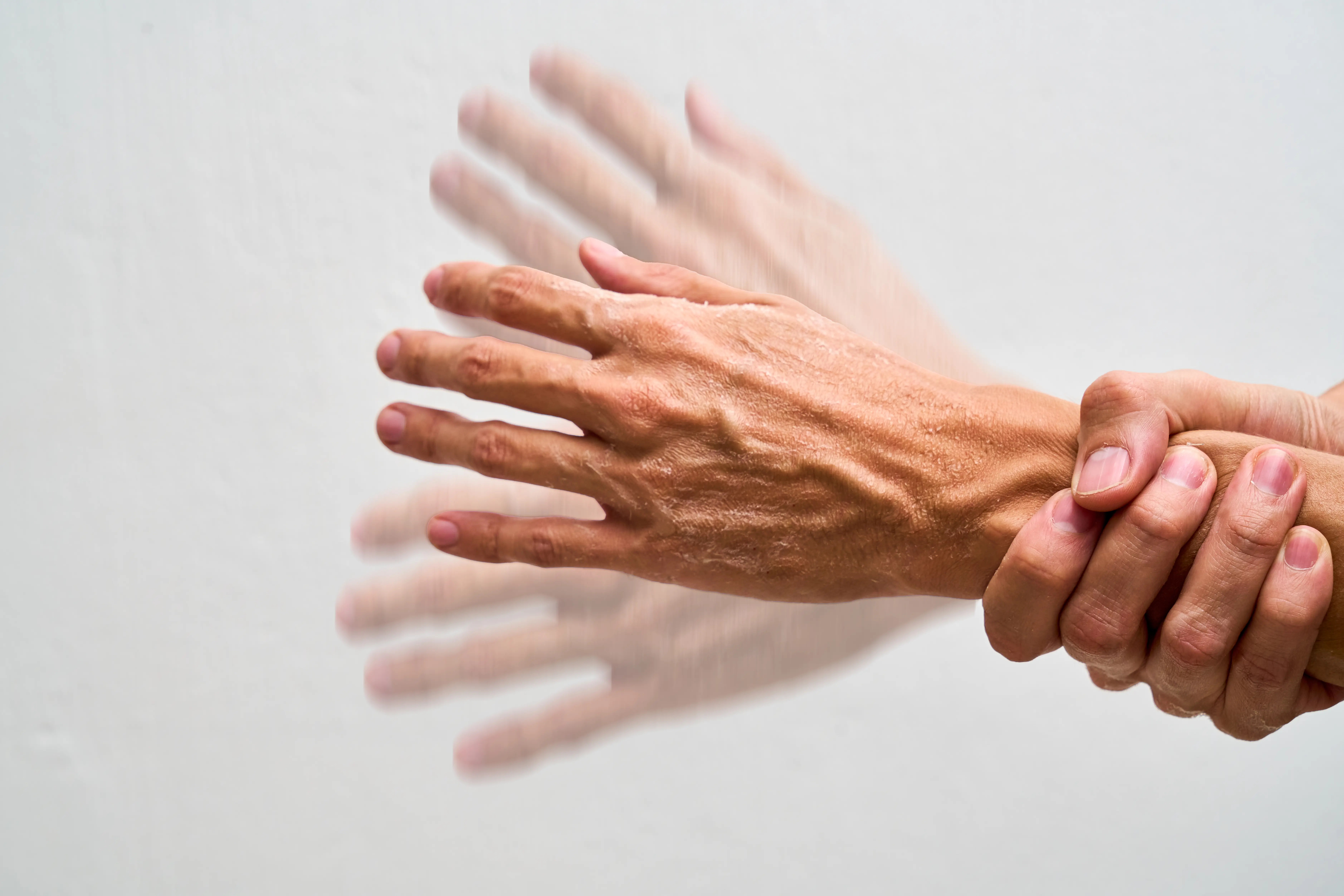
These include, for example, the Parkinson's disease or atypical Parkinsonian syndromes. Parkinson's disease is the second most common neurodegenerative disease and usually occurs in older adults. Men are more frequently affected than women. The cause is largely unclear, but genetic and environmental factors (e.g., pesticides, fine dust) play a role, as does an imbalance in the gut microbiome. These factors lead to the loss of dopamine-producing nerve cells in certain areas of the brain. The neurotransmitter regulates, among other things, motor functions.
Early symptoms are: painful muscle tension, reduced physical and mental resilience, unilateral fine motor disorders of the hands, reduced facial expressions, changed handwriting, and depressive moods. In advanced stages, it leads to tremors, slowed movements, muscle stiffness, and balance disorders.
The diagnosis involves a physical examination and imaging techniques as well as nuclear medicine methods. This also allows for the exclusion of diseases that progress similarly in the early stages but require different treatments, such as multiple system atrophy (MSA), progressive supranuclear palsy (PSP), or Wilson's disease.
The standard therapy for Parkinson's disease includes the administration of individually tailored medications in the early stage (see also therapies). In addition, electrodes can be implanted to stimulate certain areas of the brain. The disease is treatable but not curable.
Other Treatment Methods in this Department
- Erkrankungen peripherer Nerven
- Wirbelsäulenerkrankungen
- Neuro-Onkologische Erkrankungen
- Therapien neurologischer Erkrankungen – Medikamente & Verfahren
- Diagnostik neurologischer Erkrankungen – Methoden & Verfahren
- Acute and chronic pain conditions
- Epilepsy
- Muscle diseases
- Polyneuropathies
- Motor neuron diseases

-21.webp)