© Magnific
September 29, 2026
Marianne Waldenfels
When it comes to gut health, few people think of rye bread. Yet this everyday grain provides exactly what our gut bacteria need. A new study shows what can change in the body within just a few weeks.
Anyone who wants to do something good for their gut doesn't need to reach for exotic superfoods. That's the finding of a 2026 study published in the journal Clinical Nutrition : after twelve weeks on a diet rich in whole grain rye, participants showed changes in their gut microbiome composition. At the same time, concentrations of the short-chain fatty acid butyrate had risen significantly, and an important inflammatory marker in the blood had decreased.
This puts the spotlight on a food so familiar that its health benefits are easy to overlook.
Whole grain rye contains a variety of dietary fibers, including arabinoxylans, beta-glucans, and resistant starch. Some of these cannot be broken down by our digestive enzymes, so they travel intact to the large intestine, where gut bacteria ferment them.
This fermentation process produces short-chain fatty acids, one of which is butyrate. Butyrate plays a particularly important role for the intestinal lining: the cells of the large intestinal mucosa rely on it as a key energy source. It is also involved in processes that influence the intestinal barrier as well as immune and inflammatory responses.
The principle is as simple as it is effective: eating rye feeds your gut bacteria, which in turn produce substances the body can put to use.
For the RyeWeight2 study, a Danish-Swedish research team studied 255 adults who were overweight or obese. For twelve weeks, one group ate whole grain rye products – including bread, crispbread, and breakfast cereals – while the other group received comparable products made from refined wheat.
After twelve weeks, butyrate concentrations in the blood of the rye group were 38 percent higher than in the wheat group. Acetate, another short-chain fatty acid, was also elevated. The composition of the gut microbiome had changed as well.
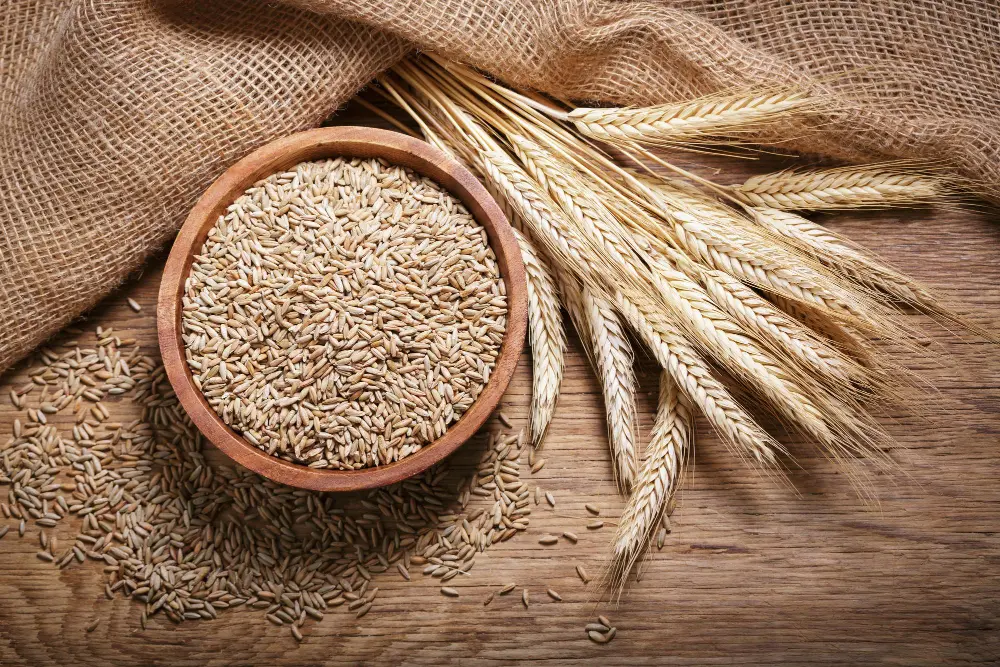
One further result stood out: in the rye group, the inflammatory marker CRP fell by 17 percent over the course of the study. CRP rises during inflammatory processes in the body, and in people carrying excess weight, chronic low-grade inflammatory processes can play a significant role.
The comparison in this study was between whole grain rye and refined wheat products – the kind many people eat daily as toast, white rolls, or baguette.
The study therefore shows, above all, what can change when low-fiber grain products are replaced with whole grain rye. Whether rye has advantages over whole grain wheat is a question this study cannot answer.
The practical upside: no one needs to completely overhaul their diet to make this switch. Simply choosing the whole grain option more often when buying bread is a good place to start.
It pays to look carefully when buying bread, because dark bread is not automatically whole grain bread. Color alone tells you little about how much of the original grain kernel is actually present.
These three tips will help you find the right bread:
Whole grain rye crispbread and rye flakes in muesli are also easy ways to bring more whole grain rye into your daily diet.
The study participants reached around 30 grams of fiber per day through the rye products provided. This matches the reference value of the German Nutrition Society (DGE) for adults of at least 30 grams per day.
Many people in Germany, however, fall well short of this target. According to a scientific assessment published in 2026 by the Max Rubner Institute, the median fiber intake recorded in the National Nutrition Survey II was 18 grams per day for women and 19 grams per day for men.
Bread was by far the most important source of fiber in that survey. This means a major opportunity for increasing fiber intake lies right in the bread basket. A simple first step: swap toast or white rolls for whole grain rye bread more often.
Those who currently eat relatively little fiber are best advised to increase their intake gradually, giving the gut time to adjust. Be sure to drink plenty of fluids as well.
A healthy gut doesn't require exotic trends. The new study shows that after twelve weeks with plenty of rye, the gut microbiome and its metabolic products had changed, and an inflammatory marker had decreased as well.
That's a good reason to give this very ordinary food a more prominent place on the menu – and to reach for whole grain rye a little more often the next time you buy bread.

How often should beginners run, when should they increase their training, and how important are rest days? Physiotherapist Nils Stützer explains how to build a healthy running routine, what role running technique plays, and how to avoid overuse injuries.
Christine Bürg & Marianne Waldenfels

With
Nils Stützer