© Diana Light/Unsplash
November 23, 2026
Marianne Waldenfels
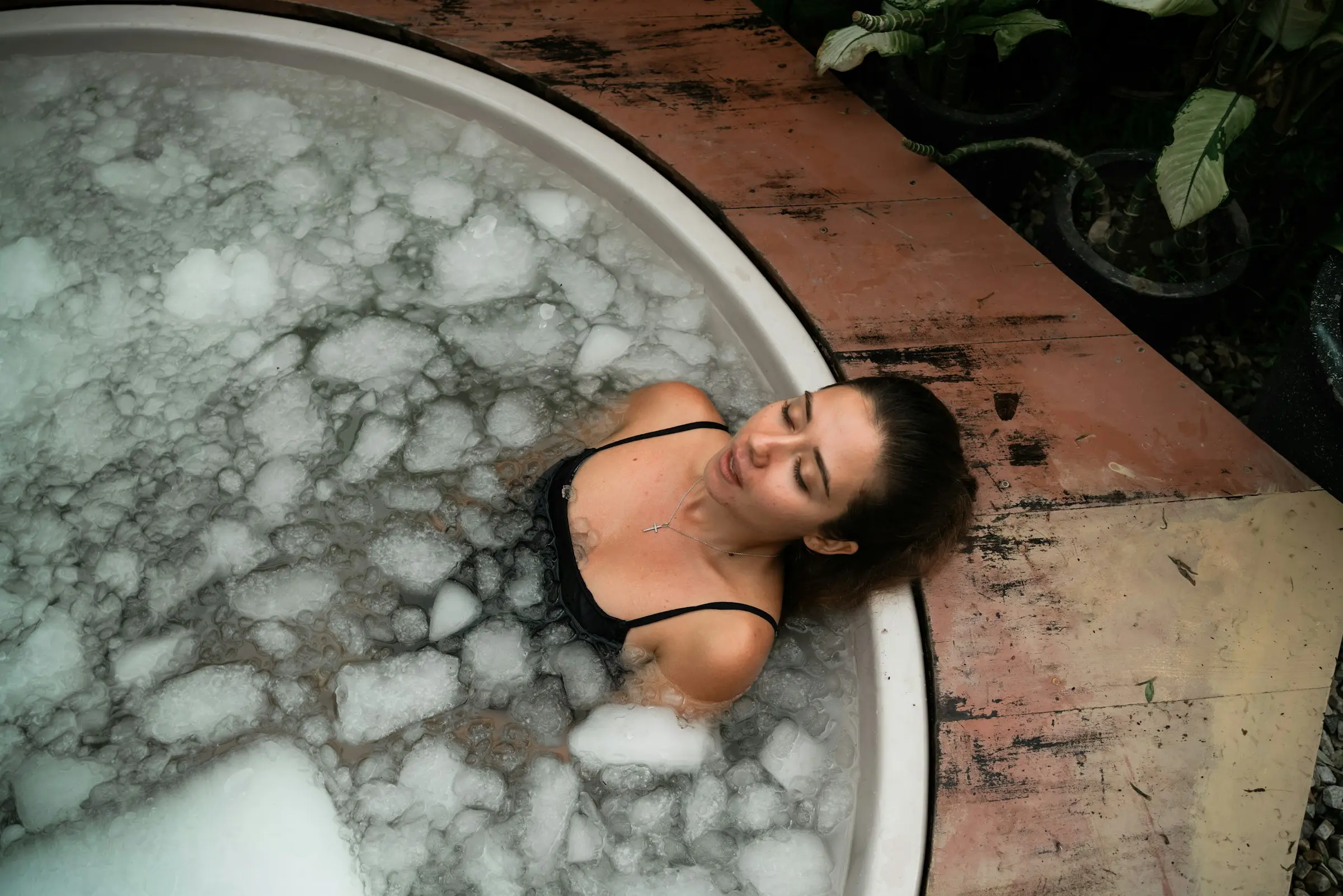
Ice baths are widely used to speed up muscle recovery after exercise. But a new study from London challenges their benefits. Researchers compared cold water, heat, and simple rest to find out what actually helps muscles recover.
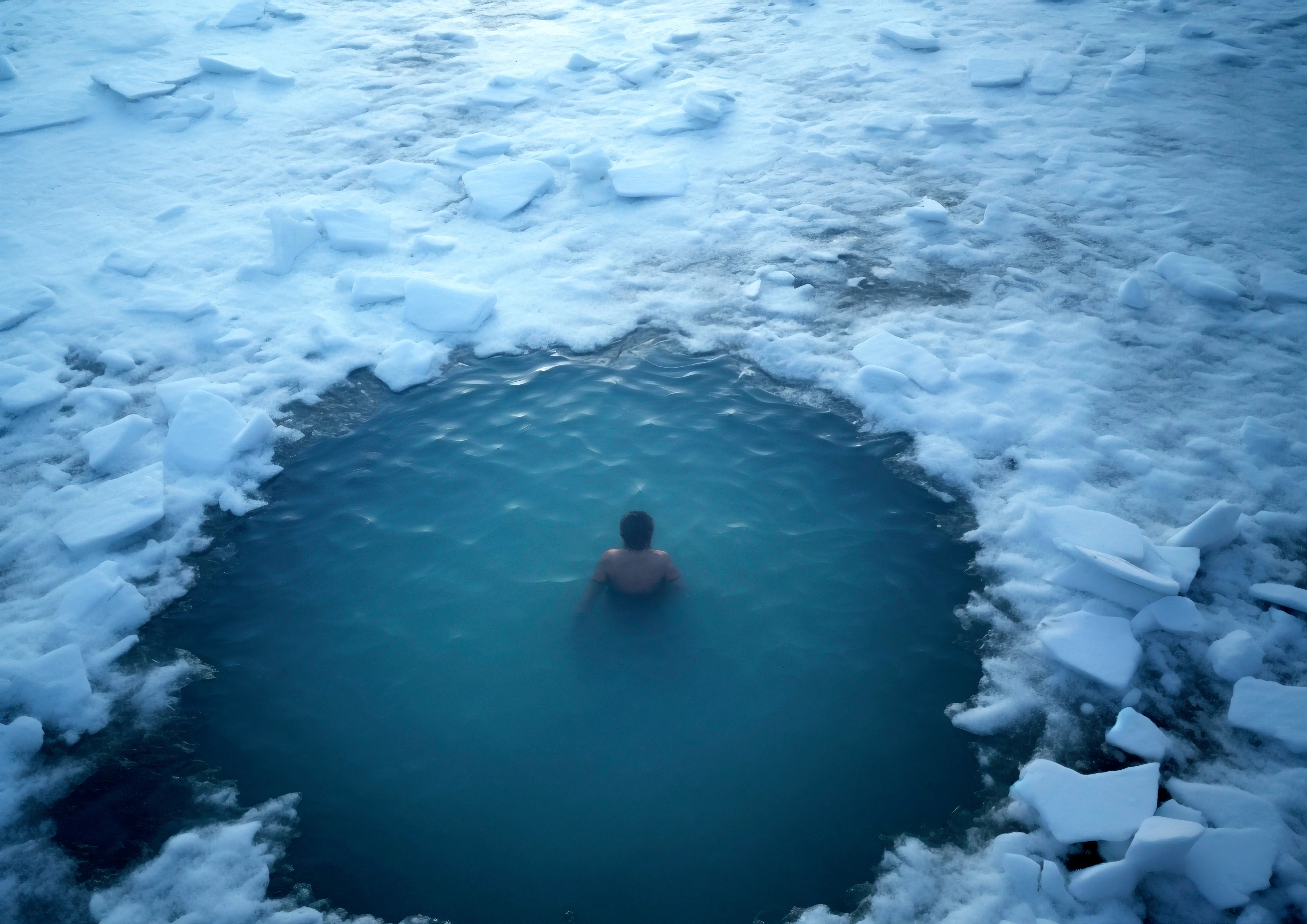
Scroll through social media in winter, and you're bound to see them: people climbing into barrels of ice water after a run, gritting their teeth, and emerging convinced their legs feel as good as new. Ice baths are no longer just a fixture of professional sports — they're widely regarded as a proven remedy for sore muscles. The idea sounds plausible: cold reduces inflammation, and less inflammation is supposed to mean faster muscle recovery.
A new study now calls this logic into question. Researchers put cold, heat, and simple rest head to head.
For the study in the Journal of Thermal Biology, a team led by sports scientist Freya Bayne of the University of East London had 40 healthy, physically active adults — 31 men and nine women — complete a training session. Researchers from London South Bank University, Maastricht University, and the University of Montpellier were also involved.
Using a training machine, participants performed a series of particularly demanding exercises targeting the front of the thigh. In these so-called eccentric movements, the muscle works while being stretched — similar to running downhill. This causes small tears in the muscle fibers and reliably triggers muscle soreness. Immediately afterward, each participant was assigned to one of four groups of ten:
• Ice bath: 15 minutes in water at 9 degrees Celsius
• Warm bath: 30 minutes in water at 42 degrees Celsius
• Warm air: 30 minutes in a chamber heated to 30 degrees Celsius
• Rest: 30 minutes of simply sitting
For three days afterward, the researchers measured participants' strength, asked about pain and muscle soreness, and analyzed blood markers indicating muscle damage, inflammation, and cellular stress.
Immediately after training, all participants had lost about a third of their strength. Over the following days, the muscles gradually recovered across all groups, and no statistically significant difference between the four methods emerged. Even so, it was notable which group lagged behind. , after 72 hours the ice bath group had recovered around 82 percent of their original strength, while the other groups reached 88 to 89 percent — including those who had simply sat still.
Cold also failed to come out ahead when it came to blood markers. According to the University of East London, the muscle damage marker creatine kinase returned toward baseline more quickly after heat treatments than after the ice bath. In the warm bath group, levels of a protein called heat shock protein 72 — which protects cells and plays a role in repair processes — also increased. The ice bath, by contrast, did not improve any of the measured recovery markers.
Cold did have one advantage, however: participants in the ice bath group tended to perceive their muscle soreness as less severe. For Bayne, that is precisely the crux of the matter. Feeling less sore does not mean the muscle is fully ready to be loaded again.
This finding is not entirely surprising. Cold water constricts blood vessels, reducing blood flow to the muscle and limiting the supply of nutrients — exactly the ones needed to repair tissue and build new protein.
Just how pronounced this effect can be was already shown in 2020 by a study from Maastricht University led by researcher Cas Fuchs, published in the Journal of Physiology. Twelve young men trained both legs for two weeks and afterward held one leg for 20 minutes in water at eight degrees Celsius and the other in neutrally tempered water.
They then drank a protein shake whose building blocks could be traced within the muscle. Significantly less of it reached the cooled leg, which also built new muscle protein more slowly over the two weeks.
Over time, this can add up. A meta-analysis in the European Journal of Sport Science by Alec Piñero and US sports scientist Brad Schoenfeld evaluated eight studies in 2024 in which participants performed strength training over several weeks and regularly took cold baths afterward. Their conclusion: those who cool down after training likely build somewhat less muscle mass.
The London study is not the first in which heat comes out ahead. Bayne was also involved in a study in the Journal of Physiology that included contributions from, among others, the Aspetar sports medicine hospital in Qatar. In that study, researchers used electrical stimulation to deliberately induce a muscle injury in 34 participants, similar to a strain.
Afterward, participants bathed their legs daily for ten days: 15 minutes in water at 12 degrees Celsius, 30 minutes in lukewarm water at 32 degrees, or 60 minutes in hot water at 42 degrees.
Strength returned at the same rate in all three groups. In the heat group, however, participants experienced less pain than in the lukewarm group and had significantly lower muscle damage markers in their blood than both other groups. Cold water, by contrast, neither relieved pain nor reduced damage markers — contrary to the researchers' expectations. Tissue samples also suggested that under heat, the muscle transitioned from the inflammatory phase to the healing phase earlier.
Even the researchers stop short of that conclusion. Those who mainly want to feel less sore can certainly benefit from an ice bath. Bayne recommends choosing the method based on the goal: cold, if the priority is how you feel the next day; heat, if the goal is to help the body repair itself and adapt to the training.
The new study also has its limitations. With ten people per group, it is small. Only one muscle group was examined over three days, and the number of participants was too small to allow a meaningful comparison between men and women. Whether regular heat applications offer long-term benefits has yet to be investigated.
• Those who want to build muscle should avoid ice baths immediately after strength training. Cas Fuchs also advises athletes looking to repair or build muscle to reconsider cold water.
• Those who simply want to ease muscle soreness can opt for the cold — it provides a better feeling, but not faster healing.
• Those who want to do something good for their body after training are at least equally well served by a warm bath.
• And those who do none of the above aren't missing much, based on current evidence: in the London study, rest performed no worse than the ice bath.
Cold hasn't had its day, however. But the idea that colder automatically means better recovery doesn't hold up to scrutiny. When it comes to muscles, what matters less is how fresh you feel the next morning than what is actually happening in the tissue.

Losing your sense of smell can be dangerous: more than one in three people affected has failed to notice smoke or similar warning signs. ENT specialist Prof. Dr. Frank Haubner explains when to see a doctor, what causes distorted smells, and why recovery is possible even years later.
Christine Bürg & Marianne Waldenfels
An interview with
Prof. Dr. med. Frank Haubner

Glucosamine is said to protect cartilage, collagen to strengthen joints. But how much do these supplements actually help with osteoarthritis? Orthopedic surgeon Dr. Florian Pfalzer explains what the research shows, which risks are often overlooked — and what works better than supplements.
Christine Bürg & Marianne Waldenfels

An interview with
Dr. med. Florian Pfalzer

Veneers promise flawless teeth – but not every treatment is as gentle as many people think. Dentist Dr. Oliver Brendel explains which risks are often underestimated, when he advises against a treatment and what really makes a beautiful smile.
Christine Bürg & Marianne Waldenfels

An interview with
Dr. med. dent. Oliver Brendel