© Lina Retzlaff
June 25, 2026
Moira Hammes
How does red light therapy work? Hale.Now founder Miriam Zech explains what the studies show, why getting the right light dose is crucial, and where the hype around red light therapy ends
Many people still have fond memories of red light — especially the warm glow of grandma's red light lamp — but what is really behind it, and how has the technology evolved?
What is now making its way into longevity studios under the term Red Light Therapy is based on a cellular mechanism and a growing body of research. So-called photobiomodulation uses targeted red and near-infrared light at very specific wavelengths to penetrate deep into tissue and act at the cellular level — specifically, at the mitochondria, the energy centers of our cells.
The research landscape is promising, but selective: not everything that is currently being hyped has actually been proven, and the difference between serious application and pure wellness marketing is an important one.
Miriam Zech, founder and CEO of Hale.Now, didn't integrate red light therapy into two of her Berlin studios on a whim — it came after an in-depth review of the research literature and a personal factory visit to the manufacturer.
In the interview, she discusses the technology behind the lounger, the overhyped red light classes, and why recovery is an important pillar of any health concept.
How did the decision to integrate Red Light Therapy at Hale.Now come about — what was the deciding moment?
I had been convinced of red light therapy for several years — not based on gut feeling, but because I had read extensively through the scientific literature. At the same time, I was somewhat hesitant because it was barely known on the German market. But when we found a suitable space for another Hale.Now studio, it was clear: now or never.
Hale.Now stands for longevity and holistic wellbeing. How does red light therapy specifically fit into your concept?
We have continually evolved and, from the very beginning, offered both movement and relaxation through group formats. It's all about the mind-body connection, and taking a holistic approach to health has always been important to me.
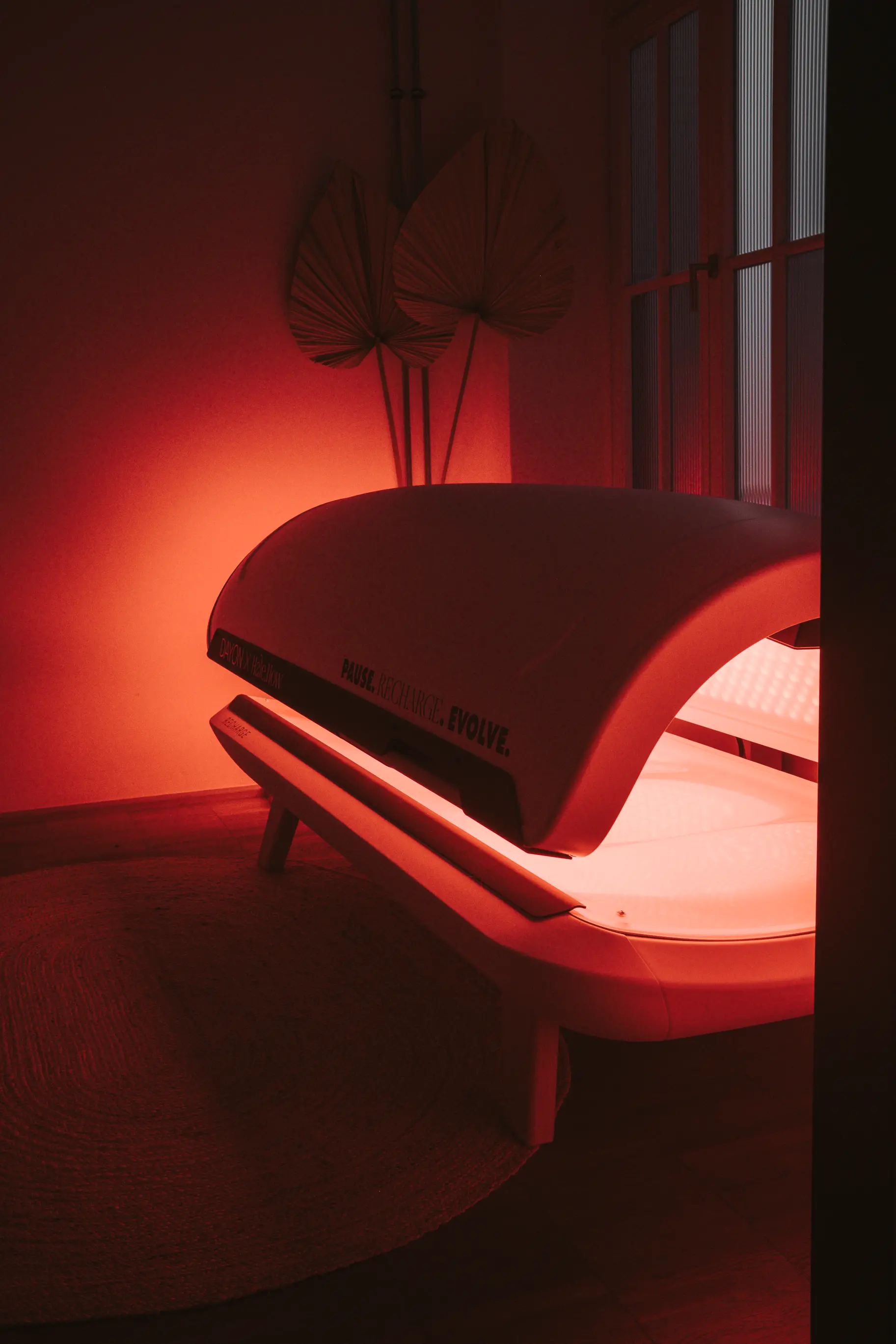
Integrating Red Light Therapy was the next logical step in positioning ourselves even more holistically and expanding our recovery offering. And on a very practical level: our loungers, with their 10- to 20-minute sessions, fit naturally and perfectly into the already hectic lives of city dwellers — take a brief break, recharge your cells, and get back to it.
What happens to your health during a session?
To put it plainly: we fuel your power plants. Red and near-infrared light penetrates the skin and tissue and is absorbed in the mitochondria by an enzyme called cytochrome c oxidase — essentially the gatekeeper of energy production. When stimulated, cellular respiration runs more efficiently and produces more ATP, the energy currency of your cells.
The technical term is photobiomodulation, and that is the key distinction: not a heat effect like in the sauna, but a light effect at the cellular level. Blood circulation is stimulated, cell regeneration is activated, and the formation of new cells is promoted. You lie there and don't feel anything dramatic at first — the work is happening beneath the surface. That's precisely the point of recovery.
For which goals or complaints is Red Light Therapy particularly suitable?
I'm deliberately drawing a distinction here — otherwise I become part of the very hype I find so off-putting. The best-documented effect is on the skin: studies show faster wound healing and stimulated collagen and elastin production — greater firmness, fewer wrinkles. That's the anti-aging angle, and because our lounger covers the skin over a large surface area, it's a perfect fit.
There is also solid data on pain and musculature — including back pain, knee pain, and muscle soreness after training — and, perhaps most surprisingly, hair growth.
An honest distinction matters here: the evidence is strongest for targeted, localized application. For the full-body variant found in our lounger, research on muscle recovery is still limited — but this is precisely where early, exciting indications of improved sleep are emerging, including higher melatonin levels.
On the topic of "more energy in everyday life" and the immune system, I want to be upfront: many members report great results, but that reflects the overall wellbeing package rather than any specific therapeutic promise. My honest advice is this — anyone dealing with a medical condition should see a doctor. But anyone looking for better recovery, improved skin quality, and more energy in daily life is in exactly the right place with us.
How often should one ideally do a session in order to feel the effects?
Red Light is not a one-night stand — it's a relationship. For noticeable results, we recommend 1 to 3 sessions per week, ideally as a long-term recovery and anti-aging routine. Each session lasts 10 to 20 minutes, so it fits easily into any day without having to build your life around it.
As with exercise, the magic lies not in one heroic session, but in regularity. Consistency beats intensity.
You've made a conscious decision against the red-light district format — against group offerings like those found elsewhere. Why? What, in your view, makes private cabins the better choice?
Because Red Light isn't a workout — it's recovery. And recovery doesn't work in a crowd. The key is finding the sweet spot: the effect depends on light dose, which comes down to two factors — how close you are to the light and how long you're exposed. Both need to be right, at the same time.
And this is where things get physically real: light intensity drops sharply with distance. A few centimeters too far away, and "effective" becomes "nice red glow." In our lounger, you are positioned at precisely the distance the device was designed for — surrounded on all sides, from both directions, evenly and consistently throughout the entire session.
Sustained, consistent light exposure where it actually makes a difference. The more skin that comes into direct contact with the light, the better — and in a cabin, you can undress as much as you like.
In a group class, that sweet spot is structurally out of reach. Ten people, one panel, everyone at a different distance — most too far away, lit from the front rather than from all sides, usually half-dressed. Some get a little something; others are bathing in mood lighting. But hardly anyone receives the dose that actually makes a difference. That's the gap between "having been there" and "it actually worked."
Then there's the philosophical side: with us, you have the cabin entirely to yourself for 20 to 30 minutes. No performance, no comparison, no "everyone breathe together now". Just you, your cells, and silence. "Take what you need" – we mean that literally. Red Light Classes are a clever trend for photos – we're in it for the effect.
Red light therapy is currently a major wellness trend — but what does the science actually say, and what is simply hype?
Both, and that's something you can say openly. Photobiomodulation at the cellular level is well documented, particularly its effects on skin and local tissue regeneration — there is a substantial body of research on that. It crosses into hype when Red Light is suddenly claimed to cure everything: every disease, a fountain of youth you just plug into the wall.
That's where I become skeptical. Much of it is based on small studies, and the decisive factors are wavelength, dose, and distance — factors that in practice are very often completely overlooked. And "more is better" simply doesn't apply here: light has an optimal dose, and beyond that point the effect reverses.
My position: I love red light therapy — but as a serious building block in a longevity routine, not as a miracle cure. That's precisely why we invest in proven technology rather than bold promises.
What are your hopes for the future of Red Light Therapy — both at Hale.Now and in the wider health landscape?
That recovery finally becomes just as much a matter of course as training. For years, we've been telling ourselves that health meant pushing harder — more sweat, more performance, more everything. We've ignored the other half of the equation: recovery. For Hale.Now, I hope that Red Light becomes a firm part of our members' routine — as normal as the reformer class on Tuesday.
In the broader picture, I would like to see more honesty: rigorous, independent research instead of glossy promises, so that people have a clear understanding of what the technology can and cannot do. When prevention and recovery are taken just as seriously as illness itself, we will have truly made a difference.
At almost 50, I can say with confidence: it's never too late to start — and never too early. The next logical step is already waiting in the wings: later this year, we will be opening the first RCVR.NOW studio, with a dedicated focus on non-touch recovery. There's plenty to be excited about.

© Caroline Pitzke
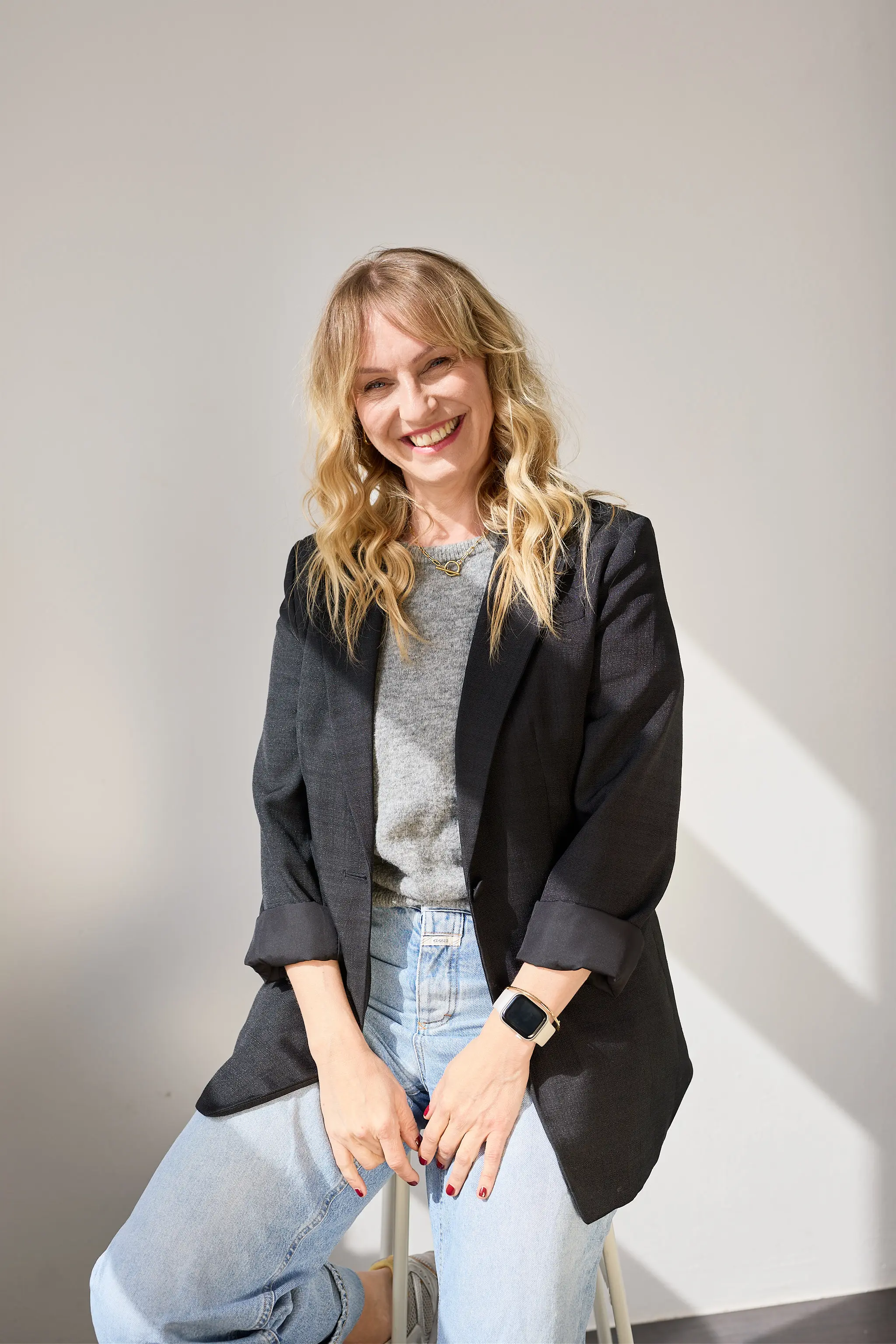
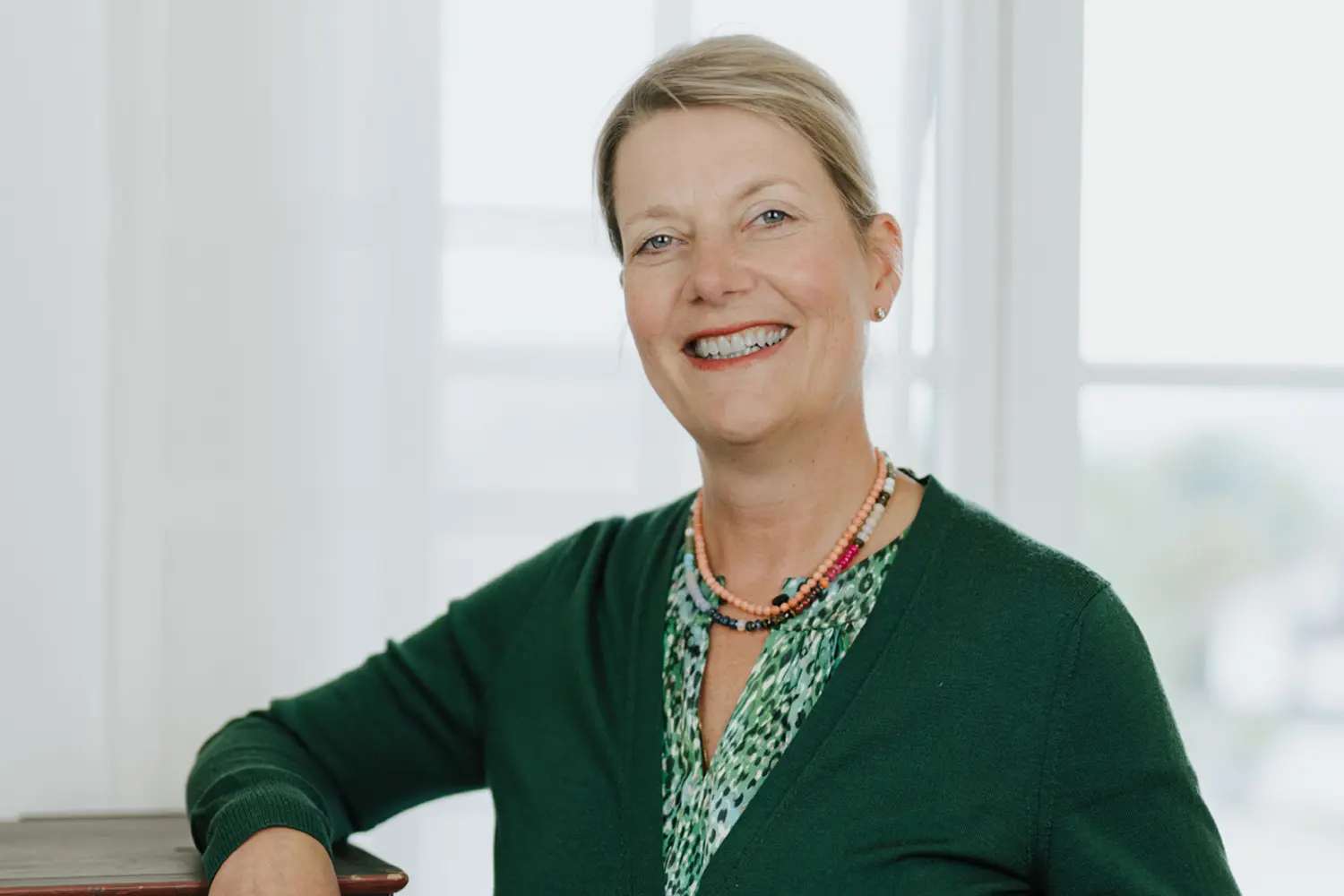
Miriam Zech, founder and CEO of Hale.Now