© Magnific
June 22, 2026
Moira Hammes
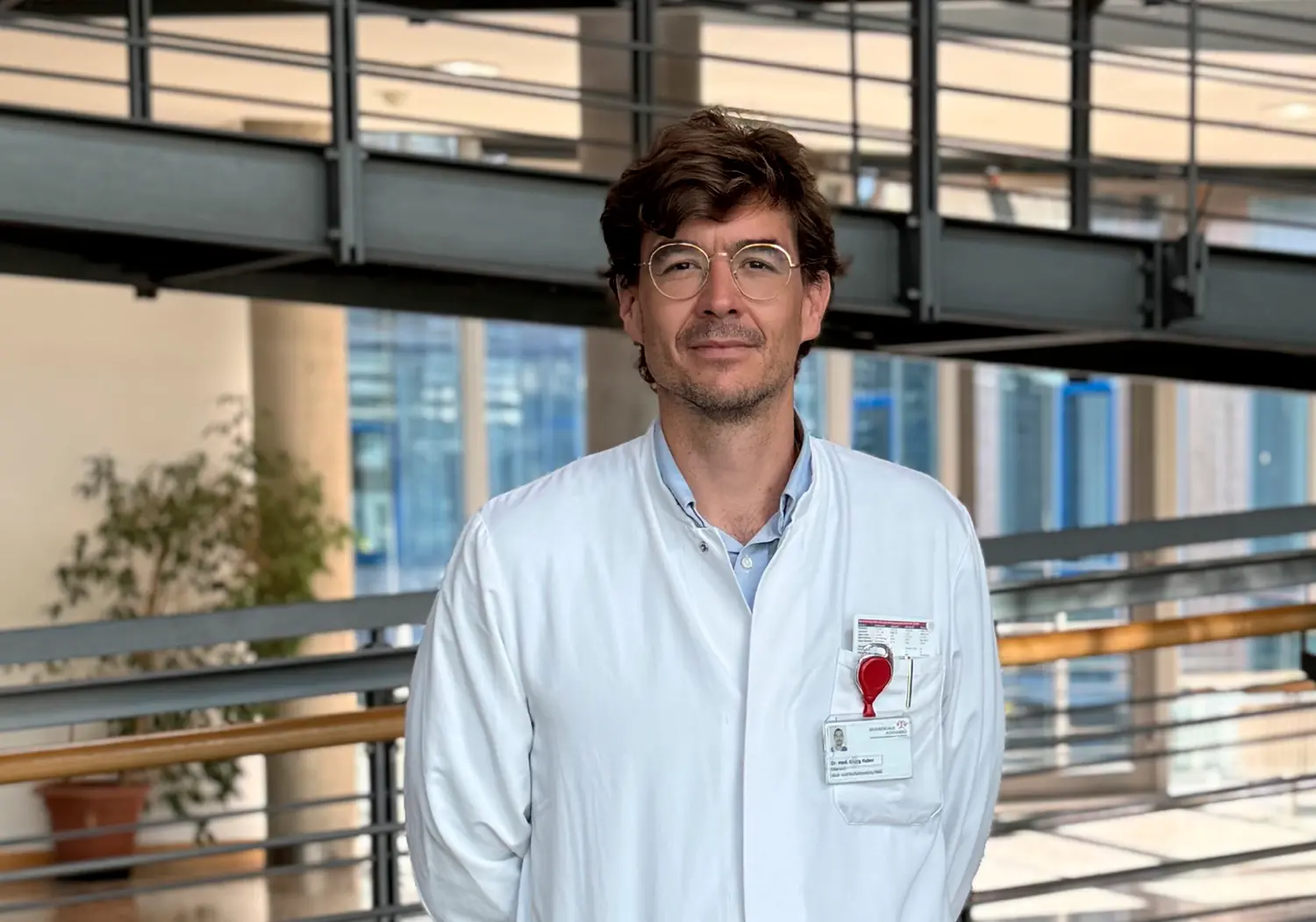
ALS affects everyone differently. In this interview, neurologist Dr. Georg Haber discusses the symptoms, diagnosis, treatment, and care of those living with the disease.

An interview with
Dr. med. Georg Haber
Amyotrophic lateral sclerosis – ALS for short – is a rare, progressive disease of the motor nervous system that, despite intensive research, remains incurable to this day. Care therefore focuses on providing the best possible symptom relief and on supporting those affected throughout the entire course of the disease.
ALS was recently thrust back into the public eye by the illness of American actor Eric Dane, best known for his roles in Euphoria and Grey's Anatomy. He passed away approximately one year after his diagnosis was made public — a remarkably rapid progression that his viewers were, in part, able to witness on screen. Dane was open about his illness and remained actively dedicated to raising awareness and advancing research right up until the end.
British astrophysicist Stephen Hawking's case followed a dramatically different trajectory: he lived with ALS for 55 years and died at the age of 76, far outliving statistical expectations. The median survival time after diagnosis currently stands at just three and a half years.
Both cases impressively illustrate how heterogeneous the course of ALS can be. To better understand the disease – from diagnosis to care – we spoke with Dr. med. Georg Haber, a specialist in neurology and specialized pain therapy.
Amyotrophic lateral sclerosis is a rare but almost always fatal neurological disease. How would you explain to a layperson, in a few sentences, what ALS is and what happens in the body?
ALS is a disease that affects the nerve cells of the central nervous system — specifically those responsible for muscle control and motor function. It is a chronic degenerative disease whose exact cause remains unknown. The condition presents in many different ways, with the most typical forms primarily affecting motor function.
In the so-called bulbar form of the disease, swallowing and speech are the primary functions affected at onset, rather than limb motor function. At its core, ALS causes slowly progressive muscle weakness as a result of damage to the nervous system.
Most people only know about ALS from media coverage of high-profile cases. How common is ALS actually, and which patient groups do you encounter most frequently?
ALS is a relatively rare disease. In Germany, there are currently around 8,000 to 9,000 people living with the condition. Across Europe, approximately three in every 100,000 people are newly diagnosed with amyotrophic lateral sclerosis each year.
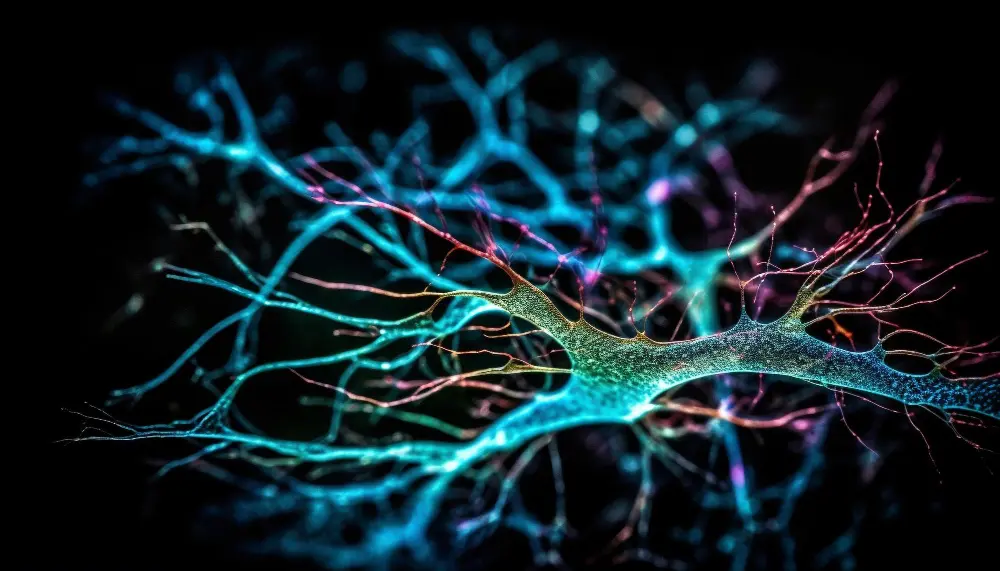
When it comes to patient groups: many patients initially come to us with other complaints — without any specific suspicion of ALS. Some are referred by a neurologist in private practice who suspects a motor neuron disease and wants further evaluation.
Often, however, these are patients who report that a leg has become weaker or that they keep dropping things, and it is only through examination and diagnostic testing that signs of motor neuron disease emerge.
ALS is classified as a motor neuron disease, an umbrella term for a group of diseases affecting the muscles of the limbs. Beyond motor symptoms, patients may also experience extra-motor symptoms, such as cognitive changes or behavioral abnormalities. In approximately 5% of cases, there is an overlap with frontotemporal dementia, known as the FTD-ALS mixed form.
Many of those affected initially experience non-specific symptoms, such as muscle weakness or speech difficulties. Which early warning signs should patients take seriously?
The majority of cases — around 90% — occur sporadically, with no identifiable family history. However, genetic forms do exist, including among the mixed FTD-ALS cases. Patients with known affected relatives in their family should seek neurological evaluation early and at regular intervals.
As a general rule: if someone notices that theirmuscle mass and strength are declining — without an obvious explanation such as immobilization, an orthopedic issue like a bone fracture, or another structural problem — it is advisable to seek a medical evaluation, ideally from a neurologist.
A diagnosis of ALS turns the lives of those affected upside down overnight. How does the diagnostic process work in practice, and why can it still take months before a diagnosis is confirmed?
The first step is a thorough neurological examination. If this reveals signs of motor neuron disease, comprehensive further diagnostic workup is warranted. This includes, among other things:
Ideally, the evaluation should take place at a specialized center with experience in motor neuron diseases. The final diagnosis is a clinical one, supported by instrumental diagnostics and established criteria. Because symptoms must be observed over a period of time, an immediate prognosis is difficult to give, particularly in light of the widely varying forms the disease can take.
The primary life-limiting factors are respiratory and swallowing insufficiency, both caused by the progressive paralysis of the corresponding muscles. Swallowing disorders increase the risk of aspiration and, with it, the danger of pneumonia, while declining respiratory muscle function leads to life-threatening respiratory insufficiency.
ALS has no cure, but care has changed significantly in recent years. What treatments and symptom-relieving measures are available today?
A curative therapy — that is, a treatment that cures ALS or reverses its symptoms — does not yet exist, it is true. However, symptomatic and disease-modifying treatments are available:
It is also worth noting that certain antioxidants have been approved in Japan and the United States; however, the European Medicines Agency (EMA) has not granted approval for these, as the effect size and benefit-risk profile were deemed insufficient.
ALS affects not only the body but every aspect of life — family, work, and sense of self. In your view, what should support for those affected and their families look like?
It is important that patients receive comprehensive information about their disease at the right time — without immediately being given a specific prognosis. Instead, the goal is to explain on an ongoing basis what ALS is, what forms it can take, and what symptomatic treatment options are available.
Another key topic is the collaborative development of an advance directive: what treatment does the patient want to receive if the diagnosis is confirmed, and what do they wish to avoid? This is a sensitive but important process.
Support for family members is equally important. Self-help groups exist for both those affected and their families, and encouraging patients and their loved ones to make use of these resources is essential for navigating the challenges of illness effectively.
Finally: what message would you like to pass on to newly diagnosed patients and their families?
The most important thing is good, honest information – not a detailed or time-specific prognosis, but clear information about what forms the disease can take, what symptoms may arise, and how they can be managed. What weighs on patients most is the uncertainty: "I have this diagnosis – what does that mean for my future?" For those without a medical background, it can feel abstract and frightening. Bringing more clarity to that is very important.
Patients and family members alike should be reassured: there is support and a solution for every situation — even if it looks different for each person and must be tailored to the individual.

ALS affects everyone differently. In this interview, neurologist Dr. Georg Haber discusses the symptoms, diagnosis, treatment, and care of those living with the disease.
Moira Hammes

An interview with
Dr. med. Georg Haber

Why surgical experience matters in rhinoplasty, what risks nasal surgery involves, and how natural-looking results can be achieved. Professor Dr. Johannes Veit discusses modern rhinoplasty and individualized aesthetics.
Christine Bürg and Marianne Waldenfels

An interview with
Prof. Dr. med. Johannes a. Veit

Why are women often more successful than men in ultramarathons? Orthopedic surgeon Dr. Yvonne Ebel discusses physiology, mental strength, nutrition, and the risks of extreme endurance stress.
Christine Bürg and Sophie Rodewyk

An interview with
Dr. med. Yvonne Ebel

Many complaints have their root cause somewhere other than where the symptoms appear. Dr. Christoph Wenninger explains the role that jaw joints, inflammation, and modern preventive care play in overall health.
Christine Bürg and Marianne Waldenfels

An interview with
Dr. Christoph Wenninger