© Magnific
June 24, 2026
Marianne Waldenfels
What really helps in the heat? Dr. Sebastian Karl explains how to protect your circulation, sleep, and concentration — and which warning signs you should take seriously.
Heat waves are no longer an exceptional phenomenon — and they put far more strain on the body and mind than many people realize. Headaches, sleep problems, difficulty concentrating, and circulatory issues can all occur once temperatures climb above 30 degrees.
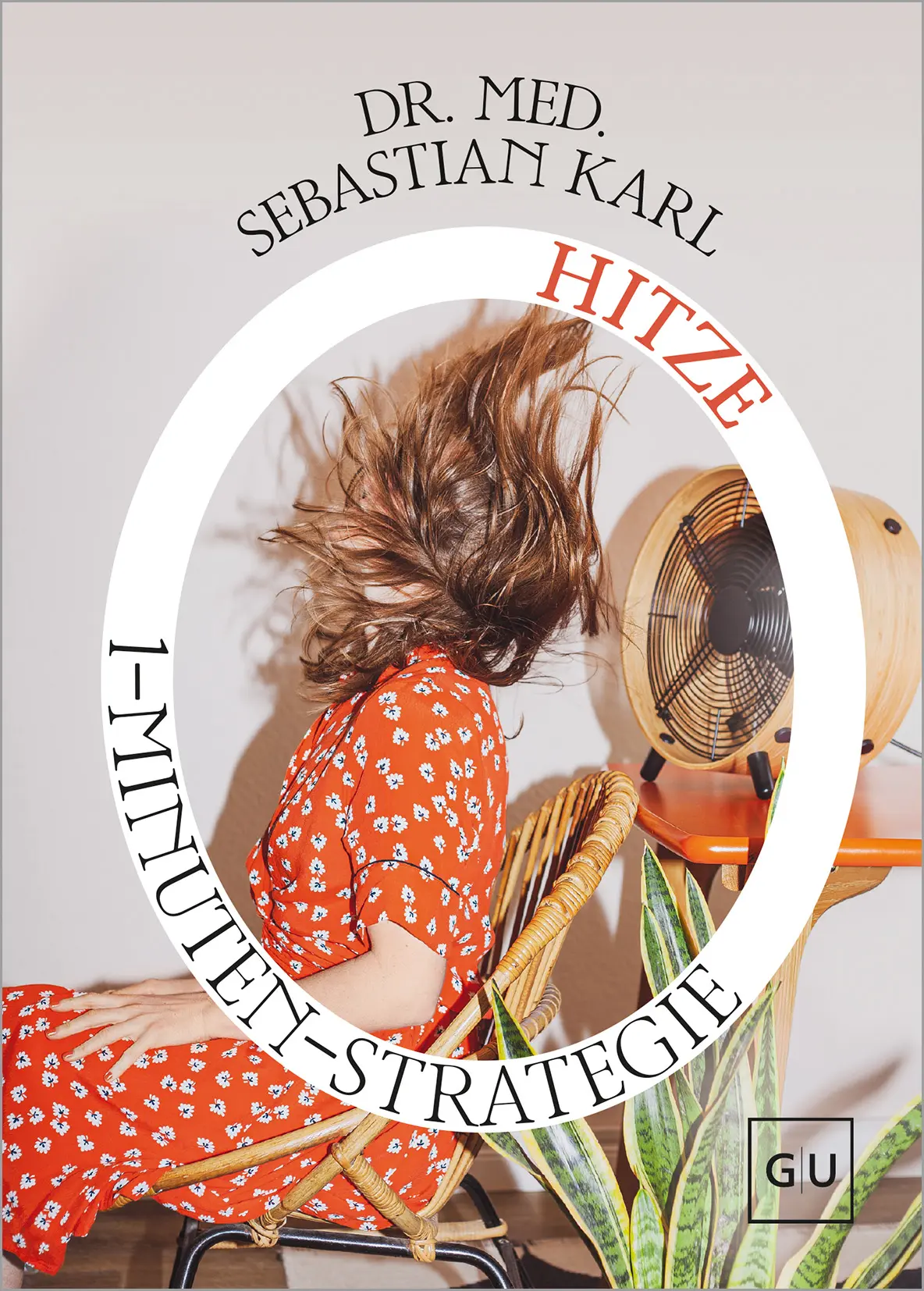
In his book 1-Minute Strategy Heat (GU Verlag), physician and molecular medicine specialist Dr. Sebastian Karl explains how heat stress can be tackled in everyday life using simple, science-backed measures. In an interview, Karl discusses, among other things, when exercise becomes a burden, why ventilating your home isn't always a good idea, and what simple strategies can help you stay healthy and productive even on the hottest days.
What should you do if you experience headaches, nausea, or vomiting in the heat?
These are definite warning signs that should be taken very seriously. You should move into the shade immediately — or better yet, find a cool place if one is nearby. You also need to cool your body down, which you can do with water from a spray bottle or damp cloths, for example. Cold drinks can also help lower your body temperature.

© Lena Lux Fotografie & Bildjournalismus
Author and scientist: Dr. Sebastian Karl, M.D., physician at the Central Institute of Mental Health in Mannheim

ALS affects everyone differently. In this interview, neurologist Dr. Georg Haber discusses the symptoms, diagnosis, treatment, and care of those living with the disease.
Moira Hammes

An interview with
Dr. med. Georg Haber

Why surgical experience matters in rhinoplasty, what risks nasal surgery involves, and how natural-looking results can be achieved. Professor Dr. Johannes Veit discusses modern rhinoplasty and individualized aesthetics.
Christine Bürg and Marianne Waldenfels

An interview with
Prof. Dr. med. Johannes a. Veit
When is ventilating actually useful in the heat?
This only helps when it is cooler outside than inside, which is often the case at night and in the early morning hours — making those the ideal times to ventilate. Depending on where you live, you should also take air pollution into account, as it can be elevated during hot weather.
How much exercise is still healthy in the heat, and at what temperatures should you be cautious about working out?
It really varies from person to person — there's no single temperature threshold. That said, I would generally advise most people to avoid sport whenever the German Weather Service issues a heat warning — which kicks in at a perceived temperature of 32°C.
How much should you drink on hot days?
For most people, two to three liters per day is appropriate. Those with certain pre-existing conditions — such as heart or kidney disease — should discuss their individual fluid intake with a doctor.

1-Minute Strategy Heat by Dr. Sebastian Karl, MD (GU Verlag): The best hacks for combating the dangerous effects of extremely high temperatures
What should you eat in the heat — and what should you avoid?
There are no foods you absolutely must avoid in the heat. It is advisable to eat several smaller portions spread throughout the day rather than large meals. Water-rich foods such as cucumbers or watermelons are particularly well-suited for hot weather.
How can you get a good night's sleep and recover despite the heat?
Preparation starts before you even fall asleep: staying well hydrated throughout the day can also help you sleep better at night. A cool shower before bed or a damp cloth on your forehead may help as well. And if you can't bear to sleep without pajamas, try popping them in the freezer shortly before bedtime.
Can you also train yourself to better tolerate heat?
Absolutely. However, it is best to start before a heat wave sets in, when the weather is warm but not yet hot. Regular endurance training, gradually increasing in duration, can help with this.
Can extreme heat really make the body age faster?
At least one major study from Taiwan supports this idea. It found that the more heat waves a person had been exposed to over their lifetime, the greater the gap between their biological and chronological age.