Other Treatment Methods
- Acute and chronic pain conditions
- Dementias
- Diagnostik neurologischer Erkrankungen – Methoden & Verfahren
- Diseases of the Peripheral Nerves
- Epilepsy
- Motor neuron diseases
- Movement disorders
- Muscle diseases
- Neuro-Oncological Diseases
- Neuroimmunological diseases
- Neurovascular diseases
- Polyneuropathies
- Spinal Diseases
- Therapien neurologischer Erkrankungen – Medikamente & Verfahren
© PMC | AI
Spinal Diseases
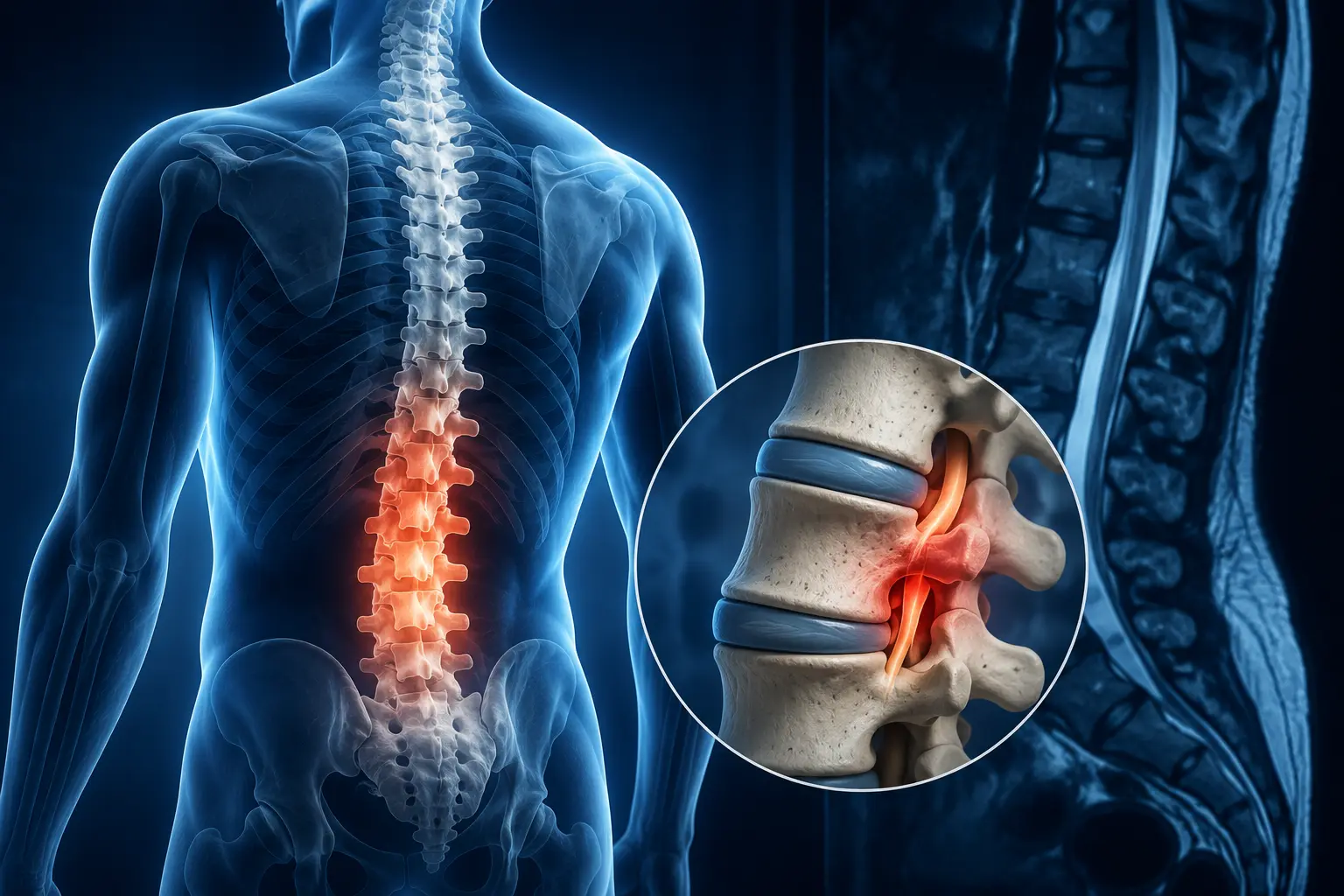
Herniated Disc, Spinal Stenosis, and Other Degenerative Diseases
As the name suggests, these conditions often develop as a result of age-related wear and tear. Such changes can compress nerves and lead to pain, numbness, or paralysis.
Goal of treatment is to relieve symptoms and preserve mobility. Therapy begins with conservative measures and proceeds to surgery if necessary.
Inflammations
Bacteria originating elsewhere in the body can also cause spinal inflammation. This can result in severe pain and requires prompt treatment.
Therapy: The source of infection is addressed through medication or surgery.
Spinal Tumors
Benign or malignant tumors can affect the vertebral bodies, spinal cord, or nerves. The most common symptom is back pain that persists even at rest.
Therapy is tailored to the individual based on imaging findings and may include surgery (decompression, stabilization), radiation, or drug therapy depending on the diagnosis.
Traumatic Injuries
These involve damage to the bony spine as well as the surrounding ligaments, muscles, tendons, or spinal cord caused by an accident. The consequences can be severe, ranging up to and including paralysis.
Therapy Goal is to restore stability — using, for example, screw-rod systems — and to prevent neurological damage.
Malformations
Developmental abnormalities of the spine, such as scoliosis, can cause symptoms even in childhood.
Therapy: Depending on the type, extent, and progression of the malformation, either conservative or surgical treatment is used. Options include specialized physiotherapy as well as individually fitted orthoses (derotation orthosis).