Other Treatment Methods
- Acute and chronic pain conditions
- Dementias
- Diagnostik neurologischer Erkrankungen – Methoden & Verfahren
- Diseases of the Peripheral Nerves
- Epilepsy
- Motor neuron diseases
- Movement disorders
- Muscle diseases
- Neuro-Oncological Diseases
- Neuroimmunological diseases
- Neurovascular diseases
- Polyneuropathies
- Spinal Diseases
- Therapien neurologischer Erkrankungen – Medikamente & Verfahren
Neuro-Oncological Diseases
Brain Tumors
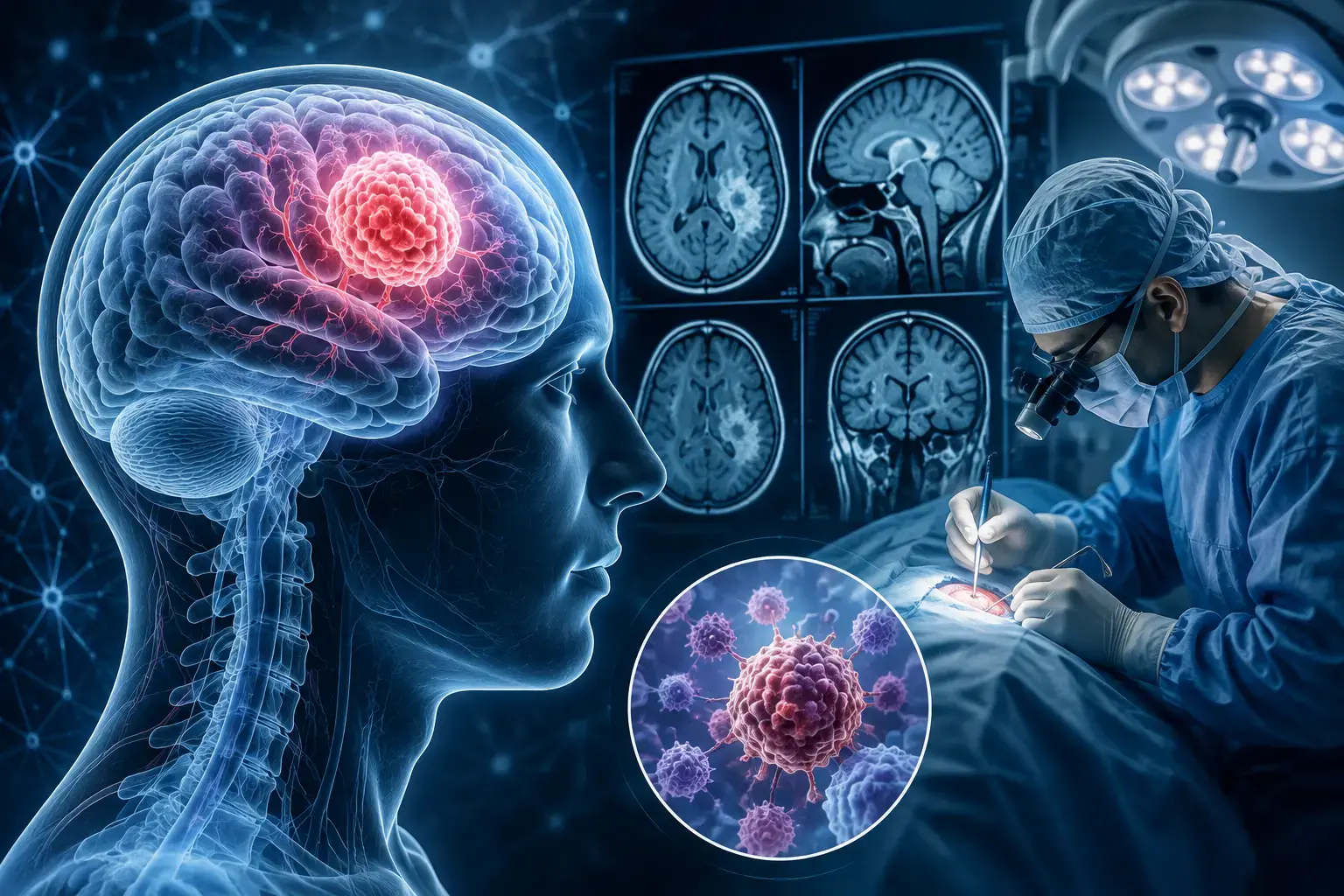
Brain tumors may be benign or malignant and originate directly in the brain. Symptoms can include progressively worsening headaches, visual disturbances, paralysis, and impaired consciousness. In addition to imaging, tissue samples are used to confirm the diagnosis and provide important information about the tumor's characteristics. This analysis is often performed using state-of-the-art technologies, including intraoperatively during surgery.
Treatment: Depending on the type, location, and growth of the tumor, brain tumors are largely or completely removed surgically. This is combined with additional treatment methods such as radiation therapy or drug therapy as appropriate.
Meningiomas
Meningiomas account for approximately one third of all primary intracranial tumors, making them the most common type. The incidence (annual rate of new cases) increases with age, and patients over 65 are particularly affected. These tumors develop in the meninges surrounding the brain, grow slowly, and often go undetected for a long time. Symptoms typically arise only as a result of the tumor's size or location.
Treatment: ranges from regular monitoring to microsurgical removal or radiation therapy.
Brain Metastases
These are deposits of cancer from other parts of the body that have spread to the brain.
Treatment: it is tailored to each individual patient and always carried out in close collaboration among various specialist disciplines. Depending on the findings, it may include surgery, radiation therapy, and drug treatment.
Neurofibromatosis
Neurofibromatosis is a rare, hereditary condition in which typically benign tumors can develop on nerves or in the brain, along with characteristic pigmented skin markings known as café-au-lait spots.
Treatment: aims to relieve symptoms, preserve neurological function, and closely monitor tumor growth.
Pediatric Neurosurgery
Pediatric neurosurgery specializes in the treatment of tumors, congenital malformations, and injuries of the brain, spinal cord, and nerves in children. Common congenital conditions include hydrocephalus ("water on the brain," caused by disrupted cerebrospinal fluid flow), spina bifida (open spine), and craniosynostosis (premature fusion of the skull sutures).
Treatment: Treatment plans are developed through an interdisciplinary approach and tailored specifically to the needs of children.