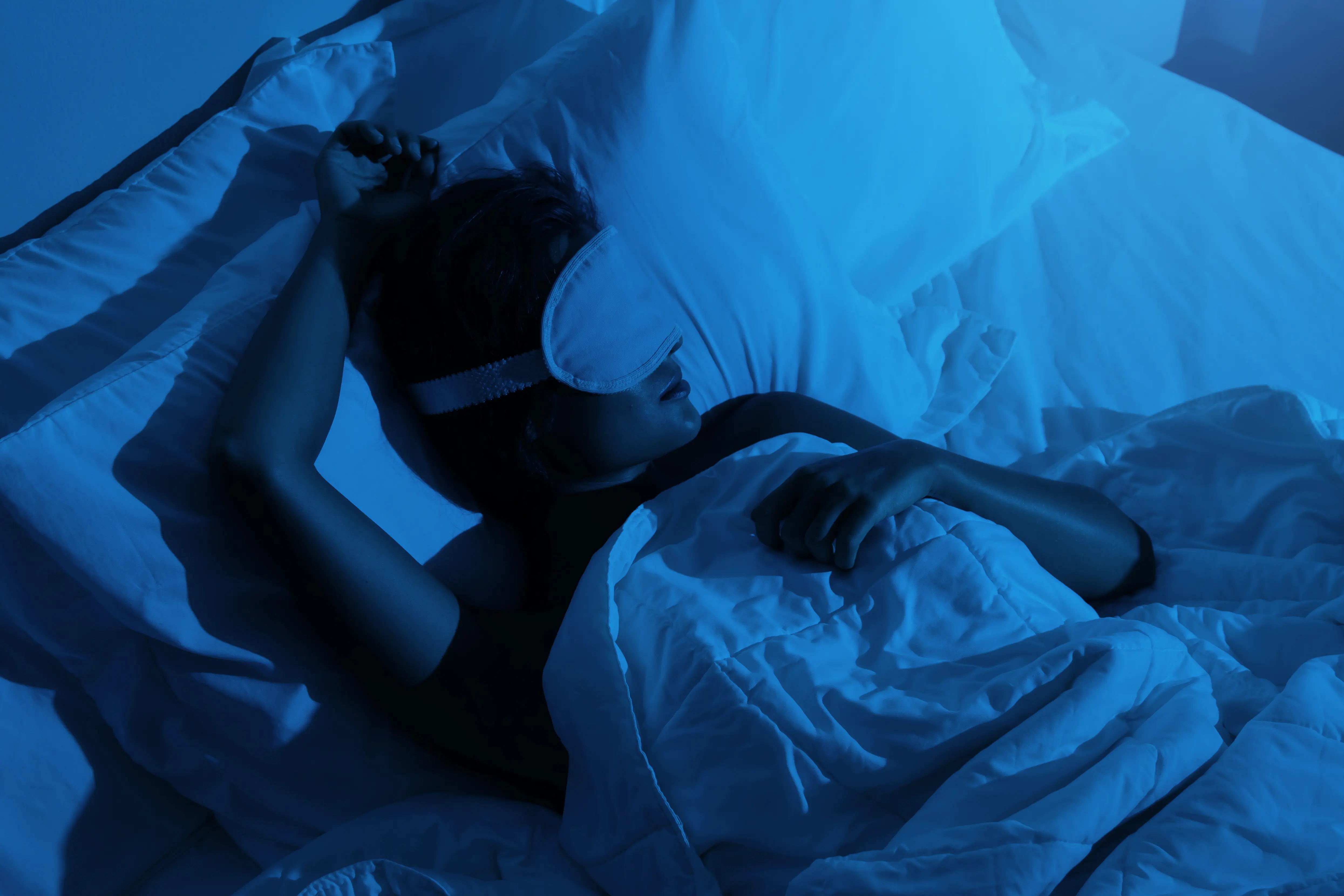
© Freepik
April 15, 2025
Margit Hiebl
- Health
Why do we dream?
About six years of our lives are spent dreaming. But what purpose do these nightly special performances of the brain serve, and how do they arise?
Share article:
© Freepik
April 15, 2025
Margit Hiebl
About six years of our lives are spent dreaming. But what purpose do these nightly special performances of the brain serve, and how do they arise?

 Find a Doctor
Search the network for suitable specialists and contact them directly
Paul McCartney is said to have allegedly written "Yesterday" in his sleep. The same happened to Keith Richards with "Satisfaction." Chemist Friedrich August Kekulé von Stradonitz envisioned the structure of the benzene molecule during a nap. It's nice when such dreams come true. But there are also reports of less pleasant dream events: For instance, Abraham Lincoln is said to have dreamed of falling victim to an assassination three days before it actually happened. People believed for a long time that dreams were encrypted messages. All religions are rife with such prophetic dreams and nocturnal messages. The founding father of psychoanalysis, Sigmund Freud, thought dreams stem from the subconscious and bring intimate thoughts and emotions to the surface.
Today, dream research suggests that they are a random mix of experienced things and the processing of feelings. Another theory posits that dreams prepare us for real situations, by—simply put—allowing us to safely play out dangerous situations or problems and practice reactions to them. On a neuroscientific level, EEG and MRI have shown that there are parallels between wakefulness and dreaming, as certain movements in dreams activate the same motor centers in the brain. The areas responsible for visual perception and emotional experience are also active.
Scientists assume that the limbic system—which is significant for emotions—plays a central role, while the prefrontal cortex responsible for logical thinking is less active. This often results in scenarios that seem surreal. One thing is certain: dreams are a product of our brain. It processes and stores information taken in during the day. Sometimes this influences the dream, sometimes not. Stress and worries, however, often lead to particularly intense and/or negative dreams. Conversely, dreams also influence our emotional balance: pleasant dreams promote relaxation and creativity, whereas nightmares can lead to stress and anxiety.
Dreaming is particularly intense during the so-called REM phase (Rapid Eye Movement), during which the eyes move rapidly back and forth. Science assumes that one probably dreams all night long—each dream lasting between 5 and 20 minutes—but not all are equally well remembered. And in the non-REM phases, dreams are not as vivid and lively. In the meantime, researchers at Kyoto University have managed to generate film-like sequences from the minds of sleepers using brain scans—which often matched the subsequently described dream experiences.
As far as they remembered them. Because that is not a given. Even though we have several dreams every night, we remember only a few or often none at all—especially if we wake from deep sleep. But one can learn to remember dreams: by going through the dream in your mind and writing it down immediately after waking up. It’s best to keep paper and pen beside the bed. Not only the images are noted, but also smells, sounds, or emerging feelings before they disappear. The more regularly you do this, the better and more detailed the dreams are remembered. A dream diary helps to work with dreams, such as with nightmares or lucid dreams.
Nightmares are the dark side of the night. The term comes from the elves of Germanic mythology, the "Alben," who were said to be responsible for dreams. According to legend, they perched on the chest of the sleeper – hence the so-called "Albdruck." In fact, such a supposed elf perches at night in five to ten percent of all healthy adults – three times more frequently in women than in men. Nightmares often occur during the REM phase. The advantage: Only the eye movements are active, while all other muscles are relaxed – this prevents the dreamer from actually becoming active and possibly injuring themselves in a fight with the monster.
The disadvantage: This inability to act can directly manifest in the dream by not being able to move or escape. Among the most common nightmare themes is the fall into the bottomless, followed by exams and fear of failure, being naked in public, persecution, injury, and the death of loved ones – fear is thus the predominant theme.
Studies have shown that a genetic factor plays a role. Also, that more "sensitive" people are more susceptible. Additionally, the current level of stress seems to have an influence. Nightmares can also occur as a side effect of medications or in connection with a mental illness, such as depression or post-traumatic stress disorder. Even external factors like alcohol, late or spicy meals contribute to the nighttime horror film because they cause restlessness in sleep and increase the likelihood of waking up at night and remembering what was just dreamed. Because nightmares usually appear in a later sleep phase.
Since nightmares always come with fear, it helps to face them. As part of a so-called IRT, the Imagery Rehearsal Therapy, the course of a nightmare can be changed in retrospect. Here, a dream diary comes into play again, in which you immediately write down what happened when you wake up from the nightmare – and in great detail, even if it can be distressing.
In the next step, you think up a new solution by, for example, talking to the nasty dream figure, imagining helpers, or illuminating the eerie parking garage. All of this is written down again exactly. This creates a new, positive version that must then be practiced: It is best to go through the scenario daily and keep adding to it – for about two weeks, then the new version should have established itself in the dream situation and the cycle of fear, which underlies many nightmares, should be broken.
But also, so-called lucid dreaming can help reprogram nightmares. If dreams still keep recurring or if nightmares are based on a post-traumatic stress disorder, professional help from behavioral therapists, psychiatrists, or a sleep lab should be sought. More information about contact points is offered by the German Society for Sleep Research and Sleep Medicine.
Anything that relaxes and promotes good sleep can help. And if you believe in it, you could hang a dreamcatcher. The web-like objects adorned with feathers, originating from indigenous cultures, are said to catch bad dreams, which are later neutralized by the morning sun. Good dreams, however, are allowed to pass through the net.
Lucid dreams or clear dreams are the bright side of dreams. The special aspect: You know during the dream that you are dreaming. The possibility of this was long doubted in science and regarded more as short waking episodes. It wasn't until the late 1980s that two researchers independently proved through studies in sleep labs that lucid dreams exist. The difference from a regular dream: The logic center in the front part of the brain is activated. In Germany, about half of the population has experienced a lucid dream at least once, one-fifth more than once a month, and about one percent several times a week. Lucid dreams also mainly occur in the REM phase.
Good lucid dreamers are considered to be people who have experience with meditation, good dream recall, and an openness to new experiences. Measurements have also shown that they have a larger prefrontal cortex. Lucid dreaming needs to be learned and practiced. It doesn't work immediately, for everyone, or always. It might be better to do it under trustworthy therapeutic guidance rather than with the help of an online course.
Among the most well-known techniques to promote lucid dreaming is the reality check, which shows whether you are dreaming or not – it is meant to train the mind to repeat the check while dreaming. Or: keeping a dream diary – this way, patterns and recurring dream signs can be recognized. In sleep labs, the "Wake up-back-to-Bed" method is often practiced: Subjects are woken after about six hours when the REM phase usually occurs. They should then remember a dream and write down all indications that it was a dream. In the following sleep, similar symbols may be identified and consciously dreamed.
Another method is the so-called MILD technique (Mnemonic Induction of Lucid Dreams). For this, one uses a sentence like “Next time I'm dreaming, I will know that I'm dreaming” as an induction when (re)falling asleep – according to studies in an Australian sleep laboratory, after two weeks, this is the most promising method.
Apart from a spirit of experimentation, lucid dreaming is interesting for professional athletes. They use this technique specifically to mentally train sequences of movements. A study from the University of Heidelberg in 2018 found that athletes who practiced complex movement patterns in lucid dreams showed partly significant performance improvements in real training. But not only athletes benefit. Musicians can also practice difficult passages in a dream, Artists develop new creative ideas, project managers play through presentations.
This is not far-fetched, because it is assumed that the REM phase plays a role for our memory and ability to learn. For others, it may be the way out of the nightmare loop. The special appeal of lucid dreams is to do something that is not possible in real life. Anyone who now thinks about influencing dreams, like in the movie Inception, where Leonardo DiCaprio hacks into others' dream worlds via dream-sharing: So far, one only has access to one's own.

Implant or your own tissue, now or after treatment — or perhaps no reconstruction at all? Plastic surgeon Dr. Juliane Bodo explains what role radiation plays, what risks to expect, and why no one should make this decision under pressure.
Christine Bürg & Marianne Waldenfels

An interview with
Dr. med. Juliane Bodo

A single hydrogel injection into the knee may relieve osteoarthritis pain for years. Orthopedist Dr. Ivo Breitenbacher has treated around 200 patients with it and explains who the procedure is right for and where its limitations lie
Christine Bürg & Marianne Waldenfels

An interview with
Dr. med. Ivo Breitenbacher
Almost everyone has seen them, and most people ignore them: tiny specks and strands drifting across their vision. Usually, they’re harmless. But sometimes they signal an emergency where quick action can save your sight. Ophthalmologist Dr. Mirka Höltzermann explains which warning signs to watch for.
Christine Bürg & Marianne Waldenfels

An interview with
Dr. Mirka R. Höltzermann

Can fasting relieve hot flashes and other menopausal symptoms? Dr. Verena Buchinger-Kähler shares remarkable cases from her clinical practice and explains how women respond to prolonged fasting – and what science has revealed so far.
Christine Bürg & Marianne Waldenfels

An interview with
Dr. med. Verena Buchinger