© Magnific
August 26, 2026
Marianne Waldenfels
On TikTok and Instagram, rice water is celebrated as a natural hair growth treatment. The tradition behind it is centuries old — but what does the research actually say? Studies reveal a crucial difference between DIY rice water and rice bran extract.
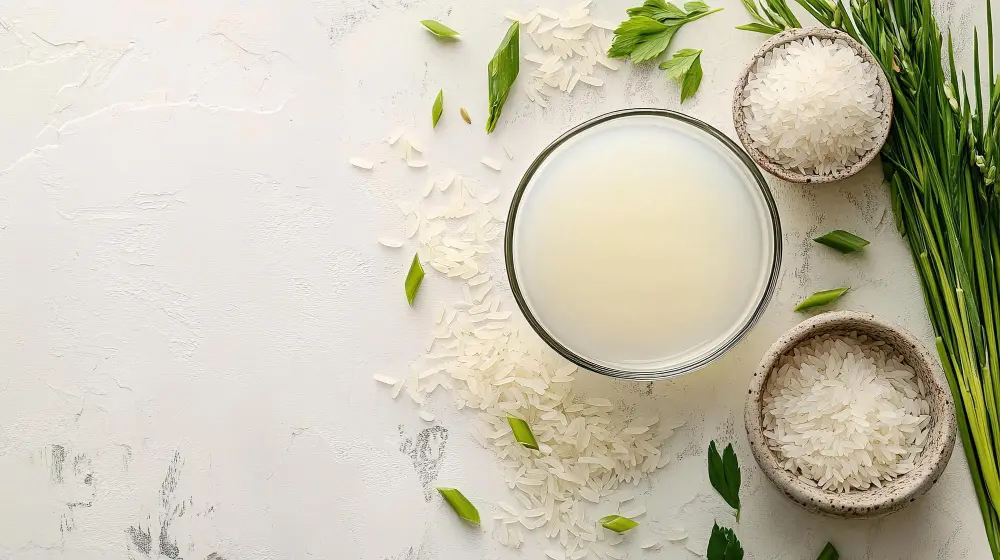
Soak a little rice, pour the milky water over your hair, and supposedly it becomes stronger, shinier, and even grows faster. On TikTok and Instagram, rice water is celebrated as a natural hair treatment, and some users even recommend it for hair loss. But behind this viral beauty hack lies a surprisingly ancient tradition.
Rice water has been used in hair care for centuries across several Asian cultures. The Yao women of southern China are perhaps the most well-known example — their traditionally very long hair is often linked to the use of fermented rice water. That said, this tradition alone is not proof that rice water actually promotes hair growth.
Most of the effects users report today relate primarily to the appearance and texture of hair: more shine, less frizz, easier combing. These changes can make hair look healthier, but they don't necessarily mean it grows faster or that hair loss is being addressed. And this is exactly where the research gets interesting.
To get a clear picture, it's essential to distinguish between two things that are regularly conflated in this trend: homemade rice water made in the kitchen and standardized rice bran extract used in cosmetic formulations.
DIY rice water: To date, there are no randomized, placebo-controlled human studies demonstrating that homemade rice water increases hair growth or treats hair loss. An often-cited early Japanese study on fermented rice water (Yu-Su-Ru) found a smoother hair surface and reduced surface friction, but did not demonstrate any effects on tensile strength, elasticity, or growth rate.
Since the study was only a conference abstract without detailed methodology, it's impossible to cleanly separate control group effects from possible hydration influences. Current reviews and dermatological assessments therefore consistently reach the same conclusion: cosmetic improvements are possible, but claims about hair growth are not evidence-based.
Rice bran extract: The picture looks quite different when it comes to standardized rice by-products used in hair care products. A evaluating ten studies concludes that topically applied rice bran extract is biologically plausible: it can promote signaling pathways that support the anagen phase — the actual growth phase of the hair follicle — reduce inflammatory markers, and inhibit 5α-reductase, a key enzyme involved in androgenetic hair loss.
In animal models, rice bran extract showed a hair growth-promoting effect, and in one mouse model it was even comparable to three percent minoxidil. In humans, the data is less extensive but still encouraging: a 16-week, placebo-controlled study with 50 Korean alopecia patients reported significantly higher hair density and greater hair diameter with a product containing rice bran extract.
Crucially, these positive findings refer to extracted, standardized ingredients — such as linoleic acid, γ-oryzanol, or certain mineral extracts — in specially formulated products. Not to the cloudy rice water from the kitchen pot.
Rice water consists mainly of water and starch; the nutrients from the rice grain that are actually of interest transfer into the water only to a very limited extent during cooking or soaking. Rice bran extracts, on the other hand, contain concentrated bioactive substances at doses that are simply never achieved in kitchen water.
On top of that, cosmetic products are specifically optimized for pH level, stability, penetration, and targeted delivery of active ingredients to the follicle — factors that cannot be controlled in a homemade rinse.
Rice water is not suitable for every hair type. The high starch content can cause what's known as protein overload: hair feels straw-like, loses elasticity, and breaks more easily. Those most at risk are people with curly, fine, or low-porosity hair, which already struggles to absorb and retain moisture.
The scalp also deserves consideration. The microbial load of self-fermented rice water is difficult to control, and for sensitive or inflammation-prone scalps, this raises the risk of irritation.
For those who still want to give rice water a try: apply it only every few weeks and always rinse it out thoroughly afterward. Expectations should remain realistic — at best, rice water can add a boost of shine. It is not a hair growth treatment.
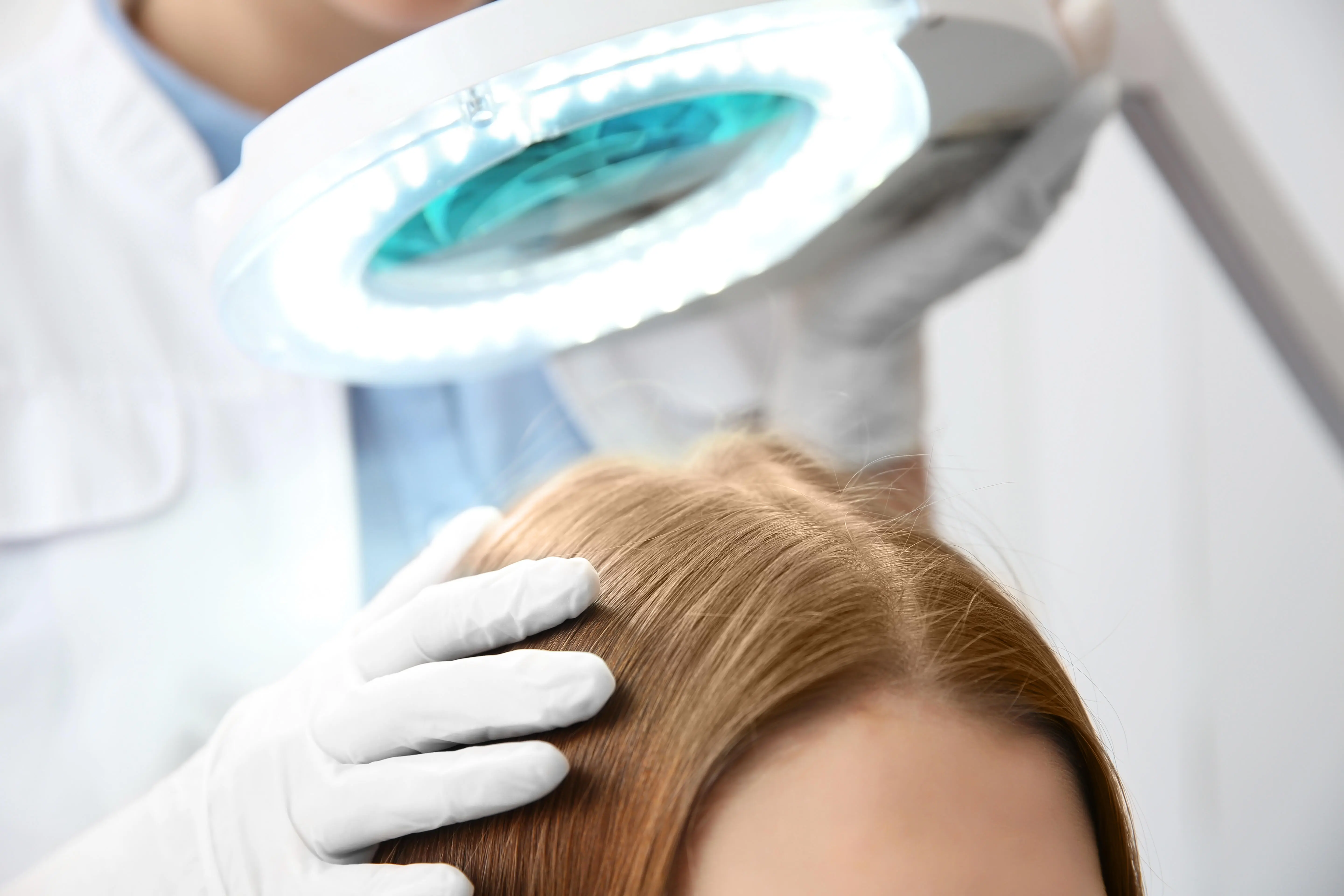
If you're experiencing genuine hair loss or noticeable thinning, you should see a dermatologist rather than experimenting with more DIY trends from the internet. Hair loss can have many causes — androgenetic, inflammatory, or nutrition-related — and each can be treated differently and in a targeted way.
On TikTok, rice water is touted as a secret weapon for silky, fast-growing hair. Science, however, doesn't back this up: there is no clinical evidence that homemade rice water from the kitchen boosts hair growth or stops hair loss. Only concentrated extract from rice bran, processed into dermatologically tested products, shows in initial studies that there is a real effect behind the hype.

Back pain can persist even when the original cause no longer fully explains the symptoms. Physiotherapist Nils Stützer explains what stress and anxiety have to do with it – and how to break the pain cycle
Christine Bürg

An interview with
Nils Stützer

Isotretinoin for acne — and a slimmer nose? The medication is being hyped on social media as a beauty hack. Dermatologist Dr. Elisabeth Zott explains what isotretinoin can actually change about the nose.
Christine Bürg & Marianne Waldenfels

With
Dr. med. Elisabeth Zott-Schuhmachers