© Moe Magners
August 28, 2026
Marianne Waldenfels
Retatrutide is generating buzz with extraordinary study results: nearly one in two participants lost at least 30 percent of their body weight at the highest dose. Here is what is known about its effects and risks.
Ozempic and Wegovy have made semaglutide a household name, and Mounjaro has done the same for tirzepatide. Now the next generation of weight-loss injections is already making waves: retatrutide. The active ingredient has not yet been approved, but a large Phase 3 trial has produced weight-loss results that are exceptional for a medication.
Particularly noteworthy: at the highest dose, nearly one in two study participants lost at least 30 percent of their starting weight. Rather than targeting just one or two hormone receptors, retatrutide acts on three simultaneously. But how meaningful are these spectacular figures, and what risks are known? And could retatrutide actually prove more effective than Wegovy and Mounjaro?
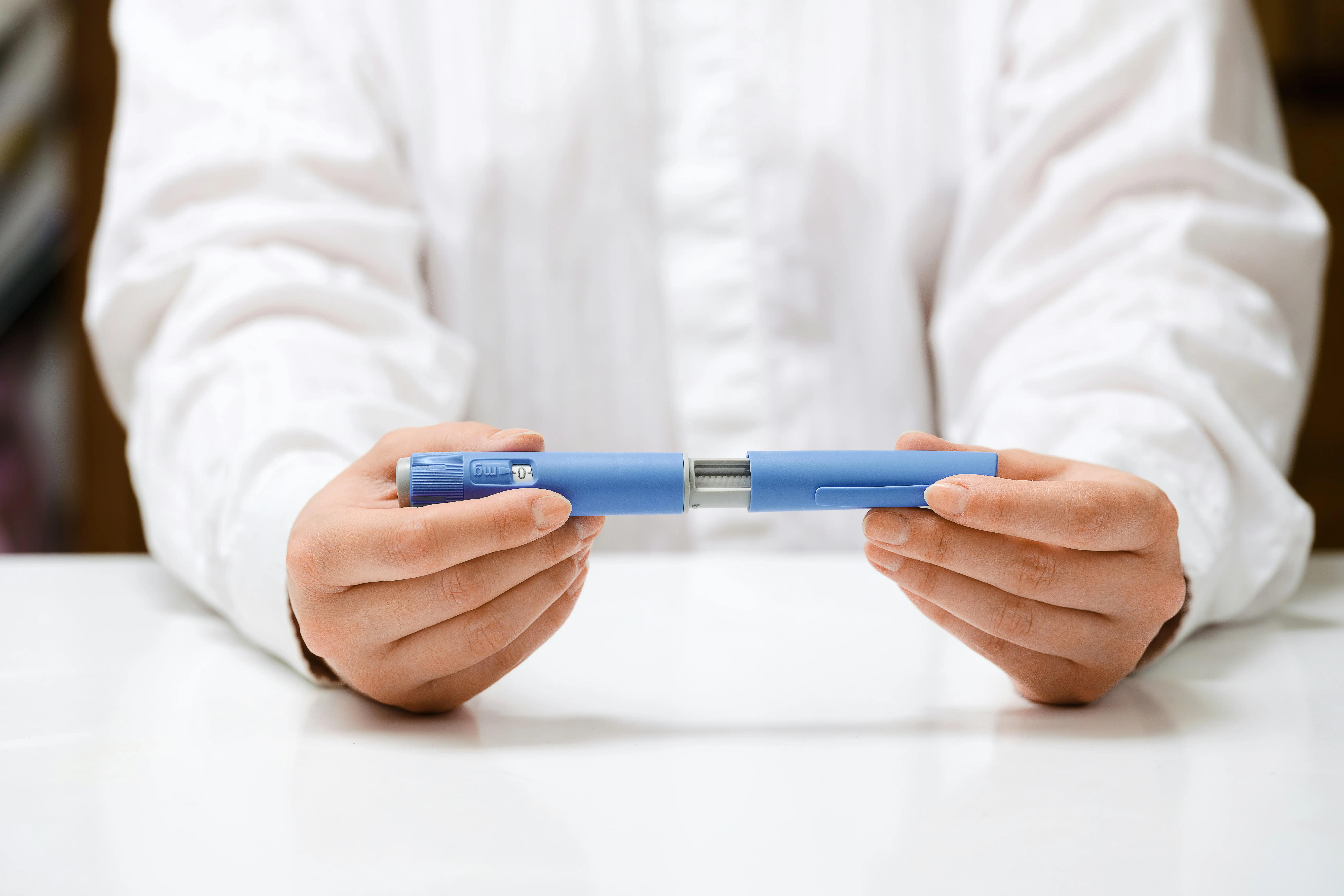
Retatrutide is injected under the skin once a week and works as a so-called triple agonist: while semaglutide acts on the GLP-1 receptor and tirzepatide combines GLP-1 and GIP, retatrutide additionally activates the glucagon receptor.
GLP-1 and GIP influence, among other things, appetite, satiety, and glucose metabolism. The additional glucagon signaling pathway may also play a role in energy expenditure. The extent to which each of the three mechanisms contributes to weight loss has not yet been fully established.
Retatrutide attracted particular attention following the results of the Phase 3 trial TRIUMPH-1, which were presented in June 2026 at the Scientific Sessions of the American Diabetes Association. The study examined 2,339 adults with obesity or overweight and at least one weight-related comorbidity. People with diabetes were not included in this trial.
After 80 weeks, participants receiving the highest retatrutide dose of 12 milligrams had lost an average of 28.3 percent of their starting weight — approximately 32 kilograms. Weight loss was smaller at lower doses, and under placebo it amounted to only a few percent.
Particularly striking: 45.3 percent of participants at the highest dose lost at least 30 percent of their starting weight. This means nearly one in two achieved a level of weight loss that has rarely been seen with anti-obesity medications to date.

The strong effect persisted even after two years. In people with a BMI of at least 35, average weight loss at the highest dose was around 30 percent. However, only a portion of the original study group took part in this extension, so the results cannot be readily generalized to all people with obesity.
A smaller Phase 2 study published in 2023 in the New England Journal of Medicine had already demonstrated unusually strong weight loss with retatrutide. Also notable was the fact that the weight curve had not yet reached a clear plateau after 48 weeks.
The Phase 3 results are therefore broadly consistent with those earlier findings. However, the complete data from TRIUMPH-1 have not yet been published as a peer-reviewed journal article; what is currently available are communications from the manufacturer Eli Lilly and the presentation at the ADA conference.
The figures naturally invite comparison. Even so, the data available so far do not allow a reliable conclusion that retatrutide is fundamentally superior to semaglutide or tirzepatide. The active ingredients were studied in different trials with different participant groups, treatment durations, and study designs.
A reliable direct comparison would require so-called head-to-head studies, in which the medications are tested against each other under identical conditions.
Worth noting as well: TRIUMPH-1 enrolled people without diabetes. In TRIUMPH-2, conducted in adults with type 2 diabetes, weight loss was considerably lower than in people without diabetes. At the highest dose, participants lost an average of 20.8 percent of their starting weight after 80 weeks.
As with other medications targeting the GLP-1 system, the most common side effects involved the gastrointestinal tract. Nausea was especially frequent: at the highest dose, 42.4 percent of participants reported it. Diarrhea, constipation, and vomiting were also common. These complaints occurred mainly during dose escalation and were predominantly mild to moderate in severity. Approximately one in nine participants discontinued treatment because of side effects.
Also notable were dysesthesias — unusual skin sensations such as tingling or burning: at 12 milligrams, these affected 12.5 percent of participants, while they were rare under placebo. Urinary tract infections, injection-site reactions, and low blood pressure were also observed more frequently.
The Phase 2 study also noted a dose-dependent increase in heart rate. Pancreatitis and diseases of the gallbladder and bile ducts are safety concerns that are closely monitored with incretin-based therapies. In the Phase 2 obesity study, one case of pancreatitis occurred; people with a history of pancreatitis were excluded from TRIUMPH-1. Assessing rare risks therefore requires larger patient numbers and longer observation periods.
Another question concerns muscle mass. No published body composition data from TRIUMPH-1 are yet available. However, a Phase 2 sub-study published in 2025 in people with type 2 diabetes showed that lean mass was lost alongside fat mass, at a magnitude the authors considered similar to that seen with other weight-loss methods.
As impressive as the figures may sound, retatrutide is currently an investigational drug. It has not yet received formal approval and cannot be prescribed by physicians for weight loss in the way that Wegovy or Mounjaro can.
This is especially important because the active ingredient is already being sold online, even before any possible approval. With such products, there is no guarantee that retatrutide is actually present, or that the dosage, purity, or manufacturing meets pharmaceutical standards. Self-administering unapproved retatrutide products is therefore strongly discouraged.
Retatrutide is currently one of the most promising compounds in obesity research. Even so, it is too early to call it a "miracle injection": the complete Phase 3 data still need to be published in a peer-reviewed setting, and long-term safety, weight trajectory after discontinuation, and real-world effectiveness all require further study. Only after a possible approval and broader use will it become clear whether this triple-action compound truly lives up to the high expectations surrounding it.

When pregnancy doesn’t happen, the uncertainty can take a heavy toll on couples. Reproductive medicine specialist Dr. Bernd Lesoine explains why age matters, when to seek medical advice, and which treatments offer the best chances of success.
Christine Bürg & Marianne Waldenfels

Back pain can persist even when the original cause no longer fully explains the symptoms. Physiotherapist Nils Stützer explains what stress and anxiety have to do with it – and how to break the pain cycle
Christine Bürg

An interview with
Nils Stützer