© Magnific
September 21, 2026
Christine Bürg & Marianne Waldenfels
Hearing loss is linked to a higher risk of dementia – yet declining hearing often goes untreated for far too long. ENT specialist Prof. Dr. Christopher Bohr explains how hearing affects the brain and why it can be important to act early.

An interview with
Prof. Dr. Christopher Bohr
Hearing loss and dementia are more closely linked than most people realize. A large study found that in older people at increased risk of dementia, cognitive decline progressed 48 percent more slowly over three years when they were fitted with hearing aids. ENT specialist Prof. Dr. Christopher Bohr explains how to recognize declining hearing, what happens inside the ear, and why you shouldn't wait too long before getting a hearing aid.
Professor Bohr, when older people can no longer follow conversations properly or respond in ways that seem out of place, relatives often think of dementia. Could hearing loss be behind it?
Yes, that's possible. The two things shouldn't be confused, though. Dementia is a condition in which, among other things, short-term memory declines.
With hearing loss, something different is going on: people with mild or moderate hearing loss can often still follow conversations, but they have to concentrate much harder to do so. That extra effort can cause them to tire more quickly, eventually tune out, and then perhaps respond in ways that seem inappropriate.
Think of it like trying to read a book in very poor light: you can still read, but you tire much more quickly. It's quite a fitting comparison.
Do relatives often notice the early signs of hearing loss before the person affected does?
Yes. Hearing loss carries far more stigma than the loss of eyesight and is more closely associated with aging. That's why many people try to compensate for it for as long as they possibly can.
You can always turn the TV or radio up a bit louder, and suddenly it's fine again. But that's precisely what the people around you notice. People also begin speaking more loudly themselves or ask others to speak up. In this way, they can disguise the hearing loss for quite a long time.
Why does hearing deteriorate so much more in some people as they age than in others?
This is largely down to genetics. We age differently as human beings – and our hearing ages differently too.
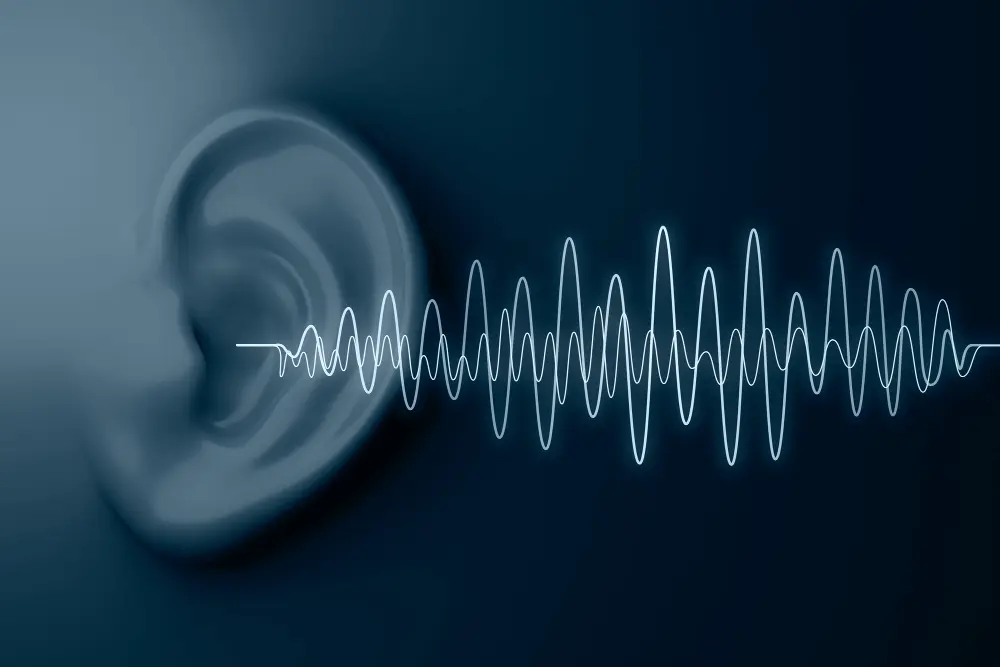
The sensory cells in the cochlea play a central role here. As we age, these cells function less effectively and their numbers decline at the same time. As a result, hearing not only becomes quieter but also less precise.
We use the term discrimination to describe the ability to perceive fine differences between individual sounds. When fewer and fewer sensory cells are available, discrimination loss occurs. It then becomes harder, for example, to tell apart an E from an I – at a certain point, such sounds become nearly indistinguishable.
This is the most significant issue with age-related hearing loss: a hearing aid can compensate very well for the need for sounds to be louder. However, it cannot compensate for discrimination loss.
At some point, even with an optimally fitted hearing aid, a person may only understand around 70 percent of what the other person is saying. At that stage, a cochlear implant needs to be considered. With one, discrimination, speech understanding, and loudness perception can all improve again.
Is that also why conversations in a noisy restaurant suddenly become so much harder to follow?
Yes. Hearing against a background of noise becomes increasingly difficult because the brain can no longer as easily separate the background noise from what it actually wants to hear. Everything increasingly blurs into an indistinguishable wash of sound.
What happens when hearing loss goes untreated for a long time?
People become increasingly isolated. Hearing is a very important source of input for the brain. It's a bit like doing a Sudoku every day: everything you hear, absorb, and process from your surroundings – and everything you think about as a result – is mental exercise for the brain.
If you can no longer hear well, a large part of that exercise disappears. The brain is significantly less stimulated and has far less work to do. This loss of activity leads to brain shrinkage. As a result, cognitive performance can also decline more rapidly.
Is that the connection between hearing loss and dementia?
Yes. It is scientifically proven.
And conversely, can the risk of dementia be reduced by wearing a hearing aid?
There is a great deal of scientific research on this, and the connection is very well established.
And yet many people initially struggle with a hearing aid. What is the reason for that?
A hearing aid amplifies all the frequencies in our environment that we are able to hear – and that includes unpleasant sounds. After all, hearing loss doesn't only mean the disappearance of pleasant frequencies; the unpleasant ones go too.
When this has been going on for a long time and those sounds suddenly return through a hearing aid, you also hear again the things that bother you: clattering dishes, machinery, or noise from the neighborhood.
For many people, this is irritating at first. That's why you have to give yourself time to get used to a hearing aid. The world becomes louder again, and loud can also be disruptive. That's partly why the acceptance of hearing aids is sometimes a little lower than it might be.
I always encourage people to consciously focus on the pleasant things they can hear again: birdsong, the church clock in the village that they perhaps haven't heard from their bed in the morning for years, or the babbling of the stream near their home. Seek out the everyday sounds you enjoy and experience them again with fresh attention. That way, the benefits of a hearing aid become far more tangible.
Does it become harder to get used to a hearing aid the older you are?
The younger we are, the more flexible we are and the more readily we adapt to change. As the saying goes: you can't repot an old plant so easily. It is simply harder for us to adjust to new situations as we get older. Our flexibility and tolerance don't tend to grow with age – if anything, they diminish.
Does that suggest it's better not to wait too long before getting a hearing aid?
Absolutely.
When should you have your hearing tested?
There's no hard-and-fast rule about when to go for a hearing test. Anyone who already has an ear condition should certainly have an ear examination including a hearing test once a year.
Those who are healthy and have no problems with their ears should go for a hearing test at the latest when the people around them start saying: "I think you're not hearing as well as you used to." When that happens, it's important not to brush it off.

Hearing loss is linked to a higher risk of dementia – yet declining hearing often goes untreated for far too long. ENT specialist Prof. Dr. Christopher Bohr explains how hearing affects the brain and why it can be important to act early.
Christine Bürg & Marianne Waldenfels

An interview with
Prof. Dr. Christopher Bohr