© Anna Tarazevich
Chances of healing for white skin cancer and its precursors are generally very good for treatment and curable nowadays.
January 19, 2026
Christine Bürg
The specialty of dermatologists Dr. Annette Zimpfer-Keese and Dr. Christine Zimpfer is dermato-oncology. In the interview, the two doctors explain what types of skin cancer exist, how to detect them early, how to protect oneself from them, and how to treat them.


With
Dr. med. Anette Zimpfer-Keese and Dr. med. Christine Zimpfer

 Find a Doctor
Search the network for suitable specialists and contact them directly
Skin cancer is one of the most common types of cancer in Germany, with 450,000 new cases annually – and the trend is rising. In the interview, dermatology oncology specialists Dr. Christine Zimpfer and Dr. Annette Zimpfer-Keese explain why early detection is lifesaving, which new therapies offer hope, and how you can protect yourself effectively. The sisters jointly run an owner-managed MVZ in Mannheim and have decades of experience in skin cancer treatment.
About 450,000 people are diagnosed with some form of skin cancer in Germany each year. And the trend is rising. Why is that? People today are actually much more aware of the dangers.
Dr. Annette Zimpfer-Keese:The increasing number of skin cancer cases in Germany is due to various causes. The demographic change with increasing life expectancy, environmental influences, genetic predisposition, lack of sun protection during sun exposure among young people, visits to tanning salons, and other causes are factors that promote skin cancer.
Skin cancer often develops without symptoms and is therefore noticed late. Even though people are better informed about the dangers of skin cancer today, there are still many who do not sufficiently protect themselves from UV radiation in private or professional settings.
Black skin cancer is extremely aggressive and dangerous. Why?
Dr. Annette Zimpfer-Keese:Black skin cancer is the most aggressive form among skin tumors and develops from the pigment-producing cells (known as melanocytes) of the skin. Black skin cancer is also known as malignant melanoma.
Black skin cancer can spread unnoticed without symptoms through the blood and lymphatic system in the body. The spread of melanoma in the bodyis also referred to as metastasis and can invade and destroy other body tissues and organs.
In the advanced stage of melanoma, the metastases can spread through the skin, lymphatic system, lungs, brain, liver, and bones. Therefore, early detection of black skin cancer is important so that it cannot spread in the body and the chances of healing are provided by early detection.
What are the chances of cure or treatment options for melanoma? Are there any new developments?
Dr. Annette Zimpfer-Keese:The art is to discover and remove an early form of melanoma that has not yet spread—then you can really help people. This means that through early detection and complete surgical removal, there is definitely a chance of cure.
The treatment options are selected by us according to the stages of the disease. With the development of new immunotherapies and targeted therapies, the chances of cure have significantly improved in advanced stages of malignant melanoma. There are now also tumor-specific vaccination strategies that are promising.
Certified cooperating skin tumor centers support us on an outpatient basis in providing high-quality care to our patients to offer them the latest therapy options.
Fortunately, there is now a better prognosis and chance of cure for metastatic patients due to new treatment options.
White skin cancer (basal cell carcinoma and squamous cell carcinoma) is much more widespread than black skin cancer. Older people are more affected than younger ones. Why?
Dr. Christine Zimpfer:White skin cancer is a collective term for various types of skin cancer. There are two types of white skin cancer, basal cell carcinoma, and squamous cell carcinoma.
Both types are less aggressive than melanoma and very rarely form metastases, known as secondary tumors. However, basal cell carcinoma is the most common form.
The causes and risk factors include intensive UV radiation exposure over the course of life due to the sun or artificial radiation exposure from past visits to tanning salons.
Furthermore, the predisposition of a person's skin type also plays a role, so the fair skin type with blue eyes, freckles, and reddish hair is much more susceptible to sunburns and later skin damage.
Many sunburns in youth and, of course, not to forget leisure activities in certain sports. Tennis, golf, sailing... or certain outdoor professions and frequent vacations in high mountains or by the sea in the past.
Older people are more affected because they have spent more time in the sun throughout their lives, were exposed to intensive UV radiation, and have experienced some sunburns in their lifetime.
In addition, the skin's ability to regenerate decreases with age, which increases the risk of skin cancer. It should also not be forgotten that, according to the current state of medicine, we are living longer now than before.
It is therefore important to also pay attention to adequate sun protection in advanced age and to have regular skin cancer screenings.
To summarize, one can say: It all depends on lifelong intense UV exposure and sunbathing. Because: The skin does not forget.
How can you recognize white skin cancer and what are the chances of recovery?
Dr. Christine Zimpfer: We naturally see many cases of skin cancer in our specialized practice in dermato-oncology, as well as their precursors, but most frequently the precursors of white skin cancer.
You have to explain to the patients that this is a chronic sun damage to the skin, which has developed over decades of UV light exposure to the skin, but does not yet constitute a tumor.
The most common type of skin cancer is basal cell carcinoma, also known as basal cell carcinoma, followed by the second most common skin cancer tumor: squamous cell carcinoma, also referred to as squamous cell carcinoma.
White skin cancer can be diverse and preferably occurs in the facial area, often showing a pearl-like - skin-colored nodule or a nodule that bleeds and ulcerates or even a non-healing small wound lesion with crusting. If a skin lesion does not heal, please see a doctor.
In the precursors of white skin cancer, actinic keratoses, reddish/brownish scaly skin lesions, rather like eczema, form preferably in the facial area. It feels rough and scaly.
White skin cancer and its precursors are usually very treatable today. Optimal early diagnosis should take place, i.e. recognize quickly and early. Both tumors can be cured today through complete surgical remediation.
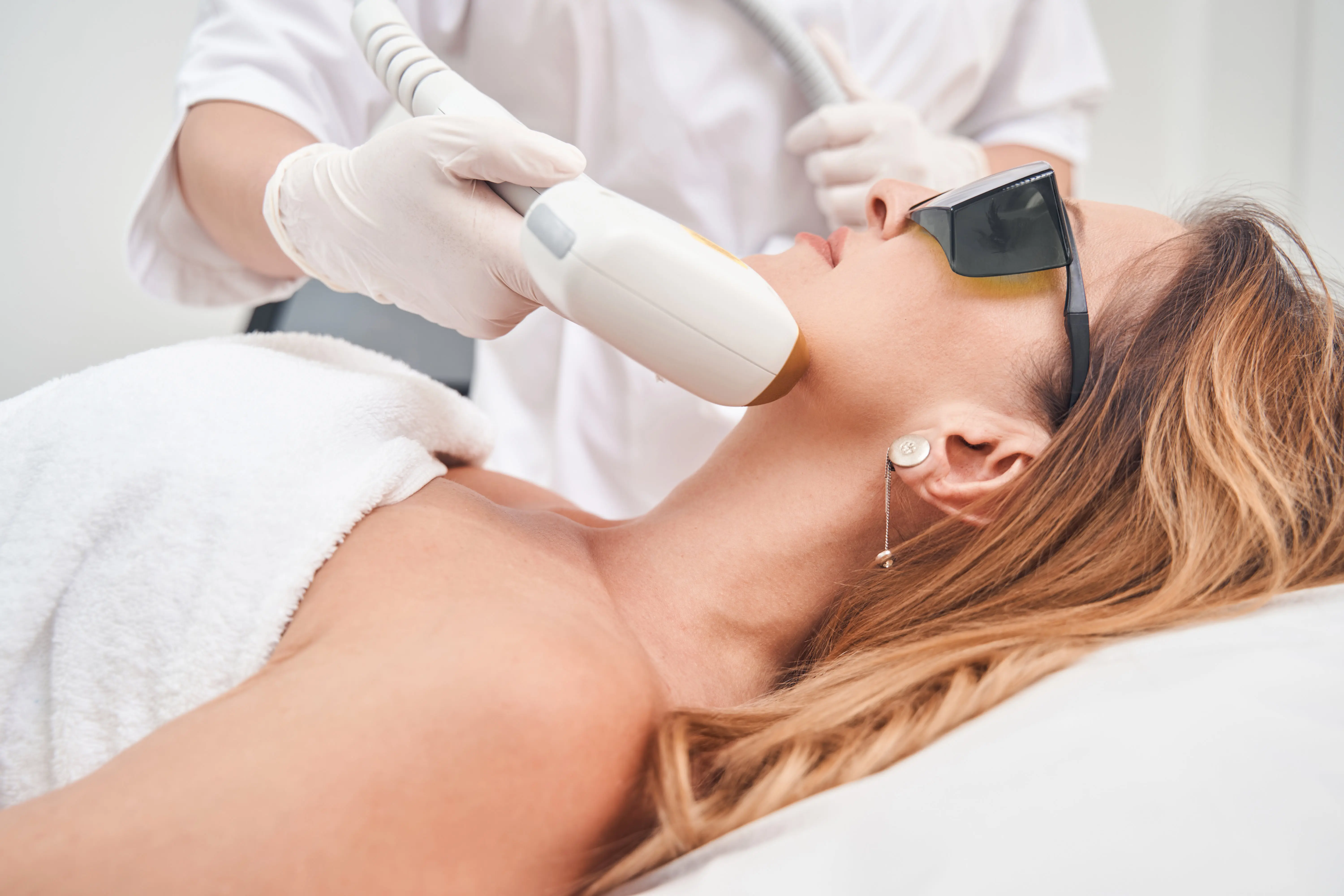
In recent years, PDT treatment has become established for the precursors, actinic keratoses, which is a non-invasive local light therapy without surgery. In our practice, this novel method is carried out with great success.
Why is skin cancer screening so important? What should it ideally look like—keyword AI diagnostics?
Dr. Annette Zimpfer-Keese:Regular skin cancer screenings help detect suspicious skin lesions early, remove them, and thus ensure that no skin cancer can develop.
Ideally, skin cancer screening should consist of a thorough dermatoscopic examination of the skin by a dermatologist with combined digital dermatoscopic imaging diagnostics.
This digital diagnostic is regularly used as a supportive measure in our skin cancer screening to detect and analyze abnormalities or the smallest changes early, even in follow-up examinations. This allows us to identify suspicious lesions more quickly.
In our skin center focused on dermato-oncology, over 63,000 digital dermatoscopic examinations have been conducted in the past 10 years.
In addition to this diagnostic, other modern AI technologies now support us in practice to avoid unnecessary surgeries and to improve diagnosis accuracy and optimize patient care in the future.
How often should you get a skin screening? Who covers the costs?
Dr. Christine Zimpfer:A skin cancer screening should generally be done once a year, especially if there is an increased risk of skin cancer. For example, with family history, due to many sunburns in childhood and adolescence, past tanning bed visits. Or jobs that are primarily performed outdoors, with a fair skin type, or many moles on the body.
From the age of 35, all statutory insured persons are entitled to a skin cancer screening every 2 years. Even for younger patients, the skin cancer screening can be covered by the insurance, but that varies depending on the insurance. We recommend clarifying this personally with your insurance company.
A skin cancer screening should generally be done once a year.
However, there are also patient cases where it is medically advisable to have a skin check even every six months, but this must be covered by the patient as a self-payer service.The costs can vary depending on the federal state.
The sun is important to us - on one hand, because it’s good for our psyche. But above all for the production of vitamin D (bone health, protection against colon cancer). A dilemma. What do you advise here?
Dr. Christine Zimpfer:It is indeed a dilemma because the sun can have both positive and negative effects. We need sunlight for part of our health, namely for vitamin D production.
Vitamin D is an essential vitamin and is widely talked about nowadays.We need vitamin D to maintain our bones, it plays a role in the immune system and also regulates important metabolic programs in our body.
In adulthood, a deficiency can lead to osteoporosis. We also know today that a deficiency can cause colon cancer. The body alone is not able to produce vitamin D; only a small part is absorbed through our diet.
What is still not widely known among the population is that, for example, it is sufficient to take a sunbath with your face, hands, and both forearms for about 15-20 minutes three times a week to stimulate vitamin D production.
Otherwise, in our holistic practice, we recommend conducting a vitamin D blood analysis for risk patients or skin cancer patients, which we offer in our practice, to determine the vitamin D level and then specifically balance deficiencies individually.
My advice would be to enjoy the sun in moderation to take advantage of the benefits of vitamin D while also protecting against excessive sun exposure. Avoiding sunburns in the future to minimize the risk of skin damage and skin cancer.
Vitamin B3 (Niacin) is said to protect the skin from UV damage. Does it make sense to supplement it?
Dr. Christine Zimpfer:Vitamin B3, also known as niacin, is a water-soluble vitamin and belongs to the group of B-complex vitamins.
It plays an important role in protecting against the effects of UV radiation. Vitamin B3 stimulates repair mechanisms in the skin and helps protect against DNA damage of skin cells and thus also against cell degeneration.
This vitamin shows a positive effect in patients with an increased risk of non-melanocytic skin cancer diseases, for example in white skin cancer and its precursors, it reduces the risk of their development by about 30-35%.
However, it is always advisable for me to conduct laboratory diagnostics before taking supplements to determine the current and individual status and to find out what is actually missing. Then you can supplement specifically.
Good sources of niacin in foods include meat (especially beef liver, naturally from organic beef), fish, brown rice, onions, nuts, and seeds.
In summary: Niacin is an important nutrient for skin health, it can reduce the risk of developing skin cancer, strengthen the skin barrier, and is also known for maintaining healthy mucous membranes.
However, the protective effect of vitamin B3 is relatively short and should therefore be taken at least 24-48 hours before sun exposure. Recommendation: Administer 500mg niacin as a supplement 2-3 times daily.
Sunscreen is indispensable for prevention. On the other hand, UV filters harm the environment. What is being done in terms of sustainability?
Dr. Annette Zimpfer-Keese:Of course, sunlight is not only harmful. The sun also supports our health. However, part of sunlight is ultraviolet light, which promotes the development of skin cancer and accelerates skin aging.
My recommendation is always to avoid sunburn and skin redness, as well as direct sun; one should rather stay in the shade, wear UV textiles or other sun-appropriate clothing.
With direct sun exposure, you need sunscreens that are applied to the skin. I emphasize sustainable and environmentally friendly sun protection for the whole family.
It is little known that sunscreens endanger the underwater world and corals. Some manufacturers now offer so-called reef-safe sunscreens that are free of ingredients like octinoxate and oxybenzone.
Sustainable sunscreen products should ideally also be free of nanotechnology, microplastics, and parabens.
Opened sunscreens should be used up soon and not used after a year, as they can become carcinogenic through the formation of octocrylene into benzophenone.
Also known as blue light or high-energy visible light, screen light, or blue light, it plays a little-known but important role in the development of skin damage. This radiation is less dangerous than UV radiation but is also an enemy of our skin health.
This blue light radiation penetrates deep into our skin unnoticed every day and leads to oxidative stress through the development of free radicals. Especially the face with the chin and cheek area is affected by the radiation of blue light from computers and phones.
For daily facial care, I would recommend using a product with a new, environmentally friendly filter for blue light or with a broadband protection.
Skin cancer is one of the most common cancers in Germany, but the chances of recovery are excellent with early detection. The most important findings from the expert interview:
The skin does not forget – UV damage accumulates over a lifetime. Therefore, consistent sun protection at any age is indispensable. Just 15-20 minutes of sun exposure three times a week is sufficient for vitamin D production.
Regular check-ups are crucial – An annual skin screening, ideally with digital dermoscopy and AI support, enables early detection of suspicious skin changes. From the age of 35, statutory health insurance covers the costs every two years.
New therapies offer hope – Modern immunotherapies and targeted treatments have significantly improved the prognosis even for advanced melanoma. Early-diagnosed skin cancer is almost always curable.
Holistic protection – In addition to traditional sun protection, vitamin B3 (Niacin) can reduce the risk of skin cancer by 30-35%. Blue light protection is also becoming increasingly important. Look for sustainable, reef-safe sunscreens.
Your most important protection: Pay attention to skin changes, avoid sunburns, and keep preventive appointments. If you have non-healing wounds or noticeable skin changes, you should see a dermatologist immediately.
For normal risk, an annual skin screening is recommended. For increased risk (family history, many moles, fair skin type), the examination should be done every six months. From the age of 35, statutory health insurance covers the costs every two years.
Melanoma (black skin cancer) originates from pigment-producing cells and is highly aggressive with risk of metastasis. Non-melanoma skin cancer (basal cell carcinoma, squamous cell carcinoma) is more common but less aggressive and rarely metastasizes. Both are highly treatable when detected early.
Pay attention to the ABCDE rule: Aasymmetry, irregular Bborder, different Ccolor, Ddiameter over 5mm, EChange. Non-healing wounds, bleeding nodules, or new, changing moles should be clarified by a doctor.
For vitamin D production, 15-20 minutes of sunlight on the face, hands, and forearms three times a week are sufficient. You should only stay in the sun longer with sun protection. Sunburns should be avoided at all costs.
Yes, studies show that niacin (Vitamin B3) can reduce the risk of non-melanoma skin cancer by 30-35%. It is recommended to take 500mg 2-3 times daily, starting 24-48 hours before sun exposure. Laboratory diagnostics before supplementation are advisable.
For everyday use, at least SPF 30 is recommended, and for intense sun exposure, SPF 50+. It is important to use a sufficient amount (2mg per cm² of skin) and to reapply every 2 hours and after swimming.
No. Tanning beds significantly increase the risk of skin cancer and are a major risk factor for the rising number of skin cancer cases, especially among young people. The WHO classifies UV radiation from tanning beds as carcinogenic.
Reef-safe sunscreens are free from ingredients like octinoxate and oxybenzone, which harm coral reefs and marine ecosystems. Ideally, they should also be free from microplastics, nanoparticles, and parabens.
Yes, particularly aggressive melanoma can affect young people too. Sunburns during childhood and adolescence drastically increase the risk. Tanning bed visits before the age of 35 increase melanoma risk by 75%.
Blue light (from screens) is less dangerous than UV radiation but causes oxidative stress and can lead to premature skin aging. The face and cheek area are particularly affected. Special day care with blue light filters is recommended.

Specialty in Dermato-Oncology: Dr. Annette Zimpfer-Keese (left) and Dr. Christine Zimpfer
When cancer runs in the family, questions about one's own risk often follow. In the first installment of her column, geneticist Dr. Laura von der Heyden explains how inherited genetic variants influence the risk of breast, colorectal, and prostate cancer — and how this knowledge can change preventive care.
Dr. med. Laura von der Heyden

By

Implant or your own tissue, now or after treatment — or perhaps no reconstruction at all? Plastic surgeon Dr. Juliane Bodo explains what role radiation plays, what risks to expect, and why no one should make this decision under pressure.
Christine Bürg & Marianne Waldenfels

An interview with
Dr. med. Juliane Bodo

A single hydrogel injection into the knee may relieve osteoarthritis pain for years. Orthopedist Dr. Ivo Breitenbacher has treated around 200 patients with it and explains who the procedure is right for and where its limitations lie
Christine Bürg & Marianne Waldenfels

An interview with
Dr. med. Ivo Breitenbacher