© Magnific
July 3, 2026
Christine Bürg & Marianne Waldenfels
Carrot juice and coconut water are being hailed on TikTok as the secret to a natural summer glow. Beta-carotene can indeed alter skin tone — though not in the way many social media videos suggest. A dermatologist explains what the science actually shows.

With
Dr. med. Timm Golüke
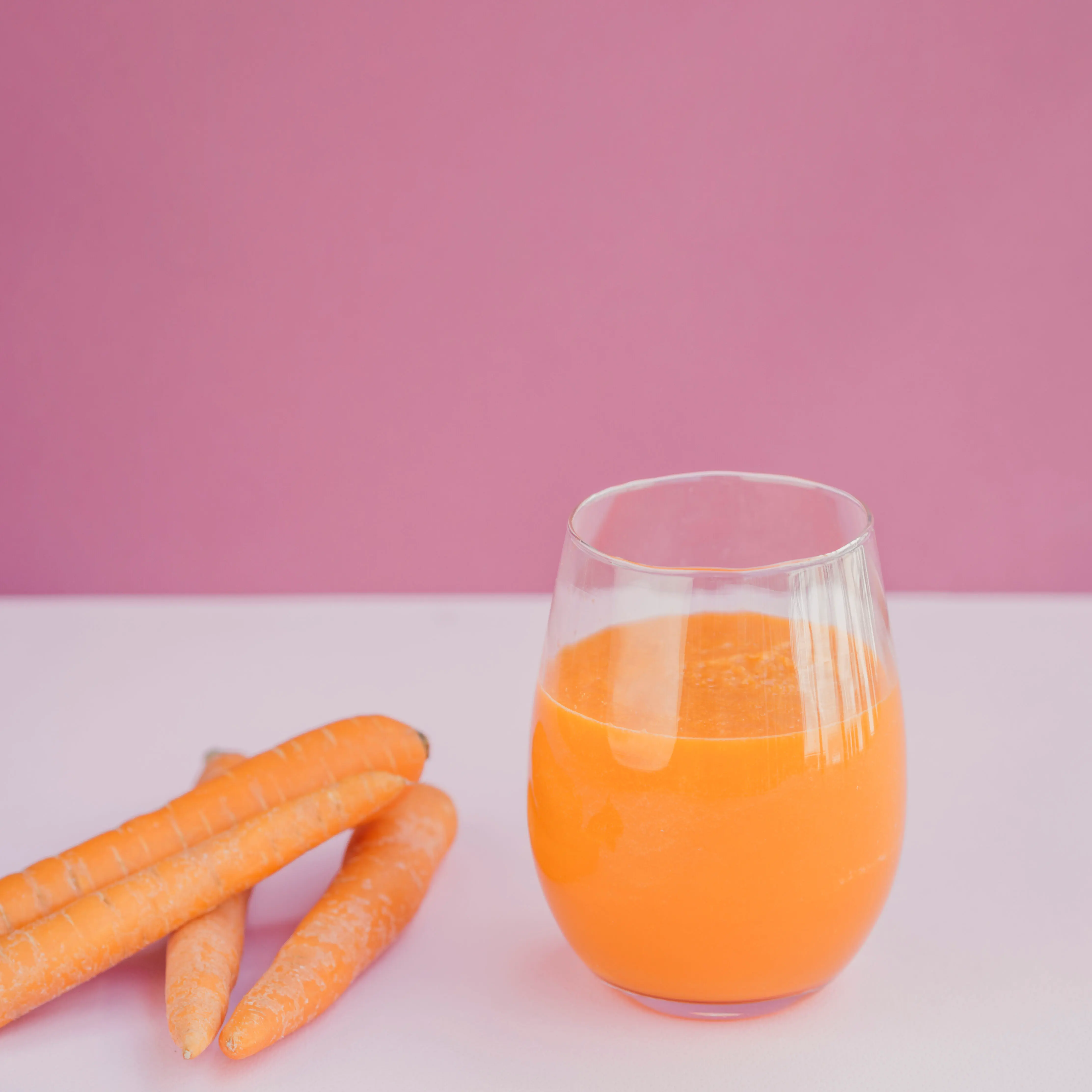
Under the hashtag "Carrot Glow Refresher," millions of social media users are mixing up their own summer drink: carrot juice and coconut water, often combined with turmeric, ginger or citrus fruits.
The promise: a naturally tanned, radiant complexion — no makeup required. The trend, popularized by creator @ckhutchings under the name "Bare Face Summer," has since become one of the most talked-about beauty trends of the summer. But how much truth is there really behind that promise?
Behind the hype lies a scientifically well-documented phenomenon. As dermatologist Dr. Timm Golüke explained in a conversation with Premium Medical Circle, regular consumption of beta-carotene from carrots can indeed cause a slight change in skin tone.
Anyone hoping for a quick cosmetic effect, however, will be disappointed. Even if the skin tone does change, it only does so after an extended period of regular intake. Furthermore, no real tan is produced — only a yellowish-golden to slightly orange discoloration of the outermost layer of skin.
Carrot juice is primarily a source of beta-carotene, a precursor to vitamin A. It also contains vitamin C, potassium, and various other plant compounds that are generally beneficial as part of a balanced diet. Beta-carotene is the compound responsible for the characteristic yellowish-orange skin discoloration that can occur at high intake levels.
Coconut water is primarily used in this trend for its hydrating properties. It supplies fluids and electrolytes, particularly potassium, making it a light, low-calorie drink — but not a skincare product in the true sense. The visible "glow" that social media talks about therefore does not come from the coconut water — if anything, it comes from the carrot juice.
The "glow" effect behind this trend is rooted in a real, well-researched phenomenon: carotenemia (also called carotinemia). When beta-carotene intake is high — around 30 milligrams or more per day over several weeks — the yellow-orange pigment builds up in the outermost layer of skin. The areas most visibly affected are the palms, the soles of the feet, and the skin around the nose.

Carrot juice and coconut water are being hailed on TikTok as the secret to a natural summer glow. Beta-carotene can indeed alter skin tone — though not in the way many social media videos suggest. A dermatologist explains what the science actually shows.
Christine Bürg & Marianne Waldenfels

With
Dr. med. Timm Golüke

Artificial intelligence is taking over routine tasks and freeing up time for what truly matters: the relationship between doctor and patient. Prof. Dr. Dominik Pförringer explains why empathy is becoming the most important factor for success in medicine in the age of AI.
Prof. Dominik Pförringer

By
Univ.-Prof. Dr. med. Dominik Pförringer

Prevention should not only detect diseases early — it should stop them from developing in the first place. Dr. Jan Hennigs explains which examinations are genuinely worthwhile today, why cardiovascular risks are so often underestimated, and how artificial intelligence is set to transform the field of prevention.
Christine Bürg & Marianne Waldenfels

An interview with
Dr. med. Jan K. Hennigs
Dr. Timm Golüke puts the timeframe in perspective: "If anything, you won't see a change after a few days — it takes several weeks. To achieve this, larger amounts of beta-carotene must be consumed regularly — significantly more than most people eat or drink in their daily lives. That said, exactly when the skin takes on a slightly more golden hue varies greatly from person to person."
Important: This discoloration has nothing to do with a vitamin A overdose. The body only converts beta-carotene into vitamin A as needed, making an overdose from carrots or carrot juice practically impossible. Carotenemia is considered completely harmless and reversible: once beta-carotene intake is reduced, the discoloration disappears on its own.
The effect is not a tan in the true sense, but a pigment deposit. The skin takes on a yellowish to orange hue rather than a tanned appearance, and this discoloration is no substitute for sun protection. Plant pigments such as beta-carotene do offer some degree of UV protection, but they cannot replace effective sun protection measures — for that, shade, clothing, and sunscreen with an adequate sun protection factor remain essential.
Dr. Timm Golücke considers the term "glow" to be misleading when used to describe this effect: "The skin does not automatically become healthier or more radiant as a result. What many people perceive as a glow is actually a slight gold-orange tint in the outermost layer of skin caused by the beta-carotene. This can make the complexion look somewhat warmer and fresher, but it has little to do with any improvement in skin quality."
That beta-carotene can influence skin tone has been scientifically established for years. Several studies show that a carotenoid-rich diet can give the skin a slightly more yellowish appearance — an effect that many people actually perceive as healthier or more attractive.
Studies also show that carotenoids can offer the skin some degree of protection against UV-induced oxidative stress. However, the effects are considerably smaller than many social media videos would suggest. This is no quick beauty hack — at best, it's a moderate effect that only emerges after an extended period of regular intake.
Smokers in particular should exercise caution. For high-dose beta-carotene supplements, large studies have shown an increased risk of lung cancer in smokers. This is an important distinction from carrot juice consumed as a food: the risk warning applies primarily to dietary supplements and high supplemental doses, not to normal amounts obtained through food.
People with a sensitive gastrointestinal tract may react to larger amounts of carrot juice with bloating, a feeling of fullness, or loose stools. This is not caused by any particular harmful substance, but is typically a result of the quantity and composition of the drink. If a large amount of fruit juice or very sweet ingredients are also included, the drink can quickly become harder to digest.
The potassium content of coconut water is particularly worth noting. Anyone with impaired kidney function or who has been advised to follow a low-potassium diet should discuss this with their healthcare provider. Because coconut water is widely regarded as a healthy lifestyle drink, this concern is easy to overlook. For certain patient groups, however, "natural" does not automatically mean "safe."
This effect is also seen in children. A yellowish "carrot skin" can occasionally develop in toddlers who eat carrot purée or carrot-rich foods very frequently. This is generally harmless, but it does show that even with natural foods, a highly one-sided diet is far from ideal.
The "Carrot Glow Refresher" is no miracle cure, but it's no myth either. The key to the effect people notice is the beta-carotene in carrot juice, which can genuinely produce a subtle shift in skin tone with regular consumption.
However, anyone hoping for a sun-kissed tan will be disappointed: the result is not a tan at all, but at best a yellowish-golden tint to the skin. Sun protection therefore remains essential.
Dr. Golüke takes a generally relaxed view of the trend: a glass of carrot juice is certainly not a problem and can even be beneficial as part of a balanced diet. It only becomes an issue when people start to think they can simply drink their way to beautiful skin, says the dermatologist.
Healthy skin depends on many factors – diet does play a role, but so do sun protection, sleep, skincare, and individual predisposition.
A visible effect does not usually occur after drinking individual glasses, but rather with regular consumption over several weeks. In studies, color changes were observed primarily with higher beta-carotene intake.
Generally not. Carotenemia is considered harmless and typically resolves on its own once beta-carotene intake is reduced.
No. Neither the discoloration nor the antioxidants it contains provide adequate UV protection. Sunscreen is still necessary.
No. Beta-carotene is only converted into vitamin A as the body needs it. The discoloration does not automatically indicate vitamin A toxicity.