© Galina Nelyubova
June 10, 2024
Dominik Pförringer
Our columnist Dr. Dominik Pförringer on the pros and cons of miraculous healing processes and the questionable nature of some digital health promises.

By
Univ.-Prof. Dr. med. Dominik Pförringer
There are those aphorisms that persistently hold, are hardly questioned, and upon precise analysis, often say astonishingly little. "Beauty is in the eye of the beholder," "The end justifies the means," or "He who heals is right" – now a priori and prima vista, all this may apply and at first glance not be grossly wrong.
As so often, however, it is reduced to such an extent that the essential and thus the critical aspects and moments fall by the wayside. As a conventional doctor, it's absolutely fine with me when someone with migraine with globules celebrates their victory – as long as they don't think a femoral neck fracture can also be rapidly and effortlessly remedied with it or that a massively cardiopulmonarily insufficient asthmatic can be turned into an Olympian.
Amazing how quickly some self-healing videos disappeared after undergoing a professional medical review.
There are panaceas, miracle powders, and countless recommendations for practically every ailment. Online platforms have opened the doors wide for mostly self-proclaimed gurus and alchemists, as well as anyone who believes they have found the wisdom of healing arts in particularly large measure.
Astonishing how quickly some self-healing videos have disappeared after being subjected to professional medical scrutiny. I certainly do not hold the view that only one path leads to the goal or that any innovation is wrong.
On the contrary. Every new approach is interesting, but whether it is also innovative and, above all, goal-oriented in the interest of the patient is something that needs to be questioned. In an increasingly opaque jungle of information, offers, and self-proclaimed institutes, the role of the medical mentor is growing.
We are increasingly becoming mountain guides on narrow ridges and are therefore very busy keeping our own knowledge up to date. But what about healing? First and foremost, it is important to see the person, to listen to them, and to learn to recognize where the real source of their complaints lies.
I do not at all hold the view that there is always only one way to reach a goal.
With medicine it's a tricky thing, and most of the time it's different than it seems. Because what torments people and what really lies behind it may be the same thing but can also differ significantly. Professional stress radiates into the back, bumpy communication with beloved in-laws affects the stomach, worries about the overall political situation lead to sleep disturbances, and the global growth of incompetence causes digestive problems.
And now conventional medicine is supposed to heal all of this, and it often fails. Then the esoteric healer comes, the Homeopath and the dowser come into play. This is more than understandable, completely logical, and often even justified.
When no one wants to listen, and interpersonal communication consists of emojis and swipes, posts and likes, then it's finally time for someone to listen again. In healthcare, this listening is not adequately emphasized. The often-cited cardiologist Professor Bernard Lown already described in his 2004 book "The Lost Art of Healing" this relevance of listening and genuine communication.
In healthcare, it is exactly this listening that is too little highlighted.
I speak continually and almost always positively about the increasing digitization of medicine. First and foremost, I aim to use this intelligently to free ourselves from screens and keyboards, to connect people with people again.
We doctors must shape digitalization in the interest of patients and for the benefit of medicine and not be harnessed by it. The technology has to perform the redundant, stupid tasks, enslave itself to the user rather than the other way around. Many health apps are beautifully designed, but only a part of them seem useful to me and only a very small fraction is medically relevant.
We doctors must shape digitization in the interest of patients and for the good of medicine.
Can the chronically ill, the lonely, the suffering really be helped by their screen and an application on it? When more and more couples sit silently opposite each other in restaurants staring at their phones and children, equipped with oversized headphones, are 'raised' by tablets instead of playing outdoors or being creative, I see a pathological situation arising from increasing digitalization in private life, the consequences of which we cannot yet really gauge.
It was about healing, yes, that has a lot to do with it. I consider an intact and well-maintained circle of friends to be the natural alternative to antibiotics. Friends who speak clear words and can endure them are a welcome corrective, can be a valve, and form the guardrail for the mind, sometimes even the body.
I consider a strong and well-maintained circle of friends to be the natural alternative to antibiotics.
In the past, a mobile phone was a luxury; today, it is a real conversation. How beautiful are those minutes, somewhere on a mountain, in a hut, when there is no reception, when people engage again with people afar, not those in the network. That in itself is healing.
Being right and getting right are two different things. As a doctor, it is clear to me that the one who is beneficial to the patient has the right to have a say. And not just in the short term, not once, but in the long run. Logically, the art is to recognize this early, ideally in advance, like in a marriage, signing a contract, or starting a sea journey.
There they come into play again, intuition, gut feeling, experience, and common sense. Then it becomes 'Who heals in the long run, is right.'
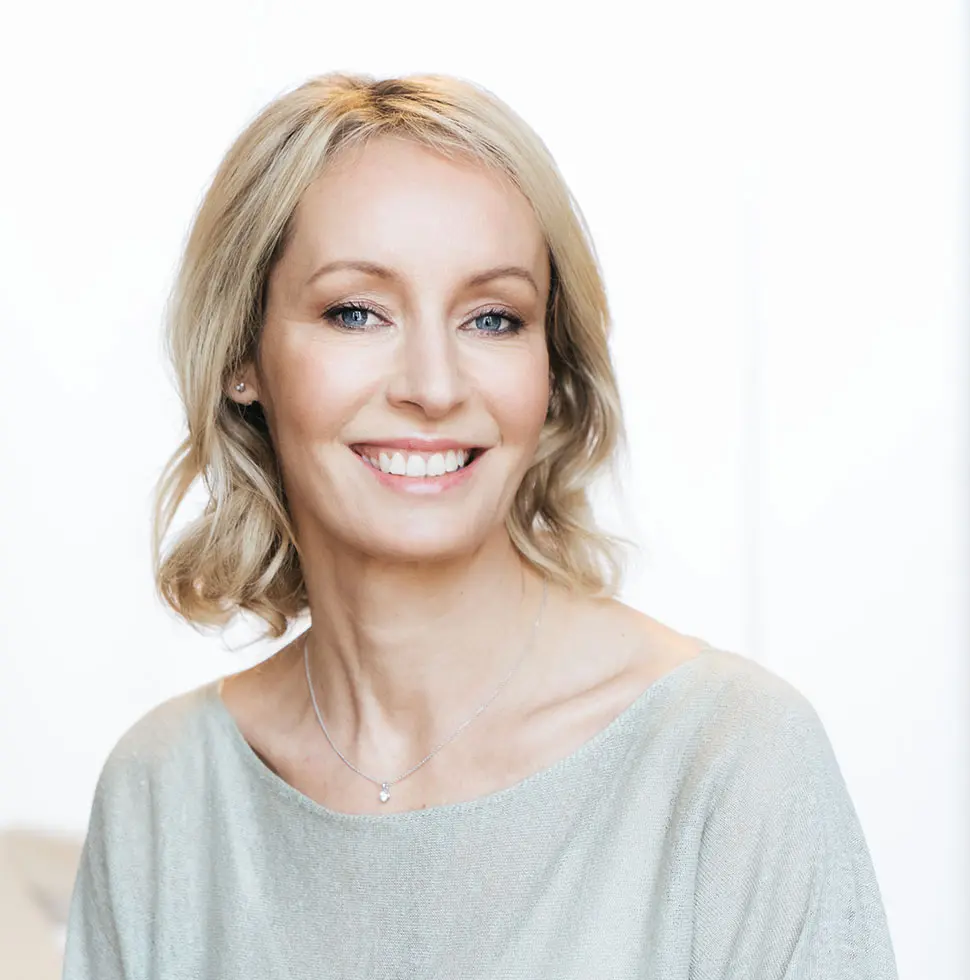
PD Dr. Dominik Pförringer is a specialist in orthopedics and trauma surgery in Munich and founder of the Digital Health Summit, which takes place every November in Munich.