© Ketut Subiyanto
September 28, 2026
Lena Sämann
Getting out of bed feels harder, and our energy dips throughout the day. As the days grow shorter, our sleep-wake rhythm can shift too. Here’s how light affects our internal clock – and why the morning hours matter most.
The days are getting shorter, mornings stay dark for longer, and dusk falls again by mid-afternoon. For many people, this is also when getting out of bed starts to feel like a real effort. You get going more slowly, feel tired during the day, or find yourself wishing you could stay in bed for just one more hour.
The fact that we feel more tired in autumn has a biological basis. Even though we spend much of our day in artificially lit indoor spaces, our bodies continue to respond to the natural cycle of light and dark. A study of more than 500 people found that our sleep actually shifts with the seasons – and one key factor was how much daylight the participants received, and when.
Our bodies run on a roughly 24-hour cycle. This circadian rhythm influences, among other things, when we feel alert and focused and when tiredness sets in.
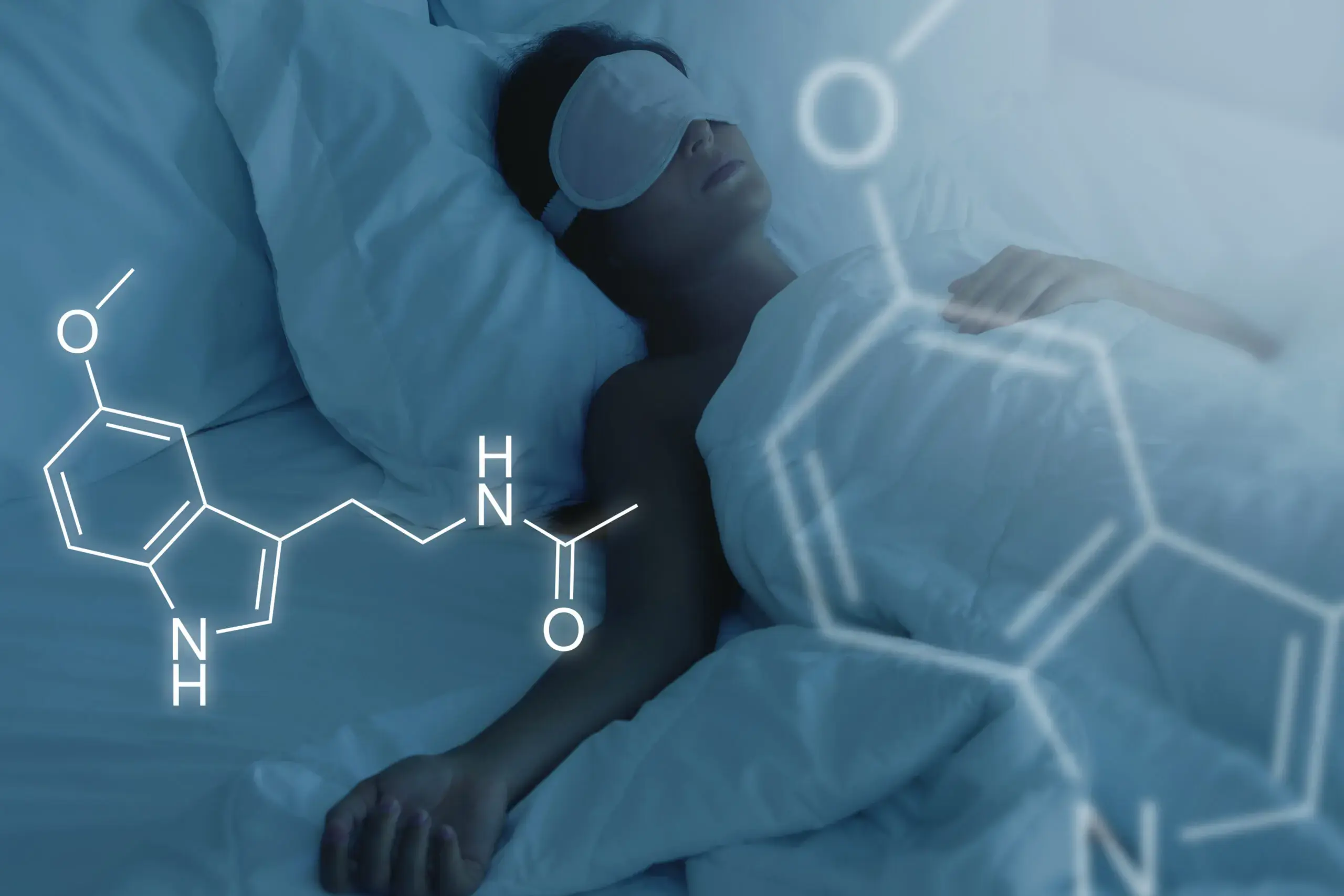
One of its most important timekeepers is light. When light hits the retina, signals are sent to the brain's central internal clock. Through this pathway, the body regulates a range of processes that shift throughout the day, including the release of the sleep hormone melatonin. Under normal circumstances, melatonin levels rise in the evening, signalling to the body that the biological night has begun.
The relationship isn't as straightforward as "less light equals more melatonin," however. What also matters for our rhythm is the time of day at which we're exposed to light.
This is precisely what a study of more than 500 adults, whose sleep and light exposure were tracked across different seasons, demonstrated. In winter, participants' sleep shifted later compared to summer.
Particularly striking was the role of timing: more light in the morning was associated with an earlier internal biological night. Light in the late afternoon and evening, on the other hand, was linked to a later shift.
This has real implications for daily life. People who leave the house in the dark on autumn mornings and then spend many hours indoors are getting very little natural light during precisely the first hours of the day.
That's why it's worth making an effort to get outside early. The sun doesn't even need to be shining: even on a grey autumn day, it's usually significantly brighter outdoors than in a typical indoor space. Even a commute to work or a short break outside can make a difference.
Anyone who suddenly wants to sleep longer in the morning will quickly wonder whether the body might actually need more sleep during the darker months of the year. There's no definitive answer yet. However, there are indications that the seasons may affect not only when we sleep but possibly also the composition of our sleep.
In a Berlin sleep laboratory study, researchers found seasonal differences in sleep architecture. REM sleep in particular – the phase in which we dream most intensely – was longer in winter than in summer. Seasonal changes were also observed in deep sleep.
The study does have an important limitation: the participants were people with sleep disorders, not a representative sample of healthy adults. It therefore cannot be concluded that we all need more sleep in autumn and winter. Even so, the results suggest that our sleep may respond to the seasons more strongly than long assumed – even in an era of central heating, electric light, and fixed working hours.
For anyone who has little opportunity to get natural light in the early hours of the day, a daylight lamp may be worth considering. Bright light can influence biological rhythms, with intensity, duration, and timing all playing a role.
Light therapy has been particularly well studied in the context of seasonal affective disorder (SAD). The US National Institute of Mental Health describes daily light therapy with a 10,000-lux light box for approximately 30 to 45 minutes, typically in the morning, as one treatment option for winter SAD.
There is also evidence of benefit beyond seasonal depression. A meta-analysis of randomised studies found that bright light can improve subjective sleep quality and insomnia symptoms. Objective sleep measurements also showed improvements, including longer total sleep time. The authors note, however, that further large-scale studies are needed.
A daylight lamp is therefore not something everyone who struggles to get going in autumn will need. It may be worth considering particularly when getting bright morning light as part of everyday life simply isn't feasible.
Late in the evening, bright light can delay the point at which we begin to feel tired.
That doesn't mean all the lights need to go off after a certain hour or that smartphones must be permanently banished from the bedroom. What's more useful is a clear contrast between day and night: bright light during the day, dimmer and softer light in the evening, and as much darkness as possible at night.
The widely recommended blue light filters are also no miracle cure for better sleep. A 2025 meta-analysis found no significant improvements from blue light filter glasses in objectively measured sleep onset time, sleep duration, or sleep efficiency.
Rather than relying solely on a smartphone's night mode or a special pair of glasses, it's therefore more worthwhile to pay attention to the overall lighting environment in the evening.
When the sun appears less frequently in autumn, vitamin D naturally comes to mind. In Germany, the skin is indeed barely able to produce adequate vitamin D during the sun-poor months. However, this does not automatically mean that autumn fatigue is caused by a deficiency.
Vitamin D supplements are also not a blanket solution for autumn fatigue. They may be most useful when a deficiency or insufficient supply is present, or when there is an increased risk of one.
Not every bout of pronounced tiredness in autumn and winter can be explained by reduced daylight. When exhaustion is accompanied by a persistently low mood, loss of interest, or significant changes in sleep and appetite, it's worth taking a closer look.
In seasonal affective depression, depressive episodes recur at a particular time of year, typically in autumn and winter. Alongside low mood, symptoms can include an increased need for sleep, difficulty concentrating, and a lack of motivation.
Severe daytime fatigue that persists over an extended period or interferes with everyday functioning should also be evaluated by a doctor. Underlying causes can include iron deficiency, thyroid conditions, or other health issues.
We can't change the fact that the days are getting shorter. What we can do is give our bodies a clear distinction between day and night – even in autumn.
Because the research shows that our sleep apparently responds to the seasons more strongly than our modern lives might lead us to believe.

Bad breath is often seen as a sign of poor dental hygiene. Yet it can develop even in people who brush thoroughly. Dentist Dr. Tore Thomsen explains how the tongue and oral microbiome contribute to bad breath — and what new studies on probiotics reveal.
Christine Bürg & Marianne Waldenfels

An interview with
Dr. med. dent. Tore Thomsen